

simply amazing, always for you.
Marriage in African traditions is never just a personal affair—it is a sacred covenant that binds not only two people, but also their families, clans, ancestors, and communities. Unlike Western weddings, which often highlight the individual love story of the couple, African weddings emphasize the social, cultural, and spiritual dimensions of union. Every ritual—whether it is the negotiation of bride price, the pouring of libation, or the celebratory dances—carries layers of meaning that speak to identity, respect, and continuity.
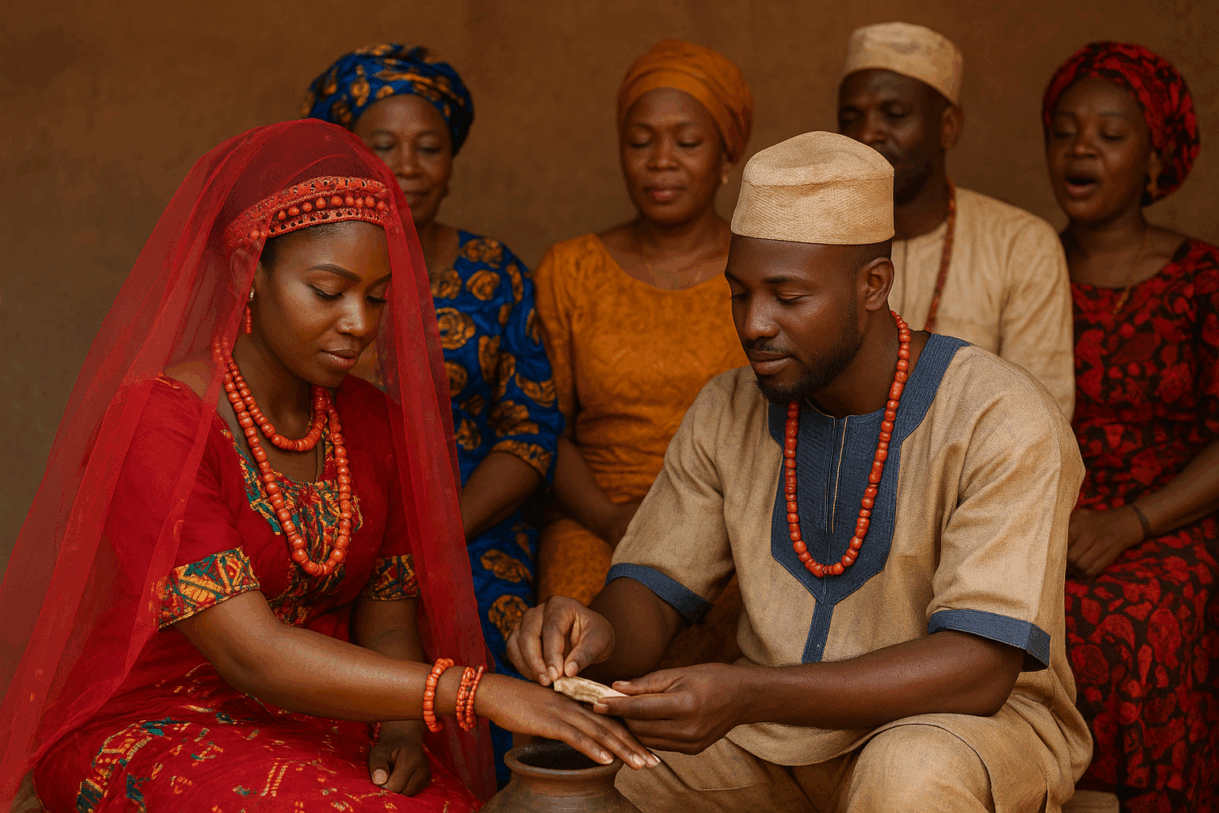
Though each African ethnic group has its own distinct practices, they share underlying values: the honor of family, the blessing of ancestors, the importance of fertility, and the sanctity of community. In this article, we explore traditional African wedding rituals, their symbolic meanings, and how these practices continue to shape modern African marriages.
1. Courtship and Family Approval
The Role of Elders
In many African cultures, marriage begins long before the wedding day. Courtship is not simply about two young people falling in love; it is also about families assessing compatibility. Elders play a central role in these early stages, often investigating the background, character, and lineage of both parties.
For example, in the Zulu culture of South Africa, the process of ukuthwala (traditional symbolic abduction) used to mark the seriousness of a man’s intention to marry. Though controversial today, it once signaled a move toward negotiations between families.
Symbolism and Meaning
- Approval ensures harmony: Families assess whether the union will foster peace and prosperity.
- Marriage as communal, not individual: The well-being of the extended family matters as much as the happiness of the couple.
Courtship in African traditions reminds us that marriage is never just a private contract—it is a public alliance.
2. Bride Price (Lobola, Dowry, or Bridewealth)
Perhaps the most recognized feature of African weddings is the bride price, known variously as lobola (Southern Africa), roora (Zimbabwe), or mahari (East Africa).
Practice
The groom’s family presents cattle, goats, money, drinks, and other gifts to the bride’s family. Negotiations can be elaborate, involving witty exchanges, symbolic riddles, and ritualized bargaining.
Symbolism
- Value and gratitude: The bride price is not about buying a woman—it is a symbolic acknowledgment of the upbringing invested by her family.
- Commitment: Demonstrates the groom’s readiness and ability to provide.
- Bond between families: The exchange of cattle, food, or gifts ties families together in mutual obligation.
Regional Examples
- Among the Kikuyu of Kenya, goats and sheep are central, symbolizing prosperity and fertility.
- The Zulu require cattle, each head representing respect and status.
- The Shona of Zimbabwe conduct roora negotiations, which can last several days and involve humor, songs, and hidden meanings.
The bride price remains one of the strongest cultural institutions in African marriages, both respected and debated in contemporary society.
3. Libation and Ancestral Blessings
No African marriage is complete without acknowledging the ancestors.

Practice
Libation involves pouring palm wine, traditional beer, water, or gin onto the ground while calling upon the names of ancestors.
Symbolism
- Connection with the spiritual world: Ancestors are believed to guide and bless the couple.
- Continuity: Reminds everyone that marriage links the living with those who came before.
- Protection: Inviting ancestral spirits to guard the new home.
Among the Ewe of Ghana, schnapps or gin is poured before any major ceremony to honor the ancestors. The Yoruba of Nigeria similarly invoke ancestral blessings through prayer and offerings.
Libation is a profound reminder that in African thought, marriage is a covenant not only among the living but across generations.
4. The Exchange of Gifts
Gift exchange is central to African weddings.
Practice
Families present symbolic items—yams, clothing, jewelry, beads, and foodstuffs—to each other.
Symbolism
- Sharing and abundance: Gifts represent goodwill and prosperity.
- Respect: Giving gifts shows honor to in-laws.
- Unity: The act of exchange cements the alliance between families.
For example, at Yoruba weddings, the groom prostrates before the bride’s family, offering gifts such as kola nuts, palm oil, and yams. Kola nuts, in particular, symbolize hospitality, peace, and life itself.
5. The Bride’s Journey and Veiling
Transition rituals emphasize that marriage is a passage from one stage of life to another.
Practice
The bride is escorted to her new home, sometimes veiled or carried in a procession. Songs, dances, and ululations accompany her journey.
Symbolism
- Transition: Moving from daughterhood to wifehood.
- Purity and respect: The veil symbolizes modesty and new beginnings.
- Community blessing: Escorting the bride ensures she enters her new life with collective support.
In Somali weddings, the bride is joyfully escorted with singing and drumming, symbolizing celebration and unity.
6. Rituals of Cleansing and Protection
African marriages often involve rituals to ward off evil and purify the couple.
Practice
Herbs, oils, water, or smoke are used to cleanse and bless. In some traditions, the couple is sprinkled with holy water or covered in protective charms.
Symbolism
- Spiritual purity: Starting married life free of negative influences.
- Protection: Safeguarding the couple against jealousy or misfortune.
- Renewal: Entering marriage with a fresh spirit.
Among the Shona of Zimbabwe, herbs like mufandichimuka are used for blessing and protection.
7. Songs, Dances, and Drumming
Celebration is at the heart of African weddings.
Practice
Music, dance, and drumming are integral parts of the wedding ceremony. Each movement and beat carries symbolic weight.
Symbolism
- Joy: Dance expresses happiness and unity.
- Strength: Drumming connects the physical and spiritual worlds.
- Teaching: Songs often carry advice and blessings for the couple.
For the Maasai of Kenya and Tanzania, the famous “jumping dance” (adumu) symbolizes strength and blessings for the marriage. In Yoruba weddings, praise singers (oriki) extol the families’ virtues.
8. Fertility and Continuity Rituals
Fertility is a central concern in African marriages, since children ensure lineage continuity.
Practice
Couples receive gifts such as seeds, gourds, or eggs. Fertility dances and blessings are common.
Symbolism
- Children as blessings: Fertility ensures survival of families and clans.
- Fragility and care: Eggs remind couples that marriage must be nurtured.
- Continuity: Seeds symbolize growth and prosperity.
Among the Ashanti of Ghana, eggs are given to couples as a reminder of fertility and the delicate nature of marriage.
9. Post-Wedding Rituals
Marriage does not end with the wedding ceremony—it continues with follow-up rituals.
Practice
- Some cultures require the couple to live temporarily with the bride’s family.
- Others test domestic skills or harmony in the new home.
Symbolism
- Endurance: Marriage is a journey, not an event.
- Community approval: The couple’s conduct after marriage secures family blessing.
The Igbo of Nigeria hold the famous wine-carrying ceremony, where the bride offers palm wine to her groom before the community, symbolizing her acceptance and respect for him.
10. Modern Adaptations of Traditional Weddings
Colonialism, religion, and globalization have reshaped African weddings, yet traditional rituals persist. Many African couples today conduct both a church or mosque wedding and a traditional ceremony.
For instance:
- In South Africa, couples may have a Western-style white wedding and later a traditional lobola ceremony.
- In Kenya, Christian weddings are often preceded by Kikuyu or Kamba dowry negotiations.
- In Nigeria, it is common to have three ceremonies: the traditional wedding, the religious wedding, and the modern reception.
Despite modern influences, traditional rituals continue to provide cultural depth, communal blessing, and ancestral continuity.
Traditional African wedding rituals are rich tapestries woven from history, spirituality, and community values.
Each ritual—from the bride price to libation, from songs to fertility symbols—carries meaning beyond its outward form. They remind us that marriage is not only about two individuals, but also about family bonds, cultural heritage, and ancestral blessings.
Even in the modern world, where Western influence is strong, African wedding traditions endure. They preserve identity, celebrate community, and honour the sacred bond of marriage. To understand these rituals is to glimpse the heart of African culture itself—resilient, symbolic, and deeply human.
SUGGESTED READS
- What Elders Say About Love: Wisdom from African Grandparents
- The Feminine Power in African Proverbs About Home and Family
- African Proverbs Every Couple Should Live By
- Understanding Polygamy and Jealousy Through African Sayings
- African Proverbs vs. Western Love Quotes: A Cultural Comparison
- The Influence of African Proverbs in Pre-Marital Counseling: Lessons from Swahili Wisdom

Support Our Website!
We appreciate your visit and hope you find our content valuable. If you’d like to support us further, please consider contributing through the TILL NUMBER: 9549825. Your support helps us keep delivering great content!
If you’d like to support Nabado from outside Kenya, we invite you to send your contributions through trusted third-party services such as Remitly, western union, SendWave, or WorldRemit. These platforms are reliable and convenient for international money transfers.
Please use the following details when sending your support:
Phone Number: +254701838999
Recipient Name: Peterson Getuma Okemwa
We sincerely appreciate your generosity and support. Thank you for being part of this journey!