

simply amazing, always for you.
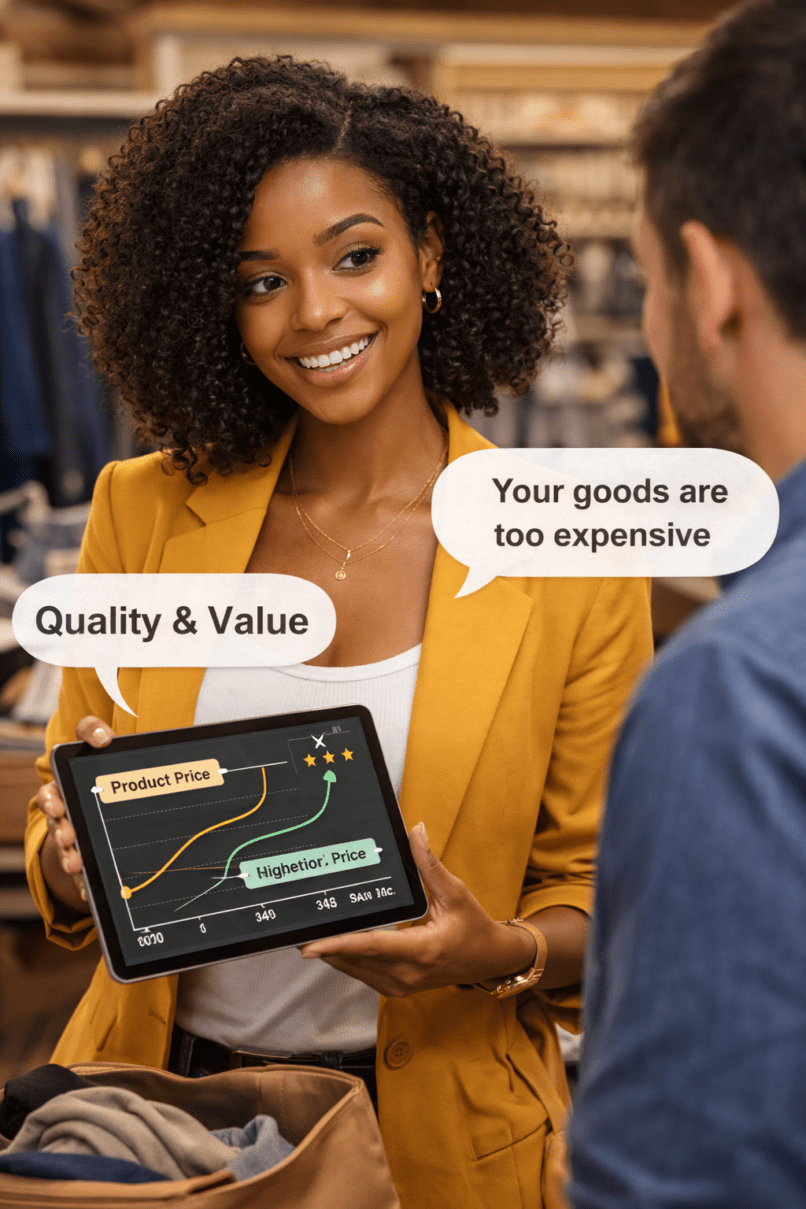
When a customer says your goods are “expensive,” they are not always talking strictly about price. In business practice, this statement usually reflects perceived value, not just cost. Below are the most common, practical reasons customers make this claim.
1. They Are Comparing You to Cheaper Alternatives
Customers often benchmark prices against:
- Competitors selling lower-quality or counterfeit goods
- Bulk sellers with thinner margins
- Informal or unregulated suppliers
- Online prices that exclude transport, taxes, or after-sales support
If your product is legitimately higher quality, your price may be fair—but the customer is comparing price only, not value.
2. You Have Not Clearly Communicated Your Value
If customers do not understand:
- Why your product lasts longer
- Why it performs better
- Why it is safer, more reliable, or more convenient
They will naturally focus on the number, not the benefits.
Unexplained quality looks like overpricing.
3. The Customer Has a Limited Budget
Sometimes the statement has nothing to do with your pricing strategy.
- The customer simply cannot afford it
- Their cash flow is tight
- They were hoping for a lower price
In this case, “expensive” really means “out of my budget.”
4. Market Expectations Are Lower Than Your Pricing
If your target market is price-sensitive:
- They expect bargaining
- They value cheap options over durability
- They prioritize short-term savings
A premium or mid-range price in a low-income or informal market will almost always be labeled “expensive.”
5. Your Pricing Is Not Aligned With Your Brand Position
If your brand presentation looks:
- Basic
- Unprofessional
- Inconsistent
But your price is premium, customers experience price shock.
Price must match:
- Packaging
- Customer service
- Store appearance
- Communication style
High price with low perceived professionalism triggers resistance.
6. The Customer Is Negotiating
In many markets, saying “it’s expensive” is simply:
- A negotiation tactic
- An invitation for a discount
- A test to see how flexible you are
It does not always mean they won’t buy.
7. They Do Not Trust the Quality Yet
New customers often resist higher prices because:
- They have not tested your product
- They fear being overcharged
- They lack social proof or recommendations
Until trust is built, higher prices feel risky.
8. You Are Targeting the Wrong Customer Segment
Your pricing may be correct—but for a different customer.
For example:
- Your goods are priced for wholesalers, but you’re selling to retailers
- Your product suits middle-income buyers, but you’re marketing to budget buyers
This mismatch always results in “your goods are expensive.”
How to Respond Professionally (Without Arguing)
Instead of defending your price, shift the conversation to value:
- Explain what makes your goods different
- Highlight durability, reliability, or savings over time
- Compare quality, not price
- Offer options (smaller quantities, bundles, or alternatives)
A strong response reframes the issue from price to benefit.
Key Business Truth
Customers rarely complain about high prices when they clearly understand the value.
They complain when:
- Value is unclear
- Trust is low
- Comparisons are incomplete
- Budgets are limited
SUGGESTED READS
- Why Wait for Employment? Build a Profitable Business from Home in Kenya
- Profitable Business Ideas You Can Start in Rural Areas in Kenya (2025 Guide)
- The Art of Business: Why Working for Others First Can Make You a Better Entrepreneur
- How to Earn Respect at Work: 15 Proven Strategies That Actually Work
- How to Save for a House at 30: A Step-by-Step Guide to Making Homeownership a Reality
Support Our Website!
We appreciate your visit and hope you find our content valuable. If you’d like to support us further, please consider contributing through the TILL NUMBER: 9549825. Your support helps us keep delivering great content!
If you’d like to support Nabado from outside Kenya, we invite you to send your contributions through trusted third-party services such as Remitly, western union, SendWave, or WorldRemit. These platforms are reliable and convenient for international money transfers.
Please use the following details when sending your support:
Phone Number: +254701838999
Recipient Name: Peterson Getuma Okemwa
We sincerely appreciate your generosity and support. Thank you for being part of this journey!