

simply amazing, always for you.
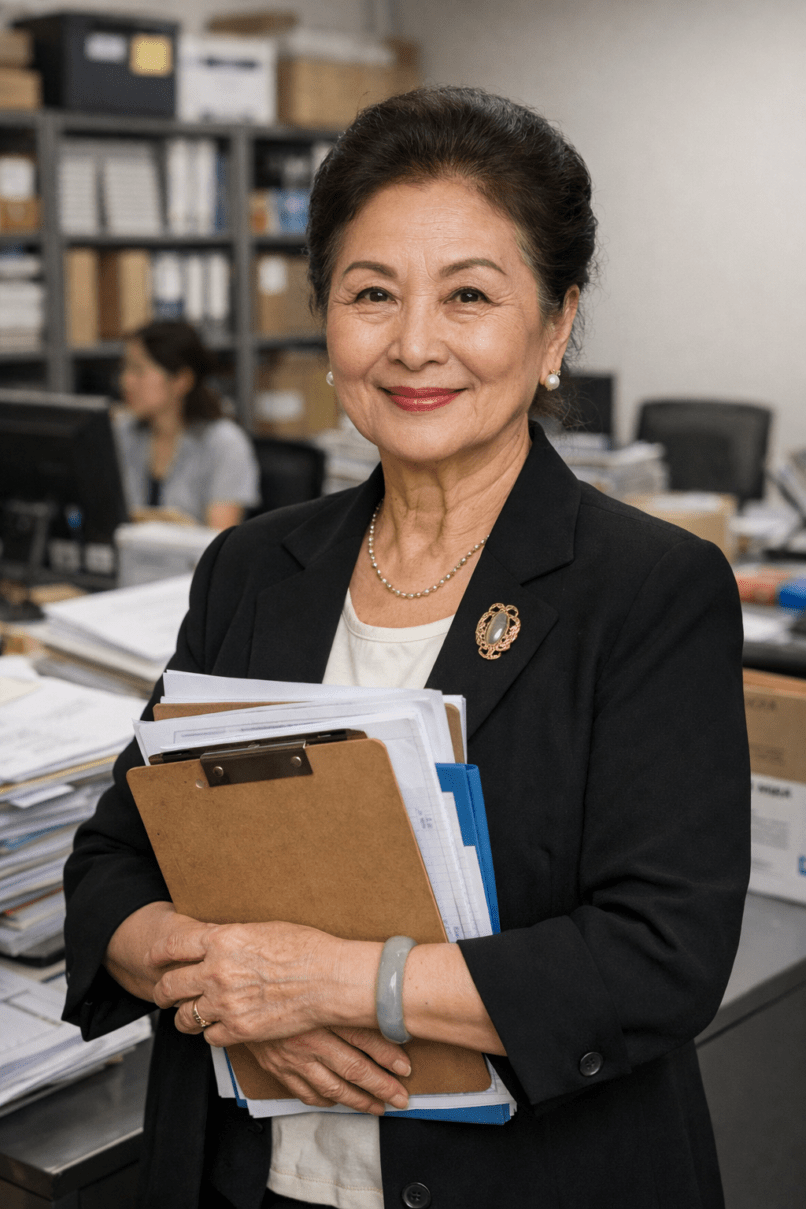
Every morning at exactly 6:30 a.m., Madam Liu ties her hair into a neat bun, slips on comfortable shoes, and walks out of her apartment in Hangzhou. The security guards greet her politely, unaware—or perhaps quietly aware—that the woman stepping into the early crowd is worth several million yuan.
She does not drive. She takes the bus.
Madam Liu is 71 years old. She owns three apartments, receives steady rental income, and her late husband’s investments ensure she will never have to worry about money again. Yet five days a week, she reports to a small textile logistics office where she works as a records clerk—a job that pays her the equivalent of a few hundred dollars a month.
She does not need the money. She needs the routine.
“If I Stay Home, the Days Become Too Long”
After her husband died eight years ago, well-meaning relatives encouraged Madam Liu to “rest,” to enjoy the fruits of decades of hard work. For the first year, she did exactly that. She traveled with tour groups, watched television dramas, and slept late.
Then something unexpected happened.
“The days felt empty,” she says calmly. “Too quiet. Too long.”
Her children live abroad. Her friends were either still working or gradually retreating into their own private lives. Despite her financial comfort, Madam Liu found herself measuring time not by purpose, but by boredom.
In China, retirement often arrives abruptly. One day, you are needed; the next, you are surplus. For many elderly people—especially those who grew up during periods of scarcity and national rebuilding—work was never just about income. It was identity.
“When you stop being useful,” Madam Liu says, “you start disappearing.”
Work as Structure, Not Survival
Madam Liu found her current job through a former neighbor. The company initially hesitated to hire someone her age, but her meticulous handwriting, reliability, and calm demeanor quickly made her indispensable.
She arrives early. She rarely takes sick days. She insists on doing tasks by hand rather than delegating everything to software.
Her salary goes untouched in a separate bank account. Sometimes she donates it to local charities. Sometimes she uses it to treat younger colleagues to lunch.
What she values most is not the paycheck, but the rhythm: waking up early, commuting, exchanging greetings, being expected somewhere.
“People wait for me,” she says. “That matters.”
A Quiet Phenomenon Across China
Madam Liu is not unique.
Across China, there is a growing number of elderly people—some financially secure—who continue working long past retirement age. They appear in convenience stores, security desks, schools, and small offices. Many are not chasing money. They are chasing relevance.
Sociologists point to several reasons:
- Cultural conditioning: Older generations equate diligence with moral worth.
- Loneliness: Adult children often live far away due to urban migration.
- Mental health: Work provides cognitive stimulation and emotional stability.
- Control: Employment restores a sense of agency in a society that often sidelines the elderly.
In a culture where productivity has long been celebrated, inactivity can feel like decay.
“I Am Rich in Money, Not in Time”
When asked why she doesn’t simply volunteer or pursue hobbies, Madam Liu pauses.
“Volunteering is good,” she says. “But work is honest. You earn your place there.”
Her wealth, she explains, solved material problems—but not existential ones.
“Money removes fear,” she says. “It does not remove emptiness.”
She does not romanticize her choice. She knows her body is slower now. She knows younger workers sometimes see her as old-fashioned. But she also knows something else.
“When I work, I sleep well,” she says. “When I stay home, I feel like I am waiting for something I don’t want to arrive.”
Redefining Retirement
Madam Liu has no plans to stop working soon. She has arranged her finances carefully, written her will, and prepared for the future. But until her health says otherwise, she will continue taking the morning bus.
Not because she must.
Because she chooses to.
In a society obsessed with early retirement and passive comfort, her story offers a quieter counterpoint: that purpose does not automatically arrive with wealth, and rest is not always the reward people imagine it to be.
Sometimes, work is not an escape from poverty.
Sometimes, it is an escape from silence.
SUGGESTED READS
- The Wickediest Thing I Ever Did to Help a Friend
- The Worst Date I Ever Went On (And What It Taught Me About Love, Red Flags, and Self-Respect)
- “The Stupidest Thing I Ever Did on a Dare (And What It Taught Me About Myself)”
- The Man Who Could’ve Been
- The Grave Between Them

Support Our Website!
We appreciate your visit and hope you find our content valuable. If you’d like to support us further, please consider contributing through the TILL NUMBER: 9549825. Your support helps us keep delivering great content!
If you’d like to support Nabado from outside Kenya, we invite you to send your contributions through trusted third-party services such as Remitly, western union, SendWave, or WorldRemit. These platforms are reliable and convenient for international money transfers.
Please use the following details when sending your support:
Phone Number: +254701838999
Recipient Name: Peterson Getuma Okemwa
We sincerely appreciate your generosity and support. Thank you for being part of this journey!