

simply amazing, always for you.
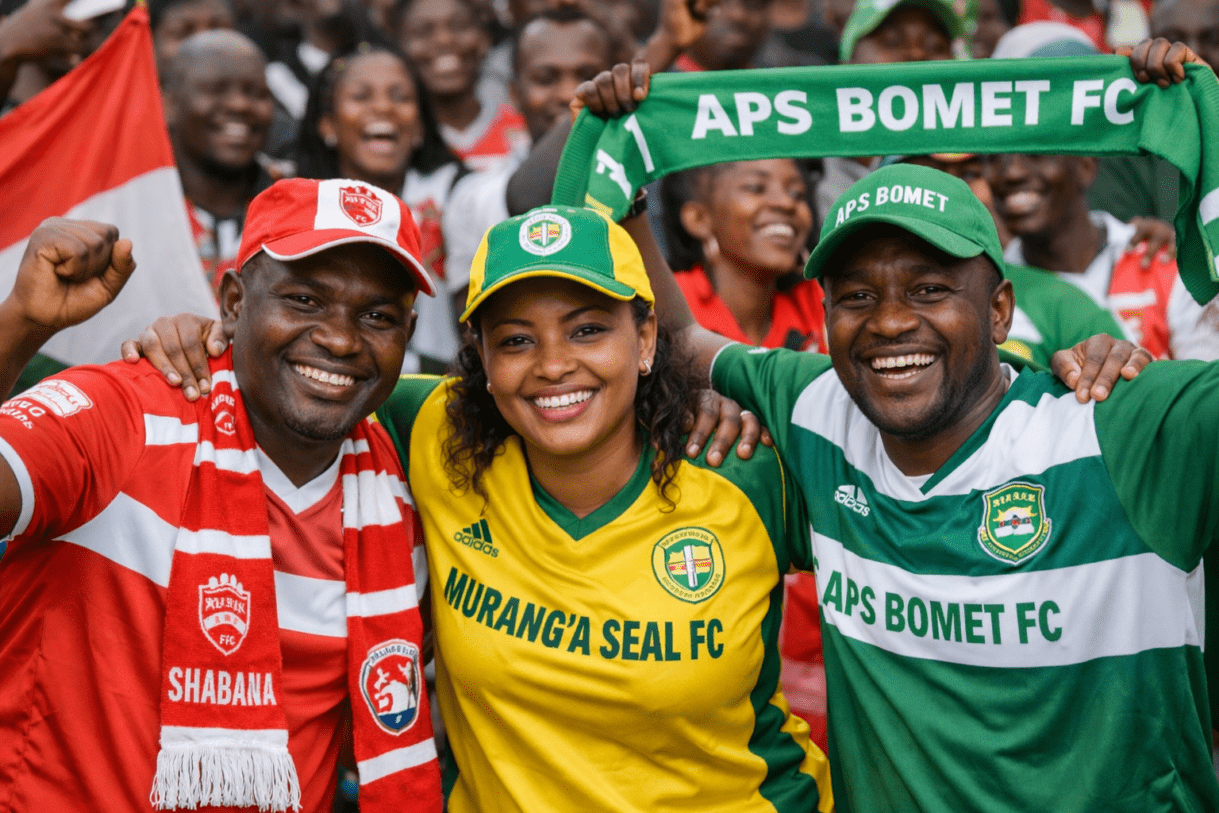
Football in Kenya is more than just a sport. It is a cultural phenomenon that transcends geography, ethnicity, and class. From the bustling streets of Nairobi to the rural expanses of Kisii, Murang’a, and Bomet, football has emerged as a unifying force in Kenyan society. While top-tier teams like Gor Mahia F.C. and A.F.C. Leopards have historically dominated headlines, smaller and county-based clubs such as Shabana FC, Murang’a Seal FC, and APS Bomet FC play an equally crucial role in knitting the nation together.
This article explores the multifaceted ways in which Kenyan football clubs foster unity, highlighting their impact on regional pride, social cohesion, youth development, economic growth, and digital engagement.
1. Regional Pride as a Catalyst for Unity
Kenya is a diverse nation with over 40 ethnic groups, each with its own unique culture and traditions. Football has historically reflected this diversity, serving as a mirror of Kenya’s complex social landscape. Many football clubs were founded along regional lines. For example:
- Gor Mahia F.C. originated from the Luo Union, gaining strong support from the Luo community.
- A.F.C. Leopards was traditionally associated with the Luhya community.
- Shabana FC represents Kisii County, embodying pride for the Gusii people.
- Murang’a Seal FC symbolizes the aspirations of Central Kenya, particularly Murang’a County.
- APS Bomet FC gives Bomet County and the broader South Rift region a sporting identity.
While these clubs may have started with a regional or ethnic focus, their fan bases have evolved to include Kenyans from diverse backgrounds. Today, a Gor Mahia supporter from Nairobi may cheer alongside a Shabana fan from Kisii, transcending ethnic and regional divides.
2. Match Days: Social Spaces for Collective Experience
Football matches create temporary spaces where differences dissolve. Stadiums become arenas of shared emotion, where Kenyans of all ages, classes, and professions unite to support their teams. Matchdays bring together:
- Farmers and traders
- Students and professionals
- Young and old
- Urban and rural residents
In cities and towns, stadiums like Kisii’s Gusii Stadium or Murang’a Stadium are transformed into hubs of celebration and camaraderie. Fans experience collective joy when their team scores, shared anxiety during tense moments, and the thrill of victory or heartbreak of defeat together. This shared experience strengthens social cohesion and helps Kenyans see beyond social and cultural differences.
3. Fan Culture and Community Identity
Organized fan groups, also known as ultras, have become a defining feature of Kenyan football. Groups such as Ultras Green 1968 (Gor Mahia) and Ultras 1964 (A.F.C. Leopards) engage in chants, displays, and community initiatives that foster solidarity among fans. Even smaller clubs like Shabana, Murang’a Seal, and APS Bomet have passionate supporter groups that:
- Organize matchday activities
- Coordinate travel for away games
- Participate in charitable events and community projects
Fan culture encourages intergenerational bonding and social interaction, creating communities united by football rather than by geography or social status.
4. Digital Engagement: Breaking Geographic Barriers
In the digital era, football clubs are not confined to local boundaries. Social media platforms like Facebook, X (formerly Twitter), Instagram, and TikTok enable fans to follow clubs from anywhere in the world. This is particularly important for clubs like Shabana, Murang’a Seal, and APS Bomet, whose fan bases extend beyond their counties. Through digital engagement:
- Fans in Nairobi, Mombasa, or Kisumu can support Shabana FC
- Diaspora communities can follow Murang’a Seal FC from abroad
- APS Bomet fans can share highlights and engage with supporters in other counties
Digital platforms foster a national conversation around football, allowing Kenyans from diverse backgrounds to connect over shared passion.
5. Grassroots Development and Youth Engagement
Football clubs in Kenya serve as engines for youth development. For many young Kenyans, seeing local heroes play professionally inspires ambition and hope. Clubs like Shabana FC, Murang’a Seal FC, and APS Bomet FC provide opportunities for young talent to:
- Participate in organized training and competitions
- Learn teamwork, discipline, and leadership skills
- Avoid negative influences such as crime and idleness
These developmental programs are crucial in counties with limited opportunities, offering youth a positive outlet and fostering unity through collective engagement in sport.
6. Economic Impact and Community Growth
Football has tangible economic benefits for local communities. Matchdays generate income for a wide range of stakeholders:
- Vendors selling food, merchandise, and tickets
- Transport providers like boda boda riders and taxis
- Hotels and guesthouses hosting visiting fans
When Murang’a Seal plays at home, or Shabana FC competes in Kisii, the local economy experiences a temporary boost. APS Bomet matches similarly energize businesses in Bomet County. Shared economic benefits encourage collective investment in club success, reinforcing community pride and unity.
7. National Unity Through Club Representation
Kenya’s devolved governance system has reinforced county identity, and football mirrors this structure. Each club acts as a representative of its county, providing recognition and visibility. Clubs such as Shabana, Murang’a Seal, and APS Bomet give smaller regions a platform in national sports, fostering a sense of inclusion and shared national identity.
Even during intense local rivalries, Kenyans rally behind the national team, showing that club competition strengthens rather than undermines national cohesion.
8. Football as a Neutral Space During Political Tension
Kenya has experienced political polarization over the years. Football provides a neutral environment where Kenyans can unite over shared passion rather than divide over politics. Matchdays and fan engagement create moments of respite from societal tensions, offering opportunities for collective celebration and dialogue.
Clubs like Shabana, Murang’a Seal, and APS Bomet host matches where political affiliations matter less than team loyalty. This neutrality makes football a powerful tool for social cohesion.
9. Intergenerational Bonding and Cultural Continuity
Football clubs facilitate intergenerational bonding. Support for a club is often passed from grandparents to parents to children. In Kisii, Shabana FC fans share matchdays with younger family members. In Bomet, APS Bomet supporters celebrate milestones with the next generation. This continuity strengthens family ties and creates shared cultural narratives, contributing to societal unity over decades.
10. Passion That Transcends Religion and Social Class
In Kenya, religion and class differences are pronounced, yet football unites fans across these divides. Pastors, farmers, bankers, and students sit together in stadiums or watch games on television. The universal language of football allows people to celebrate, commiserate, and bond over shared experiences. Clubs like Shabana FC, Murang’a Seal FC, and APS Bomet FC ensure that football remains a space where passion and loyalty outweigh social segmentation.
11. Underdog Stories and Collective Hope
The rise of smaller clubs provides narratives of hope and resilience. When Murang’a Seal fights relegation or Shabana FC pushes for promotion, the national audience follows their story. APS Bomet’s journey through league tiers inspires other counties and communities to believe in their potential. Underdog stories unite Kenyans in collective optimism, reinforcing football as a national conversation rather than a regional debate.
12. Football as an Educational and Social Platform
Beyond entertainment, football offers educational and social benefits:
- Clubs organize workshops and seminars for young fans
- Players serve as role models, advocating for education, health, and civic engagement
- Community initiatives, such as clean-up campaigns and charity matches, foster social responsibility
Shabana FC, Murang’a Seal FC, and APS Bomet FC actively participate in these initiatives, using football as a vehicle to unite communities while promoting development.
13. International Exposure and Diaspora Engagement
Football clubs connect Kenya to the global sporting community. Kenyan expatriates follow local clubs online, maintaining a sense of belonging to home communities. This interaction helps Kenyan clubs develop broader fan bases and encourages cross-cultural exchanges. It also strengthens unity by linking Kenyans at home with those abroad through shared sporting identity.
14. The Role of Media in Amplifying Unity
Local media coverage of football matches helps create shared narratives that transcend counties. Television, radio, and online platforms broadcast games from Kisii, Murang’a, and Bomet to the entire country. Storytelling around clubs, players, and fan culture allows Kenyans to share experiences, celebrate victories, and mourn losses collectively, fostering a unified football culture.
15. Building a Culture of Peace and Social Responsibility
Football encourages peaceful competition. Clubs provide structured outlets for rivalry that might otherwise manifest in social conflict. By promoting fair play, respect, and collective celebration, clubs teach lessons in community cohesion. When fans support Shabana, Murang’a Seal, or APS Bomet responsibly, it demonstrates the power of sport to unite and educate simultaneously.
16. Football as Kenya’s Social Glue
Kenyan football clubs — from giants like Gor Mahia and AFC Leopards to county champions like Shabana FC, Murang’a Seal FC, and APS Bomet FC — are more than teams. They are institutions that:
- Foster regional and national pride
- Create economic opportunities
- Unite fans across age, class, and religion
- Provide youth with positive pathways
- Build intergenerational and community bonds
- Serve as neutral spaces during political or social tension
In a nation as diverse as Kenya, football serves as a shared language, an emotional connector, and a cultural anchor. Every whistle blown, goal scored, and fan chant is a thread in the fabric of unity that binds millions of Kenyans together.
For 90 minutes, and often beyond, football reminds Kenya of what is possible when passion, pride, and collective purpose converge — a nation united not by politics or ethnicity, but by love for the beautiful game.
SUGGESTED READS
- Why Music Is So Powerful It Can Control Your Mood, Memories, and Even Your Body
- Why Is Laughter Contagious?
- The 10 Most Influential People in Human History — And Why Their Impact Still Shapes Our Lives
- If Money Were No Object: What A Real Life Would Actually Look Like
- https://nabado.co.ke/2025/11/21/if-you-found-out-you-were-dying-tomorrow-what-should-you-do-today-a-deep-human-honest-reflection/

Support Our Website!
We appreciate your visit and hope you find our content valuable. If you’d like to support us further, please consider contributing through the TILL NUMBER: 9549825. Your support helps us keep delivering great content!
If you’d like to support Nabado from outside Kenya, we invite you to send your contributions through trusted third-party services such as Remitly, western union, SendWave, or WorldRemit. These platforms are reliable and convenient for international money transfers.
Please use the following details when sending your support:
Phone Number: +254701838999
Recipient Name: Peterson Getuma Okemwa
We sincerely appreciate your generosity and support. Thank you for being part of this journey!