

simply amazing, always for you.
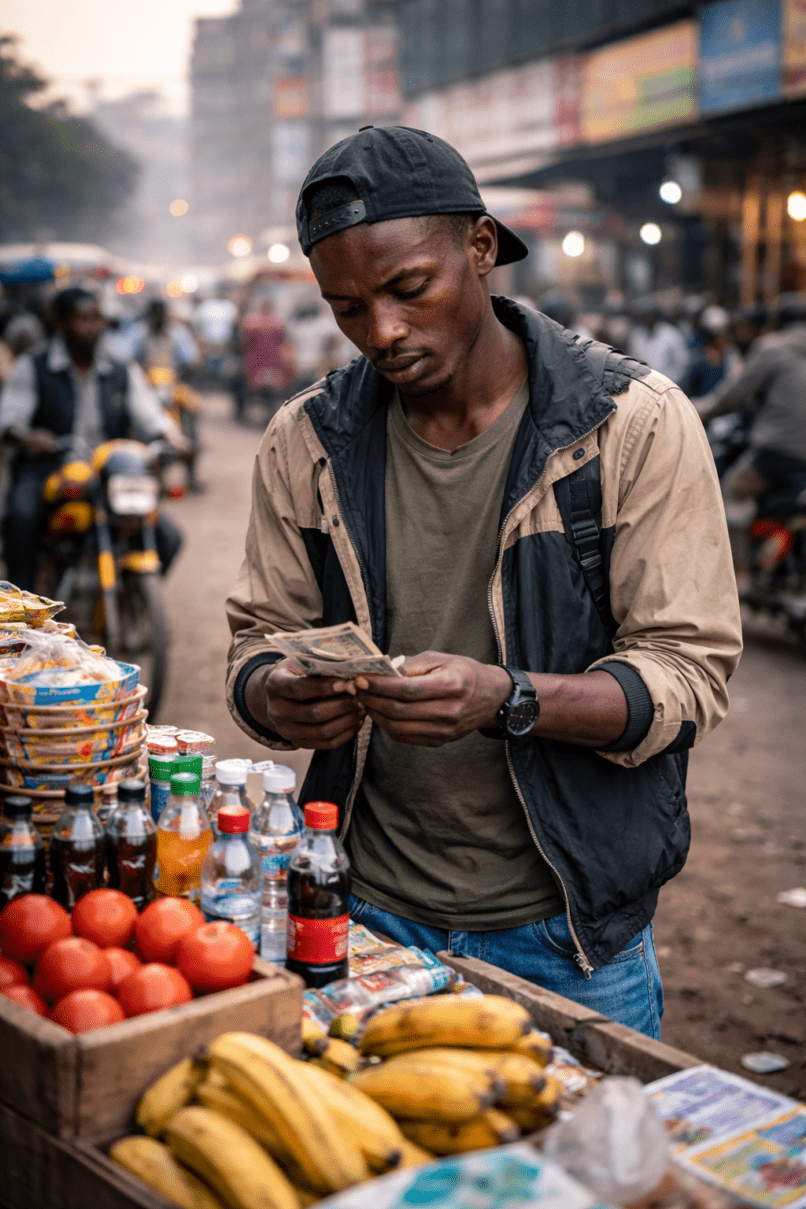
In Kenya today, “hustling” is more than a word. It is an identity. It is how millions introduce themselves to the world. Ask a young person in Nairobi what they do, and chances are they will say, “Ninahustle tu.” It can mean anything — selling thrift clothes in Gikomba, doing Bolt rides at night, freelancing online, flipping phones, running a small kiosk, trading crypto, farming sukuma wiki, or juggling three gigs that barely pay rent.
But behind the motivational captions, behind the polished Instagram reels, behind the “God did” tweets and WhatsApp statuses, there is a quieter, more complex reality. Hustling in Kenya is not just ambition. It is survival. And what no one tells you is that it comes with invisible costs.
This is the real story of hustling in Kenya — the psychological toll, the economic traps, the structural barriers, the resilience, and the uncomfortable truths that rarely make it into success threads.
Hustling in a Tough Economy
To understand hustling in Kenya, you have to understand the economic backdrop.
Kenya has one of the youngest populations in Africa. According to data from the Kenya National Bureau of Statistics, a significant percentage of the population is under 35. At the same time, formal employment opportunities have not grown fast enough to absorb new graduates entering the labor market each year.
Unemployment and underemployment remain persistent challenges. Even for those with degrees, the job market is highly competitive. A bachelor’s degree no longer guarantees employment. Many graduates end up in the informal sector — selling, freelancing, or doing temporary work.
That is how the hustle culture was born. Not from luxury, but from necessity.
The Informal Economy: The True Employer
When we talk about hustling in Kenya, we are really talking about the informal sector.
From mama mbogas to boda boda riders, from online sellers to street vendors, the informal economy employs a large majority of working Kenyans. Walk through Nairobi CBD, Kisumu town, Eldoret, or Mombasa, and you will see it everywhere. It is vibrant, creative, and resilient.
But here’s what no one tells you:
- There is no job security.
- There are no benefits.
- There is no pension.
- There is no health insurance unless you pay it yourself.
- There is no paid leave.
- There is no guaranteed income next month.
One bad week can collapse everything.
The Illusion of “Be Your Own Boss”
Social media loves the phrase “Be your own boss.” It sounds empowering. It sounds freeing. And sometimes, it truly is.
But the reality is more complicated.
When you are your own boss:
- You are also your own employee.
- You are your own HR.
- You are your own accountant.
- You are your own marketing department.
- You are your own customer care desk.
And if business is slow? You are also your own crisis manager.
In Kenya, being your own boss often means carrying all the risk alone. Rent does not care whether sales were low. Suppliers do not care if your customers delayed payment. Landlords do not accept motivational quotes.
Hustling and Mental Health
This is the part no one posts about.
Hustling in Kenya is mentally exhausting.
The pressure to provide.
The fear of failing publicly.
The comparison culture online.
The anxiety of unpredictable income.
The shame of going back home without “making it.”
Mental health discussions are growing, but stigma still exists. Many hustlers internalize stress. They normalize burnout. They say, “Ni life tu.”
But constant financial instability triggers chronic stress. It affects sleep, relationships, and decision-making. Some young people take high-risk shortcuts — betting, quick-money schemes, dubious online jobs — out of desperation.
The hustle is not just physical. It is psychological.
The Cost of Starting Small
Many motivational stories simplify the journey: “Start small.” “Begin with what you have.” “Everyone starts somewhere.”
True.
But starting small in Kenya comes with structural barriers:
1. Capital Is Expensive
Access to affordable credit is limited. Traditional banks require collateral. Microfinance institutions and digital lending apps charge high interest rates. One wrong calculation and debt snowballs.
2. Market Saturation
If something works, everyone jumps in. Phone accessories, mitumba, cosmetics, smokie biashara, online thrift stores — markets become crowded fast. Margins shrink.
3. Harassment and Crackdowns
Street vendors often face county askaris. Goods can be confiscated. Hawkers live in constant uncertainty.
4. Infrastructure Gaps
Power outages, unreliable internet, and rising fuel prices directly affect business operations.
The hustle is not just about effort. It is about navigating systems that are not always supportive.
Nairobi Is Not the Whole Story
When people talk about hustling in Kenya, they often focus on Nairobi. And yes, Nairobi is the epicenter — opportunity, chaos, ambition.
But hustling in Kisii, Bungoma, Turkana, Kilifi, or Mandera looks different.
In rural areas:
- Access to markets is limited.
- Transportation costs are high.
- Digital opportunities are uneven.
- Farming remains a primary hustle, heavily dependent on unpredictable weather patterns.
Climate change has intensified droughts and floods. For small-scale farmers, one failed season can wipe out income for months.
The hustle in rural Kenya is quieter but equally intense.
Side Hustles Are Not Always “Side”
In Kenya, a side hustle is often the main hustle.
A teacher runs a poultry farm.
A bank employee sells perfumes online.
A government worker drives Bolt after hours.
A university student designs logos at night.
Why? Because salaries often do not match the cost of living. Rent, school fees, transport, food, medical expenses — everything is rising.
Hustling is not greed. It is financial strategy.
The Role of Mobile Money and Digital Platforms
One thing that has transformed hustling in Kenya is technology.
The rise of Safaricom and its mobile money platform M-Pesa changed everything. Payments became easier. Micro-transactions became possible. Small businesses could operate without physical cash.
Social media platforms like Instagram, TikTok, and Facebook have created digital marketplaces. A young person in Nakuru can sell products to someone in Nairobi without a physical shop.
But digital hustling also comes with realities:
- Algorithm dependency.
- Account suspensions.
- Online scams.
- Copycats stealing product ideas.
- Customer distrust.
The internet expands opportunity — but also competition.
The Pressure to “Make It”
Kenyan society deeply values visible success.
Building a permanent home.
Buying land.
Driving a good car.
Paying black tax (supporting extended family).
Contributing during harambees and funerals.
These expectations are cultural and communal. They create support systems — but also pressure.
When you are hustling, success is not just personal. It is collective. If you fail, you feel like you have failed everyone.
That pressure pushes people to work harder — but it also pushes some into unsustainable lifestyles to maintain appearances.
Hustling and Relationships
Financial instability affects dating and marriage.
Money conversations have become central in modern relationships. Who pays? Who earns more? Who supports who?
For men, there is societal pressure to provide. For women, there is increasing pressure to be financially independent while still navigating traditional expectations.
Hustling often leaves little time for emotional connection. Long hours. Fatigue. Constant worry. Conflicts emerge around money.
Love becomes entangled with survival.
The Myth of Overnight Success
Every few months, a viral story appears:
“From hawker to millionaire.”
“From broke to billionaire at 30.”
“Dropped out and now owns five companies.”
These stories inspire. But they rarely show:
- The failed attempts.
- The debt.
- The family support behind the scenes.
- The connections.
- The luck.
Survivorship bias is real. For every success story, thousands struggle quietly.
That does not mean hustling is pointless. It means outcomes are uneven. And we need honest conversations about probability, not just possibility.
Government Policies and the Hustler Narrative
Politicians frequently use the term “hustler” in public discourse. It resonates because it reflects lived reality.
But rhetoric and structural reform are different things.
For hustling to become sustainable wealth creation, systems must support small businesses:
- Fair taxation.
- Access to affordable credit.
- Infrastructure.
- Transparent regulations.
- Reduced corruption.
Without systemic change, hustlers remain in survival mode rather than growth mode.
The Strength No One Talks About
Despite all the challenges, Kenyan hustlers are extraordinarily adaptive.
They:
- Pivot quickly.
- Learn new skills fast.
- Spot trends early.
- Build networks organically.
- Share information within communities.
Innovation in Kenya often starts at the grassroots level. Informal systems solve problems faster than formal institutions sometimes do.
That resilience is not accidental. It is born from necessity and creativity.
What No One Tells You About “Giving Up”
There is a toxic narrative that quitting equals weakness.
But sometimes:
- A business model is flawed.
- A market is oversaturated.
- The math does not work.
- The stress outweighs the return.
Pivoting is not failure. Closing one hustle to start another is strategy.
The problem is that many people tie their identity to their hustle. When it struggles, they feel personally inadequate.
Separating self-worth from business outcomes is one of the hardest lessons in entrepreneurship.
The Hidden Cost: Time
Hustling consumes time.
Time that could be used for:
- Skill development.
- Rest.
- Relationships.
- Strategic planning.
When you are constantly chasing daily income, long-term planning becomes difficult.
This is one of the biggest traps of survival hustling: it keeps you busy, but not always building.
So What Is the Way Forward?
There is no simple answer. But there are realities we must acknowledge:
- Hustling is not shameful. It is dignified labor.
- Hard work alone is not enough. Strategy matters.
- Community support reduces burnout.
- Financial literacy is essential.
- Mental health conversations must continue.
- Structural reform is necessary for lasting change.
Kenya’s future depends not just on hustle — but on systems that allow hustlers to transition into stable entrepreneurs, professionals, and investors.
The Truth Behind the Hustle
Hustling in Kenya is neither glamorous nor hopeless.
It is complex.
It is exhausting.
It is creative.
It is uncertain.
It is brave.
Behind every roadside vendor, every online seller, every boda rider, every freelancer, there is a story of persistence against odds.
What no one tells you is this: hustling is not just about making money. It is about navigating uncertainty with courage.
And while not every hustle becomes an empire, every hustler carries something powerful — resilience.
The real question is not whether Kenyans can hustle.
We have proven that.
The real question is whether the system will evolve enough to ensure that hustle eventually turns into stability.
Until then, the hustle continues.
SUGGESTED READS
- How Young Kenyans Are Surviving Without Stable Jobs
- “Your Goods Are Expensive” — The Lie, the Truth, and the Fix
- Why Wait for Employment? Build a Profitable Business from Home in Kenya
- Profitable Business Ideas You Can Start in Rural Areas in Kenya (2025 Guide)
- The Art of Business: Why Working for Others First Can Make You a Better Entrepreneur

Support Our Website!
We appreciate your visit and hope you find our content valuable. If you’d like to support us further, please consider contributing through the TILL NUMBER: 9549825. Your support helps us keep delivering great content!
If you’d like to support Nabado from outside Kenya, we invite you to send your contributions through trusted third-party services such as Remitly, western union, SendWave, or WorldRemit. These platforms are reliable and convenient for international money transfers.
Please use the following details when sending your support:
Phone Number: +254701838999
Recipient Name: Peterson Getuma Okemwa
We sincerely appreciate your generosity and support. Thank you for being part of this journey!