

simply amazing, always for you.
The Political Temperature in Kenya Is Rising Fast
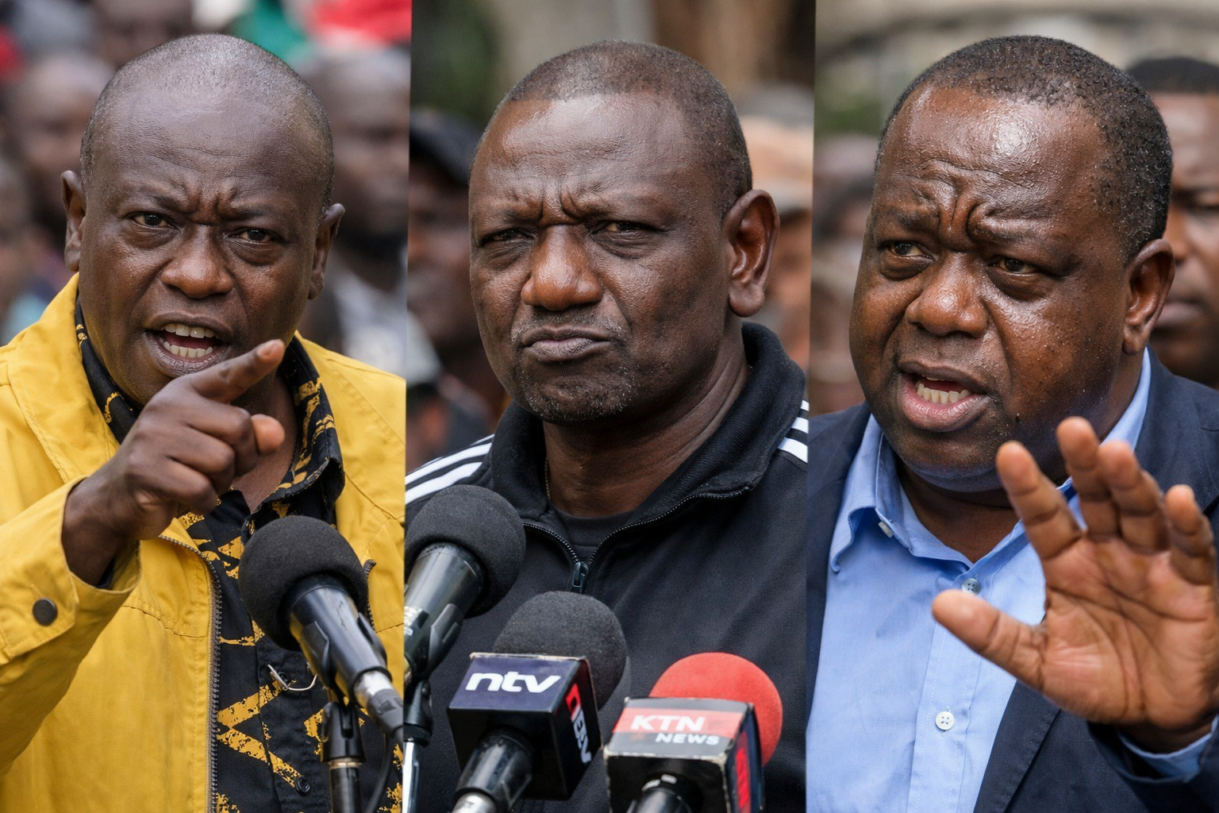
Kenya’s political environment has entered a new phase—one defined less by policy debate and more by sharp, personal exchanges. At the center of this evolving landscape are three influential figures:
- William Ruto
- Rigathi Gachagua
- Fred Matiang’i
Recent remarks involving body image, lifestyle, and personal discipline have pushed political rhetoric into more controversial territory, raising questions about leadership tone and public discourse.
Ruto vs Gachagua: From Political Partners to Personal Attacks
The relationship between Ruto and Gachagua has deteriorated rapidly, moving from coordinated messaging to open confrontation.
Gachagua’s “Thin” Remark
In one of the most talked-about moments, Gachagua took a personal jab at Ruto by suggesting that the president is “too thin,” a remark widely interpreted as an attempt to ridicule his physical appearance and lifestyle.
While seemingly casual, the comment carried deeper implications:
- It personalized the political conflict
- It signaled a willingness to cross traditional boundaries
- It shifted attention from policy to personality
Ruto’s Earlier Dismissal
This came against the backdrop of Ruto’s earlier statement dismissing Gachagua’s political influence with the phrase “wewe huna kura.”
Together, these remarks illustrate a clear escalation:
- From political disagreement
- To personal ridicule
- To public rivalry
What This Rift Reveals
The exchange reflects:
- A breakdown in political trust
- A struggle for dominance within leadership circles
- Strategic repositioning ahead of future elections
Ruto vs Matiang’i: From Subtle Jabs to Direct Lifestyle Criticism
The interaction between Ruto and Matiang’i has also evolved, moving from indirect messaging to more pointed remarks.
Ruto’s “Go to the Gym” Comment
Ruto recently suggested that Matiang’i should “go to the gym,” a comment that quickly gained traction in public discourse.
This statement can be interpreted as:
- A critique of personal discipline
- A symbolic attack on readiness or capability
- A continuation of using lifestyle as a political tool
Such remarks, while framed casually, often carry layered meanings in political communication.
Matiang’i’s Response: Firm but Measured
In contrast, Matiang’i responded without engaging in personal insults.
His response emphasized:
- The importance of respectful leadership
- The need to focus on national issues rather than individuals
- A call to elevate public discourse
By refusing to mirror the tone of his opponents, Matiang’i reinforced an image of restraint and composure.
Why Personal Remarks Are Increasing in Kenyan Politics
The growing use of personal language is not accidental. It reflects broader shifts in political strategy.
Emotional Engagement
Personal remarks capture attention quickly and provoke strong reactions, making them effective in rally settings.
Media Amplification
Statements about appearance or lifestyle tend to spread rapidly across media platforms, ensuring visibility.
Strategic Simplification
By focusing on individuals rather than policies, leaders can communicate messages more directly and memorably.
A Shift in Political Communication
Kenya’s political discourse is undergoing a transformation:
| Traditional Approach | Current Trend |
|---|---|
| Policy-driven debates | Personality-focused exchanges |
| Structured messaging | Spontaneous remarks |
| Development focus | Personal narratives |
This shift raises concerns about the long-term quality of political engagement.
The 2027 Election Is Already Taking Shape
These exchanges are not isolated incidents. They are part of a broader effort to shape public perception ahead of the next general election.
William Ruto
Ruto continues to assert dominance through direct and indirect messaging, maintaining a strong public presence.
Rigathi Gachagua
Gachagua is positioning himself as an independent voice, using bold language to remain relevant.
Fred Matiang’i
Matiang’i is cultivating an image of stability and discipline, appealing to voters seeking measured leadership.
Evaluating the Narrative Battle
Each leader’s communication style reflects a distinct strategy:
William Ruto
Combines assertiveness with strategic messaging but risks criticism for personal remarks.
Rigathi Gachagua
Relies on bold, direct language to capture attention, though it may be perceived as confrontational.
Fred Matiang’i
Maintains a controlled tone, reinforcing a disciplined public image while avoiding controversy.
Legal and Social Implications
Kenyan law addresses offensive and inflammatory speech, yet enforcement remains inconsistent. The rise in personal attacks may contribute to:
- Lower standards of public discourse
- Increased political polarization
- Reduced focus on policy issues
Implications for Citizens
Distraction from Key Issues
Attention shifts away from economic challenges, employment, healthcare, and education.
Heightened Tension
Personalized rhetoric can deepen divisions among citizens.
Influence on Voter Behavior
Emotional reactions may overshadow policy evaluation in decision-making.
What to Expect Moving Forward
As political momentum builds:
- Personal remarks may become more frequent
- Media attention will continue to focus on dramatic exchanges
- Alliances and rivalries will evolve
The recent remarks involving Ruto, Gachagua, and Matiang’i highlight a broader transformation in Kenya’s political communication.
What might appear as isolated comments about appearance or lifestyle are, in reality, part of a calculated effort to shape narratives and influence public perception.
The focus is no longer solely on governance or policy. It is increasingly about identity, personality, and positioning.
As the country moves closer to the next election cycle, these dynamics will likely intensify, making it essential for observers to look beyond the words and understand the strategies behind them.

Support Our Website!
We appreciate your visit and hope you find our content valuable. If you’d like to support us further, please consider contributing through the TILL NUMBER: 9549825. Your support helps us keep delivering great content!
If you’d like to support Nabado from outside Kenya, we invite you to send your contributions through trusted third-party services such as Remitly, western union, SendWave, or WorldRemit. These platforms are reliable and convenient for international money transfers.
Please use the following details when sending your support:
Phone Number: +254701838999
Recipient Name: Peterson Getuma Okemwa
We sincerely appreciate your generosity and support. Thank you for being part of this journey!