

simply amazing, always for you.
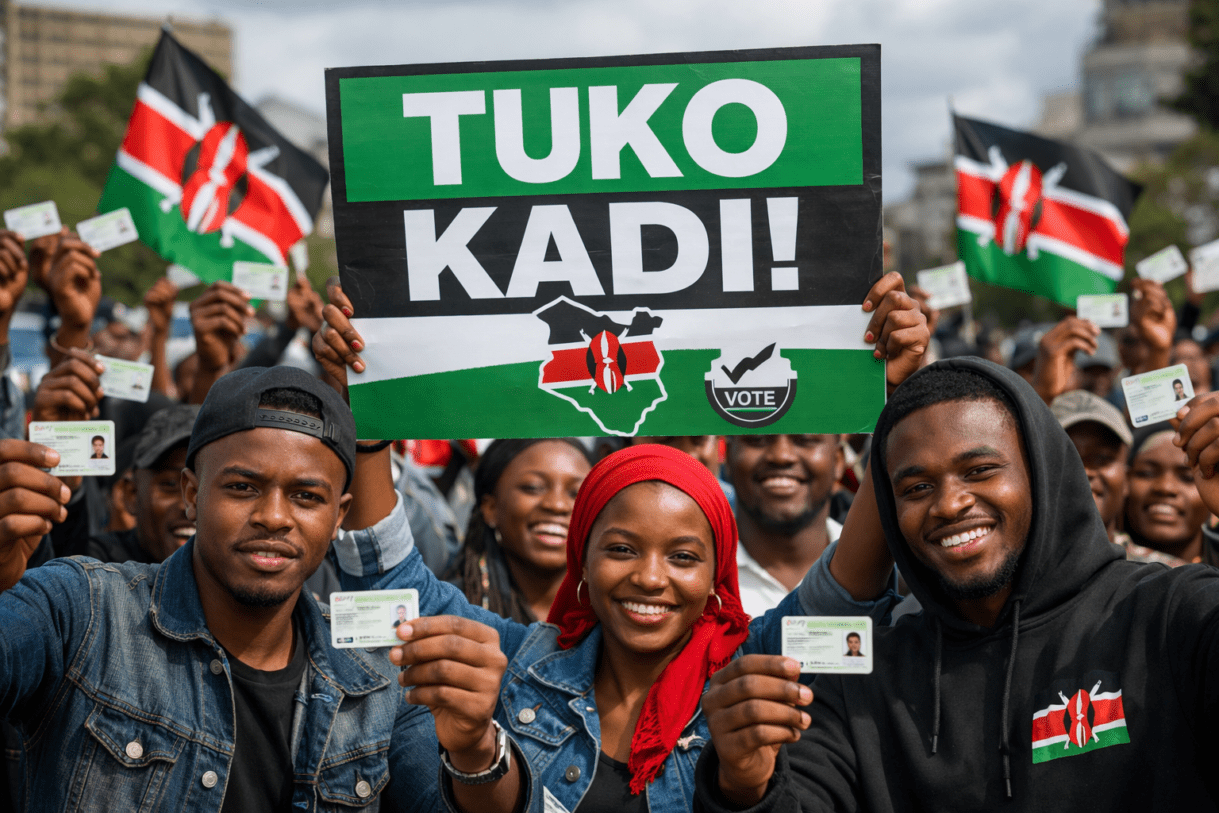
In recent years, a simple two-word phrase has quietly transformed into one of the most powerful expressions in Kenya’s political and cultural vocabulary: “Tuko kadi.” At first glance, it may sound like just another piece of Sheng—a fluid, ever-evolving urban slang born from the streets of Nairobi. But beneath its simplicity lies a layered meaning that reflects a generation’s readiness, awareness, and growing influence in shaping the country’s future.
This is not just slang. It is a signal. A declaration. A cultural marker.
From political rallies and TikTok videos to Twitter trends and street conversations, “Tuko kadi” has become shorthand for preparedness, participation, and presence. It captures the mood of a population—particularly the youth—that is no longer content with passivity. Instead, it represents a shift toward engagement, accountability, and ownership of national conversations.
This article breaks down the meaning, origin, evolution, and implications of “Tuko kadi,” exploring why it has become one of the most important phrases in Kenya today.
Understanding “Tuko Kadi”: More Than Just Words
To fully grasp the significance of “Tuko kadi,” it’s important to start with its linguistic roots.
- “Tuko” is Swahili for “we are.”
- “Kadi” directly translates to “card.”
On a literal level, “Tuko kadi” simply means “We have the card.” But language, especially Sheng, rarely operates at a purely literal level. Instead, it thrives on metaphor, context, and cultural cues.
In modern usage, “kadi” most commonly refers to a voter’s card, the official identification required for participation in elections. Therefore, the phrase has evolved into a powerful political statement:
“Tuko kadi” = “We are registered voters. We are ready to participate.”
This interpretation has gained traction particularly in the lead-up to elections, where voter mobilization becomes a central theme in national discourse.
The Rise of Political Consciousness in Kenya’s Youth
To understand why “Tuko kadi” resonates so deeply, one must consider the demographic reality of Kenya.
Kenya has a predominantly young population. A significant percentage of citizens are under the age of 35. Historically, this group has been viewed as politically disengaged or easily swayed. However, that narrative is rapidly changing.
A Shift from Apathy to Action
In the past, voter turnout among young people was often inconsistent. Barriers included:
- Lack of information
- Distrust in political systems
- Economic struggles taking priority over civic engagement
- Perception that individual votes do not matter
But the emergence of digital platforms has altered this landscape dramatically. Social media has become a powerful tool for:
- Political education
- Mobilization campaigns
- Real-time discussion and debate
- Holding leaders accountable
Within this context, “Tuko kadi” has become a rallying cry that signals a departure from apathy. It is no longer just about having a voter’s card—it is about intention.
Social Media and the Viral Power of Sheng
Sheng has always been a dynamic linguistic system, shaped by urban youth culture. However, social media has accelerated its spread and amplified its impact.
Why “Tuko Kadi” Went Viral
Several factors contributed to the phrase’s widespread adoption:
- Simplicity
It is short, easy to remember, and instantly recognizable. - Relatability
It speaks directly to a shared experience—voter registration and political participation. - Flexibility
While rooted in politics, it can be used in broader contexts to mean “we’re ready” or “we’re set.” - Memetic Potential
It lends itself well to memes, captions, and hashtags.
On platforms like X (formerly Twitter), TikTok, and Instagram, “Tuko kadi” has been used in:
- Political commentary
- Satirical posts
- Motivational content
- Campaign messaging
The phrase has transcended its original meaning, becoming a cultural shorthand for readiness in any situation.
Beyond Politics: The Cultural Expansion of “Tuko Kadi”
While its political meaning remains dominant, “Tuko kadi” has evolved into a broader cultural expression.
Everyday Usage
In casual conversation, it can mean:
- “We’re prepared”
- “We’re locked in”
- “We’re fully committed”
For example:
- A group planning a trip might say, “Tuko kadi” to confirm readiness.
- A team preparing for a competition might use it to signal confidence.
- Friends organizing an event might use it to show everything is set.
This versatility has helped the phrase gain traction beyond political circles.
The Symbolism of the “Card”
Why does the concept of a “card” carry so much weight?
In many systems, a card represents:
- Identity
- Access
- Legitimacy
- Authority
A voter’s card, in particular, symbolizes citizenship in action. It is proof that an individual has the right—and the power—to influence governance.
By saying “Tuko kadi,” individuals are not just stating that they possess a document. They are asserting:
- Their inclusion in the democratic process
- Their readiness to exercise their rights
- Their awareness of their collective power
Political Messaging and Strategic Use
Political actors have not ignored the power of this phrase. Campaign strategists, activists, and influencers have incorporated “Tuko kadi” into their messaging.
Why It Works
- It resonates with youth
- It feels organic rather than imposed
- It taps into existing cultural language
- It creates a sense of unity
Unlike traditional political slogans, which can feel distant or scripted, “Tuko kadi” feels authentic. It originates from the people, making it more effective as a mobilization tool.
The Psychology Behind the Phrase
At a deeper level, “Tuko kadi” taps into key psychological drivers:
1. Identity
It reinforces a sense of belonging to a group that is informed and prepared.
2. Empowerment
It shifts the narrative from helplessness to agency.
3. Accountability
It implies that individuals are not just observers but participants.
4. Collective Action
The use of “we” emphasizes unity and shared purpose.
Risks and Misinterpretations
Despite its positive connotations, the phrase is not without potential drawbacks.
Oversimplification of Civic Duty
There is a risk that:
- Registering to vote is seen as the end goal rather than the beginning.
- Deeper political engagement (such as understanding policies) is overlooked.
Performative Activism
On social media, there is always the possibility of:
- People using the phrase for clout rather than genuine engagement.
- Symbolic participation replacing substantive action.
Political Manipulation
Like any popular phrase, “Tuko kadi” can be co-opted for:
- Propaganda
- Misleading campaigns
- Polarizing narratives
The Role of Education and Awareness
For “Tuko kadi” to translate into meaningful impact, it must be accompanied by:
- Civic education
- Access to accurate information
- Encouragement of critical thinking
Having a voter’s card is important, but understanding how to use that power effectively is even more crucial.
A Reflection of Kenya’s Democratic Evolution
Kenya’s political landscape has undergone significant changes over the years. From periods of limited political freedom to a more open and participatory system, the country has made strides toward strengthening its الديمقراطية.
“Tuko kadi” reflects this evolution. It signals a population that is:
- More informed
- More connected
- More willing to engage
It is evidence that democracy is not just a system but a culture—one that is constantly being shaped by its citizens.
The Future of “Tuko Kadi”
As Kenya approaches future election cycles, the phrase is likely to remain relevant. However, its impact will depend on how it is used.
Potential Scenarios
- Sustained Engagement
If it continues to inspire genuine participation, it could contribute to higher voter turnout and more informed decision-making. - Cultural Integration
It may become a permanent part of Sheng, extending beyond politics into everyday language. - Dilution
Overuse or misuse could reduce its impact, turning it into just another trend.
Lessons for Other Societies
The rise of “Tuko kadi” offers valuable insights beyond Kenya:
- Language can be a powerful tool for mobilization.
- Youth-driven narratives can reshape national conversations.
- Authentic expressions resonate more than imposed messaging.
In an era where attention is fragmented, simple, relatable phrases can carry significant weight.
More Than a Phrase
“Tuko kadi” is not just slang. It is a statement of readiness, a symbol of participation, and a reflection of a changing society.
It represents a generation that is:
- Aware of its power
- Willing to engage
- Ready to shape its future
But like any tool, its effectiveness depends on how it is used. Words alone are not enough. Action must follow.
If “Tuko kadi” is to live up to its full potential, it must go beyond registration and translate into informed participation, critical thinking, and sustained engagement.
Because at its core, the phrase is not just about having a card.
It is about what you do with it.
SUGGESTED READS
- You’re Learning Languages the Wrong Way — Here’s the Only Method That Actually Works
- Why Curious Minds Get Richer, Smarter, and More Successful
- Top 10 High-Paying Side Hustles You Can Start Today
- How to Save Money Even If You’re Broke
- 7 Quick Ways to Make $1,000 Online This Month (Even If You’re Starting From Zero)
- Dr. Ramon Barba: The Genius Who Made Mangoes Bloom All Year Round
- How to Keep Bananas Fresh for Longer: Expert Tips to Stop Them from Ripening Too Fast
- How to Become More Respected: 15 Proven Ways to Earn Genuine Respect
Support Our Website!
We appreciate your visit and hope you find our content valuable. If you’d like to support us further, please consider contributing through the TILL NUMBER: 9549825. Your support helps us keep delivering great content!
If you’d like to support Nabado from outside Kenya, we invite you to send your contributions through trusted third-party services such as Remitly, western union, SendWave, or WorldRemit. These platforms are reliable and convenient for international money transfers.
Please use the following details when sending your support:
Phone Number: +254701838999
Recipient Name: Peterson Getuma Okemwa
We sincerely appreciate your generosity and support. Thank you for being part of this journey!