

simply amazing, always for you.
A Political Earthquake Inside America’s Most Sacred Court
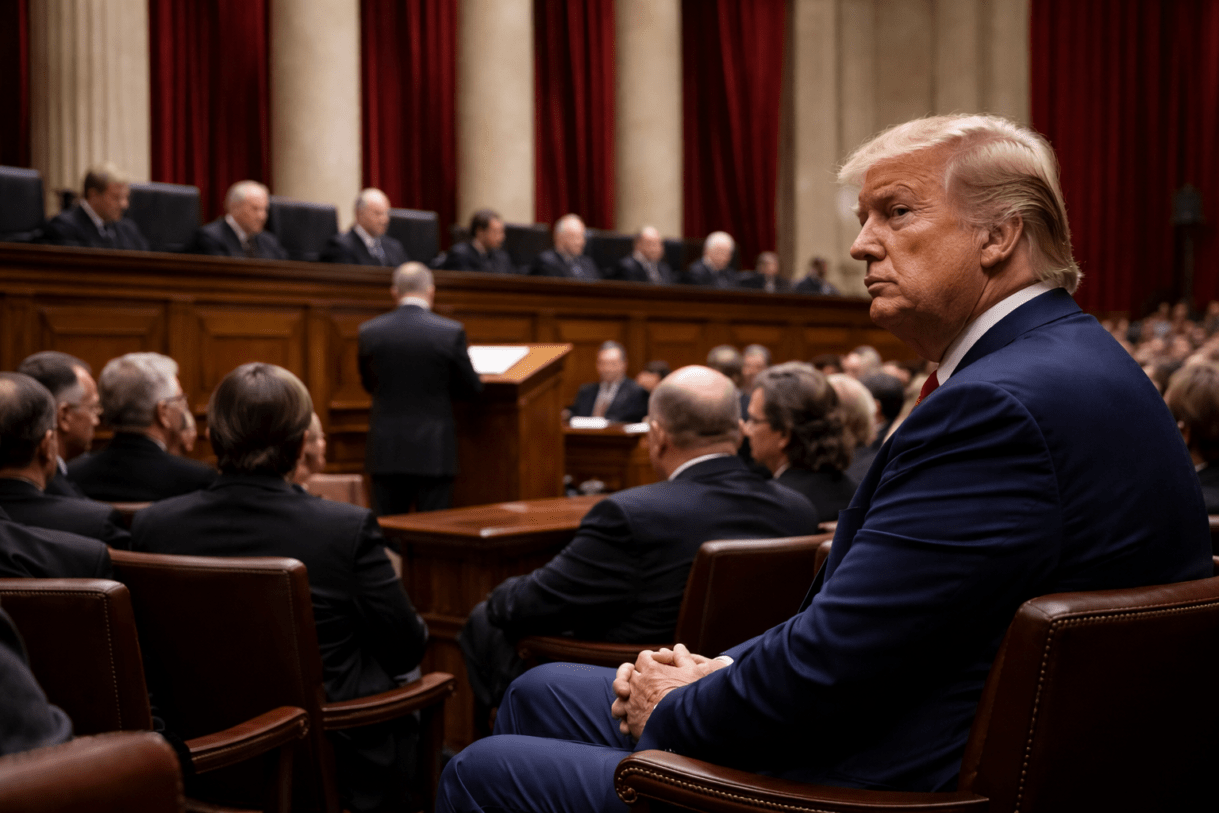
In a moment that has already been branded as one of the most dramatic constitutional flashpoints in modern American history, Donald Trump did something no sitting president had ever dared to do—he physically walked into the Supreme Court of the United States to witness oral arguments in a case that could redefine the meaning of citizenship itself.
This was not a ceremonial visit. This was not a courtesy call.
This was power—raw, visible, and deeply controversial.
At the center of the storm is one of the most explosive constitutional questions imaginable: Can a sitting president unilaterally restrict birthright citizenship in the United States?
The implications are enormous. The tension is real. And the outcome could reshape America permanently.
The Unprecedented Move That Broke 200+ Years of Tradition
For over two centuries, U.S. presidents have respected an unwritten boundary—stay away from Supreme Court proceedings. The separation of powers demanded distance. Optics mattered. The judiciary was to remain insulated from executive influence.
But Trump shattered that tradition.
His presence inside the courtroom sent a loud and unmistakable signal:
This case is not just legal—it is political, ideological, and deeply personal.
Observers described the moment as surreal. A sitting president seated just meters away from the justices who will decide the fate of his own policy agenda.
No speeches. No acknowledgment. But the symbolism? Deafening.
The Case That Could Redefine Who Gets to Be American
At the heart of the legal battle is the interpretation of the Fourteenth Amendment to the United States Constitution, specifically the clause stating:
“All persons born or naturalized in the United States, and subject to the jurisdiction thereof, are citizens…”
For more than a century, this has been understood to guarantee automatic citizenship to anyone born on U.S. soil.
But Trump’s administration is challenging that interpretation.
The Core Argument
The administration argues that the phrase “subject to the jurisdiction thereof” excludes:
- Children of undocumented immigrants
- Children of temporary visa holders
- Individuals without full legal allegiance to the U.S.
If accepted, this interpretation would end automatic birthright citizenship for millions.
The Historical Backbone: A 127-Year-Old Precedent Under Fire
Opponents of Trump’s policy point to a landmark 1898 Supreme Court ruling—United States v. Wong Kim Ark.
In that case, the Court ruled that a child born in the U.S. to foreign parents is a citizen by birth.
This decision has stood unchallenged for over a century.
Until now.
Legal scholars warn that overturning or weakening this precedent could unleash legal chaos, forcing courts to revisit countless interpretations tied to citizenship rights.
Inside the Courtroom: Tension, Silence, and History in Motion
Despite the political weight of the moment, proceedings inside the Supreme Court remained disciplined and formal.
- Justices asked probing, often sharp questions
- Lawyers debated constitutional language with surgical precision
- Trump sat silently—watching, listening, absorbing
No justice addressed him. No acknowledgment was made.
But make no mistake—the entire room was aware of his presence.
This was not just another hearing.
This was history unfolding in real time.
Outside the Court: Protests, Fury, and a Nation Divided
While legal arguments unfolded inside, the streets outside told a different story.
Thousands gathered—chanting, protesting, clashing ideologically.
On One Side:
Supporters of Trump’s policy argued:
- Birthright citizenship has been “misinterpreted”
- The system is being exploited
- Reform is necessary to protect national identity
On the Other Side:
Critics warned:
- The move is unconstitutional
- It targets immigrants and vulnerable communities
- It could create stateless children
The divide was stark. Emotional. Unforgiving.
Why This Case Matters Globally (Yes, Even in Kenya)
You might be wondering—why should this matter outside the United States?
Here’s why:
- Global Migration Policies
A shift in U.S. citizenship laws could influence immigration frameworks worldwide. - Diaspora Impact
Many families across Africa, including Kenya, have relatives in the U.S. whose legal status could be affected. - Precedent Power
When a country like the U.S. reinterprets constitutional rights, other governments often take note.
This is not just an American story.
It’s a global one.
What Happens If Trump Wins?
If the Supreme Court rules in favor of Trump’s interpretation:
- Birthright citizenship could be significantly restricted
- Children born in the U.S. may no longer automatically become citizens
- Immigration enforcement policies could tighten dramatically
- Legal battles would likely explode across lower courts
In short: America’s identity would change overnight.
What Happens If Trump Loses?
If the Court rejects the policy:
- The current interpretation of the 14th Amendment remains intact
- Birthright citizenship continues unchanged
- Trump’s executive power claims take a major hit
- Political tensions could escalate heading into future elections
Either way, the fallout will be massive.
The Real Question: Can a President Redefine the Constitution?
This is the core issue.
Not immigration.
Not politics.
Not even Trump himself.
But power.
Can a sitting president reinterpret the Constitution without Congress?
Legal experts are split:
- Some argue the executive branch has flexibility in enforcement
- Others insist only a constitutional amendment—not an executive order—can change citizenship rules
The Supreme Court now holds the answer.
Timeline: What Comes Next?
- April 2026: Oral arguments heard
- May–June 2026: Justices deliberate
- By June/July 2026: Final ruling expected
Until then, lower court blocks remain in place.
But behind the scenes, the legal machinery is grinding toward a decision that could echo for generations.
A Defining Moment in Modern History
This is bigger than politics. Bigger than one presidency.
It is a test of constitutional limits, institutional independence, and national identity.
And at the center of it all is one undeniable fact:
A sitting president walked into the Supreme Court—and the world is now watching what happens next.
SUGGESTED READS
- April Fools’ Day EXPOSED: The Shocking Origins and Insane Pranks That Fooled Millions Worldwide
- TRUMP MUST GO: Thousands in San Francisco Form Giant Human Sign on Ocean Beach
- Why Is It Cooler at Night Compared to Daytime
- Why Your Daily Spending Decisions Matter More Than You Think
- Unlock Your Brain’s Full Power: 10 Mind-Blowing Benefits of Daily Mindfulness You Can’t Ignore
- Focusing on the Future: A Guide for Young People
- The Illusion of Political Power: Citizens Are Only Valued During Election Season
- Discovering They’ve Been Dating the Same Girl for Two Years

Support Our Website!
We appreciate your visit and hope you find our content valuable. If you’d like to support us further, please consider contributing through the TILL NUMBER: 9549825. Your support helps us keep delivering great content!
If you’d like to support Nabado from outside Kenya, we invite you to send your contributions through trusted third-party services such as Remitly, western union, SendWave, or WorldRemit. These platforms are reliable and convenient for international money transfers.
Please use the following details when sending your support:
Phone Number: +254701838999
Recipient Name: Peterson Getuma Okemwa
We sincerely appreciate your generosity and support. Thank you for being part of this journey!