

simply amazing, always for you.
A Devastating Crash That Shocked Kenya
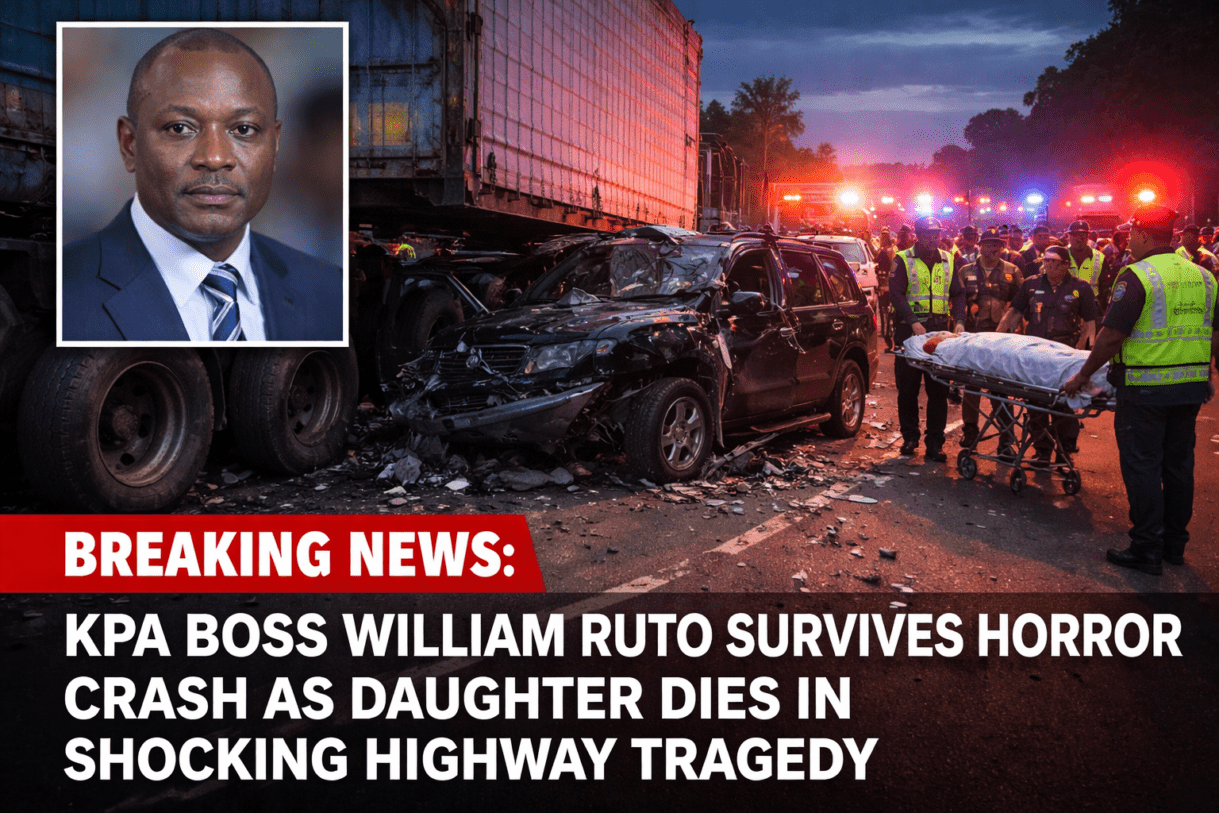
Kenya has been thrown into mourning following a tragic road accident involving Captain William K. Ruto, the Managing Director of the Kenya Ports Authority (KPA). The accident, which occurred along the busy Mombasa highway corridor in Taita Taveta County, has left one life lost—his daughter—and several others injured.
The incident has reignited concerns over road safety in Kenya, particularly along highways known for frequent fatal crashes involving heavy commercial vehicles.
What Exactly Happened?
According to preliminary reports, the KPA boss was traveling with family members on Friday, April 3, 2026, when their vehicle was involved in a catastrophic collision. The accident reportedly occurred when the vehicle slammed into a stationary trailer along the highway.
Early findings suggest that the trailer may have been improperly parked and lacked critical warning indicators such as hazard lights or reflective signage. This significantly reduced visibility, especially under low-light or high-speed conditions.
Authorities are still conducting a full investigation, but initial evidence points to a combination of poor road safety compliance and possibly limited reaction time as contributing factors.
The Human Cost: A Family Shattered
While Captain Ruto survived the crash, the most heartbreaking outcome was the death of his daughter. Her identity has not been widely publicized, likely out of respect for the family’s privacy during this painful period.
The Kenya Ports Authority released an official statement expressing profound grief and extending condolences to the bereaved family. The statement described the loss as “devastating” and asked the public to respect the family’s privacy as they process the tragedy.
For many Kenyans, the news has resonated deeply—not just because of Captain Ruto’s public profile, but because it reflects a broader national issue: the increasing number of fatal road accidents involving families.
Condition of Captain William Ruto
Despite the severity of the crash, Captain Ruto survived and is currently receiving medical care. Government officials, including Kipchumba Murkomen, have confirmed that he is in stable condition and out of immediate danger.
Medical teams are closely monitoring his recovery, and while the full extent of his injuries has not been publicly disclosed, sources indicate that he is responding well to treatment.
Other occupants of the vehicle, believed to be family members, also sustained injuries and are undergoing treatment in nearby medical facilities.
A Journey That Ended in Tragedy
Reports indicate that the family was traveling toward Arusha, possibly for the Easter holiday period. What was meant to be a routine cross-border trip turned into a nightmare within moments.
The stretch of road where the accident occurred has long been flagged as dangerous, particularly due to the frequent presence of heavy trucks and trailers, some of which are poorly maintained or improperly parked.
The Broader Issue: Kenya’s Road Safety Crisis
This tragic incident is not an isolated case. Kenya continues to grapple with a high rate of road accidents, many of which involve collisions with stationary or slow-moving trucks.
Common contributing factors include:
- Poorly marked or unlit trailers
- Driver fatigue
- Overspeeding
- Inadequate enforcement of traffic laws
- Poor road infrastructure in certain regions
The accident involving Captain Ruto has once again placed a spotlight on these systemic issues.
Stationary Trailers: A Silent Killer
One of the most alarming aspects of this crash is the alleged involvement of a stationary trailer without proper warning signals. This scenario has been responsible for numerous fatal accidents across Kenya.
Experts argue that stricter enforcement is needed to ensure that:
- All stationary vehicles are clearly marked
- Reflective materials and hazard lights are mandatory
- Off-road parking zones are properly designated and enforced
Without these measures, highways remain a ticking time bomb for unsuspecting motorists.
Public Reaction and National Sympathy
The news of the accident has sparked an outpouring of sympathy from Kenyans across the country. Social media platforms have been flooded with messages of condolence, prayers, and calls for improved road safety measures.
Many citizens have also used the moment to share personal stories of loss or near-misses on Kenyan roads, highlighting how widespread the issue has become.
Clarification: Not the President
It is important to clarify that Captain William K. Ruto is not William Ruto, the President of Kenya. The similarity in names has caused confusion in some quarters, but the two are entirely different individuals.
Captain Ruto is a senior executive in charge of the country’s port operations, a critical sector in Kenya’s economy.
Inside the Kenya Ports Authority
The Kenya Ports Authority plays a vital role in managing Kenya’s maritime infrastructure, including the Port of Mombasa—one of the busiest ports in East Africa.
Under Captain Ruto’s leadership, the authority has been instrumental in:
- Expanding port capacity
- Improving cargo handling efficiency
- Strengthening regional trade links
His temporary absence due to the accident may have operational implications, although the authority has assured the public that continuity plans are in place.
Investigations Underway
Authorities have launched a formal investigation into the crash. Key areas of focus include:
- The condition and positioning of the trailer
- Whether traffic laws were violated
- Road conditions at the time of the accident
- Possible mechanical issues with the vehicles involved
The findings of this investigation could have significant implications, particularly if negligence is established.
Calls for Accountability
Road safety advocates are calling for swift action and accountability. If the trailer was indeed improperly parked without hazard lights, the responsible parties could face legal consequences.
There is also growing pressure on authorities to:
- Increase highway patrol presence
- Enforce stricter penalties for violations
- Improve public awareness campaigns
A Wake-Up Call for Policy Reform
Tragedies like this often serve as catalysts for policy change. There is renewed urgency for the government to implement stricter road safety regulations and ensure they are consistently enforced.
Potential reforms being discussed include:
- Mandatory reflective markings for all heavy vehicles
- Real-time monitoring of highway conditions
- Enhanced driver training programs
- Investment in safer road infrastructure
The Emotional Toll
Beyond the policy discussions and public statements lies a deeply personal tragedy. Losing a child is an unimaginable pain, and for Captain Ruto and his family, the road to recovery will be long and difficult.
The nation mourns with them, but it also reflects on how such tragedies can be prevented in the future.
A Tragedy That Must Not Be Ignored
The road accident involving Captain William K. Ruto is a stark reminder of the dangers that lurk on Kenyan highways. While he survived, the loss of his daughter underscores the devastating human cost of road safety failures.
As investigations continue, one thing is clear: this tragedy must not be in vain. It should serve as a turning point—a moment when Kenya takes decisive action to make its roads safer for everyone.
SUGGESTED READS
- TICKING TIME BOMB: Iran Ceasefire Push Collides with U.S. War Threats
- London’s Secret Underground EXPOSED: 7 Abandoned Tube Stations Hidden Beneath Your Feet
- The Power of Kind Gestures: Meaningful Ways to Show Appreciation in Everyday Life
- Trump’s Ruthless Move: Pam Bondi Fired as Attorney General Overnight
- FBI Raid Rumors Explode in Memphis — Is Pooh Shiesty in Legal Trouble Again?

Support Our Website!
We appreciate your visit and hope you find our content valuable. If you’d like to support us further, please consider contributing through the TILL NUMBER: 9549825. Your support helps us keep delivering great content!
If you’d like to support Nabado from outside Kenya, we invite you to send your contributions through trusted third-party services such as Remitly, western union, SendWave, or WorldRemit. These platforms are reliable and convenient for international money transfers.
Please use the following details when sending your support:
Phone Number: +254701838999
Recipient Name: Peterson Getuma Okemwa
We sincerely appreciate your generosity and support. Thank you for being part of this journey!