

simply amazing, always for you.
Sustainability is no longer a distant concept reserved for activists or policymakers—it has become a necessary lifestyle shift for everyday people. With climate change, resource depletion, and pollution affecting communities worldwide, the home has emerged as one of the most critical starting points for meaningful environmental action.
The good news is this: you don’t need to overhaul your entire life overnight to make a difference. Eco-friendly living is built on small, consistent habits that, over time, create a powerful ripple effect. Whether you’re living in an apartment in the city or a house in the suburbs, adopting greener practices at home can reduce your carbon footprint, save money, and improve your overall quality of life.
This comprehensive guide explores practical, realistic, and impactful ways to make your home more eco-friendly—without unnecessary complexity or expense.
Why Eco-Friendly Living at Home Matters
Before diving into the “how,” it’s important to understand the “why.”
Your home is a major source of:
- Energy consumption
- Water usage
- Waste generation
- Chemical exposure
Collectively, households contribute significantly to environmental degradation. However, they also hold immense potential for positive change. When millions of homes adopt sustainable habits, the cumulative impact is enormous.
Eco-friendly living isn’t just about saving the planet—it’s also about:
- Lower utility bills
- Healthier indoor environments
- Reduced exposure to toxins
- Long-term financial savings
1. Reduce Energy Consumption Without Sacrificing Comfort
Energy efficiency is one of the fastest ways to make your home more sustainable.
Switch to Energy-Efficient Lighting
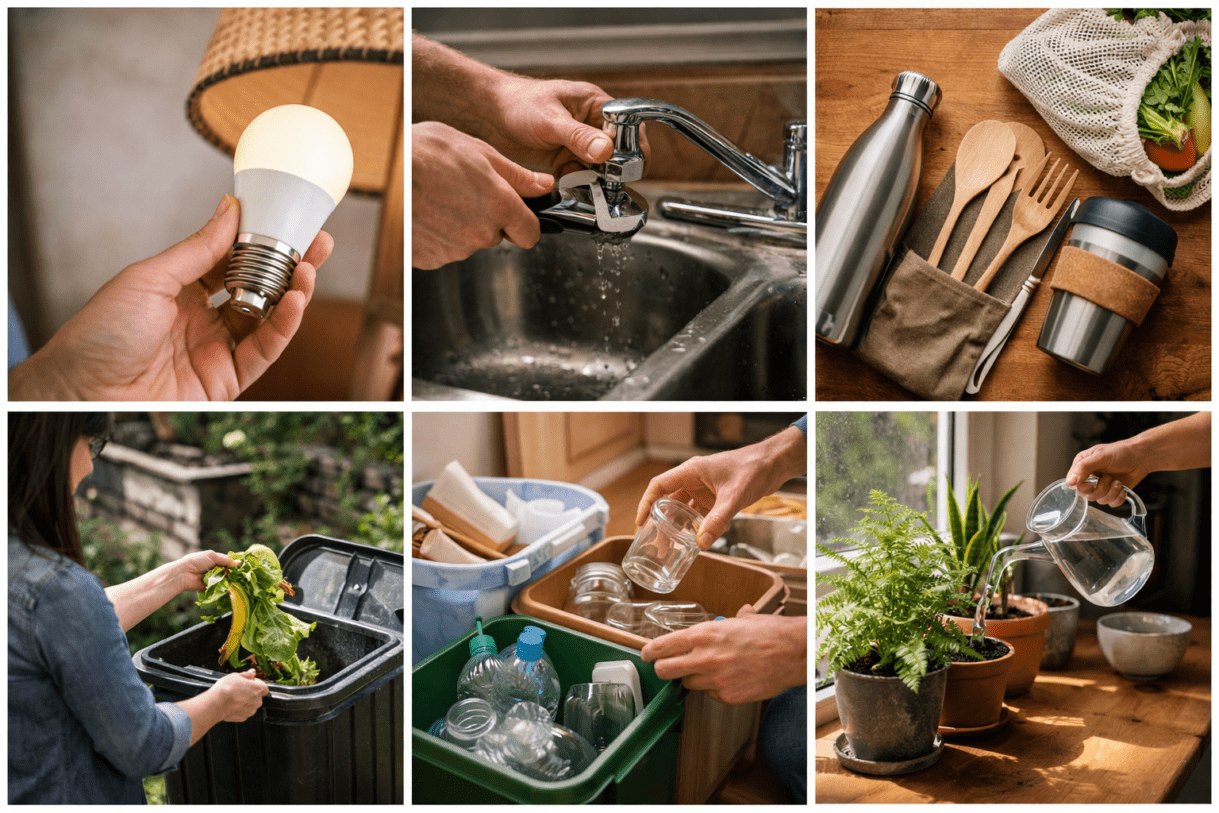
LED bulbs use far less electricity and last much longer than traditional bulbs. Replacing all your lighting may seem small, but it significantly reduces overall consumption.
Eliminate Phantom Energy
Even when turned off, many devices still draw power. This “phantom load” adds up over time.
Simple fix:
- Unplug devices when not in use
- Use power strips to switch off multiple electronics at once
Upgrade Appliances Strategically
You don’t need to replace everything immediately. Instead:
- Upgrade appliances when they break
- Choose energy-efficient models
- Prioritize high-usage items like refrigerators and washing machines
Optimize Natural Temperature Control
Instead of relying heavily on electricity:
- Open windows for ventilation
- Use curtains to block heat during the day
- Take advantage of natural cooling at night
2. Conserve Water: A Resource You Can’t Afford to Waste
Water conservation is critical, especially in regions facing periodic shortages.
Fix Leaks Immediately
A dripping tap might seem harmless, but it can waste thousands of liters annually.
Install Low-Flow Fixtures
These reduce water use without affecting performance.
Adopt Smarter Daily Habits
- Turn off taps while brushing teeth
- Use a basin when washing dishes
- Take shorter showers
Reuse Water Creatively
Greywater reuse is a simple but powerful practice:
- Use leftover water from rinsing vegetables for plants
- Collect rainwater for outdoor cleaning or gardening
3. Master the 3Rs: Reduce, Reuse, Recycle
Most people focus only on recycling—but the real impact starts earlier.
Reduce
Cutting consumption is the most effective strategy.
- Avoid impulse buying
- Choose minimal packaging
- Say no to single-use plastics
Reuse
Extend the life cycle of items:
- Use reusable shopping bags
- Repurpose glass jars
- Turn old clothes into cleaning cloths
Recycle
Recycling is important—but only when done correctly:
- Separate waste properly
- Clean recyclables before disposal
- Understand local recycling rules
4. Cut Down on Plastic Use
Plastic pollution is one of the most pressing environmental challenges today.
Simple Swaps That Make a Big Difference
- Replace plastic bags with cloth bags
- Carry a reusable water bottle
- Use reusable food containers
- Avoid plastic cutlery and straws
Be a Conscious Shopper
Look for:
- Products with biodegradable packaging
- Bulk purchase options
- Refillable containers
Reducing plastic isn’t about perfection—it’s about awareness and gradual improvement.
5. Build a Sustainable Kitchen
Your kitchen is a major source of waste and energy use.
Reduce Food Waste
Food waste contributes significantly to greenhouse gas emissions.
Solutions:
- Plan meals ahead
- Store food properly
- Use leftovers creatively
Composting
Turn organic waste into valuable compost:
- Fruit peels
- Vegetable scraps
- Coffee grounds
Even small-scale composting can significantly reduce household waste.
Adopt More Plant-Based Meals
Reducing meat consumption—even slightly—has a major environmental impact.
You don’t have to go fully vegetarian. Start with:
- Meat-free days
- Smaller portion sizes
- Plant-based alternatives
6. Choose Eco-Friendly Cleaning Products
Traditional cleaning products often contain harsh chemicals that harm both your health and the environment.
Better Alternatives
- Vinegar for cleaning surfaces
- Baking soda for scrubbing
- Lemon for natural disinfection
What to Avoid
- Aerosol sprays
- Bleach-heavy products
- Artificial fragrances
Switching to eco-friendly products reduces indoor air pollution and protects water systems.
7. Shop Smarter: Consume Less, Choose Better
Sustainable living is largely about mindful consumption.
Buy Durable Products
Cheap items often cost more in the long run due to frequent replacement.
Repair Instead of Replace
Before throwing something away, ask:
- Can it be fixed?
- Can it be repurposed?
Embrace Second-Hand Shopping
Buying used items:
- Reduces waste
- Saves money
- Extends product life cycles
Adopt Minimalism
Owning fewer, higher-quality items simplifies life and reduces environmental impact.
8. Create a Healthier Indoor Environment
Eco-friendly living also improves your personal well-being.
Maximize Natural Light
Reduce reliance on artificial lighting during the day.
Improve Air Quality
- Use indoor plants
- Ventilate rooms regularly
Avoid Synthetic Air Fresheners
These often contain harmful chemicals. Instead:
- Use essential oils
- Open windows for fresh air
9. Manage Waste Responsibly
Not all waste should go into your regular bin.
Separate Hazardous Waste
Includes:
- Batteries
- Electronics
- Chemicals
These require specialized disposal methods.
Dispose of E-Waste Properly
Old electronics contain harmful materials that should never be dumped in landfills.
Avoid Burning Trash
Burning waste releases toxic gases and contributes to air pollution.
10. Develop Sustainable Habits as a Household
Sustainability is easier when everyone participates.
Educate Family Members
Ensure everyone understands why these changes matter.
Set Clear Goals
Examples:
- Reduce electricity usage by 20%
- Cut plastic use in half
- Produce less weekly waste
Track Progress
Monitor:
- Utility bills
- Waste output
- Monthly consumption
This helps reinforce positive behavior.
11. Start with High-Impact Changes First
If you feel overwhelmed, focus on actions that deliver immediate results.
Top 5 Quick Wins
- Replace all bulbs with LED lighting
- Stop using single-use plastic bags
- Fix leaking taps immediately
- Begin waste separation
- Reduce shower time
These alone can significantly reduce your environmental footprint.
12. Save Money While Saving the Planet
One of the biggest misconceptions is that eco-friendly living is expensive.
In reality, it often leads to:
- Lower electricity bills
- Reduced water costs
- Less spending on disposable items
Sustainability is not just environmentally responsible—it’s financially smart.
13. Overcoming Common Challenges
“It’s too expensive”
Start small. Many eco-friendly habits cost nothing.
“It’s inconvenient”
New habits feel inconvenient at first but become second nature over time.
“I alone can’t make a difference”
Individual actions scale collectively. Every effort counts.
14. The Long-Term Impact of Eco-Friendly Living
When you adopt sustainable practices at home, you contribute to:
- Reduced carbon emissions
- Lower pollution levels
- Conservation of natural resources
More importantly, you set an example for others—family, friends, and your community.
15. Final Thoughts: Progress Over Perfection
Eco-friendly living is not about being perfect—it’s about being intentional.
You don’t need to eliminate all waste or achieve zero emissions overnight. Instead:
- Make better choices consistently
- Improve gradually
- Stay committed
Over time, these small actions compound into significant environmental impact.
Your home is more powerful than you think. It’s not just a place to live—it’s a starting point for change.
By reducing energy use, conserving water, minimizing waste, and making smarter consumption choices, you can transform your household into a model of sustainability. The journey may begin with small steps, but the impact reaches far beyond your front door.
Eco-friendly living is not a trend—it’s the future. And it starts with you.
SUGGESTED READS
- Scientists Finally Reveal Why You Dream — And Why Your Brain Erases It Instantly
- The World Is Drowning in Waste — Why Recycling Is No Longer Optional
- London’s Secret Underground EXPOSED: 7 Abandoned Tube Stations Hidden Beneath Your Feet
- The Illusion of Friendship: Understanding the Painful Realization That Some Bonds Were Never Genuine
- The Power of Calmness: How Inner Peace Leads to Clear Thinking and Better Decisions
- As Long as You Know Your Heart and Intentions Are Pure, Don’t Explain Yourself to Anyone
- The Strength in Smiles: A Tribute to Resilient Souls Who Have Been Through a Lot
- Embracing Imperfection: Why Making Mistakes is Better Than Faking Perfection

Support Our Website!
We appreciate your visit and hope you find our content valuable. If you’d like to support us further, please consider contributing through the TILL NUMBER: 9549825. Your support helps us keep delivering great content!
If you’d like to support Nabado from outside Kenya, we invite you to send your contributions through trusted third-party services such as Remitly, western union, SendWave, or WorldRemit. These platforms are reliable and convenient for international money transfers.
Please use the following details when sending your support:
Phone Number: +254701838999
Recipient Name: Peterson Getuma Okemwa
We sincerely appreciate your generosity and support. Thank you for being part of this journey!