

simply amazing, always for you.
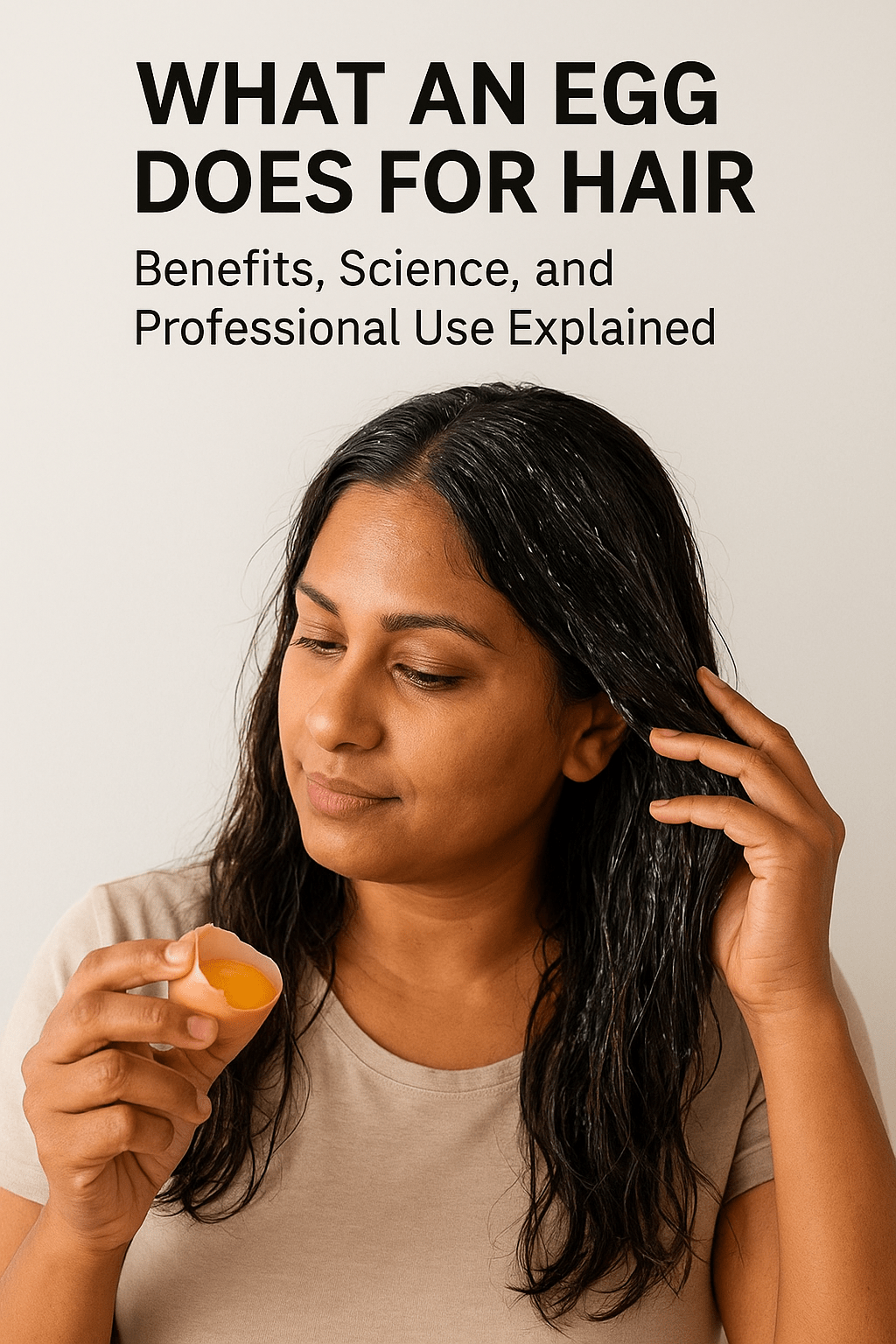
For decades, eggs have been used as a natural remedy to improve hair strength, texture, and overall appearance. While the practice appears traditional, the science behind egg-based hair treatments is compelling. Eggs contain proteins, amino acids, vitamins, minerals, and healthy fats that interact with the hair shaft and scalp in highly beneficial ways.
This guide provides a detailed, professional, and research-informed explanation of how eggs affect hair, who benefits most from egg treatments, how to use them correctly, and the common mistakes to avoid. It is suitable for salons, beauty professionals, dermatology practitioners, product developers, and individuals seeking an accurate, evidence-backed understanding.
1. Understanding the Composition of an Egg and Why It Matters for Hair Health

The effectiveness of an egg as a hair treatment lies in its unique biochemical composition. Each part of the egg—yolk, white, and shell membrane—offers distinct properties.

1.1 Proteins (40 types in total)
Proteins form the core structure of hair, which is made primarily of keratin. Eggs contain albumin, globulin, ovomucin, and other proteins that can temporarily bind to damaged areas of the hair shaft.
These proteins support:
- Strengthening weakened strands
- Improving elasticity
- Reducing breakage
- Replenishing lost keratin-like elements in damaged hair
1.2 Healthy Fats
The yolk contains naturally occurring fats, including triglycerides and phospholipids, which behave as emollients. They:
- Coat the hair
- Seal the cuticle
- Improve shine
- Increase softness
1.3 Vitamins A, D, E, B12, and Biotin
These vitamins contribute to:
- Moisture retention
- Scalp nourishment
- Oxidative protection
- Follicle support
Biotin, in particular, supports keratin infrastructure, which improves the thickness and durability of hair.
1.4 Minerals (Zinc, Selenium, Iron, Phosphorus)
Minerals play crucial roles in scalp health, follicle metabolism, and the prevention of excessive shedding.

In short, an egg acts both as a protein treatment and a moisture treatment, depending on how it is used.
2. Professional Breakdown: What Exactly an Egg Does for Hair
Below is a detailed explanation of the primary benefits eggs provide:
2.1 Strengthens the Hair Shaft
Because hair is made of keratin, external protein sources are valuable—especially for damaged hair. When applied topically, egg proteins bind to the porous, weakened segments of the strand, improving tensile strength.
Professionally, this is regarded as a mild, natural version of a protein reconstruction treatment.
Who benefits most?
- Chemically treated hair (relaxed, dyed, bleached)
- Heat-damaged hair
- Hair that breaks easily
- Fine or thinning hair
The strengthening effect is temporary but effective when applied consistently.
2.2 Enhances Shine and Smoothness
Egg yolk contains lecithin, a phospholipid with excellent conditioning properties. Lecithin smooths the hair cuticle, making strands:
- Reflect light more efficiently
- Feel softer
- Tangle less
- Appear healthier
Professionally, this mimics the smoothing effect found in high-quality conditioners.
2.3 Deep Moisturization for Dry and Brittle Hair
The fatty acids in the yolk create a natural moisture barrier. They fill in gaps in the cuticle and prevent excessive moisture loss. This leads to:
- Reduced dryness
- Increased softness
- Improved manageability
- Lower frizz levels
This benefit is particularly important for African hair types, high-porosity hair, and naturally curly or kinky hair that loses moisture quickly.
2.4 Support for Scalp Health and Stronger Roots
Eggs contain biotin, sulfur, and antioxidants that support the scalp environment. While eggs do not directly cause rapid hair growth, they help create favorable conditions for growth.
Benefits include:
- Reduced scalp dryness
- Improved follicle nourishment
- Healthier hair production
- Reduced shedding
This makes eggs a complementary support ingredient in a holistic hair-care routine.
2.5 Helps Balance Oil Levels
Egg whites contain enzymes that can gently remove excess oil from the scalp. This is beneficial for individuals who struggle with:
- Greasy hair
- Oily scalp buildup
- Heavy product usage
Egg white masks offer a mild clarifying effect without stripping the scalp.
3. How to Use Eggs on Hair (According to Your Hair Type)
Professional results depend on tailoring the egg treatment to the needs of the hair.
3.1 For Dry, Damaged, or Frizzy Hair: Yolk Only
Why?
The yolk is deeply moisturizing and restorative.
Method:
- Beat 1–2 egg yolks
- Optional: Add 1 tablespoon olive oil, coconut oil, or honey
- Apply from mid-length to ends
- Leave for 20–30 minutes
- Rinse with cool water
- Shampoo lightly if needed
3.2 For Oily Scalp or Limp Hair: Egg White Only
Why?
Egg whites help break down excess sebum and lightly tighten the scalp.
Method:
- Whisk egg white until slightly foamy
- Apply to the scalp
- Leave for 15–20 minutes
- Rinse thoroughly
- Follow with a light conditioner on the ends only
3.3 For Normal Hair: Whole Egg Treatment
Using the entire egg offers a balanced protein-and-moisture treatment.
Method:
- Beat 1–2 whole eggs
- Apply from roots to ends
- Leave for 20 minutes
- Rinse with cool water
- Shampoo once if necessary
4. How Often to Use Eggs in Hair
Professional recommendations vary based on hair condition:
Dry or Damaged Hair:
Once per week
Normal Hair:
Every two weeks
Oily Hair:
Once per month
Important:
Overusing eggs can lead to protein overload, which makes hair feel stiff or overly hard.
5. Common Mistakes to Avoid When Using Eggs in Hair
Ensuring proper technique prevents complications.
5.1 Using Hot Water
Hot water can cook the egg, making it difficult to wash out.
Always use cool or lukewarm water.
5.2 Applying Eggs Too Frequently
This may lead to protein buildup, resulting in stiff, straw-like hair.
5.3 Not Rinsing Properly
Egg residue can cause odor or buildup if not washed out thoroughly.
5.4 Using Eggs on Protein-Sensitive Hair
Some hair types react poorly to protein treatments. Always test gradually.
6. Professional Comparison: Eggs vs. Commercial Hair Treatments
Eggs offer natural benefits but differ from salon-grade products.
Strength
Eggs provide mild protein reinforcement—not as strong as keratin reconstructor products.
Moisture
Yolks deliver excellent moisture but lack the long-lasting sealing power of silicone conditioners.
Safety
Eggs are natural and free of harsh chemicals, making them suitable for sensitive users.
Cost
They are significantly cheaper than commercial treatments.
Effectiveness
For mild to moderate damage, eggs are highly effective.
For severe damage (over-bleached hair), professional products may be required.
7. Who Should Use Egg Hair Treatments?
Beneficial for:
- Dry, brittle, or frizzy hair
- Chemically treated hair
- Natural African hair
- Curly or coily hair
- Individuals with mild shedding
- Oily or product-loaded scalps
Not recommended for:
- Those sensitive to protein
- Very fine, easily weighed-down hair
- Individuals allergic to eggs
- Those who dislike strong natural smells
8. Recommended Professional Egg Mask Formulations
Moisture + Protein Repair Mask
- 1 whole egg
- 1 tablespoon olive oil
- 1 teaspoon honey
- 1 tablespoon plain yogurt
Oily Scalp Balancing Mask
- 1 egg white
- Juice of half a lemon
- 1 teaspoon aloe gel
Shine and Softness Treatment
- 2 egg yolks
- 1 tablespoon coconut milk
- 1 teaspoon castor oil
9. Professional Assessment
Eggs offer a practical, science-backed, and cost-effective method for improving hair texture, strength, shine, and scalp health. While not a replacement for advanced salon treatments, eggs remain a highly beneficial natural solution when used correctly and consistently.
They are especially valuable for individuals seeking a balanced, protein-and-moisture hair treatment that enhances hair health without harsh chemicals.
SUGGESTED READS
- THE BIRTH OF THE AK-47: A STORY OF WAR, WOUNDS, AND ONE MAN’S OBSESSION
- Why the Pacific Ocean and the Atlantic Ocean Seem Not to Mix: The Science, the History, and the Myth
- The Ocean’s Role in Climate Change: A Vital Regulator Under Threat
- The Invention of the Telephone
- The Evolution of Schools: Who Invented School?

Support Our Website!
We appreciate your visit and hope you find our content valuable. If you’d like to support us further, please consider contributing through the TILL NUMBER: 9549825. Your support helps us keep delivering great content!
If you’d like to support Nabado from outside Kenya, we invite you to send your contributions through trusted third-party services such as Remitly, western union, SendWave, or WorldRemit. These platforms are reliable and convenient for international money transfers.
Please use the following details when sending your support:
Phone Number: +254701838999
Recipient Name: Peterson Getuma Okemwa
We sincerely appreciate your generosity and support. Thank you for being part of this journey!