

simply amazing, always for you.
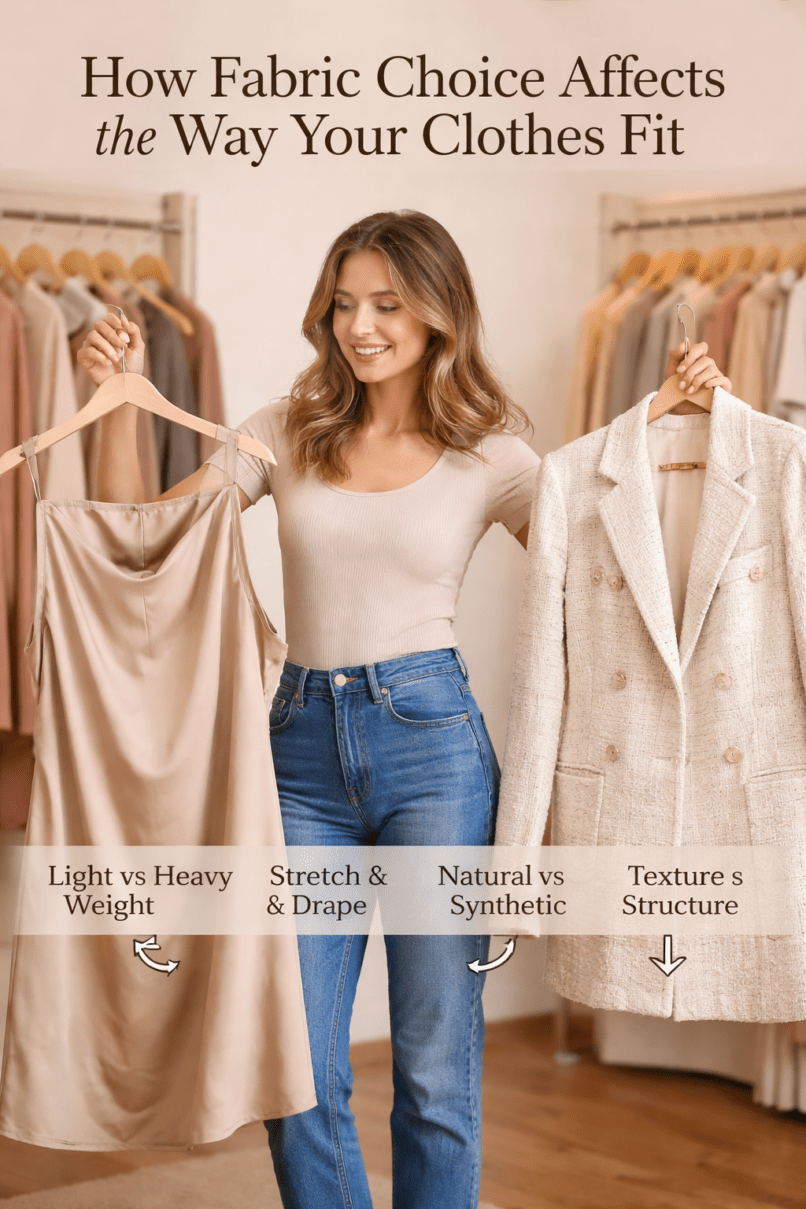
When people talk about fit, they usually focus on size, tailoring, or body shape. But in garment construction and apparel design, fabric selection is just as critical—sometimes even more important. Two garments cut from the exact same pattern can fit completely differently depending on the textile used.
Understanding how fabric choice affects the way your clothes fit is not just a matter of fashion—it’s a matter of physics, fiber science, and garment engineering. If you’ve ever wondered why one pair of trousers hugs your frame perfectly while another in the same size feels stiff and awkward, fabric is likely the reason.
This article breaks down the technical and practical reasons fabric choice determines drape, structure, stretch, comfort, and overall silhouette.
1. Fabric Weight: The Foundation of Fit
Fabric weight, typically measured in GSM (grams per square meter), directly influences how a garment sits on your body.
Lightweight Fabrics (Under 150 GSM)
Examples:
- Chiffon
- Lightweight cotton voile
- Silk crepe
Lightweight fabrics tend to:
- Drape closely to the body
- Reveal contours and undergarments
- Move fluidly
These fabrics create a softer, more body-skimming fit. However, they also magnify construction flaws and can cling in unwanted areas.
Midweight Fabrics (150–300 GSM)
Examples:
- Standard cotton shirting
- Poplin
- Light denim
Midweight fabrics provide:
- Balanced structure
- Moderate drape
- Everyday versatility
Most ready-to-wear garments fall into this category because it offers predictable shaping and ease.
Heavyweight Fabrics (300+ GSM)
Examples:
- Heavy denim
- Wool coating
- Structured twill
Heavy fabrics:
- Hold their shape
- Add bulk
- Create architectural silhouettes
A blazer made from heavyweight wool will maintain sharp lapels and defined shoulders, while a blazer made from lightweight linen will collapse more easily.
2. Fiber Content: Natural vs Synthetic vs Blended
The fiber composition determines elasticity, breathability, and recovery—three core factors in how a garment fits over time.
Natural Fibers
- Cotton
- Wool
- Linen
- Silk
Natural fibers generally:
- Breathe well
- Absorb moisture
- Have limited natural stretch (except wool)
Cotton trousers without elastane will not stretch significantly. If they fit tightly in the fitting room, they will likely remain tight.
Synthetic Fibers
- Polyester
- Nylon
- Acrylic
Synthetics are engineered for:
- Durability
- Shape retention
- Wrinkle resistance
However, pure synthetics without stretch can feel rigid. Polyester blouses often maintain structure better than silk ones but may not contour as softly.
Blends
Adding 2–5% elastane (spandex) dramatically changes fit dynamics. Even small percentages improve:
- Flexibility
- Recovery
- Comfort during movement
This is why modern denim often fits more comfortably than vintage rigid denim.
3. Stretch and Recovery: Why Some Clothes “Bounce Back”
Stretch determines how a garment accommodates movement. Recovery determines whether it returns to its original shape.
There are three main categories:
1. Non-Stretch Woven Fabrics
- No give unless cut on bias
- Precise tailoring required
- Structured silhouettes
Example: Traditional suiting wool.
2. Mechanical Stretch Fabrics
- Stretch due to weave construction
- Moderate flexibility
- Better comfort without synthetic fibers
Example: Stretch twill without elastane.
3. Knit Fabrics
- Naturally stretch due to looped construction
- Body-hugging
- Flexible and forgiving
A knit dress will conform to curves more than a woven one. That is structural—not sizing—difference.
4. Drape: The Silent Architect of Silhouette
Drape refers to how fabric hangs under its own weight.
High-drape fabrics:
- Silk satin
- Rayon
- Viscose
Low-drape fabrics:
- Canvas
- Structured cotton
- Organza
High-drape fabrics create flow and softness. Low-drape fabrics create volume and shape.
For example:
A flowing maxi dress in viscose will cascade around the body. The same dress in stiff cotton will flare outward and appear larger.
5. Fabric Structure: Woven vs Knit
Woven Fabrics
- Created by interlacing warp and weft threads
- Less stretch
- Cleaner lines
Best for:
- Tailored trousers
- Blazers
- Button-down shirts
Knit Fabrics
- Created by looping yarn
- Highly stretchable
- Contour closely
Best for:
- T-shirts
- Bodycon dresses
- Loungewear
This is why bodycon silhouettes depend on knit construction rather than woven fabrics.
6. Thickness and Bulk: Why Some Clothes Add Visual Weight
Thickness affects how seams sit and how garments layer.
Thick fabrics:
- Add volume
- Make tailoring appear sharper
- Can restrict movement
Thin fabrics:
- Layer easily
- Show seam lines
- Reveal understructures
Winter coats use thick wool to create strong shoulder lines and insulation. Summer shirts use thin cotton to reduce bulk and heat retention.
7. Texture and Surface Finish
Surface texture influences perceived fit.
- Smooth fabrics look sleek and fitted
- Textured fabrics appear looser
- Ribbed knits visually contour
For example:
A ribbed knit dress visually narrows the waist because the vertical texture draws the eye inward.
8. Fabric Shrinkage and Post-Wash Behavior
Fit is not static.
Natural fibers like cotton and linen shrink if not pre-shrunk. A perfectly fitted cotton shirt can tighten after washing.
Synthetic blends are more dimensionally stable and maintain original measurements.
Always check:
- Pre-shrunk labeling
- Washing instructions
- Fabric composition percentages
9. Climate and Environment
Fabric choice also affects how fit feels—not just how it looks.
In humid climates:
- Heavy polyester may cling
- Breathable cotton feels more comfortable
In cooler climates:
- Wool maintains structure and warmth
- Thin fabrics collapse under layering
Fit comfort depends heavily on environmental context.
10. Pattern Cutting and Fabric Compatibility
Professional pattern makers design garments for specific fabrics.
A structured blazer pattern will not translate well into stretch jersey. The pattern assumes:
- Seam allowances
- Ease measurements
- Structural reinforcement
Changing fabric without adjusting the pattern often results in poor fit.
11. Why Two Identical Sizes Fit Differently
You may buy two size “M” dresses that fit completely differently.
Reasons:
- One uses stretch knit
- One uses rigid woven
- Different drape
- Different GSM
- Different shrinkage rates
Size labeling does not account for fabric behavior.
12. Fabric Choice and Body Types
Different fabrics flatter different body structures.
- Structured fabrics define shape
- Stretch fabrics enhance curves
- Flowing fabrics soften lines
- Thick fabrics conceal
Choosing fabric strategically allows you to control silhouette rather than rely solely on size.
13. The Psychological Effect of Fabric
Fabric also influences perception.
- Structured wool suits signal authority
- Flowing silk dresses suggest elegance
- Heavy denim feels durable and grounded
- Soft knits feel casual and relaxed
Fit perception is partially psychological.
14. Common Fabric Mistakes That Ruin Fit
- Choosing rigid denim for a tight silhouette
- Buying thin fabric expecting structure
- Ignoring stretch percentage
- Not accounting for shrinkage
- Mixing incompatible layering weights
15. How to Choose the Right Fabric for Better Fit
Before purchasing:
- Check fiber composition
- Assess stretch by gently pulling fabric
- Hold garment up to see drape
- Feel thickness and density
- Read care label for shrinkage risk
Understanding fabric behavior reduces returns and disappointment.
Fabric is not just material—it is architecture.
Fit is a function of:
- Fiber
- Weight
- Stretch
- Drape
- Construction
- Environment
Two garments can share identical measurements yet fit completely differently because fabric determines how those measurements behave in real-world movement.
If you want clothes that fit better, stop focusing only on size. Start evaluating fabric with the same scrutiny designers and tailors use.
That is where true fit begins.
SUGGESTED READS
- Before You Wear That Bodycon Dress, Read This
- The Hidden Rules of Wearing Leggings in Public: What No One Tells You
- Which Underwear Is Healthier for Daily Wear — Seamless or Cotton?
- How to Get Rid of Visible Panty Lines for Good — Smart, Comfortable Solutions
- Why Do Ladies Show Pant Lines? The Honest Truth No One Talks About

Support Our Website!
We appreciate your visit and hope you find our content valuable. If you’d like to support us further, please consider contributing through the TILL NUMBER: 9549825. Your support helps us keep delivering great content!
If you’d like to support Nabado from outside Kenya, we invite you to send your contributions through trusted third-party services such as Remitly, western union, SendWave, or WorldRemit. These platforms are reliable and convenient for international money transfers.
Please use the following details when sending your support:
Phone Number: +254701838999
Recipient Name: Peterson Getuma Okemwa
We sincerely appreciate your generosity and support. Thank you for being part of this journey!