

simply amazing, always for you.
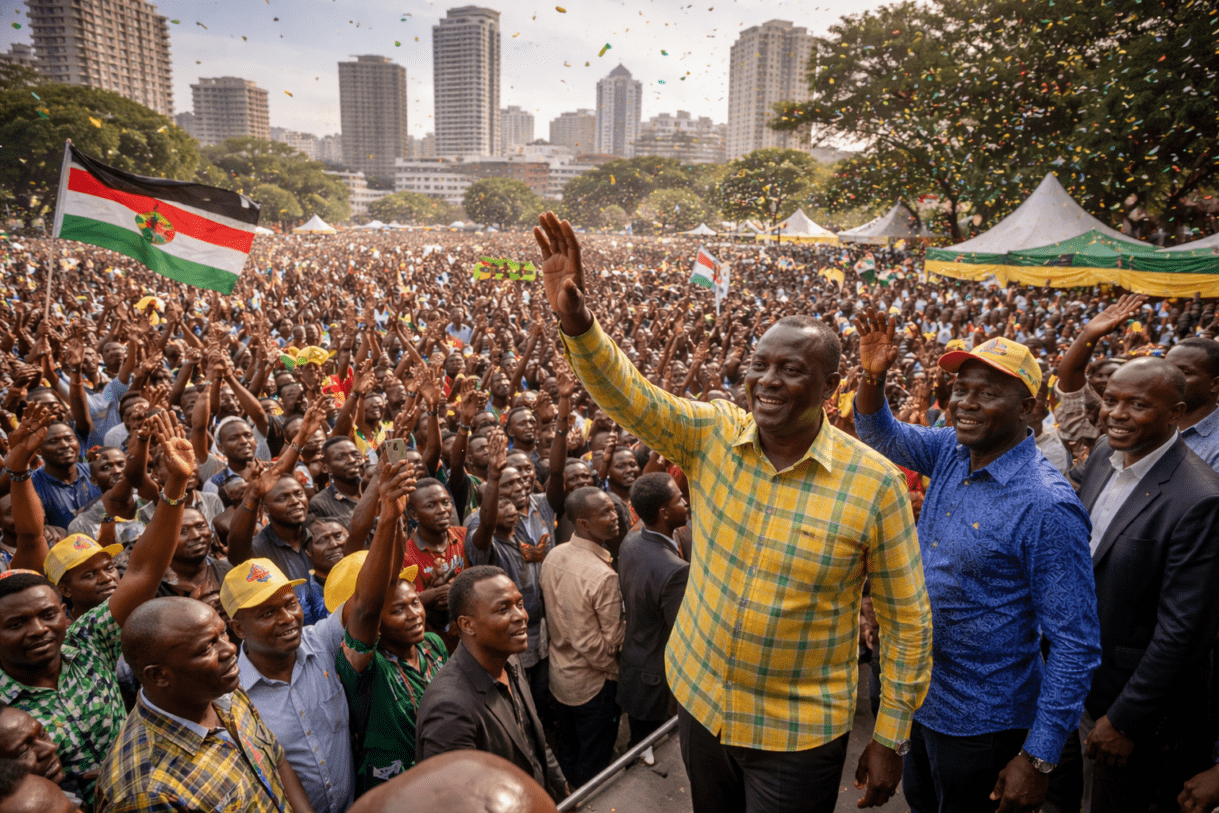
Nairobi, Kenya — Kenya’s political landscape is entering a decisive and increasingly volatile phase, with early maneuvers toward the 2027 general election now dominating national conversation. From internal party elections and coalition realignments to constitutional warnings and mounting public unease, the signals are clear: the race for Kenya’s future has effectively begun.
While the next election is still over a year away, political actors across the divide are already positioning themselves, triggering intense debate about governance, legitimacy, and the direction of the country.
Ruto’s UDA Faces Its Biggest Internal Test Yet
At the heart of current political developments is the ruling United Democratic Alliance (UDA), which has embarked on grassroots party elections, particularly in the vote-rich Mt Kenya and Rift Valley regions.
For President William Ruto, these internal polls are more than routine party housekeeping. They represent a strategic effort to consolidate control, neutralize dissent, and reaffirm loyalty within regions that were instrumental to his 2022 victory.
Political analysts note that Mt Kenya, once perceived as politically unified, has become increasingly fragmented, with competing interests and emerging power centers. The UDA grassroots elections are therefore being closely watched as a barometer of whether President Ruto can retain firm control of his political base—or whether cracks are beginning to show.
Behind the scenes, opinion polling, party discipline, and loyalty tests are shaping candidate selections, underscoring how early the ruling party is preparing for 2027.
Coalition Talks Signal a Major Political Realignment
Perhaps the most surprising political development gaining traction is the quiet but consequential dialogue around a possible UDA–ODM coalition.
If formalized, such an alliance would represent one of the most significant political realignments in Kenya’s recent history, bringing together former rivals and reshaping the opposition–government divide.
Supporters argue that a broad coalition could stabilize governance and reduce political polarization. Critics, however, warn that such arrangements risk weakening democratic accountability by blurring the lines between government and opposition.
Regardless of outcome, the very existence of these talks reflects a deeper political reality: traditional alliances are no longer guaranteed, and survival politics is driving unprecedented pragmatism among Kenya’s elite.
Opposition Strategy: Delay, Regroup, or Risk Fragmentation
Within the opposition, debate is intensifying over whether to name a presidential candidate early or delay until closer to 2027.
Some opposition leaders argue that announcing a flagbearer too soon would give President Ruto time to politically neutralize the candidate through sustained attacks or co-optation. Others believe prolonged indecision risks demoralizing supporters and reinforcing perceptions of disunity.
This strategic dilemma highlights a recurring weakness in Kenya’s opposition politics—balancing unity with timing. As history has shown, fractured opposition coalitions often struggle to unseat well-organized incumbents.
Constitutional Warnings Raise Alarm Over 2027 Elections
Adding urgency to the political moment are serious constitutional and institutional warnings about Kenya’s readiness to conduct credible elections in 2027.
Senior government figures and governors have openly cautioned that unresolved issues—particularly the reconstitution of the Independent Electoral and Boundaries Commission (IEBC) and stalled constituency boundary reviews—could undermine the legality of future elections.
These warnings have reignited memories of past electoral crises, where institutional failures fueled political instability and public mistrust. Civil society groups are now calling for immediate reforms, arguing that postponing action risks pushing the country toward a constitutional dead end.
The question many Kenyans are asking is no longer whether reforms are needed, but whether political goodwill exists to implement them in time.
Rising Tensions Within Government Ranks
Recent public disagreements among senior government officials have further fueled political intrigue.
Statements criticizing the involvement of foreign governments in domestic political debates have exposed underlying tensions within the ruling coalition. While publicly framed as policy disagreements, such exchanges are widely interpreted as early positioning for future power contests.
These internal frictions challenge the image of unity the government seeks to project and suggest that behind-the-scenes rivalry is intensifying as 2027 approaches.
Gender, Violence, and the Cost of Political Participation
Another issue gaining prominence is the increasing focus on gender-based political violence and exclusion.
As more women signal interest in elective positions, concerns are growing about intimidation, harassment, and systemic barriers that discourage female participation in politics. Advocacy groups argue that unless these challenges are addressed urgently, Kenya risks reversing gains made in gender representation.
This conversation reflects a broader societal reckoning about who gets to participate in power—and at what cost.
Public Sentiment: Fatigue, Frustration, and Digital Activism
On social media and digital platforms, political engagement remains intense, especially among younger Kenyans. While large-scale protest hashtags may ebb and flow, underlying frustrations around economic hardship, governance, and accountability remain deeply rooted.
Political messaging has increasingly shifted online, where narratives are shaped in real time and reputations can rise or fall overnight. Analysts note that digital discourse is now a central battleground, capable of influencing voter perception long before campaign season officially begins.
Ruto’s Call for Political “Ceasefire”
Against this backdrop of rising tension, President Ruto has publicly called for a toning down of divisive political rhetoric, urging leaders to focus on development and unity.
Supporters view this as a statesmanlike appeal for stability. Critics, however, argue that calls for calm often emerge precisely when political pressure is mounting, and they question whether rhetoric will translate into tangible reforms.
The Bigger Picture: Kenya at a Political Crossroads
What makes this moment particularly consequential is the convergence of early campaigning, institutional uncertainty, coalition politics, and public discontent.
Kenya stands at a crossroads where decisions made in the coming months—about electoral reforms, party discipline, and political inclusivity—will shape not just the 2027 election, but the country’s democratic trajectory for years to come.
One thing is certain: the political calm of the immediate post-election period is over. The battle lines are forming, alliances are shifting, and Kenya’s political temperature is rising fast.

Support Our Website!
We appreciate your visit and hope you find our content valuable. If you’d like to support us further, please consider contributing through the TILL NUMBER: 9549825. Your support helps us keep delivering great content!
If you’d like to support Nabado from outside Kenya, we invite you to send your contributions through trusted third-party services such as Remitly, western union, SendWave, or WorldRemit. These platforms are reliable and convenient for international money transfers.
Please use the following details when sending your support:
Phone Number: +254701838999
Recipient Name: Peterson Getuma Okemwa
We sincerely appreciate your generosity and support. Thank you for being part of this journey!