

simply amazing, always for you.
A Generation That Refused to Stay Silent
Kenya’s political history is often told through the names of presidents, liberation heroes, and party bosses. It is narrated through constitutional amendments, disputed elections, and elite power struggles. But beneath that familiar surface runs another story—one that rarely makes it into textbooks or official speeches.
It is the story of young people.
Not just as voters. Not just as protesters. But as organizers, strategists, cultural producers, digital warriors, community mobilizers, and moral agitators who have repeatedly reshaped Kenya’s political direction, often without formal recognition.
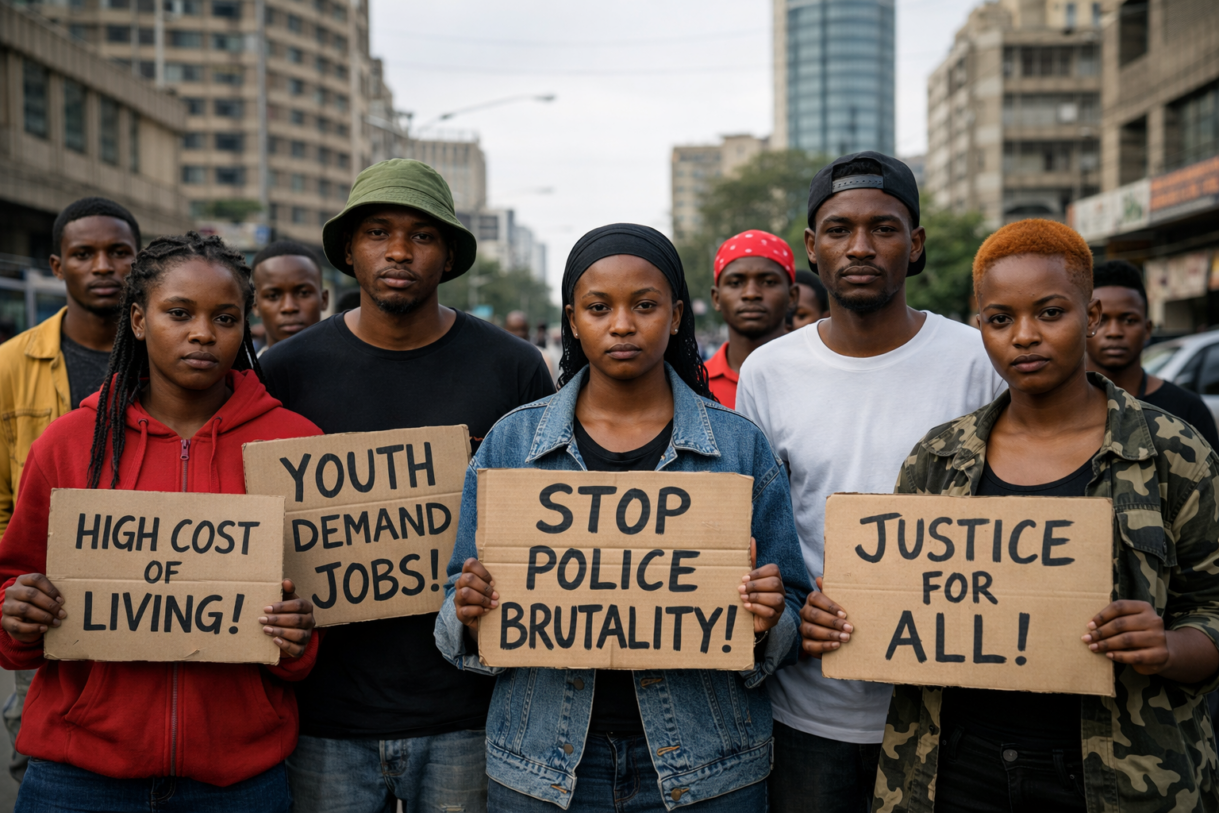
From the underground student movements of the 1990s, to the reform-driven youth activism of the 2000s, to today’s decentralized, social-media-powered mobilization, Kenyan youth have been central to nearly every major shift in public life.
Yet their role is usually minimized or distorted. When young people protest, they are labeled “rowdy.” When they organize, they are accused of being sponsored. When they articulate policy demands, they are told to wait their turn.
This article tells the deeper story.
It traces how youth movements in modern Kenya evolved, what fuels them, how they operate, why they matter, and why their influence is likely to grow rather than fade.
This is not a romanticized account. It is a realistic one—full of contradictions, failures, internal divisions, and hard-earned victories.
It is the untold story of how a generation quietly became a political force.
1. The Demographic Reality: Why Youth Power Is Structural, Not Symbolic
Kenya is a young country.
More than 70 percent of the population is under 35. This fact alone reshapes everything—from consumption patterns to cultural trends to electoral arithmetic.
But demographic weight does not automatically translate into political power.
For decades, Kenyan youth were numerically dominant but institutionally weak. They were present in rallies but absent from negotiation rooms. Mobilized for voting but excluded from agenda-setting.
What changed was not just numbers.
What changed was consciousness.
Young people began to see themselves not merely as future leaders, but as present stakeholders. They started framing politics not as a distant elite game, but as something that directly determines whether they eat, find work, access healthcare, or live in dignity.
This shift from symbolic presence to political self-awareness is the foundation of modern youth movements.
2. The 1990s: Student Activism and the Seeds of Resistance
To understand today’s youth movements, one must return to the university campuses of the early 1990s.
At that time, Kenya was under a de facto one-party system transitioning under pressure toward multiparty politics. Dissent was dangerous. Surveillance was common. Detention without trial was real.
Universities became incubators of resistance.
Students organized underground study circles, produced pamphlets, held clandestine meetings, and staged boycotts. They demanded:
- Multiparty democracy
- Academic freedom
- End to political detentions
- Freedom of expression
Campus protests were often met with brutal crackdowns. Universities were closed repeatedly. Student leaders were expelled, arrested, or forced into exile.
Yet the movements persisted.
These student activists forged networks that later fed into civil society, media, and opposition politics. Many prominent reformists of the 2000s trace their political roots to this era.
The lesson of the 1990s youth movement was simple: even under repression, organized young people could destabilize authoritarian control.
That lesson never disappeared.
3. The 2000s: Youth as Reform Foot Soldiers
The defeat of KANU in 2002 is often credited to elite opposition unity. But beneath that alliance was massive youth mobilization.
Young people:
- Registered voters in record numbers
- Campaigned door-to-door
- Organized rallies
- Served as polling agents
This period produced a new identity: youth as reform foot soldiers.
However, after the victory, many young activists discovered a painful truth.
They were useful during elections but disposable afterward.
Government appointments went largely to older political elites. Promised youth inclusion rarely materialized. Unemployment remained high. Corruption scandals multiplied.
This betrayal produced cynicism.
But it also produced something more important: political maturity.
Young activists began realizing that real power does not come from cheering at rallies. It comes from building independent platforms, issue-based movements, and long-term structures.
4. The 2010 Constitution: A Youth-Won Framework
Kenya’s 2010 Constitution is widely celebrated as a progressive charter.
Less acknowledged is how deeply youth activism shaped it.
Young people participated in:
- Civic education campaigns
- Constitution drafting forums
- Referendum mobilization
- Online debates and content creation
The Constitution introduced:
- Expanded Bill of Rights
- Devolution
- Public participation
- Leadership and integrity clauses
- Recognition of youth as a special interest group
These provisions did not fall from the sky.
They were demanded.
The Constitution gave youth movements a new legal language. Instead of merely protesting, young people could now anchor their demands in constitutional rights.
This transformed activism from moral appeal to legal argument.
5. Social Media and the Birth of Digital Activism
The explosion of smartphones and affordable data in the 2010s changed everything.
For the first time, young Kenyans could:
- Publish without editors
- Organize without physical offices
- Fundraise without traditional donors
- Mobilize within hours
Hashtags became organizing tools.
Twitter spaces became town halls.
TikTok became political education for millions.
Digital activism lowered entry barriers. One did not need party connections or wealth to influence discourse. What mattered was clarity, consistency, and credibility.
This produced a new type of activist:
- Anonymous but influential
- Issue-focused rather than party-loyal
- Highly networked but loosely structured
Power became decentralized.
No single leader could easily be co-opted or silenced.
6. Issue-Based Movements Replace Personality Politics
Earlier Kenyan politics revolved around personalities.
Modern youth movements revolve around issues.
Common focal points include:
- Cost of living
- Police brutality
- Youth unemployment
- Public debt
- Taxation
- Corruption
- Environmental destruction
This shift is crucial.
When movements are built around individuals, removing the individual collapses the movement.
When movements are built around issues, they persist.
Youth activists deliberately avoid over-personalization. They emphasize shared grievances rather than charismatic leadership.
This frustrates traditional politicians who prefer negotiating with identifiable leaders.
But it makes movements more resilient.
7. The Culture of Horizontal Organizing
Most youth movements today reject rigid hierarchies.
Instead, they operate through:
- WhatsApp groups
- Telegram channels
- Twitter lists
- Community hubs
- Ad hoc committees
Decisions are often messy. Debates are constant. Splits happen.
Yet this horizontal structure offers advantages:
- No single point of failure
- Harder to infiltrate
- Faster mobilization
- Greater sense of ownership
Everyone feels like a stakeholder.
This sense of collective ownership fuels endurance.
8. Art, Music, and Fashion as Political Weapons
Youth movements in Kenya are not confined to placards and petitions.
They express themselves through culture.
Musicians release protest songs.
Poets perform spoken word pieces about inequality.
Street artists paint murals of victims of police violence.
Fashion becomes political—T-shirts, hoodies, wristbands carrying messages.
Culture does something policy papers cannot.
It makes politics emotional.
It humanizes abstract problems.
It transforms anger into identity.
This cultural layer is one of the most underestimated strengths of youth movements.
9. The Role of Women in Youth Activism
Young women are among the most active participants in modern Kenyan movements.
They organize fundraisers, run communication channels, document abuses, and lead community outreach.
Yet they face double resistance:
- From the state
- From patriarchal norms within society
Despite this, young women continue pushing forward.
Their activism increasingly links political freedom with gender justice:
- Ending sexual violence
- Reproductive rights
- Economic inclusion
- Political representation
This intersectional approach broadens the movement’s moral authority.
10. State Response: From Ignoring to Criminalizing
The state’s relationship with youth movements has evolved through stages:
- Dismissal – labeling activists as idle or misled
- Co-optation – offering positions or small funding
- Intimidation – surveillance, summons, threats
- Criminalization – arrests, charges, bans
Each escalation signals one thing:
The state recognizes youth movements as a real threat.
Repression, paradoxically, often strengthens movements by validating their claims.
11. The Internal Struggles of Youth Movements
Youth movements are not perfect.
They face:
- Ideological divisions
- Ego clashes
- Infiltration
- Burnout
- Financial constraints
Some collapse.
Others fragment.
But even failed movements leave behind networks, skills, and political consciousness that feed future organizing.
Failure is not final.
It is iterative.
12. Why Political Parties Fear Independent Youth Movements
Political parties prefer youth wings that:
- Chant slogans
- Defend leaders
- Mobilize crowds
Independent youth movements do something more dangerous.
They ask questions.
They demand evidence.
They reject blind loyalty.
This undermines personality cults.
It forces politicians to justify themselves.
That is why parties often try to delegitimize independent youth movements as foreign-funded or anarchic.
It is projection.
What they fear is accountability.
13. Economic Pain as the Ultimate Mobilizer
Ideology matters.
But hunger mobilizes faster.
Rising food prices.
Joblessness.
High rent.
Expensive transport.
These are not abstract concepts.
They are daily experiences.
Youth movements draw power from lived reality.
When millions feel the same pain, collective action becomes logical rather than ideological.
14. From Protest to Policy: The Next Frontier
The greatest challenge facing youth movements is conversion of street power into policy impact.
Protest alone cannot lower taxes.
Tweets alone cannot create jobs.
Movements must evolve toward:
- Policy literacy
- Electoral participation
- Civic education
- Strategic litigation
- Community-level organizing
Some are already doing this.
Others are still figuring it out.
This transition will define the next phase of youth power.
15. The Future: A Permanent Political Actor
Youth movements in Kenya are not a passing trend.
They are a structural feature of modern politics.
Every generation will produce its own version.
The tools will change.
The platforms will evolve.
But the impulse—to challenge unjust power—will remain.
Kenya’s future will not be decided only in party boardrooms.
It will be shaped in digital spaces, community halls, campuses, art studios, and informal settlements.
By young people who refuse to wait their turn.
The Story Still Being Written
The untold story of youth movements in modern Kenya is not a single narrative.
It is thousands of small stories.
A student organizing a study group.
A coder building an activist website.
A poet performing in a street corner.
A young woman documenting police abuse on her phone.
None of them may see themselves as making history.
But collectively, they are.
Kenya’s youth are not just the leaders of tomorrow.
They are already leaders of today.
History simply has not caught up yet.
SUGGESTED READS
- Inside Kenya’s Protest Culture: Why Anger Keeps Exploding—and Why Hope Refuses to Die
- Voters Are Exhausted — Inside Kenya’s Rising Political Fatigue
- Kenya’s Democracy Is Being Tested — And Many Fear It’s Quietly Slipping Away
- What the 2027 Elections Mean for Kenya’s Economy and Jobs
- How Politics Is Quietly Reshaping Daily Life in Kenya
- Are Protests Becoming a Way of Life in Kenya? Inside a Country That Won’t Stay Silent
- Why Kenya’s Youth Are Angry — And Why Ignoring Them Is Dangerous

Support Our Website!
We appreciate your visit and hope you find our content valuable. If you’d like to support us further, please consider contributing through the TILL NUMBER: 9549825. Your support helps us keep delivering great content!
If you’d like to support Nabado from outside Kenya, we invite you to send your contributions through trusted third-party services such as Remitly, western union, SendWave, or WorldRemit. These platforms are reliable and convenient for international money transfers.
Please use the following details when sending your support:
Phone Number: +254701838999
Recipient Name: Peterson Getuma Okemwa
We sincerely appreciate your generosity and support. Thank you for being part of this journey!