

simply amazing, always for you.
Kenya has reached a defining moment in its national story. It is not a dramatic collapse nor a triumphant breakthrough, but something more complex and more consequential: a crossroads where old systems are under strain, new forces are rising, and the direction the country takes will shape the lives of millions for decades to come.
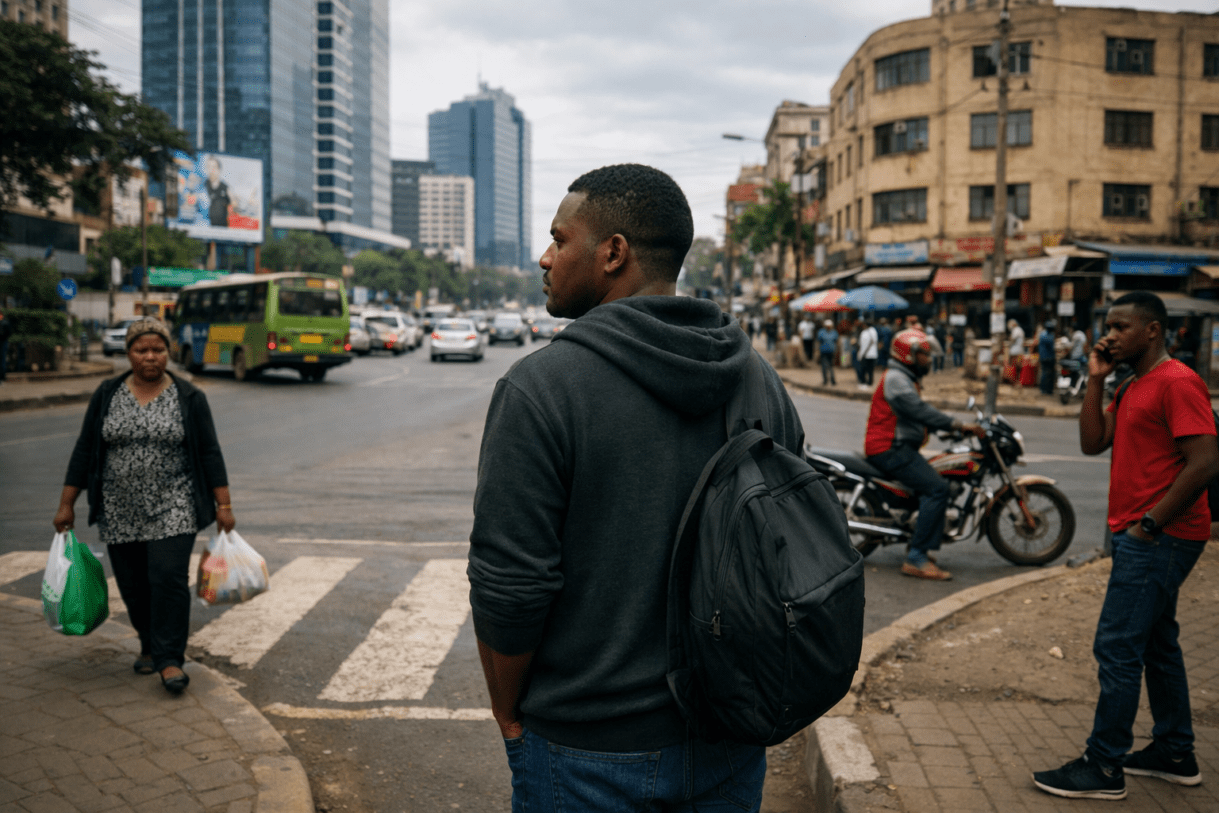
This crossroads is felt in homes struggling with the cost of living, in boardrooms weighing political risk, in villages adjusting to climate stress, and in the streets where young people are increasingly vocal about power, accountability, and fairness. It is evident in the economy that shows resilience on paper but pain in daily life, and in politics that promises reform while battling deep trust deficits.
Kenya’s future is not predetermined. It will be decided by choices—by leaders, institutions, and citizens alike. To understand where the nation is headed, one must examine how politics, economics, society, and generational change are colliding in real time.
1. A Nation in Transition, Not Crisis—but Close Enough
Kenya is often described as “stable,” especially when compared to many countries in the region. It has functioning institutions, a diversified economy, and a strong private sector. Yet stability can be deceptive. Beneath it lies widespread frustration, fatigue, and uncertainty.
Many Kenyans feel they are working harder but earning less. They see government statistics that speak of growth, while their own experience reflects stagnation. They hear political speeches about reform, but daily encounters with corruption, inefficiency, and inequality tell a different story.
This gap between official narratives and lived reality is one of the clearest signs of a country at a crossroads. When citizens stop believing the story being told by those in power, social cohesion weakens, and political legitimacy becomes fragile.
Kenya is not collapsing—but it is stretched. And stretched systems can either be reformed or they can break.
2. The Political Landscape: Power Without Trust
A Post-Old-Guard Era Is Emerging
For decades, Kenyan politics revolved around a small group of powerful personalities. Political competition was personalized, ethnicized, and cyclical. Alliances shifted, but the core structure remained the same.
That era is ending.
The gradual exit of long-dominant political figures—through age, irrelevance, or death—has created a vacuum. But it is not yet clear what will replace it. New leaders are emerging, but the system that produced old politics remains largely intact.
This creates a dangerous in-between moment: old authority has weakened, but new legitimacy has not fully formed.
Elections and Institutional Credibility
Kenya’s elections are both a democratic strength and a recurring source of tension. They mobilize citizens and define political competition, but they also expose weaknesses in institutions, especially when trust in electoral bodies is low.
At the heart of Kenya’s crossroads is a simple but unresolved question:
Can institutions be trusted to manage power transitions fairly and transparently?
Without confidence in electoral processes, politics becomes zero-sum. Losing feels existential, and winning feels temporary. This fuels instability long before ballots are cast.
As the country moves toward the next general election cycle, the credibility of institutions—not campaign slogans—will determine whether Kenya consolidates democracy or slides into prolonged political anxiety.
3. The Economy: Growth That Doesn’t Feel Like Growth
Macroeconomic Resilience vs Household Pain
On paper, Kenya’s economy shows resilience. GDP growth remains relatively strong by regional standards. Inflation has moderated. Monetary policy has eased. Certain sectors—technology, financial services, agribusiness—continue to expand.
Yet for most households, this growth feels abstract.
Food prices remain high. Housing is increasingly unaffordable. Transport and energy costs eat into incomes. Jobs—especially stable, well-paying jobs—are scarce, particularly for young people.
This disconnect is not unique to Kenya, but its effects are sharper here because expectations are high. Kenya’s population is young, educated, connected, and aware of global standards of living. When the economy fails to deliver tangible progress, frustration intensifies.
Debt, Taxes, and the Limits of Austerity
Public debt has become one of the defining economic issues of the moment. Servicing this debt constrains government spending and pushes policymakers toward higher taxation.
But there is a political limit to austerity.
When taxes rise faster than incomes, resistance becomes inevitable. Recent years have shown that Kenyans—especially the youth—are no longer willing to quietly absorb economic pain without explanation or accountability.
This creates a policy dilemma:
How does the government stabilize public finances without igniting social unrest?
The answer lies not only in numbers, but in trust. Citizens are more willing to sacrifice when they believe resources are managed fairly and corruption is punished consistently. Without that trust, even necessary reforms become politically explosive.
4. The Youth Factor: Kenya’s Most Powerful and Unpredictable Force
A Demographic Reality
Kenya is a young country. The majority of its population is under 35. This demographic reality is reshaping politics, culture, and the economy faster than institutions can adapt.
Today’s young Kenyans are different from previous generations in three critical ways:
- They are digitally connected – information spreads instantly, narratives are contested in real time, and state messaging no longer controls the conversation.
- They are less ethnically loyal – while identity still matters, economic opportunity and fairness increasingly outweigh tribal alignment.
- They are impatient – they expect results, not promises stretched over decades.
This generation does not automatically respect authority. It interrogates it.
From Silence to Mobilization
For a long time, Kenyan youth were described as apathetic. That description no longer holds.
Protests, online campaigns, and spontaneous movements have shown that young people can mobilize rapidly when pushed too far. These movements are often leaderless, decentralized, and emotionally driven—making them difficult for traditional politics to control or co-opt.
This is both a risk and an opportunity.
If engaged constructively, youth energy can renew democracy and accountability. If ignored or suppressed, it can turn volatile, feeding cycles of unrest and repression.
Kenya’s future stability depends heavily on how this generational force is handled.
5. Society Under Pressure: Inequality, Cost of Living, and Social Fatigue
The Expanding Gap
Kenya’s inequality is not just economic—it is experiential.
There is a growing divide between those who feel the system works for them and those who feel permanently locked out. This divide cuts across class, geography, and age, but it is especially pronounced between political elites and ordinary citizens.
When people believe that success depends more on connections than competence, social trust erodes. When corruption appears unpunished, cynicism becomes rational.
This erosion of trust is slow but corrosive. It weakens national identity and makes collective sacrifice harder to sustain.
Social Fatigue and Quiet Despair
Not all frustration is loud. Much of it is quiet.
Many Kenyans are exhausted—not angry enough to protest, but too discouraged to hope. They survive rather than plan. They adapt rather than dream.
This kind of social fatigue is dangerous because it can coexist with surface stability while hollowing out long-term national ambition.
Countries do not only fail through explosions. Sometimes they fail through exhaustion.
6. Technology, Media, and the Battle for Narrative
Information as Power
Kenya’s media environment has changed dramatically. Traditional media no longer monopolizes public discourse. Social platforms shape opinion, expose scandals, and amplify marginalized voices.
This has weakened state control over narratives—but it has also increased misinformation, outrage cycles, and polarization.
The challenge is no longer access to information, but credibility.
In this environment, leadership is tested not just by policy, but by communication. Silence is interpreted as arrogance. Spin is quickly exposed. Authenticity matters more than polish.
AI, Innovation, and Economic Opportunity
Kenya has long branded itself as an innovation hub. Technology remains one of its strongest long-term opportunities, from fintech to agritech to digital services.
However, innovation alone cannot solve structural problems. Without investment in education, infrastructure, and inclusive growth, technology risks deepening inequality rather than reducing it.
The question is whether Kenya can move from innovation as branding to innovation as broad-based economic transformation.
7. Regional and Global Positioning
Kenya’s Strategic Importance
Kenya remains a regional anchor. It is a diplomatic hub, a financial center, and a gateway to East Africa. Its stability matters not just domestically, but geopolitically.
This gives Kenya leverage—but also responsibility.
Global partners expect predictability, reform, and institutional strength. Investors watch political signals closely. Regional neighbors are affected by Kenya’s internal dynamics.
At a crossroads, Kenya must decide whether to deepen its role as a regional stabilizer or retreat into inward-looking politics.
Global Pressures, Local Consequences
Global economic shocks, climate change, and shifting geopolitical alliances all shape Kenya’s options. But external forces only become crises when internal systems are weak.
Strong institutions absorb shocks. Weak ones amplify them.
Kenya’s challenge is to strengthen its internal foundations fast enough to withstand external pressures.
8. Two Possible Futures
Path One: Reform, Inclusion, and Renewal
In this future, Kenya confronts its problems honestly.
Institutions are strengthened rather than personalized. Corruption is punished visibly and consistently. Economic reforms are paired with social protection. Youth are included not as tokens, but as partners.
Politics becomes less about survival and more about service. Growth becomes more inclusive. Trust, slowly, begins to return.
This path is difficult. It demands restraint from those in power and patience from citizens. But it leads to long-term stability.
Path Two: Polarization, Fatigue, and Managed Decline
In the alternative future, reforms are delayed, dissent is dismissed, and politics remains transactional.
Growth continues, but inequality deepens. Youth frustration intensifies. Protests become more frequent. Trust erodes further.
The country does not collapse—but it stagnates. Potential is wasted. Energy turns inward. Cynicism becomes the national mood.
This path is easier in the short term. But it is costly in the long run.
The Choice Is Still Open
Kenya stands at a crossroads not because it is weak, but because it is changing.
Its population is changing. Its expectations are changing. Its place in the world is changing. Old answers no longer suffice.
Where the nation is headed will not be decided by slogans or elections alone. It will be shaped by whether leaders listen, whether institutions adapt, and whether citizens remain engaged rather than exhausted.
The road ahead is uncertain—but it is not closed.
Kenya’s story has always been one of resilience, reinvention, and struggle. This moment is another chapter in that story. Whether it becomes a turning point toward renewal or a pause before deeper crisis depends on choices being made now, quietly and loudly, in offices, streets, and homes across the country.
At this crossroads, indecision is itself a decision.
And history will remember which path Kenya chose.
SUGGESTED READS
- From Silence to Resistance: How Kenyans Are Reclaiming Their Voice
- How Economic Pressure Is Redefining Kenyan Families
- The New Kenyan Revolution Isn’t on the Streets — It’s on Your Phone
- The Untold Story of Youth Movements in Modern Kenya: How a Generation Is Quietly Rewriting Power
- Inside Kenya’s Protest Culture: Why Anger Keeps Exploding—and Why Hope Refuses to Die
- Voters Are Exhausted — Inside Kenya’s Rising Political Fatigue

Support Our Website!
We appreciate your visit and hope you find our content valuable. If you’d like to support us further, please consider contributing through the TILL NUMBER: 9549825. Your support helps us keep delivering great content!
If you’d like to support Nabado from outside Kenya, we invite you to send your contributions through trusted third-party services such as Remitly, western union, SendWave, or WorldRemit. These platforms are reliable and convenient for international money transfers.
Please use the following details when sending your support:
Phone Number: +254701838999
Recipient Name: Peterson Getuma Okemwa
We sincerely appreciate your generosity and support. Thank you for being part of this journey!