

simply amazing always for you.
On February 22, 2026, the long pursuit of one of the world’s most wanted drug traffickers came to a violent end.
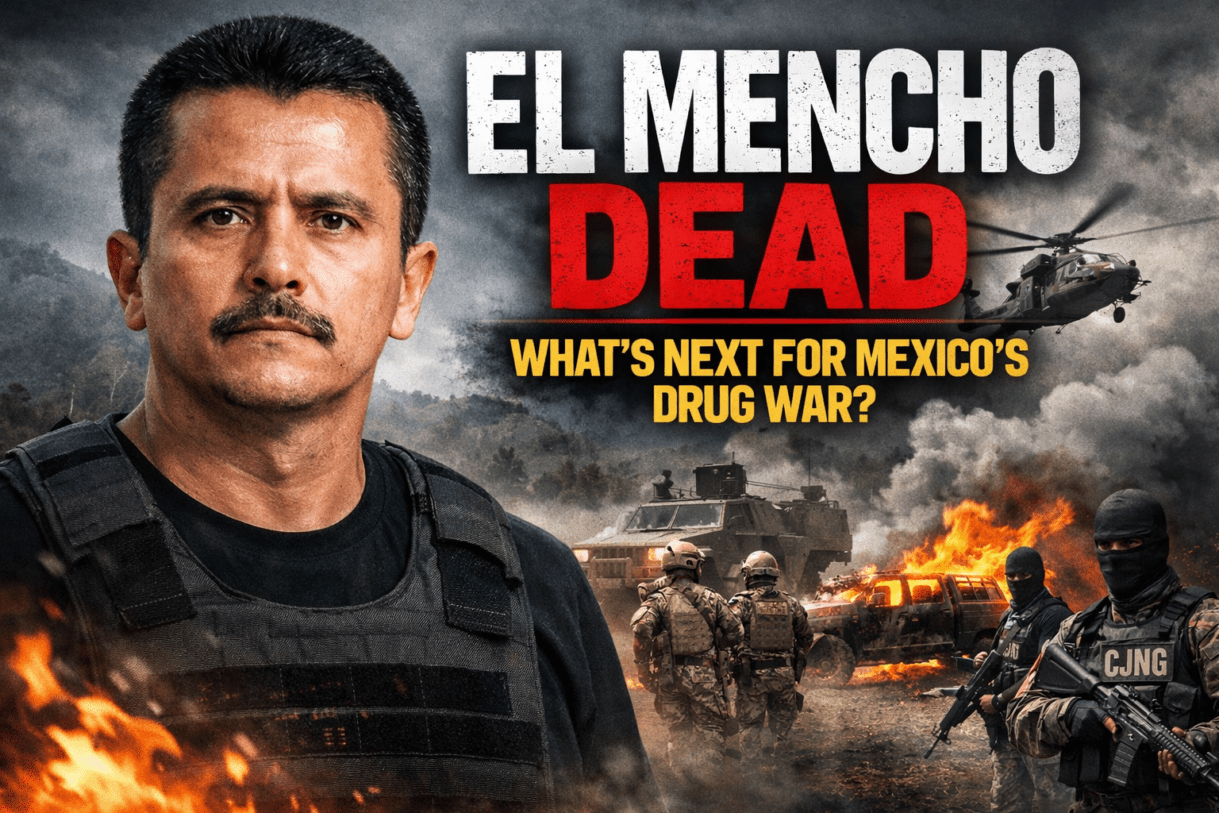
Nemesio Oseguera Cervantes — better known as El Mencho — was killed during a military operation in the mountains of Jalisco, the state where his criminal empire took root. For years, his name hovered between rumor and reality. He was reported sick. Then dead. Then hiding. Then untouchable. But this time, the Mexican government confirmed it: the man at the top of the Jalisco New Generation Cartel (CJNG) is gone.
His death marks the end of one chapter in Mexico’s fight against organized crime — but it does not mean the story is over.
The Operation That Finally Reached Him
According to official reports, Mexican armed forces tracked El Mencho to a remote area near Tapalpa, Jalisco. The terrain — rugged, forested, and difficult to access — had long served as natural protection for cartel leadership. CJNG was known for securing its strongholds with armed lookouts, fortified compounds, and rapid-response gunmen.
When security forces closed in, gunfire erupted.
Authorities say El Mencho was wounded during the confrontation. He was airlifted for emergency medical treatment but died from his injuries before reaching the hospital. Several members of his security circle were either killed or captured in the operation.
The announcement came swiftly. For a figure of his magnitude, secrecy was impossible. Confirmation spread quickly through national media, international outlets, and law enforcement agencies across North America.
Who He Was — And How He Rose
El Mencho’s story did not begin in luxury or power. Born in rural Michoacán, he reportedly spent time working in agriculture before entering criminal networks. In the 1990s, he was arrested in the United States on drug-related charges and later deported to Mexico.
From there, his ascent was steady and strategic.
After internal fractures weakened older cartels, he helped build what would become CJNG — an organization that grew rapidly in both size and aggression. Unlike some earlier criminal groups that relied heavily on quiet corruption and negotiated arrangements, CJNG developed a reputation for open confrontation.
Under his leadership, the cartel expanded aggressively into:
- Methamphetamine production
- Cocaine trafficking
- Fentanyl distribution
- Extortion and kidnapping networks
The group’s rise disrupted long-established criminal balances, particularly challenging the influence of the Sinaloa Cartel.
By the mid-2020s, CJNG was considered one of the most powerful transnational criminal organizations in the Western Hemisphere.
The Immediate Aftermath: Fire and Fear
The hours following confirmation of his death were tense.
Cartel-linked violence flared across parts of western Mexico. Vehicles were burned. Roads were blocked. Businesses shut their doors early. Security forces flooded key regions to prevent escalation.
This reaction was not unexpected.
When a cartel leader of this stature falls, two forces typically collide at once: grief within loyal ranks and opportunity among rivals. The combination often produces instability.
Authorities deployed additional military personnel to Jalisco and neighboring states, attempting to prevent retaliation and internal fragmentation from spilling into wider civilian harm.
What Happens to CJNG Now?
The death of a cartel leader creates a vacuum. What fills it determines whether violence spikes or stabilizes.
CJNG is not a small, personality-driven gang. It is a structured organization with financial networks, regional commanders, and international trafficking routes. That infrastructure does not disappear overnight.
However, leadership matters.
Without El Mencho’s central authority, several scenarios are possible:
1. Internal Power Struggles
Senior lieutenants could compete for dominance, leading to factional conflict within the cartel.
2. Strategic Consolidation
A designated successor may quickly assert control to prevent fragmentation.
3. External Pressure
Rival organizations may attempt to seize territory or weaken CJNG during transition.
Security analysts are closely watching signals from within cartel communications and regional violence patterns to assess which path emerges.
Does His Death Change the Drug Trade?
This is the harder question.
El Mencho was not just a criminal leader; he was a strategic operator within global drug markets. CJNG became a major supplier of synthetic drugs, particularly fentanyl, which has had devastating consequences in the United States and beyond.
However, drug markets are driven by demand as much as leadership.
The removal of a kingpin can disrupt supply chains temporarily. It can force reorganizations. But unless broader structural conditions change — including economic inequality, corruption, and international demand — trafficking networks often adapt.
History shows that the fall of one major figure rarely ends the system that enabled him.
The Symbolism of His Death
For many in Mexico, his killing represents a significant victory for the state. He had been among the most wanted fugitives for years, with millions offered in rewards for information leading to his capture.
For others, especially communities long caught between cartel violence and state operations, the reaction is more cautious. The death of a powerful leader does not automatically restore stability. In some regions, leadership removals have led to temporary surges in violence.
Still, symbolically, the message is clear: even the most elusive figures can be reached.
A Larger Battle Still Ongoing
The killing of El Mencho does not end organized crime in Mexico. It does not dismantle trafficking corridors overnight. It does not instantly secure communities affected by cartel dominance.
But it does shift the landscape.
CJNG’s future now depends on how its internal structure absorbs this shock. Mexico’s security strategy will also face renewed scrutiny — whether it focuses on dismantling financial networks, strengthening institutions, or maintaining aggressive tactical operations.
The next months will reveal whether this moment becomes a turning point or simply another violent transition in a long-running struggle.
For years, rumors about El Mencho’s death circulated without proof.
This time, confirmation came directly from authorities. Nemesio Oseguera Cervantes is dead.
What remains is the harder work: ensuring that his absence does not simply create space for another name to rise in his place.
SUGGESTED READS
- KCSE Results Shock: Why Your Grades Might Not Decide Your Future After All
- Which Underwear Is Healthier for Daily Wear — Seamless or Cotton?
- How to Manage Money in Kenya When Prices Keep Rising
- When Money Changes Love: The Hidden Ways Wealth Affects Relationships
- How to Get Rid of Visible Panty Lines for Good — Smart, Comfortable Solutions
- The Honest Reality of Freelancing in Kenya (Income, Struggles, and Success Tips)

Support Our Website!
We appreciate your visit and hope you find our content valuable. If you’d like to support us further, please consider contributing through the TILL NUMBER: 9549825. Your support helps us keep delivering great content!
If you’d like to support Nabado from outside Kenya, we invite you to send your contributions through trusted third-party services such as Remitly, western union, SendWave, or WorldRemit. These platforms are reliable and convenient for international money transfers.
Please use the following details when sending your support:
Phone Number: +254701838999
Recipient Name: Peterson Getuma Okemwa
We sincerely appreciate your generosity and support. Thank you for being part of this journey!