

simply amazing, always for you.
Kenya is once again facing the destructive power of seasonal rains after intense downpours triggered severe flooding in several parts of the country, with Nairobi among the hardest-hit areas. Overnight storms turned major roads into rivers, swept away vehicles, and left thousands of residents stranded.

Authorities confirmed multiple fatalities following the flooding, while emergency teams continue search and rescue operations across affected neighborhoods. The disaster highlights once again the vulnerability of urban infrastructure to extreme weather and the growing challenge posed by climate change.

As the long rainy season begins across East Africa, the events unfolding in Nairobi serve as a stark reminder of how quickly heavy rains can disrupt life in Kenya’s capital.

Heavy Rains Turn Nairobi Streets Into Rivers
The heavy rainfall that struck Nairobi overnight caused flash floods in many parts of the city. Water rapidly filled drainage systems and spilled onto roads, creating dangerous conditions for motorists and pedestrians.
Several roads across the capital were submerged, leaving vehicles stranded in deep water and forcing many commuters to abandon their journeys.
In some neighborhoods, floodwaters entered homes and businesses, destroying property and leaving families scrambling to salvage belongings.
Residents in low-lying areas were particularly affected as stormwater flowed quickly through residential streets and informal settlements.
Witnesses described scenes of chaos early in the morning as commuters attempted to navigate flooded roads while emergency responders struggled to reach some areas due to blocked routes.
Fatalities Reported as Floodwaters Sweep Through Neighborhoods
Authorities confirmed that several people lost their lives during the flooding incident.

Some victims were reportedly swept away by fast-moving floodwaters, while others died in incidents related to collapsed structures or electrical hazards caused by water entering homes.
Emergency teams later recovered bodies trapped under vehicles and debris in flooded sections of the city.
Search operations continued throughout the day as authorities attempted to account for missing persons.
The tragedy underscores the danger posed by flash floods, which can develop rapidly during heavy storms and catch residents off guard.
Major Roads Across Nairobi Disrupted
Transport across Nairobi was heavily affected by the flooding.
Key roads experienced severe waterlogging, causing massive traffic jams and preventing vehicles from moving.
Motorists reported being stuck for hours as water levels continued to rise in certain parts of the city.
Public transport operators, including matatus and buses, were forced to suspend operations along some routes due to unsafe conditions.
Many commuters resorted to walking long distances to reach their workplaces or return home.
The disruption also affected logistics operations and deliveries, highlighting how flooding can quickly paralyze economic activity in the capital.
Airport Operations Affected
The flooding also disrupted operations at Jomo Kenyatta International Airport, the country’s main aviation hub.
Water accumulation around sections of the airport caused operational challenges, forcing some flights to delay or divert to other airports.
Travelers experienced disruptions as airlines adjusted schedules to cope with the difficult weather conditions.
Although airport authorities worked quickly to restore normal operations, the incident demonstrated how severe weather can impact critical infrastructure.
Emergency Teams Mobilized
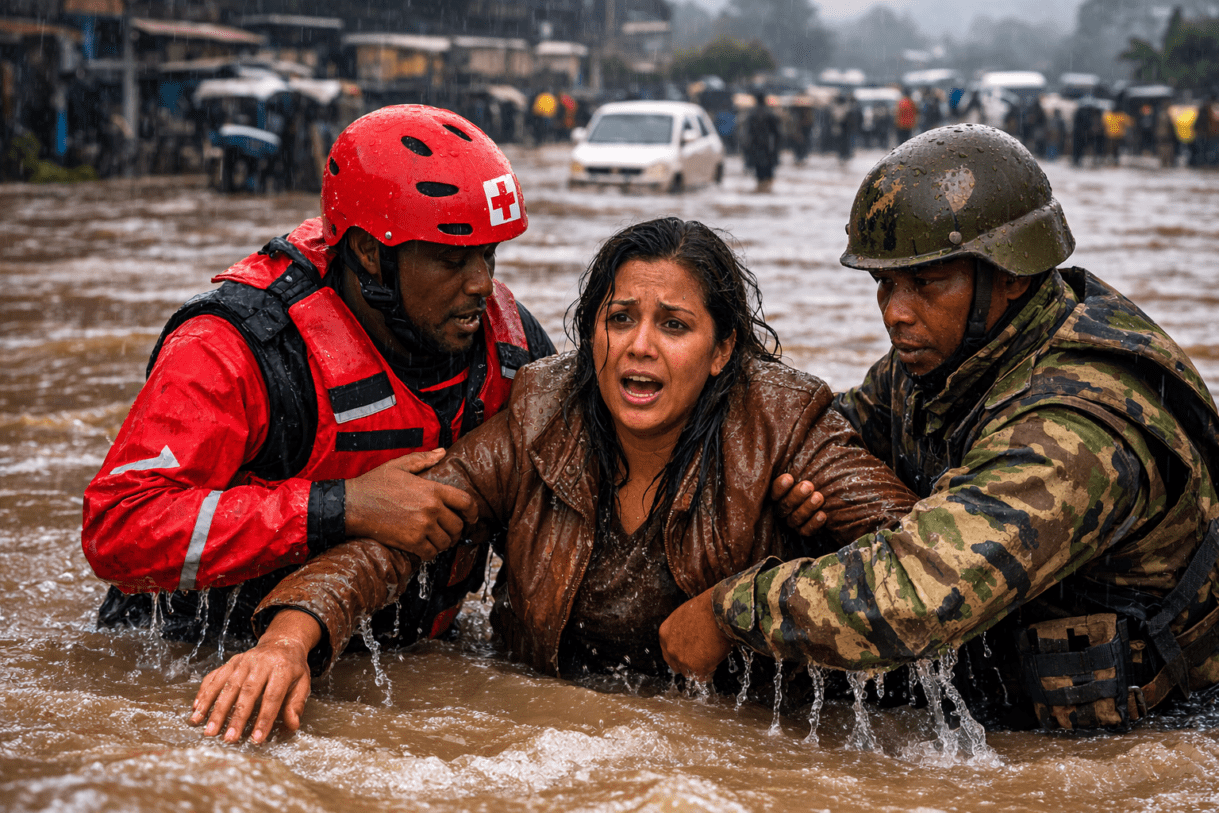
Rescue and emergency teams were deployed across Nairobi to assist residents trapped by the floods.
Among the organizations involved in the response were Kenya Red Cross, local police units, and county disaster response teams.
In some areas, the Kenya Defence Forces assisted in rescue operations by helping stranded motorists and clearing blocked roads.
Emergency responders also evacuated residents from houses threatened by rising water levels.
Relief efforts included providing temporary shelter, food, and medical assistance to affected families.
Other Regions in Kenya Also Affected
While Nairobi experienced the most visible disruption, flooding has also been reported in other regions.
Communities near rivers and floodplains in western Kenya have reported rising water levels following the heavy rainfall.
Counties around Lake Victoria are particularly vulnerable during periods of intense rain because rivers feeding into the lake often overflow.
In some areas, families have been displaced as floodwaters spread into villages and farmland.
Local authorities are monitoring river levels closely and advising residents living in flood-prone zones to prepare for possible evacuations.
Why Flooding Is Becoming More Frequent
Flooding has become an increasingly common problem in Kenya’s major cities, especially Nairobi.
Several factors contribute to the growing severity of these incidents.
Poor Urban Drainage
Nairobi’s drainage system struggles to handle heavy rainfall. Blocked drainage channels, waste disposal problems, and aging infrastructure often prevent water from flowing away quickly.
Rapid Urban Development
The rapid expansion of buildings and roads has reduced natural drainage areas. Wetlands that once absorbed excess water have been replaced by construction projects.
Climate Change
Scientists warn that climate change is increasing the intensity of rainfall events across East Africa. Storms are becoming shorter but heavier, which raises the risk of flash floods.
Settlements in Flood-Prone Areas
Many informal settlements in Nairobi are located near rivers or low-lying land where flood risk is high. Residents in these areas often face the greatest danger when heavy rains occur.
Government Issues Safety Warnings
Authorities have urged Kenyans to remain vigilant as heavy rainfall is expected to continue in several regions.
Residents living near rivers or in flood-prone neighborhoods have been advised to relocate to safer areas if water levels begin rising.
Drivers have also been warned not to attempt crossing flooded roads, as strong currents can sweep away vehicles.
Emergency officials emphasized the importance of monitoring weather updates and cooperating with rescue teams during emergencies.
Economic Impact of Flooding
Floods do not only cause loss of life and property; they also disrupt the economy.
Businesses in flooded areas are often forced to close temporarily, leading to lost revenue.
Transport delays affect supply chains, slowing down the movement of goods across the country.
Farmers in rural areas may also suffer crop losses if fields are submerged.
For a city like Nairobi, which serves as Kenya’s financial and commercial hub, prolonged flooding can have ripple effects across multiple sectors.
Communities Show Resilience
Despite the destruction, many communities have shown resilience during the crisis.
Neighbors have helped each other evacuate flooded homes, while volunteers have assisted rescue teams in reaching vulnerable residents.
Social media platforms were filled with videos of people helping push vehicles out of floodwaters and offering temporary shelter to those displaced.
Such acts of solidarity highlight the strong community spirit that often emerges during times of disaster.
What Happens Next
Weather experts say the long rainy season is only beginning, meaning additional rainfall could occur in the coming weeks.
Authorities are likely to increase monitoring of river levels and flood-prone zones.
Urban planners and policymakers may also face renewed pressure to improve drainage systems and strengthen flood preparedness measures.
Experts argue that long-term solutions must include better urban planning, environmental protection, and climate adaptation strategies.
Without such measures, cities like Nairobi could continue facing similar disasters every rainy season.
The floods that struck Nairobi demonstrate the devastating impact that heavy rains can have on urban environments.
Lives have been lost, families displaced, and infrastructure disrupted as the city struggles to cope with intense rainfall.
As rescue operations continue and communities begin the process of recovery, the disaster raises important questions about urban planning, climate resilience, and disaster preparedness in Kenya.
With the rainy season still unfolding, authorities and residents alike must remain alert to the risks posed by further storms.

Support Our Website!
We appreciate your visit and hope you find our content valuable. If you’d like to support us further, please consider contributing through the TILL NUMBER: 9549825. Your support helps us keep delivering great content!
If you’d like to support Nabado from outside Kenya, we invite you to send your contributions through trusted third-party services such as Remitly, western union, SendWave, or WorldRemit. These platforms are reliable and convenient for international money transfers.
Please use the following details when sending your support:
Phone Number: +254701838999
Recipient Name: Peterson Getuma Okemwa
We sincerely appreciate your generosity and support. Thank you for being part of this journey!