

simply amazing, always for you.
The Unspoken Rules That Shape Kenyan Lives
In many parts of the world, social norms influence behavior. But in Kenya, shame and societal expectations often operate as powerful, invisible forces that shape how people live, speak, and even think.

From childhood to adulthood, Kenyans grow up navigating a complex web of cultural expectations. These expectations dictate what success looks like, how men and women should behave, when people should marry, and what careers are considered respectable.

While these norms can sometimes promote social order and shared values, they can also become tools of control—limiting personal freedom, discouraging honest conversations, and preventing social progress.

Across families, schools, churches, workplaces, and online communities, shame has become a quiet but powerful mechanism that enforces conformity.
Understanding how this dynamic works is crucial if Kenyan society is to move toward a more open, healthy, and inclusive future.
The Role of Shame in Kenyan Culture
Shame is not always negative. In many cultures, it functions as a social regulator that discourages harmful behavior and promotes respect for community values.
However, in Kenya, shame often goes beyond discouraging harmful actions. It is frequently used to control personal choices.
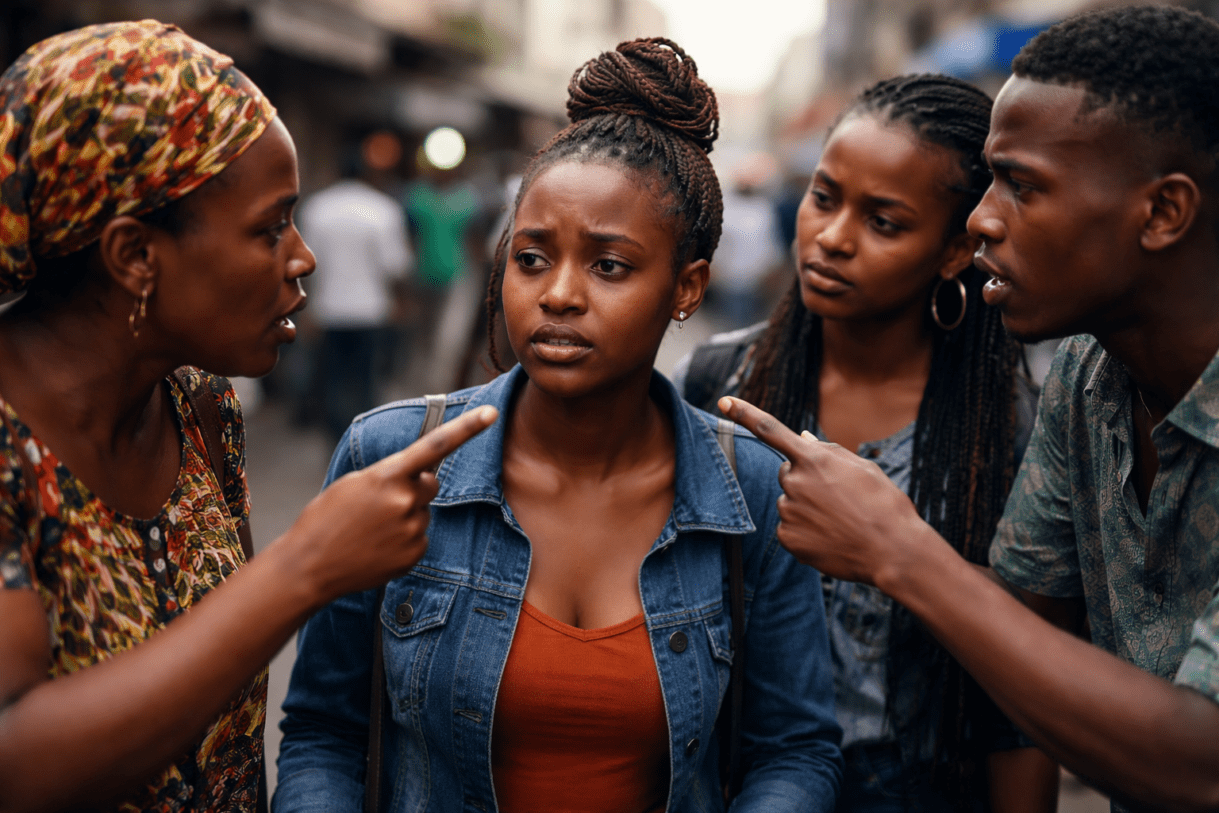
Children are taught early that their actions reflect not only on themselves but also on their families.
You may hear phrases such as:

- “What will people say?”
- “You are embarrassing the family.”
- “You are bringing shame to this home.”
These statements are not simply about discipline. They represent a broader cultural mindset where reputation often matters more than personal well-being.
As a result, many people learn to suppress their true feelings, ambitions, or struggles to avoid being judged.
The Power of “What Will People Say?”
Few phrases capture the power of social pressure in Kenya better than “What will people say?”
This question shapes countless life decisions.
Young people may avoid pursuing unconventional careers because they fear criticism from relatives or neighbors.
Adults may remain in unhappy marriages because divorce carries social stigma.
Students may hide academic struggles because failure is seen as embarrassing rather than part of learning.
The fear of public judgment creates a culture where appearances matter deeply.
Many people invest enormous energy into maintaining the image of success, stability, and moral correctness—even when reality tells a different story.
Family Expectations: The First Source of Pressure
In Kenyan society, the family is often the first institution that imposes expectations.
Parents frequently sacrifice greatly to educate their children, and in return they expect certain outcomes.
Common expectations include:
- Academic success
- Respectable careers such as medicine, law, or engineering
- Financial support for extended family
- Marriage and children at socially acceptable ages
While these expectations often come from love and hope, they can also become overwhelming.
A young person who wants to pursue art, music, or entrepreneurship may face skepticism or outright opposition.
The pressure to succeed is not just personal—it becomes a matter of family pride.
When expectations are not met, shame may follow.
Education and the Culture of Perfection
Kenya’s education system is highly competitive.
National exams such as KCPE and KCSE often determine future opportunities, and students are acutely aware that their performance can affect not only their own lives but also their family’s reputation.
In many schools, failure is stigmatized rather than treated as a learning opportunity.
Students who perform poorly may face ridicule from peers, disappointment from teachers, and criticism from parents.
This pressure contributes to anxiety, burnout, and in some cases severe mental health challenges.
The culture of perfection reinforces the idea that mistakes are shameful rather than natural.
Gender Expectations and Social Control
Gender roles in Kenya are another area where shame is frequently used to enforce conformity.
Expectations for Women
Women often face intense scrutiny regarding their behavior, appearance, and life choices.
Common societal expectations include:
- Remaining modest and respectful
- Getting married at the “right” age
- Becoming mothers
- Avoiding behaviors perceived as “too independent”
A woman who chooses not to marry or have children may face constant questioning or judgment.
Even career success can sometimes be framed negatively if it challenges traditional gender roles.
Expectations for Men
Men are also affected by social expectations.
Kenyan society often expects men to:
- Be financially successful
- Provide for extended family
- Show emotional toughness
- Avoid vulnerability
Men who struggle financially or emotionally may feel deep shame, which discourages them from seeking help.
This dynamic contributes to silent mental health struggles among many men.
Religion and Moral Expectations
Religion plays a major role in Kenyan society.
Churches and mosques often provide community support, moral guidance, and social stability.
However, religious expectations can also intensify the culture of shame.
Topics such as sexuality, divorce, mental health, and addiction are often framed in moral terms rather than discussed openly.
People who struggle with these issues may fear being judged or excluded from their communities.
This can lead to secrecy and isolation rather than healing.
Social Media and the Amplification of Shame
In the past, social pressure mostly came from family, neighbors, and local communities.
Today, social media has amplified the scale of public judgment.
Platforms such as Facebook, TikTok, and X have created an environment where mistakes can go viral overnight.
Public shaming has become common.
Individuals may be attacked online for:
- Personal opinions
- Lifestyle choices
- Fashion or appearance
- Relationship decisions
The fear of becoming the next trending topic keeps many people cautious about expressing themselves freely.
The Mental Health Impact
Living under constant social expectations can have serious psychological consequences.
Many Kenyans experience stress from trying to meet societal standards.
Some common effects include:
- Anxiety about reputation
- Fear of failure
- Low self-esteem
- Emotional suppression
- Burnout
Mental health conversations are slowly becoming more common in Kenya, but stigma remains strong.
Admitting emotional struggles can still be perceived as weakness.
This prevents many people from seeking professional support.
The Economic Consequences
Shame and expectations also influence economic behavior.
For example:
Some people avoid starting small businesses because they fear being seen as unsuccessful if the venture fails.
Others take on large financial obligations—such as expensive weddings or lavish lifestyles—to maintain appearances.
These pressures can lead to debt and financial stress.
In a society where reputation matters greatly, people may prioritize image over financial stability.
Generational Differences: Change Is Emerging
Despite these challenges, Kenyan society is not static.
Younger generations are increasingly questioning traditional expectations.
Many young Kenyans are embracing:
- Alternative careers
- Mental health awareness
- Delayed marriage
- Individual expression
- Entrepreneurship
Social media, global exposure, and education have opened new ways of thinking.
However, the tension between tradition and modern values remains strong.
Many young people find themselves balancing respect for cultural norms with the desire for personal freedom.
When Shame Protects Community Values
It is important to recognize that not all forms of social pressure are harmful.
Communities often use shame to discourage behaviors that damage social trust.
For example, public criticism may target corruption, exploitation, or unethical behavior.
In these cases, social accountability can play a positive role.
The challenge is distinguishing between healthy accountability and oppressive judgment.
Breaking the Cycle of Fear and Judgment
Reducing the harmful effects of shame requires cultural shifts at multiple levels.
Families
Parents can encourage open conversations with children about career choices, mental health, and personal goals.
Supportive dialogue reduces fear and builds confidence.
Schools
Educational institutions can promote a growth mindset that treats mistakes as opportunities for learning rather than sources of humiliation.
Religious Institutions
Faith communities can foster compassion by discussing sensitive topics with empathy rather than condemnation.
Media
Responsible media coverage can highlight diverse life paths and reduce unrealistic expectations.
The Power of Honest Conversations
Change begins when people start speaking honestly about the pressures they face.
When individuals share their experiences with failure, doubt, or unconventional choices, they challenge the illusion that everyone else is living perfect lives.
These conversations create space for empathy and understanding.
They also remind society that behind every polished image is a complex human story.
A Future Beyond Shame
Kenya is a country rich in culture, resilience, and ambition.
As the nation continues to evolve, there is an opportunity to redefine what success and respect truly mean.
A healthier society is one where:
- People can pursue different life paths without fear of ridicule.
- Mental health is treated with seriousness and compassion.
- Failure is seen as part of growth.
- Individuals are valued for authenticity rather than appearances.
Reducing the power of shame does not mean abandoning cultural values.
Instead, it means creating a culture that balances community expectations with personal freedom.
Shame and social expectations have long shaped Kenyan society.
They influence how people think about success, relationships, careers, and identity.
While these forces can strengthen community bonds, they can also create invisible chains that limit personal growth and honest expression.
As Kenya continues to change, the challenge is not to eliminate tradition but to evolve it.
A society that encourages openness, empathy, and individuality will not only be freer—it will also be stronger.
SUGGESTED READS
- Kenya’s Silent Mental Health Crisis: Why Millions Are Struggling in Silence
- In Kenya, Success Comes With Expectations — Here’s Why
- Young, Ambitious, and Struggling: The True Story of Kenya’s Youth
- The Simple Habits That Help Kenyans Become Financially Stable
- How Fabric Choice Affects the Way Your Clothes Fit

Support Our Website!
We appreciate your visit and hope you find our content valuable. If you’d like to support us further, please consider contributing through the TILL NUMBER: 9549825. Your support helps us keep delivering great content!
If you’d like to support Nabado from outside Kenya, we invite you to send your contributions through trusted third-party services such as Remitly, western union, SendWave, or WorldRemit. These platforms are reliable and convenient for international money transfers.
Please use the following details when sending your support:
Phone Number: +254701838999
Recipient Name: Peterson Getuma Okemwa
We sincerely appreciate your generosity and support. Thank you for being part of this journey!