

simply amazing, always for you.
Cuba Slams U.S. Embassy Over Diesel Request in the Middle of a National Energy Breakdown
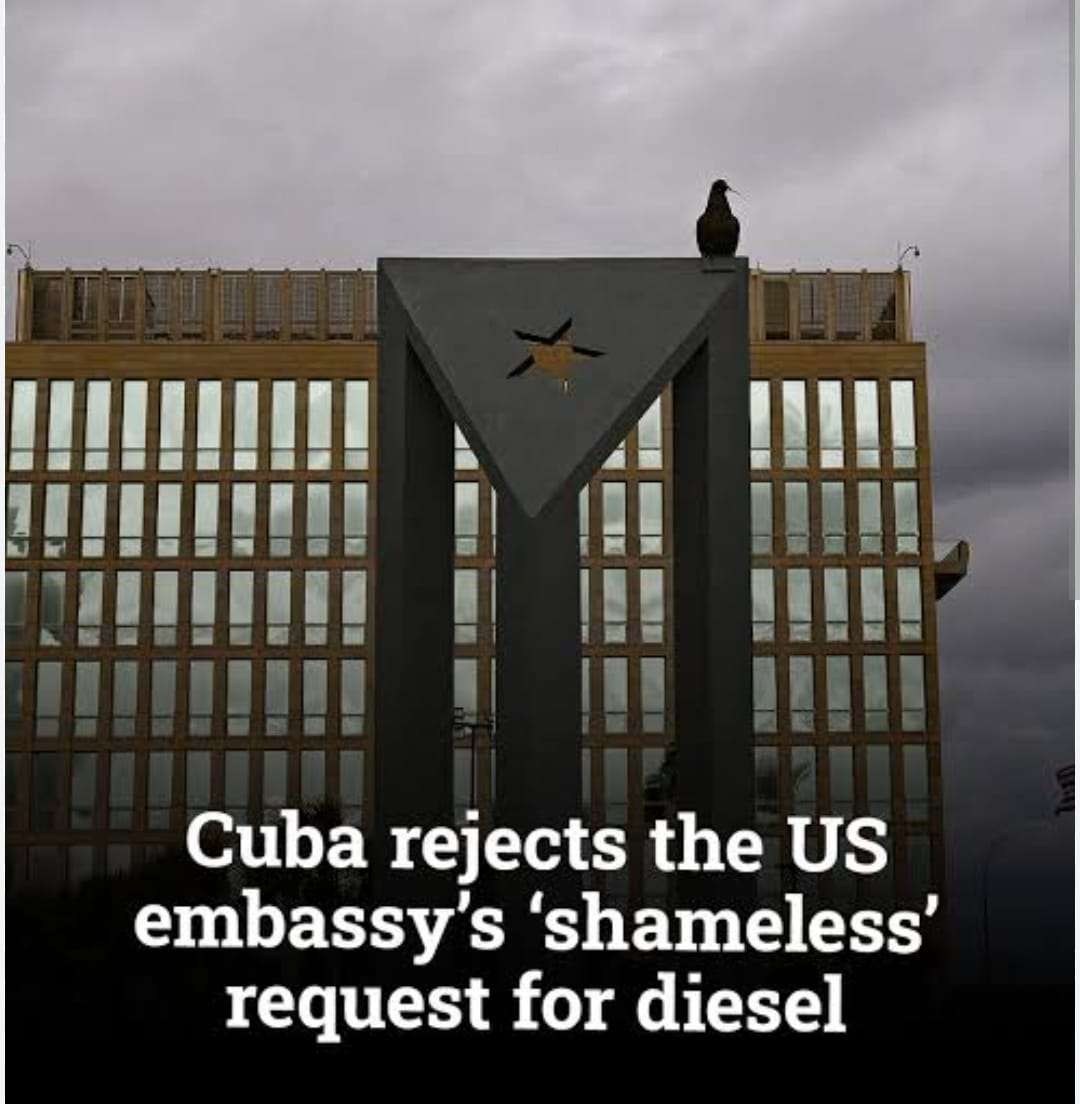
Tensions between Cuba and the United States have escalated sharply after Havana rejected what it described as a “shameless” request by the U.S. Embassy to import diesel fuel for its operations.
The controversy comes at a moment when Cuba is grappling with one of the worst energy crises in its recent history—marked by widespread blackouts, fuel shortages, and mounting public frustration.
The Request That Sparked Outrage
At the center of the dispute is the United States Embassy in Havana, which reportedly sought permission to bring in diesel from abroad to power its backup generators.
Cuba’s government flatly denied the request.
Officials in Havana responded with unusual bluntness, accusing Washington of hypocrisy. In a formal communication, Cuban authorities said the request was inappropriate given the severe hardships facing ordinary citizens who have no such access to fuel.
For Cuban leaders, the issue wasn’t just logistical—it was symbolic.
A Nation in the Dark
Cuba’s energy crisis has reached a critical level in recent months:
- Rolling blackouts lasting several hours a day
- Power grid instability affecting entire provinces
- Disruptions to hospitals, transport, and food supply chains
The situation has forced many households to adapt to unpredictable electricity schedules, while businesses struggle to remain operational.
In some regions, electricity cuts have become so frequent that daily life now revolves around when power is available—if at all.
Why Diesel Matters So Much
Diesel is a lifeline in Cuba’s current situation. With an aging national grid and limited electricity generation capacity, backup generators have become essential for:
- Hospitals and emergency services
- Government operations
- Foreign diplomatic missions
But here’s the catch: diesel is in critically short supply.
Cuba relies heavily on imported fuel, and shipments have declined due to financial constraints and reduced support from key allies. This has created a system where even essential sectors are rationing fuel.
Sanctions at the Core of the Conflict
Cuba’s rejection of the request cannot be separated from its long-standing dispute with the United States over economic sanctions.
The U.S. embargo—tightened significantly in recent years—has:
- Restricted Cuba’s access to global fuel markets
- Limited financial transactions needed to secure energy imports
- Increased shipping and insurance costs for suppliers
From Havana’s perspective, the situation is clear: the same country imposing restrictions is now seeking an exception for its own operations.
Cuban officials argue that granting the request would send the wrong message domestically and internationally.
A Question of Optics—and Power
The Cuban government’s use of the word “shameless” underscores how politically charged the issue has become.
Allowing the U.S. Embassy to import diesel independently would effectively create a two-tier system:
- Reliable power for diplomatic staff
- Continued outages for Cuban citizens
That contrast, officials suggest, would be unacceptable at a time when millions are enduring prolonged blackouts.
The government is keenly aware of public sentiment, especially as economic conditions remain strained.
Diplomatic Consequences Could Follow
The fallout from this dispute could ripple beyond fuel logistics.
There are growing concerns that:
- The U.S. may scale back operations at its embassy due to energy constraints
- Staffing levels could be reduced if reliable power cannot be maintained
- Reciprocal measures could affect Cuba’s diplomatic presence in Washington
Such moves would further strain already fragile relations between the two countries.
A Crisis Years in the Making
Cuba’s current energy emergency didn’t happen overnight. It is the result of multiple overlapping challenges:
- Aging power plants with frequent breakdowns
- Limited domestic oil production
- Reduced fuel shipments from allies like Venezuela
- Persistent financial and trade restrictions
The result is a system under constant stress—where even minor disruptions can trigger widespread outages.
What Happens Next?
For now, Cuba appears firm in its stance: no special treatment for the U.S. Embassy.
The decision signals that Havana is prioritizing political consistency over diplomatic convenience, even at the risk of escalating tensions.
For the United States, the denial presents a practical challenge—how to maintain embassy operations in a country where energy is no longer guaranteed.
The Bigger Picture
This dispute goes beyond diesel.
It highlights a deeper contradiction at the heart of U.S.-Cuba relations:
- Economic pressure aimed at weakening the Cuban state
- Continued reliance on operating within that same constrained environment
As Cuba’s energy crisis intensifies, such contradictions are becoming harder to ignore—and more politically explosive.
Cuba’s rejection of the U.S. Embassy’s diesel request is not just a bureaucratic decision.
It is a calculated political statement in the middle of a national emergency.
With millions of Cubans facing daily blackouts, Havana has drawn a clear line:
no exceptions, no privileges—even for one of its most powerful adversaries.
SUGGESTED READS
- The 3-Meter Mistake That Almost Cost Her Life
- Captain Irene Koki Mutungi: The Girl Who Touched the Sky
- The Top 10 Countries Most Indebted to China
- How Far Can Wild Animals See? A Look at Nature’s Vision Masters
- Why Listening Is the Key to a Healthy Relationship (And How to Be a Better Listener)
- How to Have Tough Conversations Without Ruining Your Relationship
- The Love Languages Explained: How to Love Your Partner the Right Way
- How to Improve Communication in Your Relationship (10 Simple Tips)

Support Our Website!
We appreciate your visit and hope you find our content valuable. If you’d like to support us further, please consider contributing through the TILL NUMBER: 9549825. Your support helps us keep delivering great content!
If you’d like to support Nabado from outside Kenya, we invite you to send your contributions through trusted third-party services such as Remitly, western union, SendWave, or WorldRemit. These platforms are reliable and convenient for international money transfers.
Please use the following details when sending your support:
Phone Number: +254701838999
Recipient Name: Peterson Getuma Okemwa
We sincerely appreciate your generosity and support. Thank you for being part of this journey!