

simply amazing, always for you.
Where Faith Meets Authority
In Nigeria, politics is not just about policies or manifestos—it’s a potent mix of power plays, tribal loyalties, and deeply embedded spiritual beliefs. This West African giant, known for its religious diversity and vibrant democracy, has a political landscape where spirituality—both traditional and modern—exerts undeniable influence.

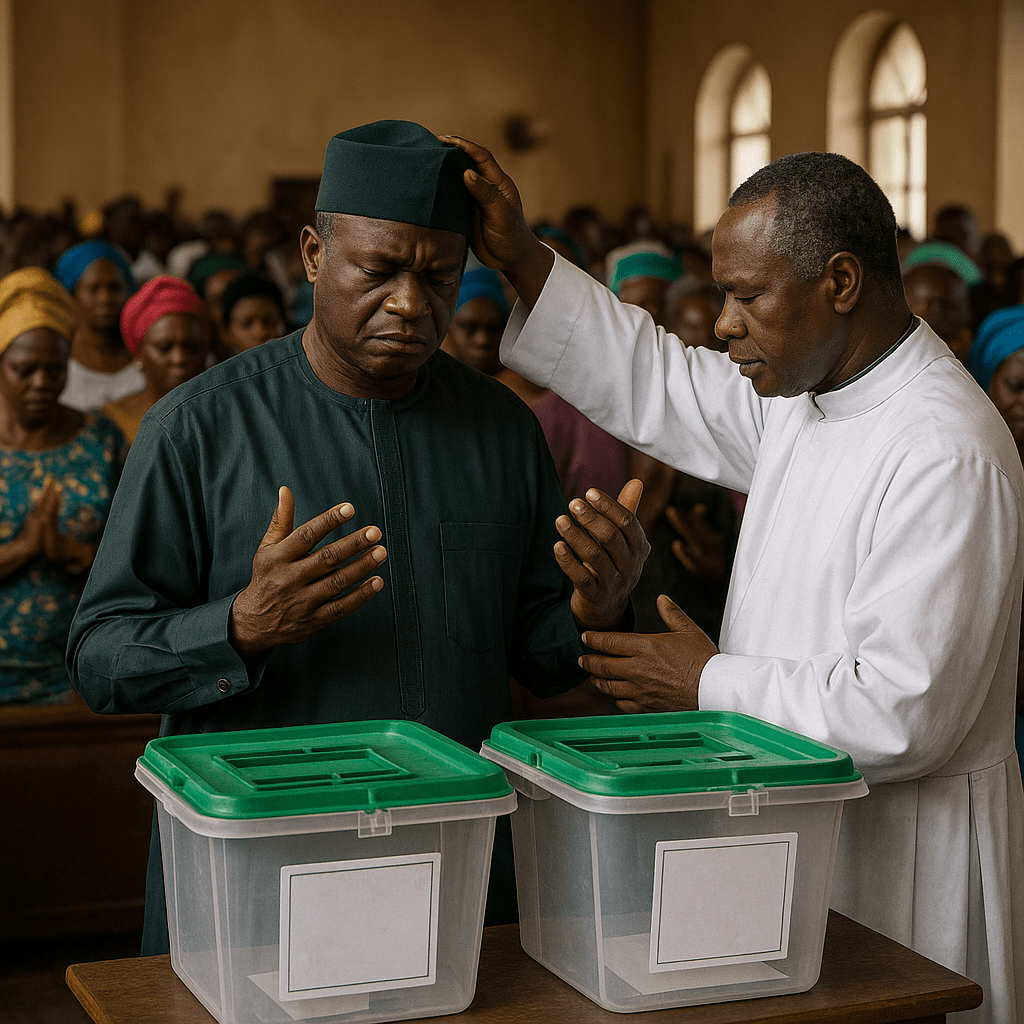
From Christian pastors laying hands on presidential candidates, to politicians visiting native shrines like Okija, the intersection between faith and governance is both fascinating and unsettling. Is this spiritual connection empowering or manipulating the people? Is Nigeria being spiritually led—or spiritually controlled?
Let’s unpack the deep-rooted ties between politics, power, and spirituality in Nigeria.
1. Historical Context: Colonization and the Seeds of Power
Before the British drew borders, Nigeria’s political structure was highly decentralized. Kingdoms like the Oyo Empire, Benin Kingdom, and Sokoto Caliphate had rulers who were both political and spiritual heads. Traditional priests, oracles, and diviners guided kings and elders on matters of war, justice, and succession.
Colonialism disrupted these systems but did not erase them. Instead, Western-style governance merged awkwardly with traditional authority, creating a dual power structure—one Western and official, the other spiritual and cultural.
After independence, Nigeria’s post-colonial leaders didn’t abandon this blend—they embraced it. Many sought spiritual legitimacy through ancestral rites or religious institutions, even as they paraded modern constitutions.
2. Religion as a Political Tool
Christianity and Political Endorsements
Mega churches in Nigeria wield massive political clout. With congregations in the tens of thousands and followings across states, pastors have become political influencers. Prominent politicians often seek endorsements from Pentecostal leaders like Pastor Enoch Adeboye, Bishop David Oyedepo, or Pastor Paul Adefarasin.
These pastors are seen not only as moral compasses but as divinely anointed gatekeepers of political success. Prayer rallies for national transformation often become subtle campaign platforms.
Islam and the North
In Northern Nigeria, Islam holds deep sway. The Sultan of Sokoto is not just a religious leader—he’s a key political figure. Governors and presidential aspirants often seek his blessings or attend Islamic gatherings to signal alignment with Northern interests.

Islamic clerics (mallams) and influential Quranic teachers (almajiri sheikhs) are courted by politicians aiming to secure massive voter blocs in the north. Politics here is inseparable from religion.
3. Native Shrines and Secret Powers
Beyond the glare of mainstream religion lies a more hidden, occult-spiritual realm—traditional shrines, ancestral spirits, and secret cults.
Okija Shrine and the Fear of the Unknown
Perhaps the most infamous symbol of this underground power is the Okija Shrine in Anambra State. Exposed in the early 2000s, the shrine was said to be a spiritual court where powerful figures—including politicians—went to swear oaths, settle disputes, and secure spiritual backing.
Despite media condemnation, the shrine revealed something deeper: many Nigerian politicians still fear and rely on traditional spiritual forces—believing that what the ballot box doesn’t secure, ancestral pacts will.
Occult Societies and Secret Cults
Elite cults and secret societies also permeate Nigeria’s political corridors. From university fraternities to adult brotherhoods like the Ogbomoso Cult, Oro Cult, or the Reformed Ogboni Fraternity, stories abound of initiates who trade spiritual allegiance for influence and protection.
4. Prophets and Political Prophecies
The “prophet industry” in Nigeria has grown exponentially, especially around election seasons. Prophets claim to foresee winners, predict coups, or declare spiritual consequences if certain candidates are elected.
While some view this as spiritual guidance, critics argue it’s manipulation wrapped in divine language. Failed prophecies don’t seem to dent the popularity of these figures—instead, followers often rationalize the inaccuracies.
Why? Because in Nigeria, faith is deeper than facts, and many believe that spiritual revelation trumps empirical analysis.
5. Power and the People: Are Nigerians Truly Free to Choose?
When elections are infused with prophecy, religious pressure, or ancestral oaths, is the electorate truly voting freely? Spiritual leaders can influence millions with a single “vision,” tilting the scale in democratic contests.
Moreover, a culture of fear—of curses, spiritual consequences, or divine punishment—can keep people from questioning their leaders. When politics is seen as “God-ordained,” dissent becomes sacrilege.
6. The Dangers of Spiritualized Governance
When politicians govern as “anointed ones” rather than public servants, accountability suffers. Criticism is dismissed as rebellion against God. Policy failure is spiritual warfare. Corruption is justified as divine favor.
This “God complex” in leadership has eroded democratic norms, encouraged sycophancy, and silenced critical voices.
Moreover, reliance on divine intervention—rather than policy, planning, and data—has turned Nigeria into a nation that prays more than it plans.
7. When Faith Empowers: The Positive Side
It’s not all gloom. Spirituality has also mobilized social change, helped communities heal, and provided moral frameworks where institutions are weak.
Faith-based organizations build hospitals, schools, and orphanages. Churches and mosques rally aid during crises. Some spiritual leaders have stood against corruption and urged ethical leadership.
When spiritual authority is used to challenge tyranny, not endorse it, it becomes a force for justice.
8. The Way Forward: Decoupling Without Dismissing
Nigeria cannot (and perhaps should not) separate spirituality from public life. Faith is deeply woven into the national psyche. But the country must redraw the lines between political power and spiritual manipulation.
Suggested Reforms:
- Strengthen civic education to help people think critically.
- Promote interfaith dialogue that encourages tolerance, not political allegiance.
- Encourage religious leaders to teach values, not candidates.
- Expose and prosecute the abuse of spiritual power for electoral gain.
An Unholy Trinity or a Sacred Balance?
The intersection of politics, power, and spirituality in Nigeria is a double-edged sword. It has inspired hope—and enabled oppression. It has healed souls—and shackled minds.
For Nigeria to thrive, both its politicians and its priests must remember: power belongs to the people, not just to the pulpit or the shrine.
True democracy demands spiritual humility, political accountability, and an awakened citizenry that prays—and also thinks, questions, and votes wisely.
SUGGESTED READS
- Why Many Nigerians Still Visit Native Doctors: A Deep Dive into Beliefs, Culture, and Modern Realities
- The Truth About African Traditional Religions: Myths, Realities, and Why They Still Matter Today
- The Dark Legacy of Okija Shrine: Nigeria’s Most Notorious Traditional
- How Foday Sankoh Led Sierra Leone into Chaos: The Ruthless Rise of a Rebel
- The Blood Oath: Rise of the Bakassi Boys
Support Our Website!
We appreciate your visit and hope you find our content valuable. If you’d like to support us further, please consider contributing through the TILL NUMBER: 9549825. Your support helps us keep delivering great content!
If you’d like to support Nabado from outside Kenya, we invite you to send your contributions through trusted third-party services such as Remitly, SendWave, or WorldRemit. These platforms are reliable and convenient for international money transfers.
Please use the following details when sending your support:
Phone Number: +254701838999
Recipient Name: Peterson Getuma Okemwa
We sincerely appreciate your generosity and support. Thank you for being part of this journey!