

simply amazing, always for you.
A Shrine Shrouded in Mystery
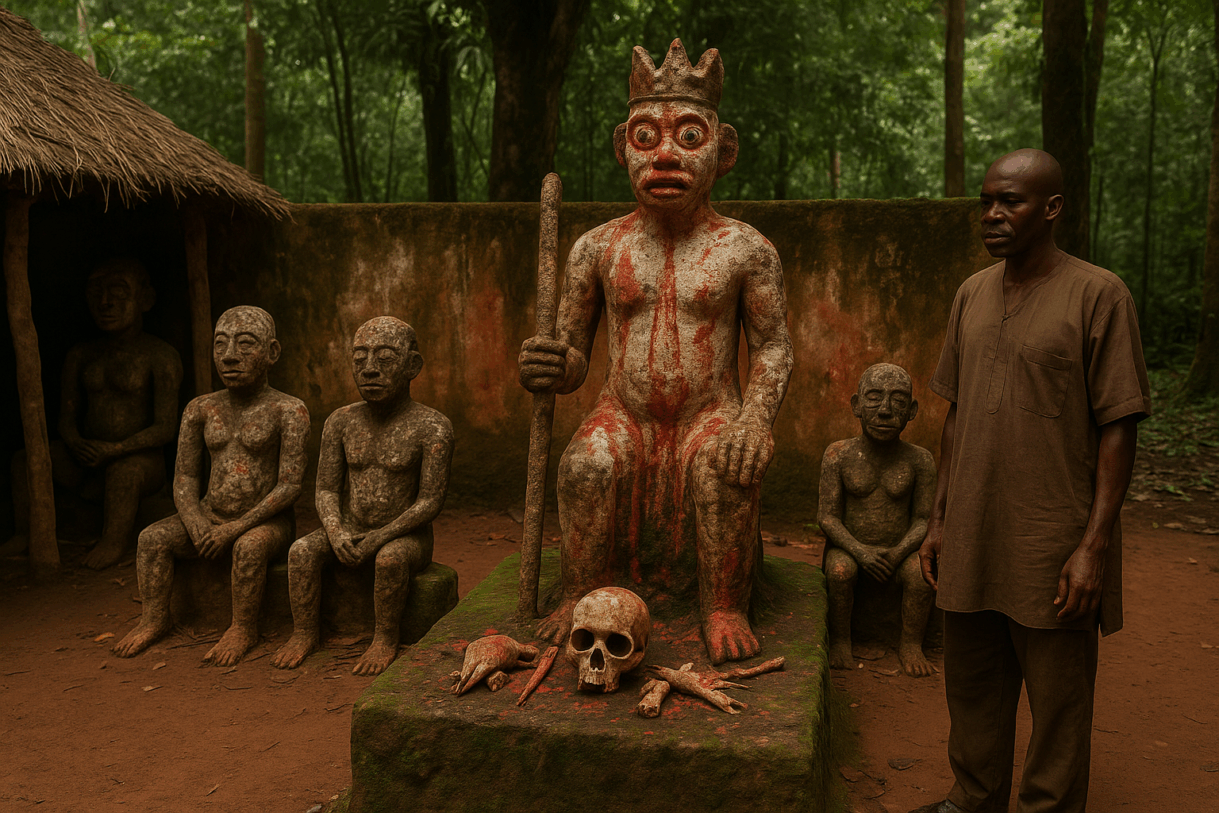
Nestled deep in the forests of Okija town, in Ihiala Local Government Area of Anambra State, Nigeria, lies a controversial yet culturally significant place of worship and arbitration — the Okija Shrine. Also known as Ogwuwu Akpu and Ogwuwu Isiula, this sacred site once operated as a powerful traditional court, but it later drew international headlines for the wrong reasons — dead bodies, political drama, and moral outrage.
In this article, we dive into the historical roots, religious practices, political controversies, and cultural implications of Okija Shrine, shedding light on how a once-revered spiritual hub became one of Nigeria’s most feared and misunderstood places.
1. Origins of the Okija Shrine
A Justice System Rooted in Tradition
The Okija Shrine is part of a larger African Traditional Religion (ATR) system practiced by the Igbo people. In precolonial times, when no formal police or court systems existed, the shrine served as a spiritual court of justice. Disputes ranging from land disagreements to accusations of theft or betrayal were brought before the shrine’s spiritual custodians, known as priests or native doctors.
The accused and accuser would both swear oaths before the deities of the shrine. It was believed that anyone who lied would face divine punishment, usually death, within a specified period. In this way, the shrine acted as both judge and executioner.
2. Location and Physical Description
The shrine is located in Okija, a quiet town known for its dense forests and traditional culture. The shrine complex was originally made up of several deity houses, sacred groves, spiritual chambers, and sacrificial altars.
By the early 2000s, the shrine had become notoriously secretive, with rumors circulating of ritualistic practices, human sacrifices, and the presence of decomposing corpses, which were said to be victims of the shrine’s “justice.”
3. Rituals and Practices
The Oath-Taking Ceremony
Central to Okija’s function was the “truth ritual” — an elaborate process in which the disputing parties would take an oath before the gods. This often involved:
- Bringing symbolic offerings (e.g., goats, chickens, kola nuts, palm wine)
- Invoking ancestral spirits
- Drinking sacred water
- Making declarations of innocence or guilt
Those who were guilty were believed to suffer mysterious deaths, illnesses, or madness, often within weeks or months.
Fear as a Tool of Order
The fear of spiritual retribution kept people in check. Many Nigerians believed that Okija Shrine was more effective than the modern police in ensuring justice, especially in rural areas where corruption often crippled state institutions.
4. Controversies and National Outrage (2004 Incident)
In August 2004, the Nigerian Police raided the Okija Shrine and uncovered a horrific sight — dozens of human skulls and decaying bodies. The news made national and international headlines, igniting outrage and sparking debates about the place of traditional justice in a modern democracy.
During the raid:
- Over 70 corpses and skulls were discovered
- Shrine priests were arrested
- Allegations of murder, extortion, and political manipulation surfaced
Many of the bodies were believed to be those of people who had been brought to the shrine by relatives or enemies, accused of spiritual crimes, and never left.
5. Political Connections and Scandals
The scandal rocked the political class. Several Nigerian politicians were linked to the shrine — some allegedly visited it to swear oaths of loyalty, while others sought protection or arbitration. Most notably, Chris Ngige, then-Governor of Anambra State, was allegedly taken to the shrine under duress by his political godfather, Chris Uba, to swear an oath of allegiance.
The political use of the shrine exposed a dark undercurrent — where traditional spirituality was being weaponized for power, control, and fear.
6. Cultural Significance vs. Misuse
While the 2004 revelations shocked the world, it is crucial to distinguish between traditional spiritual practices and their abuse.
Many Igbo elders still believe that Okija Shrine — in its original, uncorrupted form — was a sacred space that upheld truth and moral order. They argue that modern abuses were the result of:
- Greedy priests exploiting people for money
- Politicians corrupting sacred rituals
- A lack of regulation, allowing excesses to flourish
This leads to an important cultural discussion: How do you preserve indigenous beliefs without allowing them to be hijacked by evil or greed?
7. Legal and Government Response
Following the police raid, the Anambra State government banned shrine activities, arrested several shrine custodians, and began cleanup operations. However, the shrines were never fully dismantled, and many similar deities across the region still operate in secrecy.
The Nigerian legal system recognizes freedom of religion, so shrines like Okija remain in a legal gray area — protected under religious freedom but vulnerable to prosecution if they break criminal laws.
8. Okija Shrine Today: What Has Changed?
Today, the shrine no longer commands the level of fear or influence it once had, especially after the 2004 raid. However:
- Some traditionalists still quietly use it for spiritual arbitration.
- Tourists, researchers, and the curious occasionally try to visit, though access is heavily restricted.
- The surrounding Okija community remains divided — some want to rebrand the shrine’s image, while others want to bury its past entirely.
9. Broader Implications: A Clash of Faiths and Modernity
Okija Shrine represents more than just a notorious landmark. It symbolizes a larger cultural dilemma in Nigeria and across Africa:
- How do ancient beliefs co-exist with modern law?
- Should traditional justice systems be integrated into state systems, or abolished?
- How do communities protect spiritual heritage from exploitation?
These questions continue to echo in debates around African traditional religions, governance, and human rights.
A Shrine That Reflects Nigeria’s Cultural Tension
The Okija Shrine is both a spiritual relic and a cultural battleground. It served as a sacred courtroom long before the arrival of colonial law but later spiraled into a center of horror and political manipulation. Today, it stands as a controversial symbol — both of ancestral wisdom and moral failure.
As Nigeria continues to wrestle with its identity — between modernity and tradition — the story of Okija Shrine remains a haunting reminder of what happens when power, fear, and belief collide.
SUGGESTED READS
- Behind the Bars: The Most Dangerous Prisons in the World
- How Foday Sankoh Led Sierra Leone into Chaos: The Ruthless Rise of a Rebel
- The Blood Oath: Rise of the Bakassi Boys

Support Our Website!
We appreciate your visit and hope you find our content valuable. If you’d like to support us further, please consider contributing through the TILL NUMBER: 9549825. Your support helps us keep delivering great content!
If you’d like to support Nabado from outside Kenya, we invite you to send your contributions through trusted third-party services such as Remitly, SendWave, or WorldRemit. These platforms are reliable and convenient for international money transfers.
Please use the following details when sending your support:
Phone Number: +254701838999
Recipient Name: Peterson Getuma Okemwa
We sincerely appreciate your generosity and support. Thank you for being part of this journey!