

We aint done yet.. Expect another one.
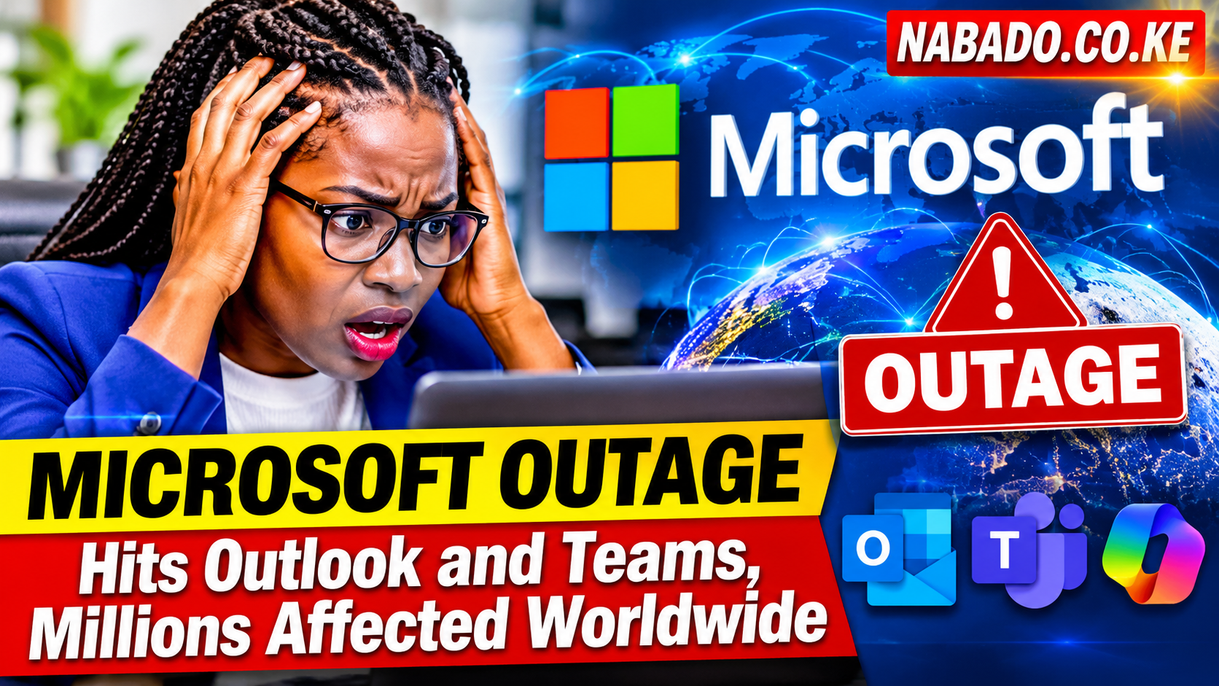
A major global Microsoft outage has disrupted access to Outlook, Microsoft Teams and other Microsoft 365 services, leaving millions of users facing difficulties communicating, sending emails and accessing essential workplace tools.
The disruption, which began on Thursday, November 12, 2026, affected users across several countries, raising concerns among businesses and organisations that depend on Microsoft’s digital platforms for their daily operations.
Outlook users were among the hardest hit, with reports of people being unable to open their inboxes, send emails or receive new messages. Others experienced repeated connection errors when attempting to access their accounts.
Microsoft Teams, a widely used platform for virtual meetings, workplace communication and collaboration, also experienced service interruptions.
The outage demonstrated how dependent modern workplaces have become on cloud-based technology, with even a temporary disruption affecting communication and productivity across different industries.
Microsoft Outage Affects Multiple Services
The technical problems extended beyond Outlook and Teams, affecting several applications within Microsoft’s ecosystem.
Some users reported difficulties accessing Microsoft 365, OneDrive, SharePoint and other online productivity tools.
These services are widely used by businesses, schools, government institutions and individuals to store documents, manage projects, communicate and share information.
For organisations that rely heavily on Microsoft’s infrastructure, the disruption created significant operational challenges.
Employees who depend on Outlook for official correspondence were unable to respond to certain requests, while teams using cloud-based document storage experienced difficulties accessing important files.
The impact varied depending on the service and region, meaning not every Microsoft customer experienced the same problems.
What Caused the Microsoft Global Outage?
Microsoft attributed the disruption to technical problems affecting parts of its infrastructure.
The company reported that some of its servers were experiencing unusually high workloads, resulting in reduced capacity and connectivity problems.
Engineers began investigating the issue and introduced recovery measures aimed at restoring affected systems.
These included restarting affected servers and redirecting traffic to alternative infrastructure to reduce pressure on struggling systems.
However, the recovery process proved challenging, with some servers becoming unresponsive again after being brought back online.
Microsoft subsequently explored additional technical solutions to stabilise its infrastructure and restore normal service.
The company did not identify a cyberattack as the cause of the disruption.
Businesses and Government Agencies Affected
The outage affected organisations across different sectors, highlighting the risks associated with depending on a single technology provider for essential business operations.
Government institutions, financial organisations and businesses in several countries reported disruptions.
Some organisations experienced difficulties communicating internally, while others struggled to access services used for customer support and daily administration.
Airlines and other service providers were also among the organisations affected by interruptions involving their digital communication systems.
The incident illustrated how problems affecting one major technology company’s infrastructure can have consequences far beyond the technology industry.
Microsoft Working to Restore Services
Microsoft engineers continued working to identify the underlying technical problems and restore affected applications.
Although some services began showing signs of recovery, the company faced difficulties achieving consistent performance across its infrastructure.
Users were encouraged to monitor Microsoft’s official service-status channels for updates rather than repeatedly attempting to access applications experiencing problems.
The company had not provided a definitive timeline for the complete restoration of all affected services in the reports available on November 13.
What the Outage Means for Kenyan Businesses
The disruption is also significant for Kenyan organisations that rely on Microsoft 365 for everyday business operations.
Many companies use Outlook for official communication, Teams for virtual meetings and OneDrive and SharePoint for storing important documents.
When these services become unavailable, employees may struggle to communicate with colleagues, respond to clients and complete urgent assignments.
Businesses affected by the disruption may need to temporarily rely on alternative communication channels, including telephone calls and other messaging platforms.
The incident also highlights the importance of maintaining backup systems and business continuity plans to minimise the impact of unexpected technology failures.
Fresh Questions Over Microsoft’s Cloud Reliability
The latest outage has renewed discussions about the reliability of cloud-based services and the growing dependence on major technology companies.
Microsoft’s platforms support millions of individuals and organisations worldwide, making service interruptions particularly disruptive.
While cloud computing offers convenience, flexibility and easier collaboration, widespread infrastructure failures can affect numerous customers simultaneously.
For businesses, the incident serves as a reminder that even established technology providers can experience unexpected technical problems.
As Microsoft continues its recovery efforts, users around the world will be watching closely for confirmation that Outlook, Teams and other essential applications have returned to normal operation.
The full extent of the disruption and its financial impact will become clearer as more information emerges.
SUGGESTED READS
- How to Prompt Friends and Other People on M-Pesa
- Why Your Daily Spending Decisions Matter More Than You Think
- How to Supercharge Your Productivity at Work
- The Simple Habits That Help Kenyans Become Financially Stable
- Living Paycheck to Paycheck in Kenya: The Silent Financial Crisis No One Is Talking About
- Why More Kenyans Are Choosing Side Hustles Over Employment
- How to Manage Money in Kenya When Prices Keep Rising
- The Honest Reality of Freelancing in Kenya (Income, Struggles, and Success Tips)
- The Dark Side of Hustling in Kenya: What Social Media Never Shows You
- How Young Kenyans Are Surviving Without Stable Jobs

Support Our Website!
We appreciate your visit and hope you find our content valuable. If you’d like to support us further, please consider contributing through the TILL NUMBER: 9549825. Your support helps us keep delivering great content!
If you’d like to support Nabado from outside Kenya, we invite you to send your contributions through trusted third-party services such as Remitly, western union, SendWave, or WorldRemit. These platforms are reliable and convenient for international money transfers.
Please use the following details when sending your support:
Phone Number: +254701838999
Recipient Name: Peterson Getuma Okemwa
We sincerely appreciate your generosity and support. Thank you for being part of this journey!