

We aint done yet.. Expect another one.
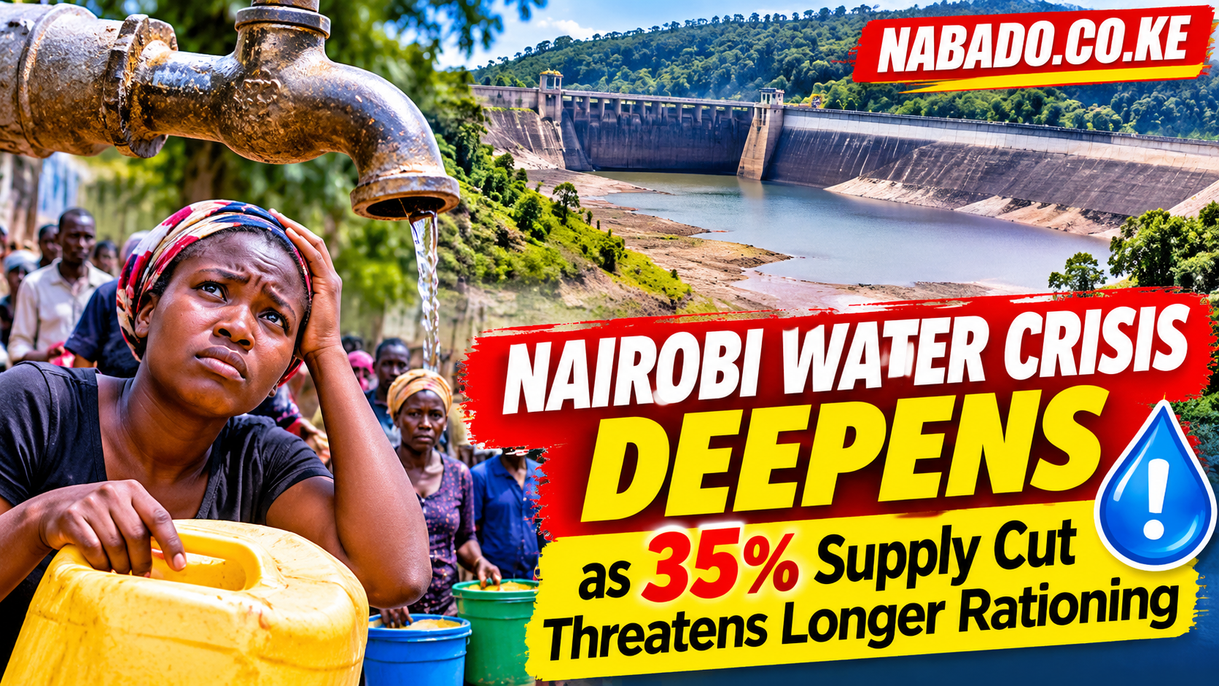
Residents of Nairobi and neighbouring counties could experience longer periods without piped water following a 35% reduction in water production by the Nairobi City Water and Sewerage Company.
The announcement, made on November 9, 2026, comes amid declining water levels at Ndakaini Dam, one of the major sources supplying Nairobi and surrounding areas.
According to the water utility, below-average rainfall in the dam’s catchment area has reduced water inflows, forcing the company to cut production to preserve the remaining reserves.
The reduction has affected operations at two major treatment facilities, Ngethu and Kigoro water treatment plants, which play a significant role in supplying water to Nairobi residents.
Counties Likely to Be Affected
The supply disruption is expected to affect households and businesses across Nairobi, Kiambu, Machakos and Kajiado counties.
Several water service providers serving these areas are likely to implement extended rationing schedules as they adjust to the reduced production.
Residents who depend entirely on piped water could face difficulties accessing sufficient supplies for cooking, cleaning, bathing and other daily activities.
Businesses that rely heavily on water, including hotels, restaurants, laundries and manufacturing facilities, may also experience increased operational costs as they seek alternative supplies.
Nairobi Water Urges Residents to Conserve Water
Nairobi Water has urged consumers to use the available water responsibly as the utility works to manage the shortage.
Residents have been encouraged to avoid unnecessary wastage, repair leaking pipes, store water safely and prioritise essential household activities.
The company is also expected to continue monitoring water levels and reviewing production depending on rainfall patterns and the condition of the dams.
When Will Normal Water Supply Resume?
The biggest concern for residents is how long the rationing will continue.
Nairobi Water has not provided a definite date for the restoration of normal supply. Recovery will largely depend on improved rainfall and increased water inflows into the affected reservoirs.
For now, households are being encouraged to prepare for possible interruptions and follow announcements from their respective water service providers.
The 35% production reduction highlights Nairobi’s continued vulnerability to changing weather patterns and the growing pressure on water resources as the city’s population and demand continue to increase.
SUGGESTED READS
- Why Do People Go Back to Someone Who Hurts Them? The Psychology Behind Toxic Relationships
- Can Your Brain Create a Memory That Never Happened? The Truth About False Memories
- Why Do Strangers Sometimes Look Familiar? The Fascinating Science Behind That Feeling
- Africa’s Social Media Obsession: The Countries Spending More of Their Lives Online
- What Is the Most Common Thing Humans Lie About? The Truth Behind Every day Lies
- Why Do Songs Get Stuck in Your Head? The Science Behind Earworms
- Why Do I Sometimes Forget What I Was About to Say? The Science Behind Losing Your Train of Thought
Support Our Website!
We appreciate your visit and hope you find our content valuable. If you’d like to support us further, please consider contributing through the TILL NUMBER: 9549825. Your support helps us keep delivering great content!
If you’d like to support Nabado from outside Kenya, we invite you to send your contributions through trusted third-party services such as Remitly, western union, SendWave, or WorldRemit. These platforms are reliable and convenient for international money transfers.
Please use the following details when sending your support:
Phone Number: +254701838999
Recipient Name: Peterson Getuma Okemwa
We sincerely appreciate your generosity and support. Thank you for being part of this journey!