

simply amazing, always for you.
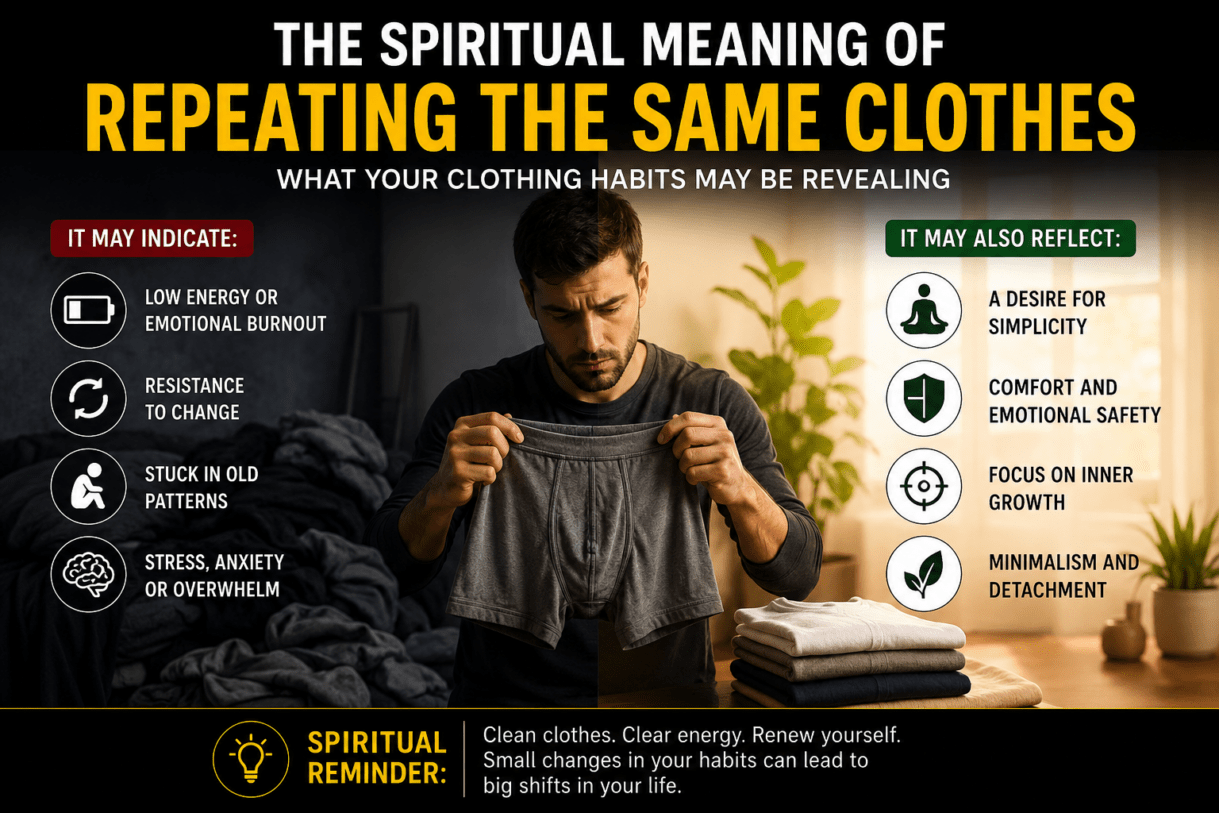
There are habits people rarely talk about openly, yet millions quietly experience them every day. One of them is the tendency to repeatedly wear the same clothes — especially the same innerwear. Sometimes it happens because of comfort. Sometimes it becomes a routine. Other times, it turns into an emotional attachment so strong that a person feels uneasy wearing anything else.
While many people dismiss this as an ordinary behavior, others believe there may be a deeper spiritual meaning behind it. Across cultures, religions, and spiritual traditions, clothing has never been viewed as “just fabric.” Clothes are often connected to identity, emotional energy, personal confidence, spiritual cleanliness, and even destiny.
Innerwear, in particular, occupies a unique symbolic position because it is the closest layer to the human body. It absorbs sweat, body heat, emotions, movement, and daily experiences. For this reason, many spiritual traditions consider undergarments deeply personal objects that can carry emotional and energetic significance.
But what does it really mean when someone keeps repeating the same clothes or innerwear?
Is it a spiritual sign?
A psychological pattern?
An emotional comfort mechanism?
Or simply a normal human habit?
The truth is more complex than many people realize.
This article explores the spiritual, emotional, cultural, and psychological meanings behind repeatedly wearing the same clothes — especially innerwear — and what this behavior may reveal about a person’s inner world.
Why Clothes Have Spiritual Meaning in Many Cultures
Long before modern fashion existed, clothing already carried spiritual symbolism.
In ancient societies, what people wore represented:
- purity,
- status,
- spiritual identity,
- mourning,
- protection,
- discipline,
- or transformation.
Even today, many religions maintain sacred dress traditions:
- white garments for purity,
- black clothing for mourning,
- robes for humility,
- head coverings for reverence,
- and ceremonial clothing for spiritual rituals.
This is because clothing does more than cover the body. It communicates identity and energy.
Many spiritual traditions believe clothes absorb:
- emotions,
- memories,
- personal energy,
- environmental energy,
- and spiritual influence.
That is why people often say things like:
- “I feel lucky in these clothes.”
- “This outfit gives me confidence.”
- “I don’t feel like myself without this.”
The attachment is not always logical. Sometimes it is emotional, psychological, or spiritual.
The Special Spiritual Significance of Innerwear
Innerwear is different from outer clothing.
Unlike jackets or shirts, innerwear:
- stays in close contact with the body,
- absorbs sweat and body heat,
- touches sensitive areas,
- and is worn during the most vulnerable moments of life.
Because of this closeness, many spiritual beliefs associate undergarments with:
- personal energy,
- emotional vulnerability,
- sexuality,
- confidence,
- protection,
- and self-worth.
In some traditions, people avoid lending innerwear because it is believed to carry personal spiritual energy. Others believe worn undergarments can hold emotional residue from experiences, relationships, stress, or trauma.
Whether one believes these ideas literally or symbolically, the emotional connection people develop with certain innerwear is very real.
Repeating the Same Clothes as a Spiritual Comfort Zone
One of the most common spiritual interpretations of repeatedly wearing the same clothes is emotional safety.
Certain clothes can become psychological armor.
A person may repeatedly wear the same innerwear because:
- it feels familiar,
- it creates comfort,
- it reduces anxiety,
- or it represents emotional security.
Spiritually, this may mean the individual is seeking stability during uncertain times.
Human beings naturally cling to familiar things when life feels chaotic. Repeating clothing can become a subconscious attempt to maintain emotional balance.
This is especially common during:
- heartbreak,
- grief,
- stress,
- financial hardship,
- depression,
- major life changes,
- or emotional exhaustion.
The clothing becomes associated with survival and emotional grounding.
The Spiritual Meaning of Feeling “Attached” to Certain Clothes
Some people feel unusually connected to specific clothes or innerwear. They may wash them constantly and continue wearing them even when they are old or damaged.
Spiritually, attachment to clothing can symbolize:
- attachment to past identity,
- fear of change,
- emotional dependency,
- unresolved memories,
- or resistance to personal transformation.
Sometimes the clothes remind a person of:
- a happier time,
- a successful period,
- a former relationship,
- youth,
- safety,
- or emotional stability.
The mind and spirit often hold onto physical objects connected to emotional experiences.
This does not automatically mean something supernatural is happening. Often, the clothing becomes symbolic of emotional continuity.
Spiritual Stagnation and Repetitive Clothing Habits
Many spiritual teachings emphasize renewal.
Fresh clothes, bathing, cleaning, and grooming are commonly associated with:
- new beginnings,
- spiritual cleansing,
- emotional release,
- and energetic renewal.
When someone repeatedly wears the same innerwear without change, some spiritual traditions interpret it as a sign of stagnation.
This does not mean the person is cursed or spiritually attacked. Rather, it may symbolize:
- emotional exhaustion,
- lack of motivation,
- spiritual heaviness,
- low self-esteem,
- or feeling stuck in life.
Sometimes the outer habit reflects the inner condition.
A person who feels trapped emotionally may unconsciously stop caring about renewal in practical areas of life.
The Link Between Energy and Clothing
Many spiritual belief systems teach that objects absorb energy.
This idea appears in:
- African traditions,
- Eastern spirituality,
- New Age beliefs,
- folk traditions,
- and some religious practices.
According to these beliefs, clothing can absorb:
- emotional states,
- stress,
- fear,
- joy,
- anxiety,
- and environmental energy.
This is why many people report feeling emotionally different when wearing different outfits.
Some people feel:
- powerful in certain clothes,
- emotionally low in others,
- or spiritually uncomfortable in garments associated with painful memories.
Whether interpreted spiritually or psychologically, clothing clearly influences emotional experience.
Why Some People Fear Throwing Away Old Innerwear
People sometimes hold onto old undergarments for years.
Spiritually, this can symbolize:
- fear of letting go,
- emotional attachment,
- insecurity,
- or subconscious survival instincts.
In some cases, individuals grew up in environments where resources were scarce. Repeating and preserving clothing then becomes linked to emotional survival.
The behavior may continue even after circumstances improve.
Spiritually, this may represent a scarcity mindset — the fear that letting go of old things could somehow create instability or loss.
Can Repeating the Same Innerwear Affect Confidence?
Absolutely.
Even from a psychological perspective, clothing affects identity and mood.
Clean, fresh clothing often contributes to:
- higher confidence,
- better self-esteem,
- improved mood,
- and greater emotional energy.
On the other hand, neglecting personal care can sometimes reinforce:
- shame,
- insecurity,
- emotional fatigue,
- or low motivation.
Spiritually, self-care is often viewed as self-respect.
Many traditions teach that caring for the body is connected to caring for the spirit.
Spiritual Cleansing Through Clothing
Throughout history, washing clothes has symbolized more than hygiene.
It has represented:
- purification,
- renewal,
- spiritual cleansing,
- and emotional release.
In many cultures:
- white clothing symbolizes purity,
- clean garments represent dignity,
- and changing clothes after hardship symbolizes transformation.
Some spiritual practices even recommend:
- washing clothes after funerals,
- discarding garments linked to traumatic experiences,
- sun-drying clothes for cleansing,
- or praying while laundering clothes.
These rituals reflect the belief that clothing can carry emotional and spiritual weight.
Repetition as a Sign of Emotional Burnout
Not every repetitive clothing habit is spiritual.
Sometimes the explanation is emotional burnout.
People experiencing:
- anxiety,
- depression,
- chronic stress,
- or emotional exhaustion
often repeat clothing because decision-making becomes mentally draining.
Choosing what to wear may feel overwhelming, so the brain defaults to familiarity.
Spiritually, this can indicate the need for:
- rest,
- healing,
- grounding,
- and emotional restoration.
The habit itself is not dangerous, but it may point toward deeper emotional fatigue.
Minimalism vs Spiritual Neglect
It is important to distinguish between simplicity and neglect.
Some spiritually disciplined people intentionally repeat clothes because they reject materialism.
This is common among:
- monks,
- spiritual teachers,
- disciplined minimalists,
- and people focused on inner growth.
For them, repeating clothes represents:
- humility,
- simplicity,
- detachment from vanity,
- and mental clarity.
However, there is a difference between:
- intentional simplicity,
and - emotional neglect.
The key difference is awareness.
Minimalism is deliberate.
Neglect often comes from emotional disconnection or low energy.
The Psychological Power of Familiar Clothing
Science also explains why people repeat clothes.
Familiar clothing creates predictability.
Predictability reduces stress.
That is why many successful people wear nearly identical outfits daily. It minimizes mental effort and creates routine.
Innerwear can also create sensory comfort:
- familiar texture,
- fit,
- smell,
- or body memory.
Spiritually, familiar clothing may feel “safe” because the body associates it with emotional stability.
Cultural Beliefs About Clothing and Energy
Different cultures hold unique beliefs about clothing.
African Traditions
In some African spiritual traditions:
- clothing may symbolize dignity and personal power,
- dirty garments can symbolize spiritual heaviness,
- and repeated unclean innerwear may be viewed as spiritually unhealthy.
Some communities also believe personal clothing should be protected because it carries spiritual identity.
Eastern Spiritual Traditions
Certain Eastern traditions connect cleanliness with energetic balance.
Fresh clothing is often associated with:
- inner harmony,
- spiritual purity,
- and energetic flow.
Some practices even recommend wearing certain colors to influence emotional or spiritual states.
Christian Perspectives
Many Christian teachings focus less on mystical energy and more on:
- cleanliness,
- self-respect,
- modesty,
- and discipline.
The spiritual meaning is often connected to the condition of the heart rather than the clothing itself.
However, renewal and cleanliness still carry symbolic significance.
Is Repeating Innerwear a Bad Spiritual Sign?
Not necessarily.
Repeating the same innerwear is not automatically:
- a curse,
- bad luck,
- spiritual attack,
- or negative energy.
In most cases, it reflects:
- habit,
- comfort,
- emotional attachment,
- stress,
- financial circumstances,
- or personal preference.
The deeper meaning depends on:
- why the habit exists,
- how it affects your life,
- and whether it reflects emotional imbalance.
When the Habit May Signal Something Deeper
You may need deeper reflection if:
- you feel emotionally dependent on certain clothes,
- you avoid replacing worn-out garments,
- the habit connects to sadness or low self-worth,
- you neglect hygiene consistently,
- or you feel emotionally “stuck.”
In such cases, the clothing may symbolize unresolved emotional issues.
How to Spiritually Reset Your Energy Through Clothing
Many people underestimate how refreshing small physical changes can feel.
If you want an emotional or spiritual reset, consider:
- organizing your wardrobe,
- donating unused clothes,
- replacing damaged innerwear,
- wearing brighter colors,
- deep-cleaning your room,
- and improving self-care routines.
These actions may seem simple, but they can psychologically and emotionally signal renewal.
The Emotional Meaning of Wearing “Lucky” Clothes
Many people believe certain clothes bring luck.
Athletes, performers, students, and workers often repeat specific garments during important moments because they associate them with success.
Spiritually, the clothing becomes symbolic of confidence and positive expectation.
The actual power may not come from the garment itself but from the emotional belief attached to it.
Confidence changes behavior.
Behavior influences outcomes.
Clothing and Identity
Clothing often reflects identity.
When someone repeatedly wears the same clothes, they may unconsciously be reinforcing a specific version of themselves.
This can be positive or limiting.
For example:
- someone recovering from hardship may cling to familiar clothes for emotional stability,
- while someone afraid of change may unconsciously resist personal growth through repetitive habits.
Spiritually, transformation often begins when identity shifts.
Sometimes changing clothing patterns symbolizes readiness for a new chapter in life.
Why Innerwear Symbolizes Vulnerability
Innerwear is hidden from public view.
Because of this, it often symbolizes:
- private identity,
- vulnerability,
- intimacy,
- and self-perception.
The way people treat their innerwear may reflect how they feel about themselves privately — not publicly.
Someone may dress well outside while neglecting innerwear due to:
- low self-esteem,
- emotional fatigue,
- or internal disconnection.
Spiritually, hidden habits often reveal deeper truths than public appearances.
The Connection Between Self-Worth and Personal Care
Personal care is deeply connected to self-worth.
When people feel emotionally healthy, they usually care more about:
- cleanliness,
- appearance,
- grooming,
- and freshness.
When emotional health declines, these areas are often neglected first.
Spiritually, caring for your body can be viewed as honoring yourself.
This does not mean expensive clothing is necessary. Simplicity can still reflect dignity and self-respect.
The Danger of Over-Spiritualizing Everything
It is important to remain balanced.
Not every repeated behavior has mystical meaning.
Sometimes repeating the same innerwear simply means:
- laundry has not been done,
- finances are limited,
- comfort matters,
- or routine feels easier.
Over-spiritualizing ordinary habits can create unnecessary fear.
Healthy spirituality should encourage awareness, not paranoia.
The Symbolic Power of Fresh Starts
There is a reason people wear new clothes during:
- weddings,
- graduations,
- birthdays,
- religious ceremonies,
- and New Year celebrations.
Fresh clothing symbolizes:
- transformation,
- hope,
- renewal,
- and a new beginning.
Even psychologically, changing appearance can create emotional momentum.
Sometimes a simple wardrobe refresh can help a person feel mentally lighter and emotionally renewed.
The spiritual meaning of repeatedly wearing the same clothes — especially innerwear — is not always mysterious or supernatural. More often, it reflects emotional patterns, comfort, identity, stress levels, or subconscious attachment.
For some people, the habit represents:
- stability,
- grounding,
- simplicity,
- or emotional safety.
For others, it may reveal:
- stagnation,
- burnout,
- fear of change,
- or emotional exhaustion.
Clothing carries symbolic power because human beings attach emotions, memories, and identity to what they wear. Innerwear, being closest to the body, naturally feels even more personal and emotionally charged.
The most important thing is balance.
There is nothing wrong with comfort or simplicity. But if repetitive clothing habits begin reflecting emotional neglect, low self-worth, or resistance to growth, it may be time for renewal — not just in your wardrobe, but within yourself.
Sometimes changing something small externally can become the first step toward healing internally.
SUGGESTED READS
- How to Handle Arguments in a Healthy Way Without Hurting Each Other
- 25 Powerful Relationship Tips for Couples Living Together: How to Thrive, Not Just Survive
- Why Ladies Shouldn’t Tell Their Friends About Their Husbands’ Strengths or Downfalls
- How to Rebuild Trust in a Relationship After Betrayal
- Common Relationship Mistakes and How to Avoid Them
- Online Dating Tips: How to Find True Love in the Digital Space

Support Our Website!
We appreciate your visit and hope you find our content valuable. If you’d like to support us further, please consider contributing through the TILL NUMBER: 9549825. Your support helps us keep delivering great content!
If you’d like to support Nabado from outside Kenya, we invite you to send your contributions through trusted third-party services such as Remitly, western union, SendWave, or WorldRemit. These platforms are reliable and convenient for international money transfers.
Please use the following details when sending your support:
Phone Number: +254701838999
Recipient Name: Peterson Getuma Okemwa
We sincerely appreciate your generosity and support. Thank you for being part of this journey!