

simply amazing, always for you.
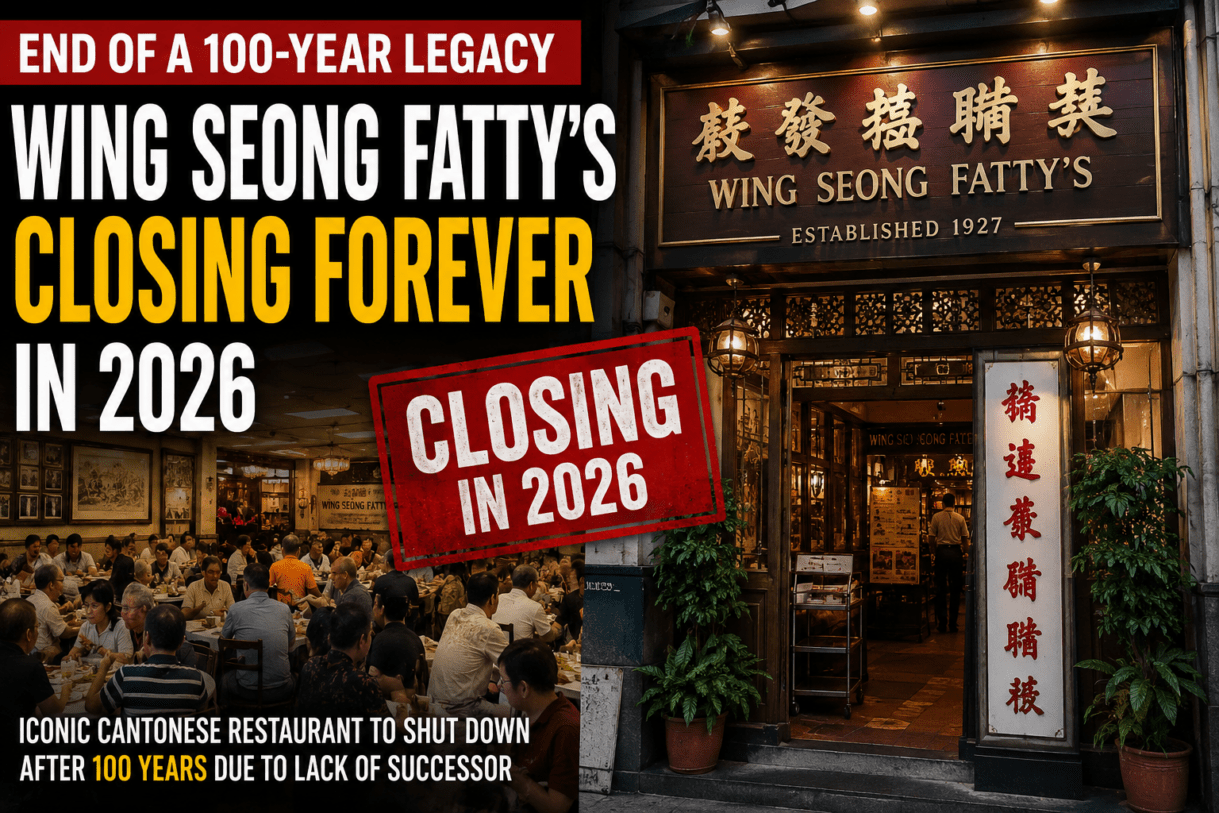
A beloved chapter in Cantonese culinary history is coming to a heartbreaking end. After nearly 100 years of serving generations of loyal customers, the legendary Wing Seong Fatty’s restaurant will officially close its doors in 2026, marking the end of one of the region’s most iconic family-run eateries.
The announcement has sent waves of sadness through food lovers and longtime patrons who grew up dining at the historic establishment. According to the owners, the closure is happening because there is no successor willing or able to continue the family business after decades of operation.
For many customers, Wing Seong Fatty’s was never just a restaurant. It was a living piece of history.
End of an Era for Cantonese Dining
Founded almost a century ago, Wing Seong Fatty’s became famous for preserving authentic Cantonese flavors through generations. The restaurant earned a reputation for traditional recipes, classic roast meats, handmade specialties, and an atmosphere that captured the golden age of Cantonese dining.
Families celebrated birthdays, weddings, Lunar New Year gatherings, and major milestones inside its dining halls for decades. Some customers say they first visited the restaurant as children and later brought their own children and grandchildren there.
Now, many are rushing to make reservations before the iconic restaurant disappears forever.
The owners revealed that despite the restaurant’s popularity and cultural importance, finding someone willing to continue the demanding family business proved impossible. Like many traditional eateries around the world, the next generation chose different career paths instead of inheriting the restaurant trade.
Why Historic Restaurants Are Disappearing
Wing Seong Fatty’s closure reflects a growing global trend affecting heritage restaurants and family-owned businesses.
Many iconic establishments are struggling with:
- Rising operational costs
- Increasing rent and food prices
- Labor shortages
- Changing customer habits
- Competition from modern dining chains
- Lack of younger family members to take over
Food industry experts say the closure of century-old restaurants represents more than just economic pressure. It also signals the gradual disappearance of cultural traditions and culinary heritage that cannot easily be recreated.
Historic Cantonese restaurants especially face challenges balancing tradition with changing consumer preferences. Younger diners increasingly favor modern food concepts, fast-casual dining, and social media-driven restaurant trends, leaving traditional establishments fighting to survive.
Customers React With Emotion Online
News of the closure quickly spread online, where thousands of customers shared emotional memories connected to Wing Seong Fatty’s.
Some described the restaurant as the “heart of family celebrations,” while others called it “one of the last true Cantonese institutions.” Former customers posted old family photos, stories of wedding banquets, and memories of favorite dishes they had enjoyed for decades.
Many expressed sadness that future generations will never experience the authentic old-school atmosphere that made the restaurant legendary.
For longtime patrons, the closure feels deeply personal.
“This is where our family gathered every holiday,” one customer wrote online. “Losing this place feels like losing a part of our childhood.”
A Cultural Landmark Beyond Food
Historians and food enthusiasts say establishments like Wing Seong Fatty’s are important cultural landmarks because they preserve culinary techniques, family traditions, and community identity across generations.
Unlike modern chain restaurants, century-old eateries often carry handwritten recipes, cooking methods, and hospitality traditions passed down through families for decades.
Once those businesses close, much of that history disappears forever.
Experts warn that without stronger efforts to preserve heritage dining institutions, many more iconic restaurants could vanish within the next decade.
Final Year Expected to Draw Huge Crowds
With the final closure set for 2026, customers are expected to flock to Wing Seong Fatty’s for one last taste of its historic Cantonese cuisine.
Many diners hope to revisit favorite dishes, reconnect with old memories, and say goodbye to a restaurant that survived wars, economic downturns, changing generations, and nearly 100 years of history.
The restaurant’s final months are likely to become an emotional farewell tour for loyal customers who spent a lifetime eating there.
As the countdown to closure begins, Wing Seong Fatty’s now stands as a powerful reminder of how quickly cultural institutions can disappear when tradition no longer has a successor.
SUGGESTED READS
- The Clearing and Maturation Process of a Cheque
- How to Ask for a Promotion (And Actually Get It)
- How to Ask for a Salary Increase (and Actually Get It)
- How to Make Money Online: A Comprehensive Guide
- The Top 10 Countries Most Indebted to China
- How to Improve Customer Loyalty: A Comprehensive Guide
- Strategies for Improving Brand Awareness
- Mastering the Art of Negotiation: A Comprehensive Guide to Improving Your Skills

Support Our Website!
We appreciate your visit and hope you find our content valuable. If you’d like to support us further, please consider contributing through the TILL NUMBER: 9549825. Your support helps us keep delivering great content!
If you’d like to support Nabado from outside Kenya, we invite you to send your contributions through trusted third-party services such as Remitly, western union, SendWave, or WorldRemit. These platforms are reliable and convenient for international money transfers.
Please use the following details when sending your support:
Phone Number: +254701838999
Recipient Name: Peterson Getuma Okemwa
We sincerely appreciate your generosity and support. Thank you for being part of this journey!