

simply amazing, always for you.
Some stories sound too bizarre to be true. A man surviving two atomic bombs, a cat falling from skyscrapers and living, or a chicken continuing to walk around after losing its head all sound like urban legends invented to shock people online. Yet one of the strangest stories ever documented in American history is completely real.
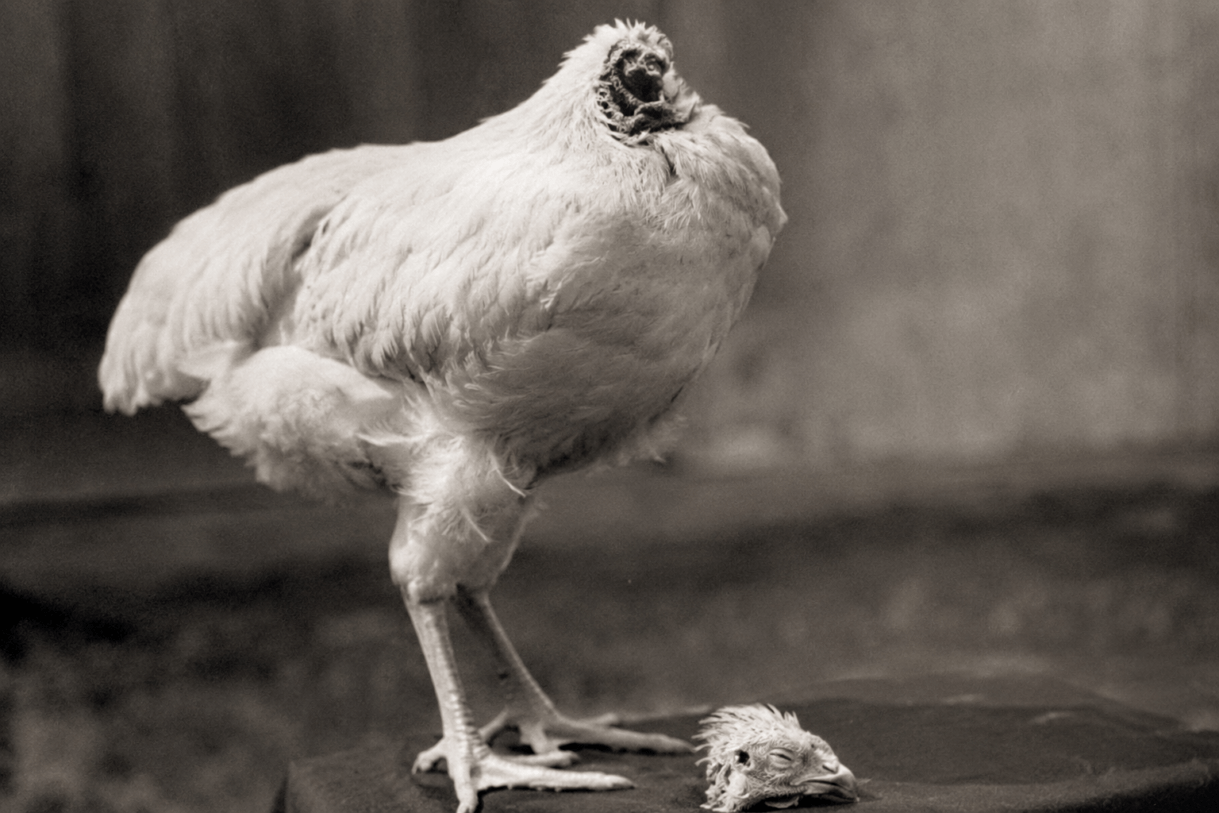
In 1945, a chicken named Mike the Headless Chicken became one of the most famous animals in the United States after surviving a failed slaughter attempt. Instead of dying instantly, Mike continued living for an astonishing 18 months.
The bird ate through a dropper, traveled across America, appeared in newspapers, earned thousands of dollars, and amazed scientists who struggled to explain how such survival was possible. Decades later, Mike’s story remains one of the most shocking real-life animal survival stories ever recorded.
This article explores the complete story behind Mike the Headless Chicken, the science behind his survival, how he became a national sensation, and why people around the world are still fascinated by him nearly 80 years later.
Who Was Mike the Headless Chicken?


Mike was an ordinary rooster born on a farm in Fruita, Colorado, owned by farmer Lloyd Olsen and his wife Clara.
Nothing about the bird seemed unusual at first. Mike was just another chicken among many raised for food during the mid-1940s. At that time, slaughtering chickens at home was common in rural America. Families often raised their own poultry for eggs and meat.
On September 10, 1945, Lloyd Olsen went outside to prepare several chickens for dinner. Mike happened to be one of them.
What occurred next would change the history of animal folklore forever.
The Day Mike Lost His Head
Lloyd Olsen placed Mike on a chopping block and swung an axe toward the bird’s neck. Normally, that would have been the end.
But Mike did not die.
Instead, the chicken stood up and began stumbling around the yard.
At first, Olsen thought the bird’s movements were simply reflexes. Chickens often flap or twitch after slaughter due to nerve activity. However, Mike kept moving long after that stage should have ended.
The bird even attempted to groom itself and balance normally.
Olsen realized something extraordinary had happened.
The axe had missed a crucial section of Mike’s brain.
Instead of completely severing the head, the cut left most of the brain stem intact. One ear and part of the jugular vein also remained attached to the body.
That accidental mistake allowed Mike to survive.
How Did Mike the Headless Chicken Stay Alive?
The science behind Mike’s survival is what makes the story even more astonishing.
Most people assume that removing a head instantly kills any animal. In most cases, that is true. However, the body’s automatic survival functions are controlled by the brain stem, not the larger upper portion of the brain.
The brain stem controls:
- Breathing
- Heartbeat
- Basic movement
- Reflexes
- Circulation
Because Mike’s brain stem remained largely intact, his body continued functioning.
Veterinarians later confirmed that the axe missed the jugular vein, preventing Mike from bleeding to death. Blood clotting also helped seal the wound quickly.
Scientists who studied Mike explained that although the bird lost much of its face and skull, enough neurological structure remained for survival.
The case became one of the most famous examples of accidental biological survival ever documented.
Feeding a Headless Chicken
One obvious question fascinated people across America:
How could Mike eat without a head?
Since Mike no longer had a beak or full mouth, Lloyd Olsen and his wife used an eyedropper to feed him directly through his throat opening.
Mike’s diet included:
- Milk
- Water
- Small grains
- Corn kernels
The couple carefully inserted food into the remaining esophagus.
Because mucus sometimes blocked Mike’s airway, they regularly cleaned his throat using a syringe.
Caring for Mike required constant attention. Without daily feeding and cleaning, he would not have survived.
Remarkably, Mike even gained weight during parts of his life after the accident.
From Farm Curiosity to National Celebrity
News about the “miracle chicken” spread quickly across Colorado.
Soon, local newspapers picked up the bizarre story. Reporters traveled to see whether the chicken was real or a hoax.
It was very real.
Mike became an overnight media sensation.
The late 1940s were a golden age for traveling carnivals and sideshows in America. People paid to see strange attractions, unusual talents, and biological oddities.
Mike instantly became one of the most profitable attractions of the era.


Crowds lined up to witness the impossible bird.
Some visitors thought it was fake until they saw Mike moving around with their own eyes.
Others became fascinated by the scientific mystery behind his survival.
Mike toured the country and appeared at carnivals, fairs, and exhibitions across the United States.
Mike’s Massive Earnings
Mike was not just famous — he became extremely valuable.
Reports from the time claimed Mike earned his owners as much as $4,500 per month during the peak of his popularity. In modern value, that would equal tens of thousands of dollars monthly.
The bird was insured for $10,000, which was a massive amount in the 1940s.
Newspapers described Mike as one of the strangest entertainers in America.
At a time when radio dominated entertainment and television was still new, people were hungry for astonishing real-life stories. Mike delivered exactly that.
The chicken appeared in magazines, newspaper columns, and promotional posters throughout the country.
America’s Obsession With Strange Attractions
To understand Mike’s popularity, it helps to understand American culture during the 1940s.
Traveling fairs and oddity exhibitions were major entertainment industries. Long before the internet or social media, people gathered at carnivals to witness unusual acts and bizarre spectacles.
Audiences were fascinated by:
- Human oddities
- Animal anomalies
- Circus performers
- Illusionists
- Survival stories
- Scientific curiosities
Mike fit perfectly into that world.
He became one of the era’s most talked-about attractions because he blurred the line between science and impossibility.
People could not stop asking questions.
How was he alive?
Did he feel pain?
Could he see?
Was it cruel?
Was it a miracle?
The mystery only increased Mike’s fame.
The Scientific Community Investigates
Scientists and veterinarians became deeply interested in Mike’s condition.
Experts examined the bird and concluded that his survival was biologically possible due to the preserved brain stem.
The case helped scientists better understand:
- Neurological survival
- Reflex behavior
- Animal anatomy
- Brain function
Although Mike was unique, scientists explained that chickens have relatively small brains compared to mammals. Much of their basic bodily operation relies on lower brain functions.
Still, surviving for 18 months was considered extraordinary.
Mike became one of the most famous documented examples of partial decapitation survival in medical and biological discussions.
Was Mike Suffering?
One of the biggest ethical questions surrounding Mike’s story concerns whether the chicken suffered.
Modern animal experts remain divided.
Some believe Mike likely experienced limited awareness due to the missing upper brain structures. Others argue that basic pain responses may still have existed.
What is clear is that Mike continued functioning normally in many ways. Witnesses reported that he:
- Walked around
- Balanced himself
- Attempted grooming motions
- Responded to movement
- Maintained body weight
His owners reportedly cared for him carefully because Mike had become both valuable and beloved.
Still, by modern standards, many people would view such exhibition practices differently today.
The Tragic Death of Mike the Headless Chicken
After surviving for 18 remarkable months, Mike’s life ended unexpectedly in March 1947.
At the time, Mike was touring Arizona with his owners.
One night at a motel, Mike began choking on mucus.
Normally, the Olsens used a syringe to clear his throat and airway. Unfortunately, the syringe had reportedly been left behind at another location.
Without it, they could not save him.
Mike died at approximately two years old.
Ironically, after surviving decapitation, it was choking that finally ended his life.
His death shocked fans across the country.
Many newspapers published obituaries for the famous bird.
Mike’s Legacy Lives On Today


Even decades after his death, Mike remains one of America’s most legendary animal stories.
The town of Fruita, Colorado, continues honoring him every year through the famous “Mike the Headless Chicken Festival.”
The event includes:
- Live music
- Contests
- Chicken-themed games
- Parades
- Historical exhibits
Thousands of visitors attend the festival annually.
Mike has become a permanent part of local history and American folklore.
There are statues, souvenirs, and museum displays dedicated to the bizarre bird.
Very few animals in history have maintained cultural relevance for nearly a century after death.
Mike is one of them.
Why Mike’s Story Still Fascinates the World
The story of Mike the Headless Chicken continues spreading online because it touches something deeply human: our fascination with survival against impossible odds.
People are naturally drawn to stories that challenge common sense.
Mike forces people to confront uncomfortable truths about biology and life itself.
The story also survives because it combines several powerful elements:
1. Shock Value
The idea of a headless chicken living for 18 months instantly grabs attention.
2. Scientific Mystery
People become curious about how such survival was biologically possible.
3. Emotional Impact
Many people feel sympathy for Mike while others admire his survival.
4. Historical Fascination
The 1940s carnival culture gives the story a unique nostalgic atmosphere.
5. Viral Potential
Even in modern times, Mike’s story spreads rapidly online because it sounds fake despite being true.
Other Animals That Survived Incredible Injuries
Mike’s story is unusual, but nature has produced other shocking survival stories.
Some documented examples include:
- Frogs surviving partial freezing
- Snakes living after severe injury
- Turtles surviving damaged shells
- Cats surviving extreme falls
- Fish regenerating tissue
However, Mike remains one of the most famous examples because his condition was so visually dramatic.
Few survival stories match the sheer disbelief caused by a chicken living without most of its head.
Mike in Popular Culture
Over the years, Mike has appeared in:
- Television documentaries
- Science programs
- Viral internet articles
- Educational discussions
- Museum exhibits
- Books about strange history
The story is often included in lists of:
- Weirdest true stories
- Most unbelievable animal facts
- Historical oddities
- Real events that sound fake
Mike’s name has become synonymous with impossible survival.
Could Something Like This Happen Again?
Technically, yes — but it is extremely unlikely.
Experts explain that Mike survived due to a nearly impossible combination of factors:
- The precise angle of the axe
- The preserved brain stem
- Limited blood loss
- Immediate clotting
- Human care afterward
Without all those conditions happening simultaneously, survival would have been impossible.
That rarity is part of why Mike’s story remains legendary.
Lessons From Mike the Headless Chicken
Although Mike’s story sounds absurd, it offers several deeper lessons.
Survival Is Sometimes Stranger Than Fiction
Reality often produces stories more unbelievable than movies or novels.
Biology Can Be Extraordinary
The human body and animal bodies are capable of surprising resilience under certain conditions.
Curiosity Drives Human Culture
Mike became famous because people are endlessly fascinated by the unknown and unexplained.
History Is Full of Forgotten Wonders
Many extraordinary real-life stories disappear over time, but some survive because they capture the imagination forever.
The Debate Over Animal Entertainment
Mike’s story also raises important conversations about how animals were treated historically.
During the 1940s, traveling animal exhibitions were common and widely accepted. Today, public attitudes toward animal welfare are much stricter.
Modern audiences may view Mike’s exhibition differently than people did at the time.
The story therefore exists in two worlds simultaneously:
- A fascinating biological phenomenon
- A reflection of changing ethics in entertainment
That complexity makes Mike’s story even more historically important.
Why the Internet Keeps Rediscovering Mike
Every few months, Mike’s story goes viral again online.
New generations encounter the headline:
“A chicken survived 18 months without a head.”
Most people initially assume it is fake.
Then they discover the photographs, historical documents, and scientific explanations.
That cycle keeps Mike alive in internet culture decades after his death.
The story perfectly fits the modern appetite for unbelievable but true content.
The story of Mike the Headless Chicken remains one of the strangest true survival stories ever recorded.
What began as an ordinary day on a Colorado farm turned into a worldwide phenomenon that shocked scientists, entertained millions, and permanently entered American folklore.
Mike should have died instantly in 1945.
Instead, he survived for 18 months, toured the country, earned huge amounts of money, and became one of history’s most famous animals.
His story continues fascinating people because it challenges what we think we know about life, biology, and survival itself.
Nearly 80 years later, the legend of Mike the Headless Chicken still feels impossible.
But it happened.
SUGGESTED READS
- The Man Who Survived Two Atomic Bombs: The Unbelievable Story of Tsutomu Yamaguchi
- The 3-Meter Mistake That Almost Cost Her Life
- Captain Irene Koki Mutungi: The Girl Who Touched the Sky
- The Blood Oath: Rise of the Bakassi Boys
- The Last Blessing: The Man Who Made It Rain From Heaven
- How Foday Sankoh Led Sierra Leone into Chaos: The Ruthless Rise of a Rebel
- The Dark Legacy of Okija Shrine: Nigeria’s Most Notorious Traditional

Support Our Website!
We appreciate your visit and hope you find our content valuable. If you’d like to support us further, please consider contributing through the TILL NUMBER: 9549825. Your support helps us keep delivering great content!
If you’d like to support Nabado from outside Kenya, we invite you to send your contributions through trusted third-party services such as Remitly, western union, SendWave, or WorldRemit. These platforms are reliable and convenient for international money transfers.
Please use the following details when sending your support:
Phone Number: +254701838999
Recipient Name: Peterson Getuma Okemwa
We sincerely appreciate your generosity and support. Thank you for being part of this journey!