

We aint done yet.. Expect another one.
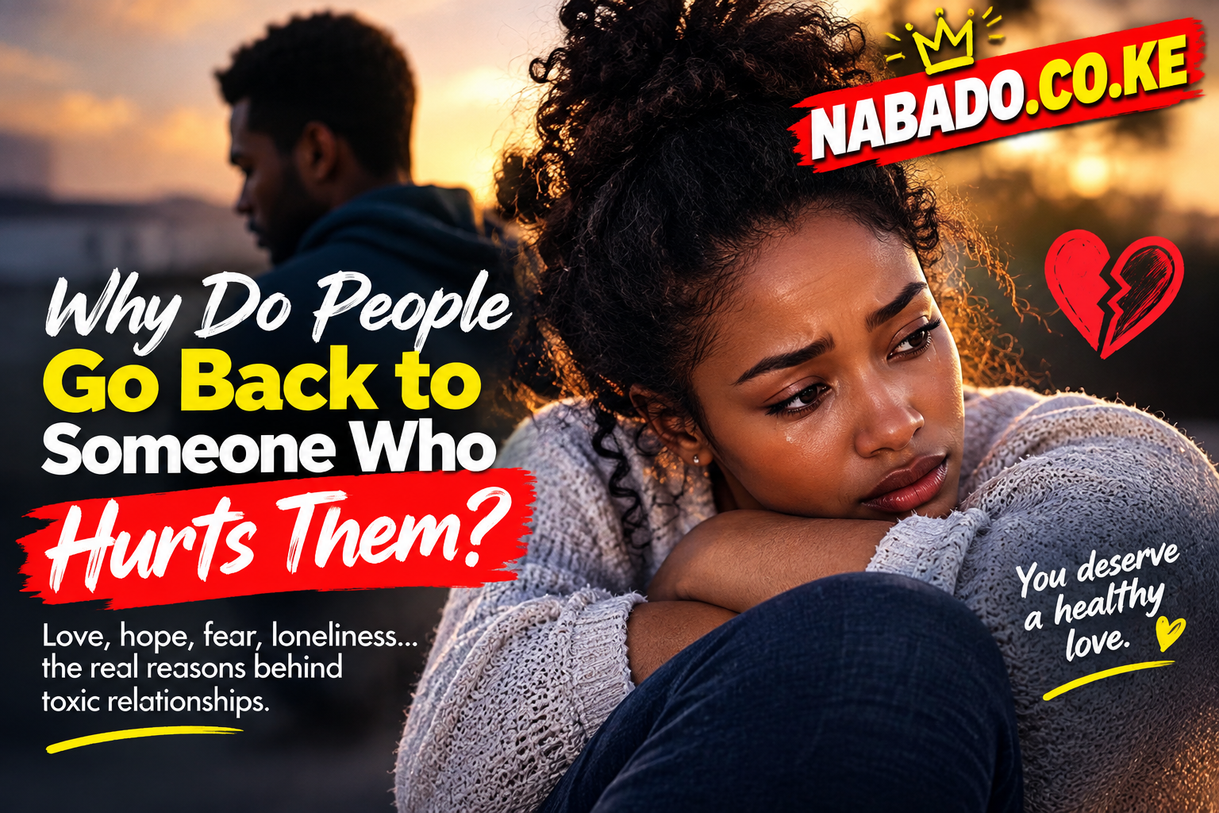
There is a question that often leaves people confused, frustrated and even judgmental: Why do people go back to someone who hurts them?
From the outside, the answer may seem obvious. If someone lies, cheats, manipulates, insults, humiliates or repeatedly breaks another person’s trust, why would that person return?
Why go back after saying, “I am done”?
Why miss someone who caused so much pain?
Why accept another apology after promising never to return?
The reality is far more complicated than simply telling someone to “leave.”
People do not remain attached to harmful relationships because they are necessarily weak or incapable of making decisions. Human attachment is powerful. Love, memories, hope, fear, loneliness, familiarity and emotional dependence can all pull a person back toward someone they know is hurting them.
In some relationships, the situation becomes even more complicated because the person causing the pain is also the person providing affection, reassurance and comfort. The same individual can become both the source of distress and the person someone desperately wants to make things right with.
That creates a cycle that can be extremely difficult to break.
Understanding why people return to painful relationships requires looking beyond the obvious question of what the person is doing. It requires understanding what the relationship feels like from the inside.
Love Does Not Automatically Disappear When Someone Hurts You
One of the biggest misunderstandings about unhealthy relationships is the belief that being hurt should immediately destroy love.
Unfortunately, emotions do not work that way.
A person can be deeply hurt by their partner and still love them. They may know that the relationship is unhealthy while simultaneously wishing that it could return to the way it was in the beginning.
This is because relationships are not built only from present-day experiences. They are also built from memories, shared experiences, private jokes, physical intimacy, dreams, promises and emotional investments made over time.
Someone may be thinking:
“I know they hurt me, but I still love them.”
“I know I should leave, but I want things to work.”
“I hate what happened, but I miss the person they used to be.”
These feelings are not necessarily contradictory.
A person can experience anger and love at the same time. They can be disappointed and hopeful at the same time. They can be exhausted by a relationship and still fear losing it.
This emotional conflict is one reason people sometimes return even after a painful breakup.
People Often Return Because They Remember the Good Times
When a relationship becomes painful, it is easy to focus on the worst moments. But when separation happens, memories can change the emotional picture.
The mind does not always replay an entire relationship equally.
A person may remember the first date, the late-night conversations, the trips, the laughter, the affection and the moments when they felt completely understood.
They may remember who their partner was before everything changed.
This can create a powerful thought:
“Maybe we can get back to how things used to be.”
The person is not necessarily returning to the pain. They may believe they are returning to the good version of the relationship.
This distinction matters.
Sometimes people become attached not only to the person themselves but also to the future they imagined together.
They may have imagined marriage, children, financial stability, growing old together or simply building a life with someone they believed would always be there.
Walking away can therefore feel like losing two things at once: the relationship and the future they had pictured.
Hope Can Be Stronger Than Evidence
One of the most powerful forces keeping people in unhealthy relationships is hope.
Even after repeated disappointment, people may continue believing that their partner can change.
An apology can reignite that hope.
A loving message can reignite it.
A promise to “do better” can reignite it.
A few peaceful weeks can make someone believe the worst is finally over.
Then the cycle may begin again.
This is why someone can leave one week and return the next.
They may not have forgotten the pain. They may simply believe that this time will be different.
Hope can be especially powerful when the other person appears genuinely remorseful.
An apology may sound sincere. The partner may cry, accept responsibility and promise that it will never happen again.
For the person who still loves them, believing the apology may feel easier than accepting that the pattern is unlikely to change.
The emotional question becomes:
“What if this is the time they finally change?”
That question can keep someone returning for years.
The Push-and-Pull Cycle Can Create Intense Attachment
Some unhealthy relationships operate through a repeating emotional pattern.
There is conflict.
Then emotional pain.
Then distance.
Then an apology.
Then affection.
Then closeness.
Then calm.
Eventually, another conflict occurs and the cycle repeats.
This pattern can create powerful emotional highs and lows.
During the painful stage, the person may swear that they are leaving forever.
During the loving stage, they may feel closer to their partner than ever.
The contrast between the two experiences can make the relationship emotionally intense.
When affection is repeatedly followed by pain and then restored, the moments of affection can feel unusually valuable.
This dynamic is sometimes discussed in relation to intermittent reinforcement, where unpredictable positive experiences can make a behavior particularly difficult to stop.
The person may start waiting for the next good moment.
They may think:
“Maybe the loving person will come back.”
“Maybe this time we will be happy again.”
That uncertainty itself can keep the attachment alive.
Familiar Pain Can Feel Safer Than an Unknown Future
Another major reason people return is familiarity.
Even a painful relationship is something a person understands.
They know the partner’s personality.
They know the routines.
They know where they stand financially.
They know the family.
They know the social circle.
They know what tomorrow roughly looks like.
Leaving creates uncertainty.
Suddenly there may be an empty side of the bed. No daily messages. No shared plans. No familiar routine.
The future becomes unknown.
For some people, the thought of starting over feels terrifying.
This is especially true when someone has spent years building their identity around a relationship.
They may wonder:
“Who am I without this person?”
“Will I ever find someone else?”
“What will my family think?”
“What if I leave and regret it?”
“What if nobody loves me again?”
The fear of uncertainty can become stronger than the desire for change.
As a result, someone may return to what they already know—even when what they know is painful.
Loneliness Can Pull People Back
Loneliness has a remarkable influence on human decision-making.
After a breakup, people often imagine that freedom will automatically feel good.
Sometimes it does.
Other times, the silence becomes overwhelming.
The person who once received daily messages suddenly receives none.
There are fewer conversations.
There may be nobody to call late at night.
The emotional space left behind can become difficult to tolerate.
This can cause someone to reconsider a relationship they had previously decided to leave.
They may begin remembering the comforting parts of the relationship and minimizing the painful ones.
Instead of thinking:
“They repeatedly disrespected me,”
they may start thinking:
“At least I wasn’t alone.”
That is not necessarily because the person has changed their standards. It may be because loneliness has changed what feels emotionally urgent.
Low Self-Esteem Can Make Leaving More Difficult
A person’s beliefs about themselves can have a significant influence on the relationships they tolerate.
Someone with low self-esteem may believe they are not attractive enough, successful enough, interesting enough or worthy enough to find a healthier partner.
Over time, repeated criticism can make those beliefs even stronger.
A person may begin asking:
“Who else would want me?”
“Maybe I am the problem.”
“Maybe this is as good as it gets.”
These thoughts can trap people in relationships that they would otherwise leave.
When someone has been repeatedly told that they are difficult, worthless, unattractive or impossible to love, those messages can begin to affect the way they see themselves.
Eventually, leaving may not feel like escaping mistreatment.
It may feel like giving up the only relationship they believe they deserve.
That is one reason rebuilding self-worth can be an important part of breaking an unhealthy relationship cycle.
Sometimes People Become Emotionally Dependent
Emotional dependence develops when a person’s sense of security becomes heavily tied to another person.
Their partner may become the person they rely on for validation, comfort, reassurance and a sense of belonging.
They may constantly need to know:
“Are we okay?”
“Do you still love me?”
“Are you angry with me?”
“Will you leave me?”
When the relationship becomes unstable, the person’s emotional state may rise and fall with their partner’s behavior.
A loving message can bring enormous relief.
Silence can trigger anxiety.
An apology can produce happiness.
Rejection can feel devastating.
The relationship becomes more than a partnership. It becomes the center of the person’s emotional world.
That makes separation much harder.
Trauma Bonding Is Often Mentioned, but the Term Should Be Used Carefully
The phrase “trauma bond” is frequently used when people discuss abusive or highly unstable relationships.
It generally refers to a strong emotional attachment that can develop in relationships characterized by repeated harm, fear, manipulation and periods of positive treatment.
However, not every difficult or unhealthy relationship should automatically be described as a trauma bond.
People return to harmful relationships for many different reasons, and there is no single psychological explanation that applies to everyone.
Sometimes it is love.
Sometimes it is fear.
Sometimes it is loneliness.
Sometimes it is financial dependence.
Sometimes it is children, family pressure or social expectations.
Sometimes it is simply hope.
Understanding the specific circumstances matters.
Financial Dependence Can Keep People in Painful Relationships
Not every decision to stay or return is purely emotional.
Money can be a major factor.
A person may depend on their partner for rent, food, school fees, transportation, healthcare, childcare or other basic needs.
Leaving may mean immediate financial instability.
Someone may know that their relationship is unhealthy but feel unable to leave because they do not have an independent income or another place to live.
This is particularly important when discussing abusive relationships.
Telling someone simply to “walk away” ignores the practical barriers that can make leaving dangerous or impossible without preparation.
In some cases, leaving safely requires financial planning, social support and access to a secure place.
Children Can Complicate Everything
Parents may stay in unhealthy relationships because they are worried about their children.
They may believe that children need both parents together.
They may fear custody battles.
They may worry about disrupting school, housing or family life.
They may also hope that the relationship will improve for the sake of the children.
However, remaining in a harmful relationship can also affect children, especially when they are regularly exposed to hostility, intimidation, emotional manipulation or violence.
The decision can therefore become incredibly complicated.
A person may not be asking only:
“Do I want this relationship?”
They may also be asking:
“What will happen to my children if I leave?”
That can delay decisions for a long time.
People Sometimes Believe They Caused the Problem
Self-blame is another common reason people return.
A person may think their partner behaved badly because they were too demanding, too emotional, too jealous or not supportive enough.
They begin searching for something they could have done differently.
This can create the illusion that they can fix the relationship by fixing themselves.
They may think:
“If I stop arguing, maybe they will stop cheating.”
“If I become more affectionate, maybe they will stop ignoring me.”
“If I lose weight, maybe they will appreciate me.”
“If I stop questioning them, maybe everything will be peaceful.”
Personal growth is valuable, but it should not be confused with taking responsibility for another person’s abusive or destructive choices.
Everyone is responsible for their own behavior.
Apologies Can Be Powerful
A sincere apology can make people reconsider leaving.
This is understandable.
When someone you love says, “I know I hurt you, and I am sorry,” it can be emotionally difficult to remain angry.
People naturally want to believe that the person they love has finally understood the damage they caused.
But words and patterns are different.
An apology may be meaningful, but meaningful change requires more than words.
Real change is usually demonstrated through consistent behavior over time.
A person who repeatedly apologizes but repeatedly causes the same harm may be participating in a cycle rather than ending one.
That distinction can help someone evaluate a relationship more clearly.
Instead of asking only:
“Did they apologize?”
It may be more useful to ask:
“Has their behavior changed consistently?”
Some People Are Attached to Potential, Not Reality
There is a powerful emotional trap in relationships: becoming attached to someone’s potential.
A partner may not be treating you well today, but you may believe they could become an amazing person one day.
You imagine who they could be after they mature, heal, become responsible, stop drinking, stop cheating or learn to communicate.
You may fall in love with the person you believe they can become.
But relationships happen in reality, not potential.
The important question is not simply:
“Could this person change?”
Almost anyone could theoretically change.
The more important question is:
“What is this person consistently choosing to do now?”
That question can separate hope from evidence.
Why Leaving Can Feel Like Losing Part of Yourself
Long-term relationships become woven into identity.
People begin saying:
“We.”
Instead of:
“I.”
Their plans, routines and decisions revolve around another person.
Friends may become mutual friends.
Activities become shared.
Homes become shared.
Family traditions become shared.
Even personal goals may become connected to the relationship.
When the relationship ends, the person may feel as though a part of their identity has disappeared.
This is one reason healing after a breakup can feel so difficult.
The person is not only grieving another human being.
They may be grieving a lifestyle, a future, a social identity and a version of themselves.
Why People Go Back Even After Saying “Never Again”
People sometimes return after making extremely strong statements.
They may tell friends:
“I will never speak to them again.”
“I am completely finished.”
“I would rather be alone.”
Then, weeks later, they are together again.
This can look irrational from the outside.
But decisions made during emotional pain do not always survive emotional distance.
During a crisis, someone may see the relationship clearly.
After several weeks of loneliness, nostalgia and an emotional message from their former partner, their perspective may change.
That does not necessarily mean they were lying when they said they were finished.
It means human emotions can fluctuate.
A decision may have been sincere in one emotional state and difficult to maintain in another.
The Relationship Can Become a Cycle Rather Than a Choice
One of the most important things to understand is that returning can become habitual.
The relationship may follow a predictable pattern:
Conflict → separation → loneliness → reconciliation → happiness → conflict again.
Once that cycle becomes familiar, returning can almost feel automatic.
The person may not sit down and logically decide:
“I have analyzed the evidence and concluded that returning is the best option.”
Instead, emotion takes over.
They miss the person.
They receive a message.
They meet.
They talk.
They remember the good moments.
They reconcile.
For a while, everything feels better.
Then the original problems return.
Breaking that cycle requires recognizing the pattern rather than evaluating every incident separately.
Missing Someone Does Not Mean You Should Go Back
One of the most important lessons in ending unhealthy relationships is learning to separate missing someone from needing someone.
You can miss somebody and still know that being with them is harmful.
You can love someone and still decide that you cannot continue the relationship.
You can remember beautiful moments without pretending that painful moments never happened.
You can forgive someone without giving them access to you again.
These distinctions are difficult, but they are powerful.
Emotions do not always provide instructions.
Missing someone tells you that there was attachment.
It does not automatically tell you that returning is the right decision.
How Can Someone Break the Cycle?
Breaking a painful relationship pattern usually begins with honesty.
Instead of asking only, “Do I love this person?” ask a broader set of questions.
How do I feel most of the time in this relationship?
Do I feel respected?
Can I express myself safely?
Has the behavior actually changed?
Is the relationship based on mutual trust?
Am I constantly anxious?
Do I feel like I am losing myself?
Am I staying because I genuinely want this relationship, or because I am afraid of being alone?
Am I in love with who this person is, or with who I hope they will become?
Those questions can reveal realities that emotion sometimes hides.
It can also help to create distance when possible.
Constant texting, checking social media, calling and repeatedly revisiting old conversations can make emotional separation harder.
Support from trusted friends, family members or a qualified mental-health professional can also provide perspective.
In situations involving abuse, safety planning and professional support may be especially important.
A Healthy Relationship Should Not Require You to Abandon Yourself
Every relationship has disagreements.
People hurt each other accidentally.
Couples can argue, misunderstand one another and make mistakes.
The existence of conflict does not automatically mean a relationship is toxic.
The difference is often found in patterns.
Healthy relationships generally involve respect, accountability, communication, boundaries and the ability to repair problems.
Unhealthy relationships may involve repeated manipulation, humiliation, intimidation, control, betrayal or abuse.
A person should not have to continuously sacrifice their dignity, safety or mental well-being simply to keep a relationship alive.
Love is important.
But love alone is not enough to create a healthy relationship.
The Real Reason People Go Back Is Often More Complicated Than “They Still Love Them”
When people ask why someone returns to the person who hurt them, they often want one simple answer.
There usually isn’t one.
People return because they still love.
They return because they hope.
They return because they are lonely.
They return because they remember the good.
They return because they fear starting over.
They return because they are financially dependent.
They return because they have children.
They return because their self-esteem has been damaged.
They return because the relationship has become emotionally addictive or deeply familiar.
They return because they believe the next time will be different.
Sometimes several of these reasons exist at the same time.
That is why judging someone from the outside can be misleading.
What looks like a simple decision to leave may feel like an enormous emotional, financial and psychological battle to the person living through it.
So, why do people go back to someone who hurts them?
Because human beings do not make relationship decisions using logic alone.
We make them with memories, attachment, hope, fear, loneliness, desire and emotional needs.
Someone can know that a relationship is hurting them and still struggle to let go.
They can walk away and still miss the person.
They can say they are done and still answer the phone.
They can remember the pain and still remember the love.
None of this means that harmful behavior should be excused. It simply means that leaving an unhealthy relationship can be much more difficult than outsiders realize.
The most important realization may be this:
A person does not have to stop loving someone before deciding that the relationship is no longer good for them.
Sometimes healing begins when someone stops asking, “How can I make this person love me correctly?” and starts asking, “What kind of relationship allows me to feel safe, respected and fully myself?”
That shift can change everything.
And sometimes the strongest act of love is not staying.
It is finally choosing yourself.
SUGGESTED READS
- Still Cringing Over Something You Did 10 Years Ago? Here’s Why Your Brain Won’t Let It Go
- What Does It Mean When a Woman Says “You Will Not Find Someone Like Me”?

Support Our Website!
We appreciate your visit and hope you find our content valuable. If you’d like to support us further, please consider contributing through the TILL NUMBER: 9549825. Your support helps us keep delivering great content!
If you’d like to support Nabado from outside Kenya, we invite you to send your contributions through trusted third-party services such as Remitly, western union, SendWave, or WorldRemit. These platforms are reliable and convenient for international money transfers.
Please use the following details when sending your support:
Phone Number: +254701838999
Recipient Name: Peterson Getuma Okemwa
We sincerely appreciate your generosity and support. Thank you for being part of this journey!