

simply amazing, always for you.
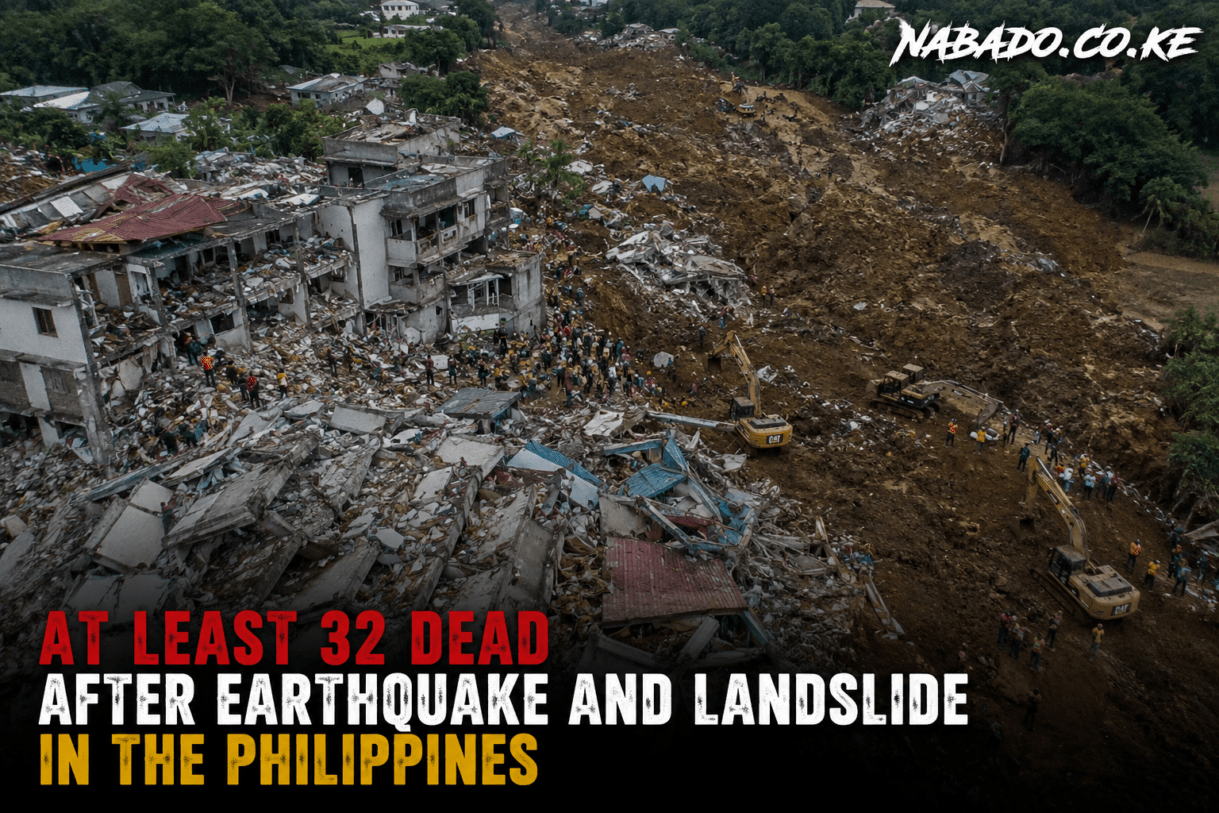
At least 32 people have been confirmed dead and more than 130 injured after a powerful earthquake triggered devastating landslides and widespread destruction across the southern Philippines, marking one of the country’s deadliest natural disasters in recent years.
Residents across the southern island of Mindanao woke to terror when a powerful earthquake violently shook homes, businesses, schools, and public buildings. Within seconds, entire communities were thrown into chaos as roads cracked, structures collapsed, and hillsides gave way under the force of the tremor.
Emergency officials say the disaster has already claimed at least 32 lives, while rescue crews continue searching through rubble and landslide debris for survivors. Authorities fear the death toll could rise as communication is restored in isolated communities cut off by damaged roads and infrastructure.
A Morning of Fear and Destruction
Witnesses described scenes of panic as people rushed from homes and workplaces while the ground shook beneath them.
In several towns across Mindanao, residents reported hearing loud cracking sounds moments before buildings began collapsing. Vehicles swayed on roads, power lines snapped, and clouds of dust filled the air as structures crumbled.
Many survivors spent hours gathered in open fields and evacuation centers, afraid to return indoors because of continuing aftershocks.
“I thought the entire building was going to fall,” one resident told local media. “People were screaming and running in every direction.”
The powerful quake was felt hundreds of kilometers away, causing alarm throughout southern regions of the country.
Landslides Turn Villages Into Disaster Zones
While the earthquake itself caused significant destruction, the resulting landslides proved even more deadly in several areas.
Entire sections of hillsides collapsed without warning, burying homes and trapping residents beneath tons of mud, rocks, and debris.
One of the worst-hit communities suffered multiple fatalities after a massive landslide swept through a residential area. Rescue teams worked through the night using excavators, search dogs, and manual digging equipment to locate survivors.
Families stood helplessly nearby as emergency workers searched for loved ones feared trapped beneath the earth.
Officials said unstable ground conditions continue to pose a major threat, especially in mountainous regions already weakened by previous rainfall.
Rescue Operations Continue Around the Clock
Search-and-rescue teams from across the country have been deployed to affected regions as authorities race against time to find survivors.
Military personnel, firefighters, police officers, medical teams, and volunteers have joined the operation.
Temporary medical centers have been established to treat the injured, while emergency shelters provide food, water, and basic necessities for displaced families.
Several hospitals reported receiving a steady stream of patients suffering fractures, head injuries, cuts, and trauma-related conditions.
Emergency officials say many remote villages remain difficult to reach because roads have been blocked by landslides and earthquake damage.
Helicopters and specialized rescue units have been dispatched to assess some of the hardest-hit locations.
Buildings Damaged Across Multiple Provinces
The earthquake caused extensive structural damage throughout southern Philippines.
Government offices, schools, churches, commercial buildings, and residential properties suffered varying degrees of destruction.
Videos circulating online showed collapsed walls, shattered windows, damaged roads, and heavily cracked buildings.
Engineers have begun inspecting critical infrastructure to determine whether structures remain safe for occupation.
Authorities have warned residents not to enter damaged buildings until official safety assessments are completed.
Several schools have suspended classes indefinitely as inspections continue.
Business owners now face significant losses as damaged establishments remain closed pending repairs.
Tsunami Fears Trigger Mass Evacuations
Adding to the panic, tsunami alerts were issued shortly after the earthquake struck.
Coastal communities across parts of the Philippines rushed to higher ground as emergency warnings spread.
Sirens sounded in several areas while local authorities instructed residents to move away from beaches and low-lying coastal zones.
The warnings also prompted heightened monitoring in neighboring countries.
Fortunately, officials later downgraded and lifted tsunami alerts after determining that major destructive waves were unlikely.
Nevertheless, the temporary warning highlighted the serious risks associated with powerful offshore earthquakes in the region.
Why the Philippines Is So Vulnerable to Earthquakes
The Philippines sits within the Pacific Ring of Fire, one of the world’s most active seismic zones.
This massive belt stretches around the Pacific Ocean and is responsible for a large percentage of the world’s earthquakes and volcanic eruptions.
Because several tectonic plates meet beneath the region, the country experiences frequent seismic activity.
While most earthquakes cause little damage, powerful events can quickly turn deadly, especially when they strike populated areas or trigger secondary disasters such as landslides and tsunamis.
Experts note that earthquakes remain impossible to predict accurately, making preparedness and resilient infrastructure essential for reducing future casualties.
Families Face an Uncertain Future
For many survivors, the earthquake has changed life forever.
Thousands of people have been displaced from their homes and now face an uncertain future.
Parents are struggling to provide comfort and stability for children traumatized by the disaster. Many families have lost homes, businesses, possessions, and in some cases, loved ones.
Relief agencies are mobilizing resources to provide shelter, food supplies, medical assistance, and psychological support.
Humanitarian organizations have also begun fundraising efforts to help affected communities rebuild.
Government Promises Emergency Assistance
National leaders have pledged immediate assistance to disaster-hit regions.
Emergency funds are being released to support rescue efforts, medical care, temporary housing, and infrastructure repairs.
Authorities have urged citizens to remain vigilant as aftershocks continue across the affected region.
Disaster management agencies are also evaluating long-term recovery strategies that will be needed once rescue operations conclude.
Officials emphasized that rebuilding efforts could take months or even years depending on the scale of the destruction.
Aftershocks Keep Communities on Edge
Hundreds of aftershocks have already been recorded since the main earthquake struck.
Seismologists warn that some aftershocks could be strong enough to cause additional damage to weakened structures.
Residents have been advised to prepare emergency kits, follow official safety instructions, and remain alert for evacuation orders if necessary.
The ongoing tremors have created widespread anxiety among survivors, many of whom remain afraid to sleep indoors.
Open spaces, evacuation centers, and temporary shelters have become gathering points for families seeking safety.
A Nation Mourns as Recovery Begins
As rescue teams continue their search and families mourn those lost, the Philippines once again finds itself confronting the devastating power of nature.
The deadly earthquake and landslides have left communities shattered, homes destroyed, and lives forever changed.
Yet amid the tragedy, stories of courage and resilience are emerging. Neighbors are helping neighbors, volunteers are joining rescue efforts, and communities are coming together in the face of unimaginable loss.
For now, the focus remains on finding survivors, supporting victims, and beginning the long process of recovery.
As the nation mourns at least 32 lives lost, millions are watching and hoping that those still missing will be found alive beneath the rubble.
SUGGESTED READS
- 10 Simple Parenting Hacks Every Mom and Dad Should Know
- How to Balance Parenting and Personal Time Without Feeling Guilty
- The Ultimate Baby Monitor Buying Guide: Top 10 Must-Have Features for Peace of Mind
- Bringing Baby Home? 25 Essential Baby-Proofing Tips Every New Parent Must Know
- Hospital Bag Checklist for New Parents: Don’t Forget These Must-Haves
- How to Survive the First Trimester: The Ultimate Guide for Expecting Parents
- 30 Proven Ways to Instantly Boost Your Mood (Backed by Science — #7 Will Surprise You
- 10 Things No One Tells You About the First Month of Parenthood
- How to Know If You’re Truly in Love (6 Signs You Can’t Ignore)

Support Our Website!
We appreciate your visit and hope you find our content valuable. If you’d like to support us further, please consider contributing through the TILL NUMBER: 9549825. Your support helps us keep delivering great content!
If you’d like to support Nabado from outside Kenya, we invite you to send your contributions through trusted third-party services such as Remitly, western union, SendWave, or WorldRemit. These platforms are reliable and convenient for international money transfers.
Please use the following details when sending your support:
Phone Number: +254701838999
Recipient Name: Peterson Getuma Okemwa
We sincerely appreciate your generosity and support. Thank you for being part of this journey!