

We Ain’t Done Yet… Expect Another One.
DONTIRE: The Kenyan Shoe Made from Car Tyres That Refuses to Go Out of Style
Long before sustainability became a global trend, Kenya had already mastered the art of turning waste into something valuable. Across villages, towns, and even bustling cities, a unique pair of sandals made from discarded car tyres quietly became one of the country’s most practical inventions.
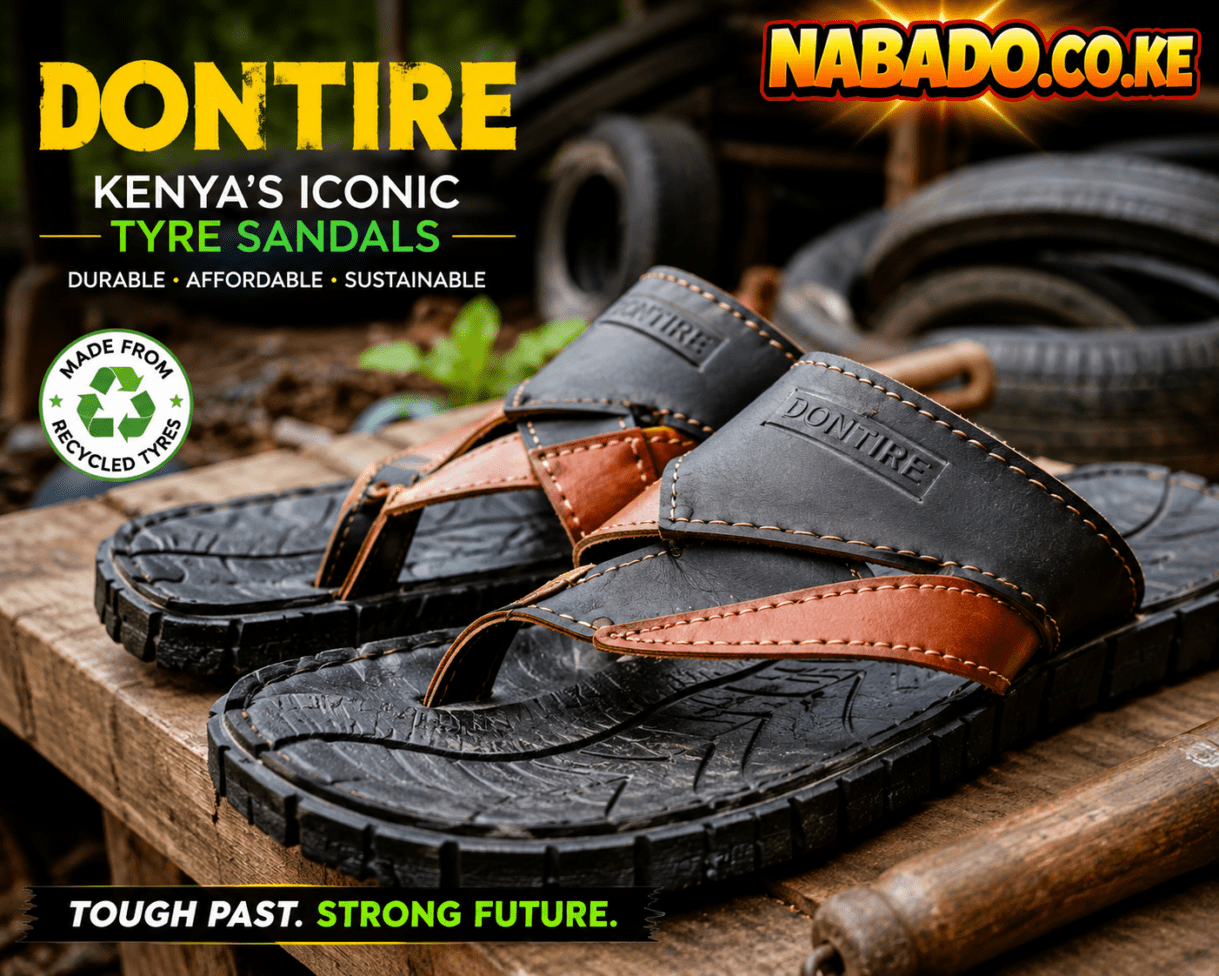
For decades, they were simply known as Akala. Today, however, a new name is making waves online and in everyday conversations—DONTIRE.
The catchy slang is spreading rapidly among young Kenyans, breathing fresh life into a shoe that has served generations. While the name may be new, the story behind the footwear is one of resilience, creativity, and African craftsmanship.
Born From Necessity
Years ago, buying factory-made shoes was beyond the reach of many families. Rural craftsmen searched for an affordable alternative that could survive rough terrain, long walks, and changing weather.
Their solution was ingenious.
Old vehicle tyres, once considered useless, were cut into thick, durable soles. Leather straps or strong rubber bands were then attached to create sandals that could withstand years of use.
Unlike ordinary sandals that wore out after months, these handmade creations seemed almost indestructible.
That toughness earned them respect across Kenya.
Why They Are Called Akala
The sandals have long been associated with western Kenya, particularly among the Luo community, where they became an everyday essential.
Farmers wore them while working in their fields.
Fishermen used them on the shores of Lake Victoria.
Schoolchildren walked long distances wearing them.
Even traders travelling between markets trusted Akala because they could handle rocky paths, mud, and scorching heat without falling apart.
Over time, Akala became more than footwear. They became part of Kenya’s cultural identity.
Enter DONTIRE
Today, a fresh generation has given the famous sandals a modern nickname—DONTIRE.
The slang is inspired by the sandals’ defining feature: their soles are made from used car tyres.
The playful name combines “don’t” and “tyre,” creating a memorable expression that instantly reminds people of the shoe’s rugged origins.
Across social media, many young Kenyans now refer to Akala simply as DONTIRE, helping introduce the traditional footwear to audiences who may never have worn the originals.
Although the nickname continues to gain popularity, Akala remains the traditional and widely recognized name, while DONTIRE is an emerging slang term.
Built to Last
One reason DONTIRE continues attracting attention is its unmatched durability.
Unlike many modern sandals that wear out quickly, recycled tyre soles can survive years of heavy use.
The thick rubber naturally resists:
- Sharp stones
- Muddy roads
- Rough village paths
- Rainy conditions
- Daily wear and tear
Many owners proudly say a single pair can last for years with minimal repairs.
That durability makes DONTIRE one of Kenya’s most economical footwear choices.
An Early Example of Recycling
Long before conversations about climate change and sustainable fashion dominated global headlines, Kenyan artisans were already practising recycling.
Instead of allowing worn-out tyres to become environmental waste, they transformed them into useful products.
Every pair of DONTIRE sandals gives discarded rubber a second life.
Today, environmentalists view such products as examples of the circular economy—where waste materials are reused instead of being thrown away.
What began as a solution to poverty has become a symbol of environmental responsibility.
Handmade by Skilled Artisans
Making authentic DONTIRE sandals is not as simple as cutting pieces of rubber.
Experienced craftsmen carefully select tyre sections depending on thickness and flexibility.
The tyre is then shaped into the correct foot size before holes are made for straps.
Some artisans use genuine leather, while others use recycled rubber or synthetic materials depending on customer preference.
Each pair is finished by hand, giving it a unique appearance.
No two handmade pairs are exactly alike.
From Village Roads to Fashion Statements
For many years, Akala sandals were viewed mainly as practical footwear for rural communities.
That perception is changing.
Modern Kenyan designers have embraced the classic design and introduced stylish upgrades including:
- Premium leather straps
- Bright colours
- Decorative stitching
- Fashion-forward designs
- Urban-inspired finishes
Today, DONTIRE sandals are worn at cultural festivals, outdoor events, beaches, and even fashion runways celebrating African design.
Many tourists also buy them as authentic Kenyan souvenirs.
Why Young People Love the Name DONTIRE
Slang often breathes new life into familiar things.
The name DONTIRE is short, memorable, and easy to share on social media.
It reflects Kenya’s vibrant youth culture, where creative nicknames quickly become part of everyday language.
The new name also sparks curiosity.
Someone hearing “DONTIRE” for the first time naturally asks what it means, creating an opportunity to learn about one of Kenya’s oldest handmade shoes.
More Than Just Footwear
For many Kenyans, DONTIRE represents much more than sandals.
It tells the story of innovation born from hardship.
It celebrates local craftsmanship.
It reminds people that valuable products do not always come from expensive factories.
Sometimes, all it takes is creativity, skill, and determination.
That spirit continues to inspire artisans who still produce the sandals by hand today.
A Proud Symbol of Kenyan Ingenuity
As global demand for sustainable products continues to grow, Kenya’s famous tyre sandals are receiving renewed appreciation.
Whether people call them Akala or embrace the trending slang DONTIRE, the footwear remains a powerful reminder that simple ideas can stand the test of time.
From dusty village paths to modern city streets, DONTIRE continues to prove that durability, sustainability, and African craftsmanship never go out of fashion.
SUGGESTED READS
- If Money Were No Object: What A Real Life Would Actually Look Like
- The Secret Softness: Why Accidental Tenderness Is One of the Most Attractive Behaviours in a Person
- Why Men Don’t Chase Like They Used To — And What Today’s Shift Really Means
- Nowadays We Don’t Send Fare, We Just Request an Uber
- The Handkerchief Tradition: The Forgotten Fabric That Carried Our Deepest Emotions
- How Food Can Solve Angriness: The Science of Eating Your Way to Calm
- The Way I Communicate: Why I Prefer Words That Feel Real

Support Our Website!
We appreciate your visit and hope you find our content valuable. If you’d like to support us further, please consider contributing through the TILL NUMBER: 9549825. Your support helps us keep delivering great content!
If you’d like to support Nabado from outside Kenya, we invite you to send your contributions through trusted third-party services such as Remitly, western union, SendWave, or WorldRemit. These platforms are reliable and convenient for international money transfers.
Please use the following details when sending your support:
Phone Number: +254701838999
Recipient Name: Peterson Getuma Okemwa
We sincerely appreciate your generosity and support. Thank you for being part of this journey!