

We aint done yet.. Expect another one.
Growing up comes with responsibilities that nobody can completely prepare you for. Once you become an adult, life expects you to make important decisions, manage money, maintain relationships, solve problems and take care of yourself. Unfortunately, many people leave school knowing how to pass examinations but without mastering some of the practical skills needed to navigate everyday life.
Being an adult is not simply about reaching a certain age, getting a job or moving out of your parents’ home. It is about becoming independent, responsible and capable of handling situations without always depending on someone else.
Some skills can save you money, others can protect your life, while others can help you build meaningful relationships and advance your career.
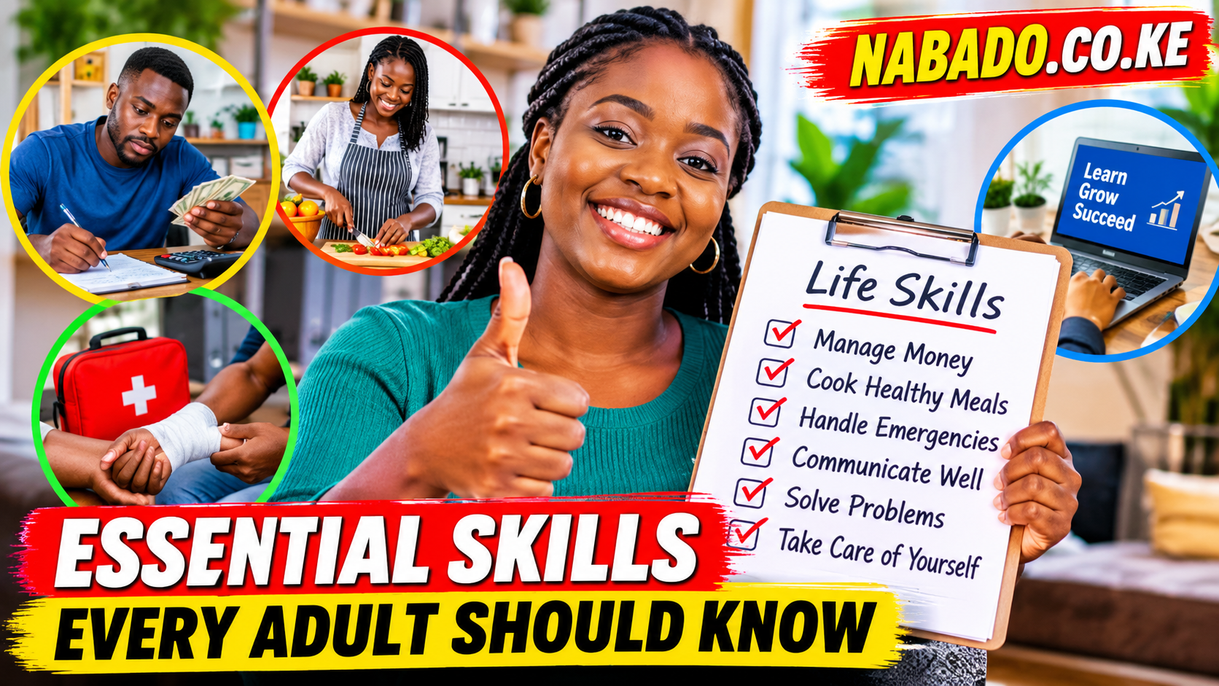
Here are some of the most important skills every adult should know.
1. Financial Management

Caucasian woman calculating budget at home on table, holding cash, writing notes, feeling satisfied
One of the most important skills every adult should develop is knowing how to manage money.
Many people earn a salary but struggle financially because they have never learned how to budget, save or distinguish between needs and wants.
Financial management involves understanding how much money you earn, how much you spend and how to plan for future expenses.
Every adult should understand:
- How to prepare a monthly budget.
- How to save consistently, even with a small income.
- How to avoid unnecessary debt.
- How interest rates work.
- How to manage loans and credit.
- How to build an emergency fund.
- How to plan for retirement.
For example, someone earning KSh 40,000 monthly should understand how to distribute that income between rent, food, transport, savings, personal expenses and other obligations.
The ability to manage money is often more important than the amount of money someone earns.
2. Cooking Basic Meals

Every adult should know how to prepare basic meals.
Depending entirely on restaurants, fast food or other people to prepare food can become expensive and unhealthy.
Cooking is not necessarily about becoming a professional chef. It is about knowing how to prepare nutritious meals using affordable ingredients.
Some basic cooking skills include:
- Preparing rice, potatoes, vegetables and pasta.
- Cooking eggs and meat properly.
- Preparing simple soups and stews.
- Understanding food hygiene.
- Storing food safely.
- Planning meals to reduce waste.
In Kenya, for instance, knowing how to prepare ugali, sukuma wiki, beans, rice and traditional vegetables can help someone eat affordably without constantly purchasing prepared food.
Cooking also gives people greater control over their nutrition and food expenses.
3. First Aid and Emergency Response
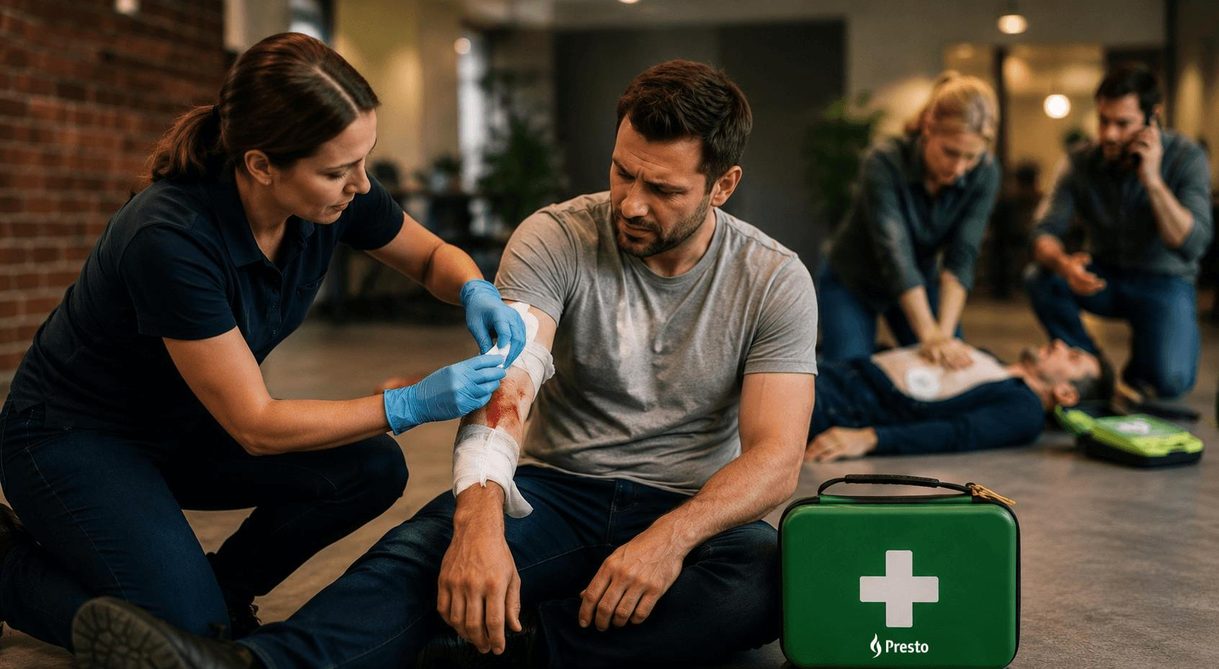
An emergency can happen anywhere, at home, at work, on the road or in a public place.
Knowing basic first aid can make the difference between helping someone survive and watching helplessly as their condition deteriorates.
Every adult should understand how to:
- Recognise when someone needs emergency medical attention.
- Control serious external bleeding.
- Perform CPR through recognised training.
- Use an automated external defibrillator (AED).
- Respond to choking.
- Recognise possible stroke and heart attack symptoms.
- Treat minor burns and wounds safely.
It is also important to know local emergency numbers and the location of nearby hospitals.
First aid training is particularly valuable because emergencies rarely happen when people are fully prepared.
4. Effective Communication
Communication is one of the most underrated skills in adulthood.
People communicate every day with employers, colleagues, family members, friends, customers and strangers. However, being able to speak does not automatically mean someone knows how to communicate effectively.
Good communication involves expressing ideas clearly, listening carefully and understanding other people’s perspectives.
Every adult should learn how to:
- Speak confidently and respectfully.
- Listen without unnecessarily interrupting.
- Write professional emails.
- Ask questions when something is unclear.
- Disagree without becoming disrespectful.
- Explain problems without blaming others.
- Communicate boundaries.
Effective communication can prevent misunderstandings, strengthen relationships and create opportunities in professional environments.
5. Time Management

Woman pointing with pen to do list for today and looking at watch closeup
Time is one resource that nobody can recover once it has been wasted.
Adults often have several responsibilities competing for their attention, including employment, family, finances, personal development and social commitments.
Without proper time management, even simple responsibilities can become overwhelming.
Useful time-management skills include setting priorities, creating realistic schedules, avoiding unnecessary distractions and completing important tasks before deadlines.
One effective approach is to identify the three most important things that must be accomplished each day.
Learning to manage time also means understanding when to say no to activities that interfere with important responsibilities.
6. Basic Home Maintenance
Every adult should know how to handle simple household problems.
Imagine discovering a leaking tap, a blocked sink or a loose door handle and having no idea what to do.
Although professionals should handle complicated repairs, basic home maintenance can save money and prevent minor problems from becoming expensive disasters.
Useful skills include:
- Changing a light bulb safely.
- Unblocking a simple drain.
- Tightening loose screws.
- Using basic household tools.
- Identifying water leaks.
- Resetting a tripped circuit breaker when safe.
- Knowing when to call a qualified electrician or plumber.
Understanding how your home works makes independent living easier.
7. Swimming
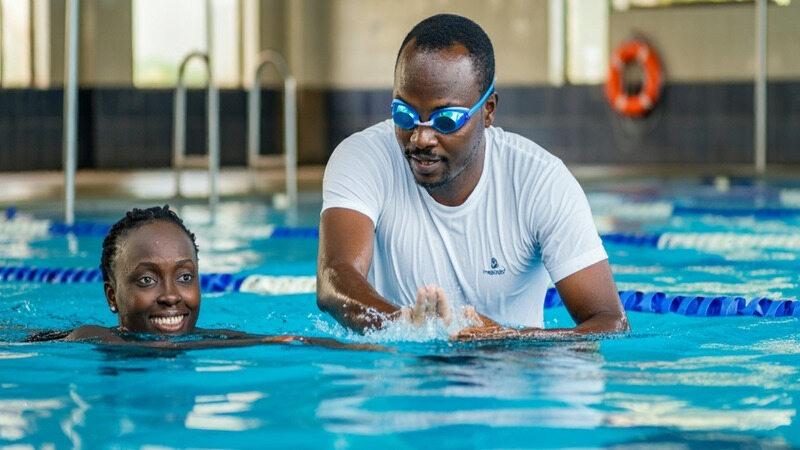
Learn to Swim | Beginner Adult & Kids Swimming Lessons
Swimming is more than a recreational activity. It is an important survival skill.
Drowning can happen quickly, sometimes in places where people least expect it. Knowing how to swim can improve personal safety around swimming pools, lakes, rivers and the ocean.
Adults should learn basic swimming techniques, floating, controlled breathing and how to recognise dangerous water conditions.
However, knowing how to swim does not make someone immune to drowning. Even experienced swimmers can get into trouble.
It is equally important to understand water safety, avoid swimming alone and seek professional rescue training before attempting to save someone in deep or dangerous water.
8. Emotional Intelligence
Emotional intelligence is the ability to understand, manage and respond appropriately to emotions.
It is one of the most valuable skills in relationships, workplaces and everyday interactions.
Adults with good emotional intelligence are generally better equipped to handle disagreements, criticism, disappointment and stressful situations.
Important aspects include:
- Recognising your emotions.
- Controlling impulsive reactions.
- Understanding how your behaviour affects others.
- Showing empathy.
- Handling criticism constructively.
- Managing anger and frustration.
- Recognising when you need help.
For example, receiving criticism at work does not necessarily mean someone dislikes you. Learning to separate feedback from personal attacks can help you grow professionally.
9. Basic Computer and Digital Skills

Remote work and digital transformation, professional woman working on a laptop in a modern office environment, Business professional typing on a computer at a desk
Technology has become part of almost every aspect of modern life.
From applying for jobs to paying bills, communicating with colleagues and accessing government services, digital skills are increasingly necessary.
Every adult should know how to:
- Use a computer and smartphone effectively.
- Create and edit documents.
- Send professional emails.
- Use spreadsheets.
- Conduct online research.
- Identify suspicious links and scams.
- Protect passwords and personal information.
- Use online banking safely.
In an increasingly digital world, people who understand technology often have greater access to employment, education and business opportunities.
10. Critical Thinking and Problem-Solving
Not everything people hear, read or see online is true.
Adults must develop the ability to examine information, question assumptions and make decisions based on evidence rather than emotions or rumours.
Critical thinking helps people avoid manipulation, recognise misinformation and evaluate opportunities before committing their resources.
For instance, before investing money in a business promising unusually high returns, a person should investigate the company, understand the risks and look for independent evidence.
Problem-solving also requires patience, creativity and the ability to consider different solutions before making decisions.
11. Learning How to Say No
Many adults struggle because they find it difficult to refuse requests.
They agree to lend money they cannot afford to lose, accept responsibilities they cannot manage or remain in uncomfortable situations because they fear disappointing others.
Learning to say no is an important part of establishing healthy boundaries.
It does not mean becoming selfish or disrespectful. It means understanding your limitations and protecting your time, finances and emotional well-being.
A simple response such as “I am sorry, but I cannot commit to that right now” can be enough.
Not every request deserves a yes.
12. Driving and Road Safety

Although not everyone needs to own a vehicle, understanding road safety is an important life skill.
Adults should know basic traffic rules, recognise road signs, understand pedestrian safety and know what to do when involved in an accident.
For those who drive, additional skills include checking vehicle fluids, recognising warning lights, changing a tyre safely and understanding basic vehicle maintenance.
Knowing how to drive can also improve independence and expand employment opportunities.
However, obtaining a valid driving licence and understanding responsible driving practices are essential.
13. Conflict Resolution
Disagreements are unavoidable in life.
People have different opinions, expectations, personalities and interests. The ability to resolve disagreements peacefully is therefore essential.
Adults should learn to address problems without resorting to insults, threats or unnecessary confrontation.
Effective conflict resolution involves listening to the other person, identifying the actual problem, controlling emotions and looking for a reasonable solution.
This skill is useful in marriages, friendships, workplaces, businesses and family relationships.
Sometimes, resolving a disagreement also means accepting that both parties may never completely agree.
14. Personal Hygiene and Self-Care
Taking care of yourself is a basic responsibility of adulthood.
Personal hygiene contributes to health, confidence and positive social interactions.
Every adult should understand the importance of bathing regularly, maintaining oral hygiene, washing clothes, keeping living spaces clean and practising appropriate food hygiene.
Self-care also includes getting sufficient sleep, maintaining physical activity and seeking medical attention when necessary.
Looking after yourself should not be treated as a luxury that only becomes important when life is going well.
15. Basic Legal and Administrative Knowledge
Many people only begin learning about legal matters when they find themselves facing a serious problem.
However, understanding basic legal and administrative responsibilities can prevent unnecessary difficulties.
Adults should know how to:
- Read and understand contracts before signing.
- Keep important documents safely.
- Understand employment agreements.
- Recognise their basic consumer rights.
- Understand tenancy obligations.
- Maintain accurate financial records.
- Follow relevant tax requirements.
- Identify when professional legal advice is necessary.
In Kenya, for example, adults should understand the importance of documents such as national identification cards, KRA PIN certificates, employment contracts and relevant insurance records.
Keeping personal documents organised can save considerable time when dealing with employers, banks and government institutions.
16. Negotiation Skills
Negotiation is not limited to business executives and politicians.
Adults negotiate almost every day, sometimes without realising it.
They negotiate salaries, rent, business agreements, purchases, workplace responsibilities and family arrangements.
Good negotiation requires preparation, patience and an understanding of what both parties want.
Instead of accepting the first offer, an individual should learn how to ask questions, explain their position and explore alternatives.
Negotiation does not always mean defeating another person. Often, the best outcome is an agreement that benefits everyone involved.
17. Adaptability and Continuous Learning
The world changes constantly.
Technology develops, industries evolve, businesses close and new opportunities emerge. Skills that are valuable today may become less relevant in the future.
Adults must therefore remain willing to learn.
Adaptability involves adjusting to unfamiliar circumstances without giving up whenever something changes.
It also means accepting mistakes, learning from experience and being willing to acquire new knowledge.
Someone who loses a job, for example, may need to develop new professional skills, explore a different career or start a small business.
The ability to adapt can make difficult transitions easier.
18. Self-Defence and Personal Safety
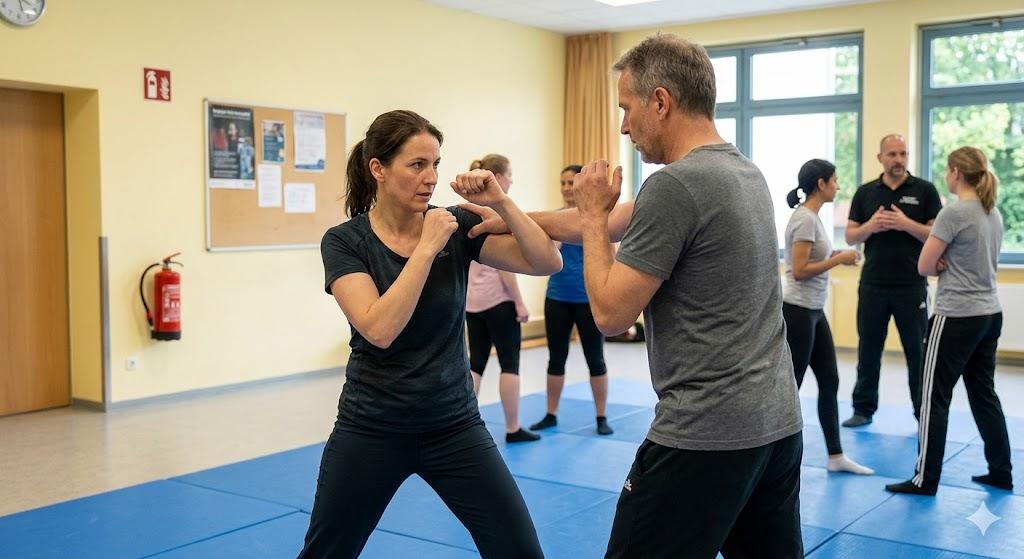
Personal safety is another important aspect of independence.
Adults should understand how to recognise potentially dangerous situations, avoid unnecessary confrontations and protect themselves when faced with threats.
Basic self-defence training can improve confidence and teach practical techniques for responding to physical danger.
However, self-defence is not simply about fighting. It also involves situational awareness, avoiding risky environments, maintaining safe distances and knowing when to escape or seek assistance.
19. Building and Maintaining Relationships
Human beings depend on relationships for companionship, support, cooperation and personal development.
However, maintaining healthy relationships requires effort and understanding.
Adults should learn how to build trust, respect differences, apologise when wrong and recognise unhealthy behaviour.
They should also understand that meaningful relationships require boundaries and mutual responsibility.
Knowing how to maintain friendships, professional connections and family relationships can make life more fulfilling.
20. Making Independent Decisions
Adulthood requires making decisions without constantly waiting for other people to approve them.
Some decisions may involve choosing a career, managing money, getting married, relocating or starting a business.
Every adult should learn how to examine available information, consider possible consequences and accept responsibility for their choices.
Seeking advice is valuable, but allowing other people to make every important decision can prevent personal growth.
Independence begins when someone learns to take responsibility for the direction of their life.
Why These Skills Matter More Than People Realise
Many people grow up believing that academic qualifications, a good job and a steady income are enough to guarantee a successful life.
While education and employment are important, they do not automatically prepare someone for every challenge adulthood presents.
A person can have a university degree but struggle to manage money. Someone can earn a high salary but lack basic cooking skills. Another person may be professionally successful but struggle to maintain healthy relationships.
Real independence requires a combination of practical, emotional, financial and social abilities.
These skills also complement one another. Financial management helps people avoid unnecessary debt, communication improves professional relationships, emotional intelligence helps resolve conflicts, while critical thinking supports better decisions.
The goal is not to become an expert in everything. It is to develop enough knowledge and confidence to handle everyday responsibilities and recognise when professional assistance is necessary.
Nobody becomes a fully prepared adult overnight. Adulthood is a continuous learning process, and some of its most important lessons come from personal experiences, mistakes and unexpected challenges.
However, developing essential life skills early can make the journey significantly easier.
Whether it is learning how to cook, manage money, swim, perform first aid, communicate effectively or solve problems, every skill adds another layer of independence.
Ultimately, being an adult is not simply about how old you are. It is about how well you can take care of yourself, make responsible decisions and handle the challenges that life brings.
SUGGESTED READS
- How to Run an Effective One-on-One Meeting: A Guide for Productive Conversations
- The Clearing and Maturation Process of a Cheque
- How to Ask for an Opportunity: A Complete Guide to Getting a “Yes”
- How to Make Money Online: A Comprehensive Guide
- How to Improve Customer Loyalty: A Comprehensive Guide
- Strategies for Improving Brand Awareness
- Mastering the Art of Negotiation: A Comprehensive Guide to Improving Your Skills
- 10 Key Strategies for Making a Lasting Positive Impression on New Clients

Support Our Website!
We appreciate your visit and hope you find our content valuable. If you’d like to support us further, please consider contributing through the TILL NUMBER: 9549825. Your support helps us keep delivering great content!
If you’d like to support Nabado from outside Kenya, we invite you to send your contributions through trusted third-party services such as Remitly, western union, SendWave, or WorldRemit. These platforms are reliable and convenient for international money transfers.
Please use the following details when sending your support:
Phone Number: +254701838999
Recipient Name: Peterson Getuma Okemwa
We sincerely appreciate your generosity and support. Thank you for being part of this journey!