

We aint done yet… Expect another one.
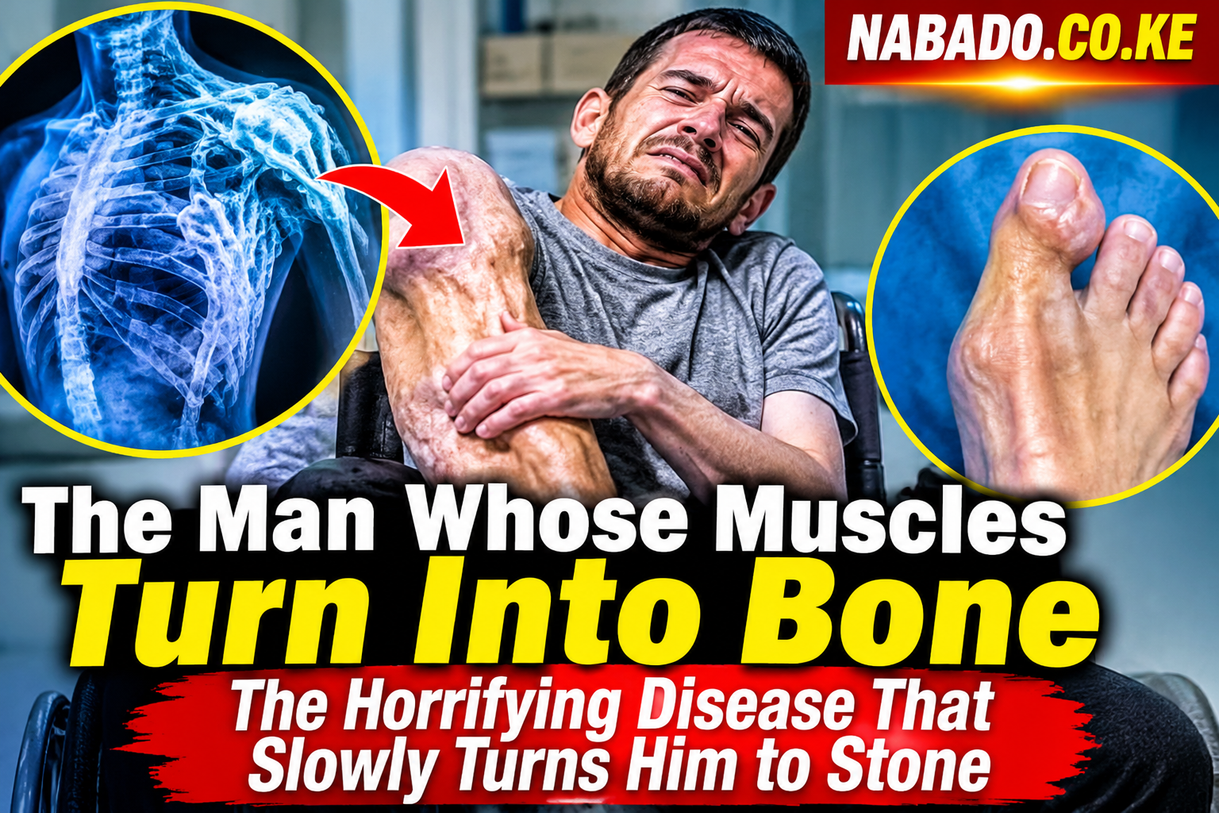
A rare genetic condition known as Stone Man Syndrome causes muscles, tendons and ligaments to gradually develop bone, leaving affected people struggling to move, eat and even breathe.
Imagine having a body that slowly turns against you, not through an ordinary illness or injury, but through a process that transforms the very muscles responsible for movement into bone.
For people living with a rare medical condition known as Fibrodysplasia Ossificans Progressiva (FOP), this frightening experience is a daily reality.
Often referred to as Stone Man Syndrome, the condition causes bone to develop in parts of the body where it should never exist. Muscles, tendons, ligaments and other connective tissues gradually become affected, restricting movement and sometimes leaving patients almost completely immobilised.
Although the condition sounds like something from a science-fiction movie, it is a recognised genetic disorder that has puzzled medical researchers for decades.
What makes it particularly disturbing is that the human body, which normally depends on flexible muscles and joints to function, begins developing an abnormal second skeleton.
What is Stone Man Syndrome?
Fibrodysplasia Ossificans Progressiva is an extremely rare genetic disease characterised by progressive abnormal bone formation outside the normal skeleton.
In a healthy person, bones develop within the skeletal system, while muscles and connective tissues remain flexible. These structures work together to support movement, balance and everyday physical activities.
However, people with FOP experience a disruption in this biological process.
Their bodies begin producing additional bone inside soft tissues. This process, medically known as heterotopic ossification, gradually creates abnormal bone structures that can connect muscles and joints.
As these structures grow, affected body parts become increasingly stiff.
The condition is estimated to affect approximately one person in every one to two million people worldwide, making it one of the rarest genetic disorders known to medicine.
Unlike ordinary bone diseases, FOP does not simply weaken existing bones. It causes entirely new bone to form in places where muscles and other soft tissues should remain.
The Genetic Mutation Behind the Condition
Scientists have identified a mutation in a gene known as ACVR1 as the main cause of classic FOP.
The gene provides instructions for producing a receptor involved in regulating bone and cartilage development.
In people with the condition, a mutation causes this receptor to behave abnormally, activating signals that encourage bone formation in inappropriate parts of the body.
Consequently, tissues that should remain soft and flexible can gradually turn into bone.
Most people with classic FOP have the same specific mutation, known as ACVR1 R206H.
The condition is generally not inherited from parents. Most cases occur because of a new genetic mutation, meaning a child can be born with FOP even when neither parent has the disease.
The Strange Sign That Can Appear at Birth
One of the most recognisable features of Stone Man Syndrome is that its first warning sign can appear before a child experiences any major movement difficulties.
Many children born with FOP have unusually shaped big toes.
The toes may be shorter than normal, bent inward or malformed in other ways. This unusual feature can provide doctors with an important clue when diagnosing the condition.
However, the more serious symptoms usually become noticeable during childhood.
Affected children may develop painful swellings around the neck, shoulders, back and other parts of the body.
These episodes are known as flare-ups.
The affected areas may become swollen, warm, painful and inflamed. Initially, the symptoms can resemble ordinary injuries, infections or other medical conditions.
But in someone with FOP, a flare-up can trigger abnormal bone formation within the affected tissues.
Over time, repeated episodes can cause permanent restrictions in movement.
How the Disease Gradually Turns the Body Into a Second Skeleton
Stone Man Syndrome does not transform every muscle into bone overnight.
Instead, abnormal bone develops progressively, often following episodes of inflammation.
The areas affected and the speed of progression vary from one patient to another.
The neck may become stiff, making it difficult to turn the head. The shoulders can gradually lose mobility, leaving the arms trapped close to the body.
When the back becomes affected, bending and twisting may become increasingly difficult.
As abnormal bone develops around the hips and legs, walking can become challenging, with some patients eventually requiring wheelchairs.
The jaw can also become affected. When this happens, opening the mouth may become difficult, interfering with eating, speaking and maintaining proper oral hygiene.
One of the most serious complications involves the rib cage.
Normally, the ribs expand and contract during breathing. However, abnormal bone formation around the chest can restrict this movement, making it increasingly difficult for the lungs to expand.
This can lead to a serious complication known as thoracic insufficiency syndrome.
Why Ordinary Injuries Can Become Dangerous
For most people, a fall, bruise or muscle injury is something the body eventually recovers from.
For someone with FOP, even relatively minor physical trauma can trigger a painful flare-up and additional bone formation.
This makes everyday medical treatment particularly complicated.
Certain procedures that are considered routine for other patients can cause serious problems for someone with this condition.
Intramuscular injections, muscle biopsies and unnecessary surgical operations may cause tissue damage that triggers further abnormal bone growth.
Even surgery intended to remove existing abnormal bone can make matters worse because the trauma may stimulate the body to produce additional bone.
For this reason, people with FOP require specialised medical attention. Doctors must carefully consider the risks before carrying out procedures that could damage affected tissues.
Is There a Cure for Stone Man Syndrome?
There is currently no treatment that completely cures FOP or reverses all the abnormal bone formation that has already occurred.
However, medical researchers have made progress in developing treatments that target the biological processes responsible for the condition.
One important development is palovarotene, marketed under the brand name Sohonos.
The medication targets pathways involved in cartilage and bone formation and has received approval from the United States Food and Drug Administration for reducing new abnormal bone formation in eligible patients with FOP.
However, it is not a permanent cure and cannot simply dissolve existing abnormal bone.
Treatment also requires careful medical supervision because the medication can cause side effects, including concerns involving skeletal development in children.
Other management strategies include controlling painful flare-ups, preventing injuries, monitoring breathing and providing support when eating or moving becomes difficult.
The main objective is to preserve mobility and independence for as long as possible.
How Long Can Someone Live With Stone Man Syndrome?
Life expectancy varies depending on the severity of the condition and the complications experienced by an individual.
Some patients experience slower progression, while others develop significant physical limitations during childhood or adolescence.
One of the biggest threats comes from the gradual restriction of chest movement.
When the rib cage becomes increasingly stiff, breathing can become difficult. Respiratory complications are among the leading causes of serious illness and death among people with FOP.
Although the condition can be life-limiting, affected individuals can still attend school, develop relationships, pursue interests and participate in society.
Access to specialist healthcare and appropriate support can make an important difference in managing the disease.
Why Early Diagnosis Matters
One of the biggest challenges surrounding FOP is that its early symptoms can be mistaken for other medical conditions.
A painful swelling may be interpreted as an infection, injury or tumour.
Without recognising the underlying disorder, patients may undergo unnecessary medical procedures that can trigger further bone formation.
The unusual shape of the big toes, combined with suspicious soft-tissue swellings, can help doctors identify the condition.
Genetic testing can confirm the diagnosis by identifying a disease-causing mutation in the ACVR1 gene.
Early recognition is particularly important because it allows patients, families and healthcare professionals to take precautions against avoidable injuries and complications.
A Rare Disease That Challenges Medical Science
Stone Man Syndrome remains one of the most extraordinary conditions in modern medicine.
It demonstrates how a single genetic mutation can disrupt the body’s natural development and healing processes.
For people living with FOP, the challenge is not simply dealing with pain. It is coping with the possibility of gradually losing abilities that most people take for granted.
Simple activities such as raising an arm, turning the head, walking or opening the mouth can become increasingly difficult.
Scientists continue studying the condition, hoping to discover more effective ways of controlling abnormal bone formation and improving patients’ quality of life.
Although there is still no complete cure, advances in genetic research and targeted treatments offer hope for better disease management.
Stone Man Syndrome is a reminder that the human body can sometimes develop in ways that are difficult to imagine. For those affected, the battle involves protecting the movement and independence that the rest of the world often takes for granted.
SUGGESTED READS
- A Baby Born With a Beard? The Strange Medical Truth Behind the Rare Phenomenon
- Why Do I Sometimes Forget What I Was About to Say? The Science Behind Losing Your Train of Thought
- What Would Happen If Humans Stopped Sleeping? The Terrifying Truth About Sleep Deprivation
- How to Prevent Cyclospora Infection and Explosive
- Tics and Tourette Syndrome: Causes, Symptoms, Diagnosis, and Treatment
- The Silent Killer That Turns Simple Infections Deadly
- Hantavirus: The Silent Threat from Rodents You Can’t Afford to Ignore
- Burned Out and Overwhelmed? Science Reveals Simple Ways to Relax Your Mind and Take Back Control
- Morning Wood Explained: The Surprising Science Behind Why Men Wake Up Hard—and What It Reveals About Your Health
- What Happens When You Swallow Mucus? The Shocking Truth About Your Body’s Hidden Defense System

Support Our Website!
We appreciate your visit and hope you find our content valuable. If you’d like to support us further, please consider contributing through the TILL NUMBER: 9549825. Your support helps us keep delivering great content!
If you’d like to support Nabado from outside Kenya, we invite you to send your contributions through trusted third-party services such as Remitly, western union, SendWave, or WorldRemit. These platforms are reliable and convenient for international money transfers.
Please use the following details when sending your support:
Phone Number: +254701838999
Recipient Name: Peterson Getuma Okemwa
We sincerely appreciate your generosity and support. Thank you for being part of this journey!