

We aint done yet.. Expect another one.
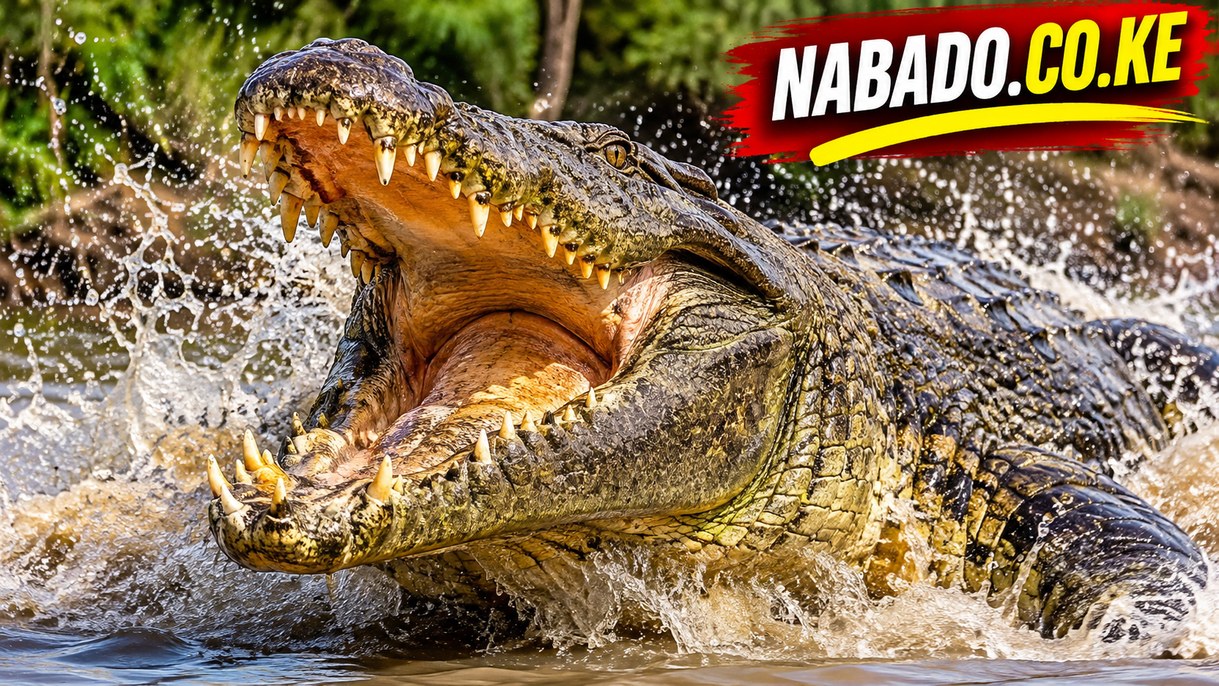
Imagine standing beside a quiet river in Africa. The water appears peaceful, birds are singing, and everything seems normal. Suddenly, a pair of eyes emerges from beneath the surface. Before you can understand what is happening, a massive reptile launches itself out of the water with incredible speed.
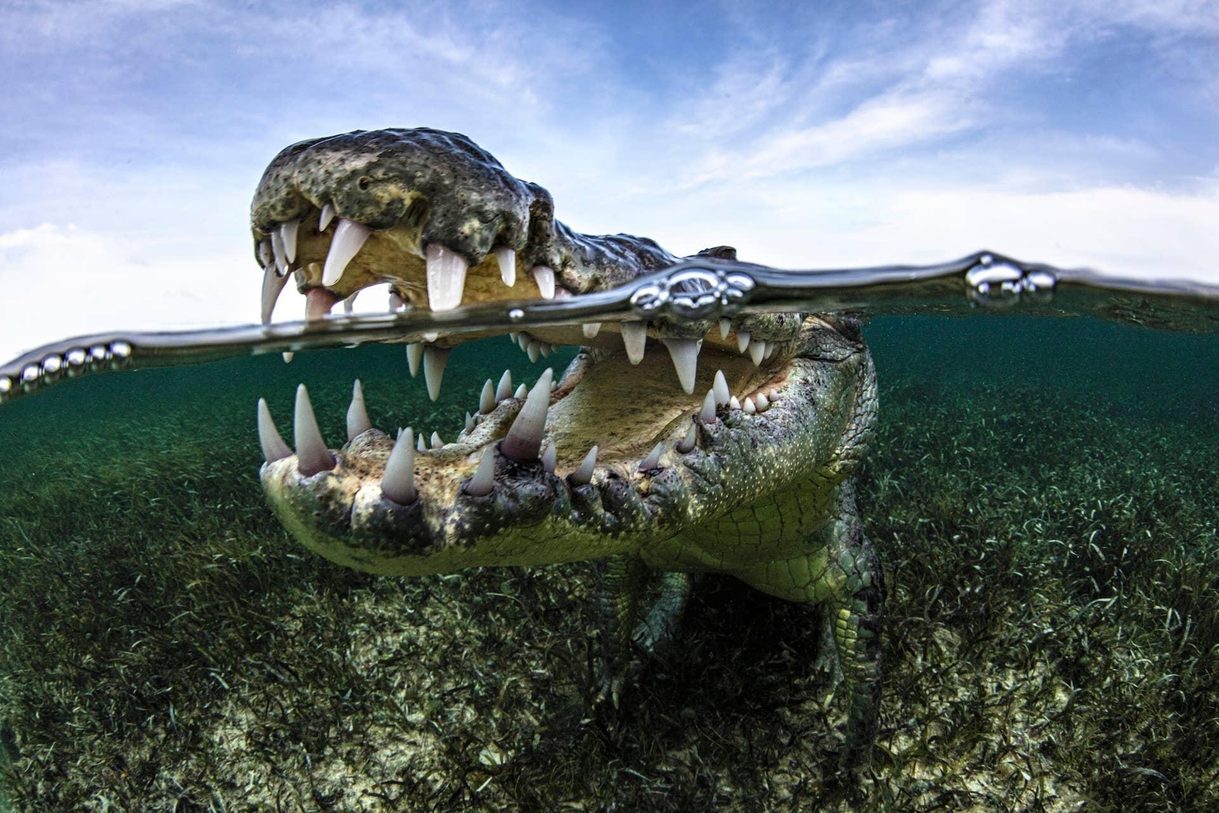
This is the terrifying reality of living alongside crocodiles.
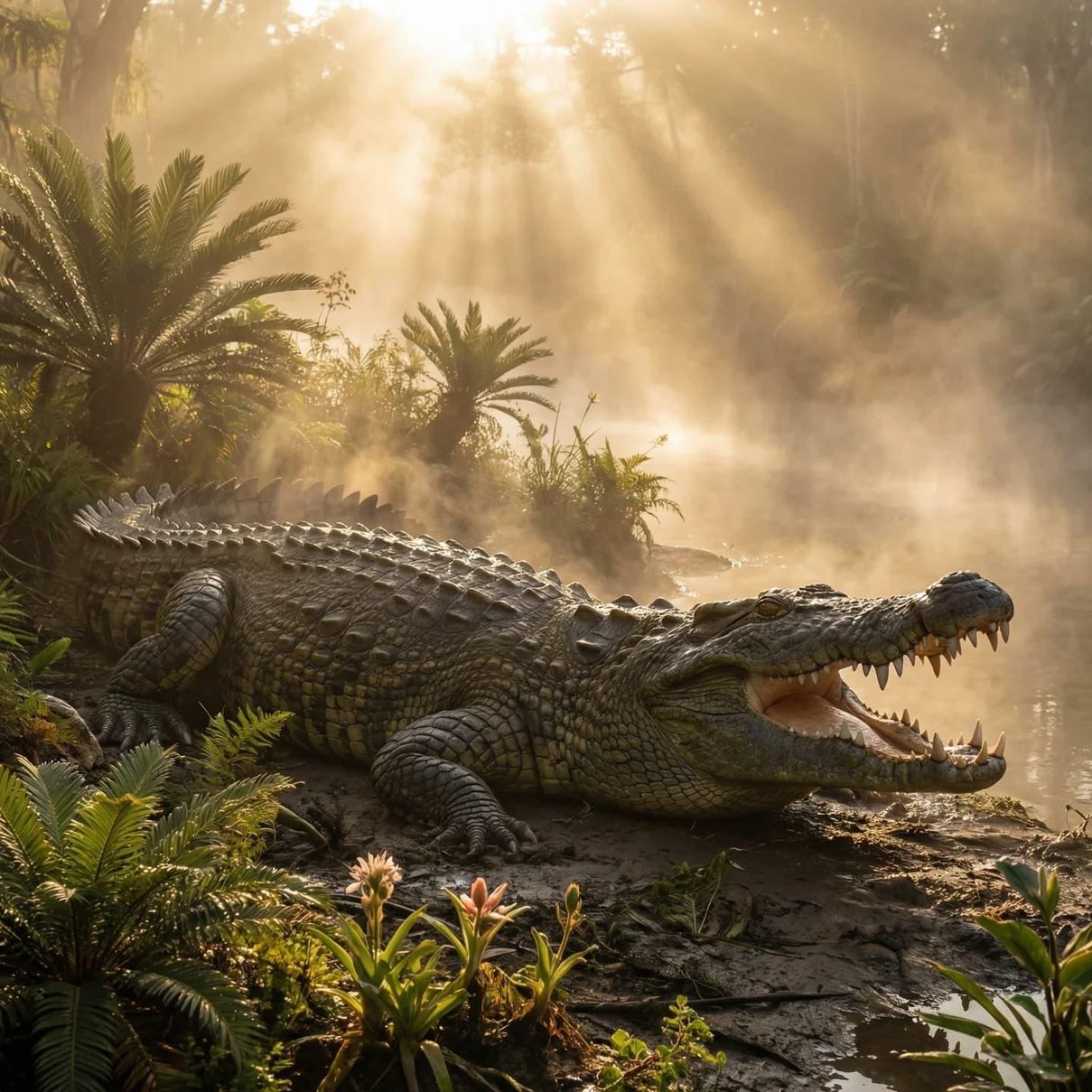
Crocodiles are among the oldest surviving groups of reptiles on Earth. They existed during the age of dinosaurs’ ancestors and have survived millions of years of environmental changes. Their powerful jaws, armoured bodies, excellent underwater vision and ability to remain motionless for hours make them some of the most successful predators in the animal kingdom.
Although many people fear sharks, lions and snakes, crocodiles deserve a special place among the world’s most dangerous animals. Some species are large enough to overpower animals much bigger than humans, while others regularly attack people who unknowingly enter their territory.
Two species stand out in particular: the saltwater crocodile, the world’s largest living crocodile, and the Nile crocodile, one of Africa’s most notorious predators.
But what makes these reptiles so dangerous? How big can they grow? Which crocodile species are responsible for the most attacks on humans? And could a person survive an encounter with one?
This article explores the world’s most dangerous crocodiles, their hunting abilities, habitats, unusual behaviour and the real dangers they pose to people.
1. Saltwater Crocodile: The World’s Largest and Most Powerful Crocodile
Saltwater Crocodile
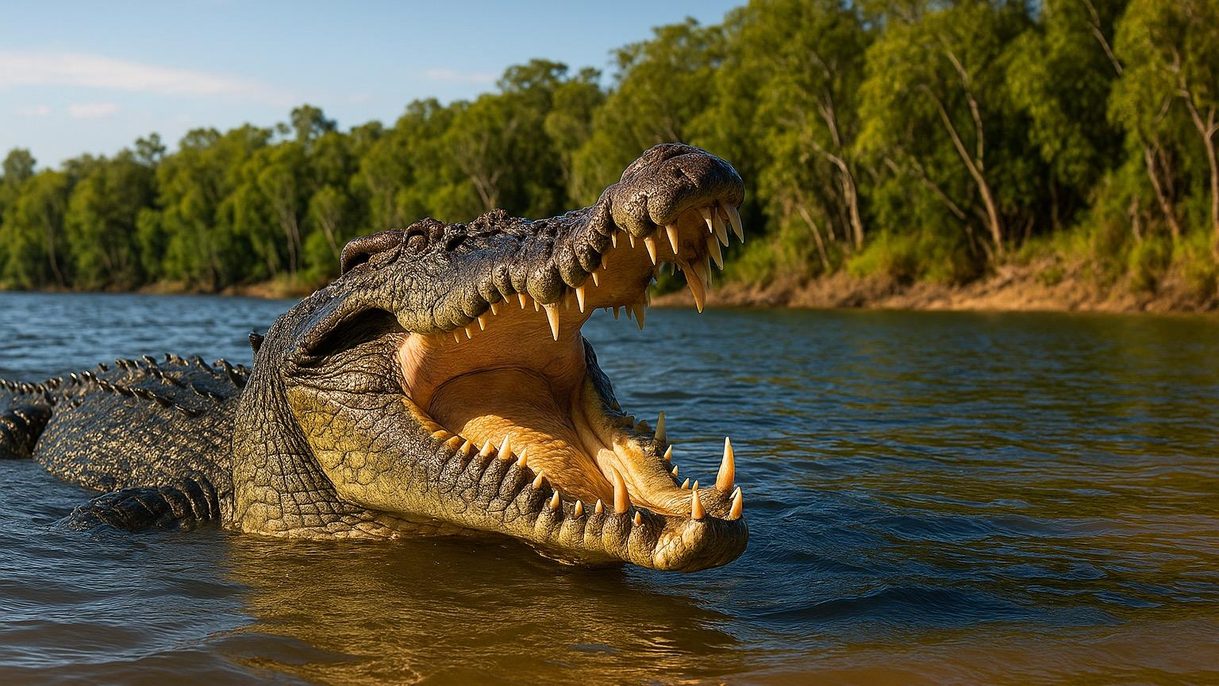
The saltwater crocodile (Crocodylus porosus) is widely regarded as the largest living crocodilian and one of the most formidable predators on the planet.
It is commonly found in northern Australia, Indonesia, Papua New Guinea, Malaysia, the Philippines and other parts of Southeast Asia.
Unlike what its name suggests, this crocodile does not live exclusively in seawater. It inhabits freshwater rivers, swamps, mangroves, coastal wetlands and estuaries. Its ability to tolerate saltwater allows it to travel between islands and across large stretches of ocean.
An adult male can reach approximately 5 to 6 metres in exceptional cases, although many are considerably smaller. Large individuals can weigh more than 1,000 kilograms.
What makes the saltwater crocodile particularly frightening is its combination of size, strength, patience and intelligence.
It can remain almost completely submerged, leaving only its eyes and nostrils above the water. An unsuspecting animal approaching the riverbank may never realise that a predator is waiting nearby.
When the crocodile attacks, it can explode out of the water, seize its victim and drag it underneath.
Its powerful jaws are designed to grip and crush prey. Once it captures an animal, escaping becomes extremely difficult.
Saltwater crocodiles eat fish, birds, turtles, wild pigs, monkeys, water buffalo and other animals. Large individuals can also attack people who enter their habitat.
Their reputation is supported by documented fatal encounters in parts of Australia and Southeast Asia.
2. Nile Crocodile: Africa’s Terrifying River Predator
Nile Crocodile
For Africans, the Nile crocodile may be the most familiar and frightening member of the crocodile family.
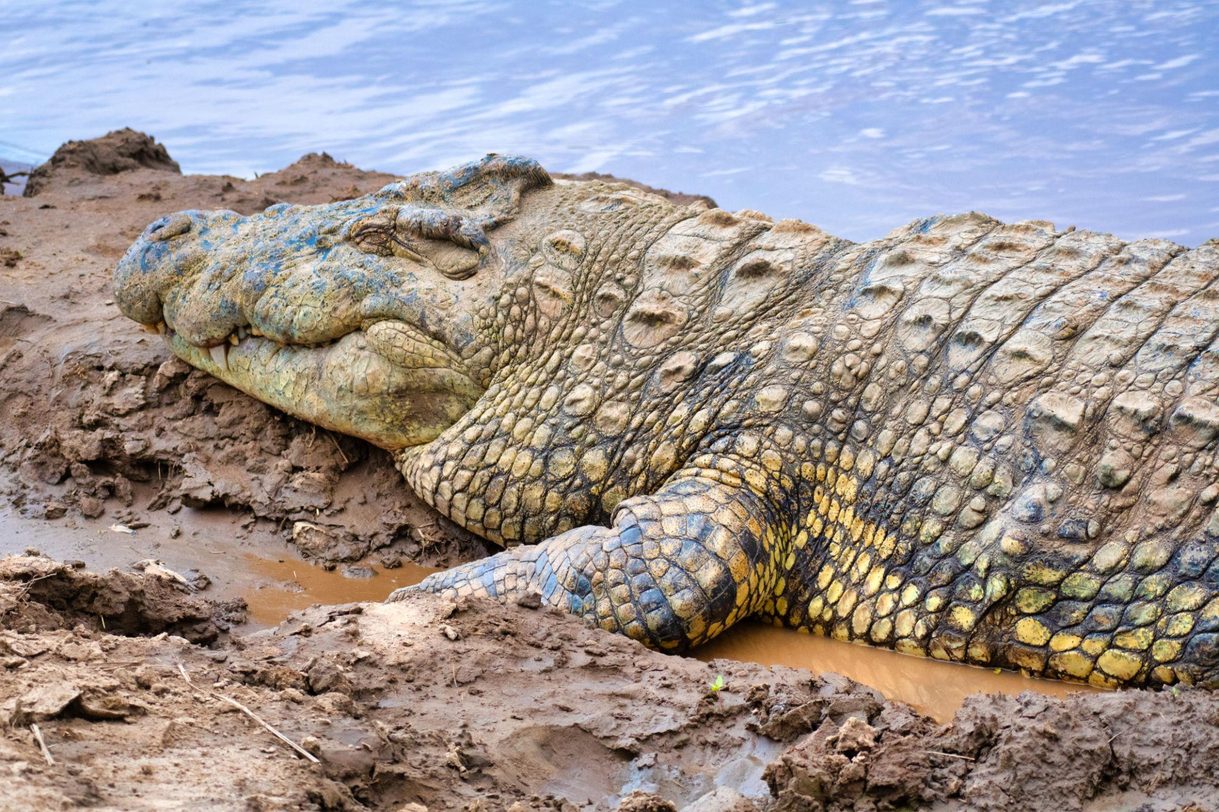
The Nile crocodile (Crocodylus niloticus) is widely distributed across sub-Saharan Africa and is found in rivers, lakes, wetlands and other freshwater environments.
It is also present in Kenya, where crocodiles inhabit waterways such as Lake Victoria, Lake Turkana and sections of major river systems.
The Nile crocodile is one of the largest crocodile species in the world. Large adults can grow beyond five metres, although most are smaller.
Unlike many predators that actively chase their victims over long distances, Nile crocodiles rely heavily on ambush hunting.
They may spend hours floating quietly in the water or resting near riverbanks. Their dark, rough skin helps them blend into muddy surroundings.
When an animal approaches the water to drink, the crocodile can launch an explosive attack.
Its prey includes fish, antelope, zebras, wildebeest, birds and other animals. Large crocodiles have even been known to attack animals much bigger than themselves.
Why Nile crocodiles are particularly dangerous to humans
The Nile crocodile is responsible for numerous attacks on people in Africa.
Fishing communities, farmers, herders and people collecting water from rivers and lakes can face significant risks.
In some rural communities, people depend on natural water sources for everyday activities. Unfortunately, these are also places where crocodiles hunt.
A person washing clothes, collecting water or fishing near the edge of a river may unknowingly enter the territory of a crocodile.
Unlike lions, crocodiles do not need to be visible to pose a threat. They can remain underwater for extended periods, making them difficult to detect.
This is one reason why crocodile attacks can happen with very little warning.
3. American Crocodile: A Powerful Predator of the Americas
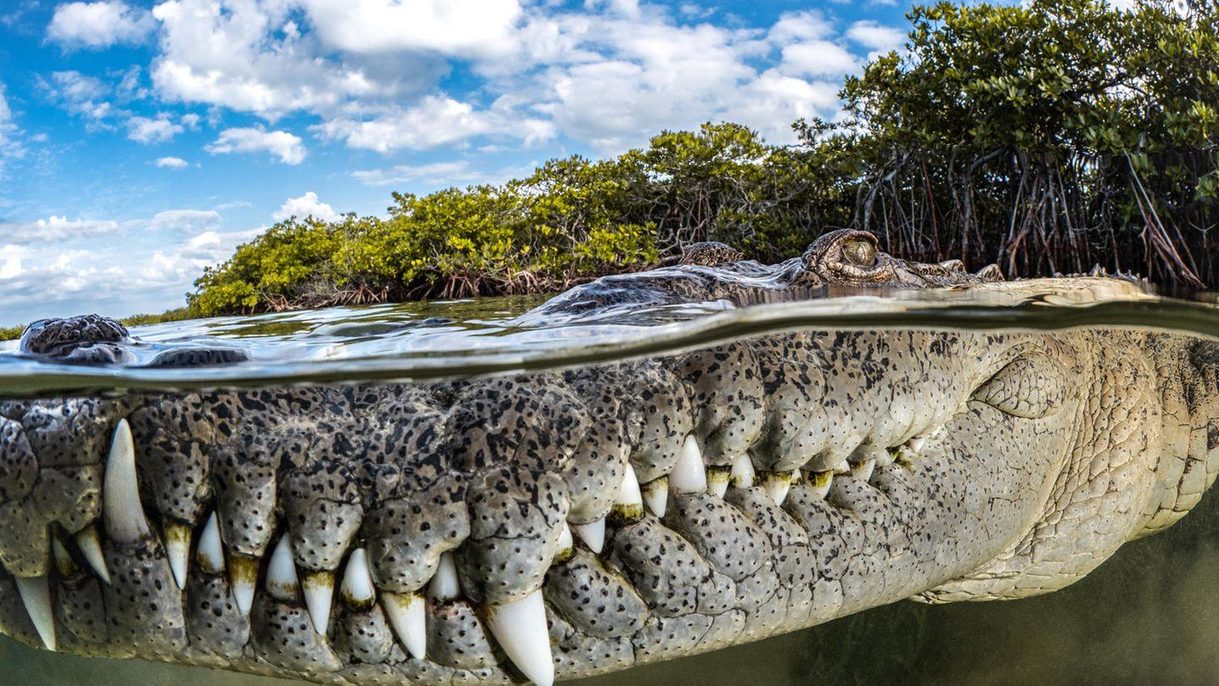
American Crocodile
The American crocodile (Crocodylus acutus) is another dangerous species, found in parts of Central America, the Caribbean, northern South America and southern Florida.
It is a large reptile that prefers coastal habitats, including mangrove swamps, lagoons, estuaries and river mouths.
Adult American crocodiles can grow to approximately four to five metres, with particularly large individuals exceeding that range.
Although they generally avoid unnecessary contact with humans, they can become dangerous when people enter their habitat.
American crocodiles are opportunistic hunters. They feed on fish, crabs, birds, turtles and mammals. Their ability to survive in both freshwater and saltwater environments makes them adaptable predators.
Attacks on humans have been documented, particularly in areas where human settlements overlap with crocodile habitats.
One reason people underestimate this species is that it does not always display the aggressive behaviour associated with the saltwater crocodile. However, a crocodile does not need to appear aggressive to be dangerous.
4. Mugger Crocodile: India’s Dangerous Freshwater Hunter
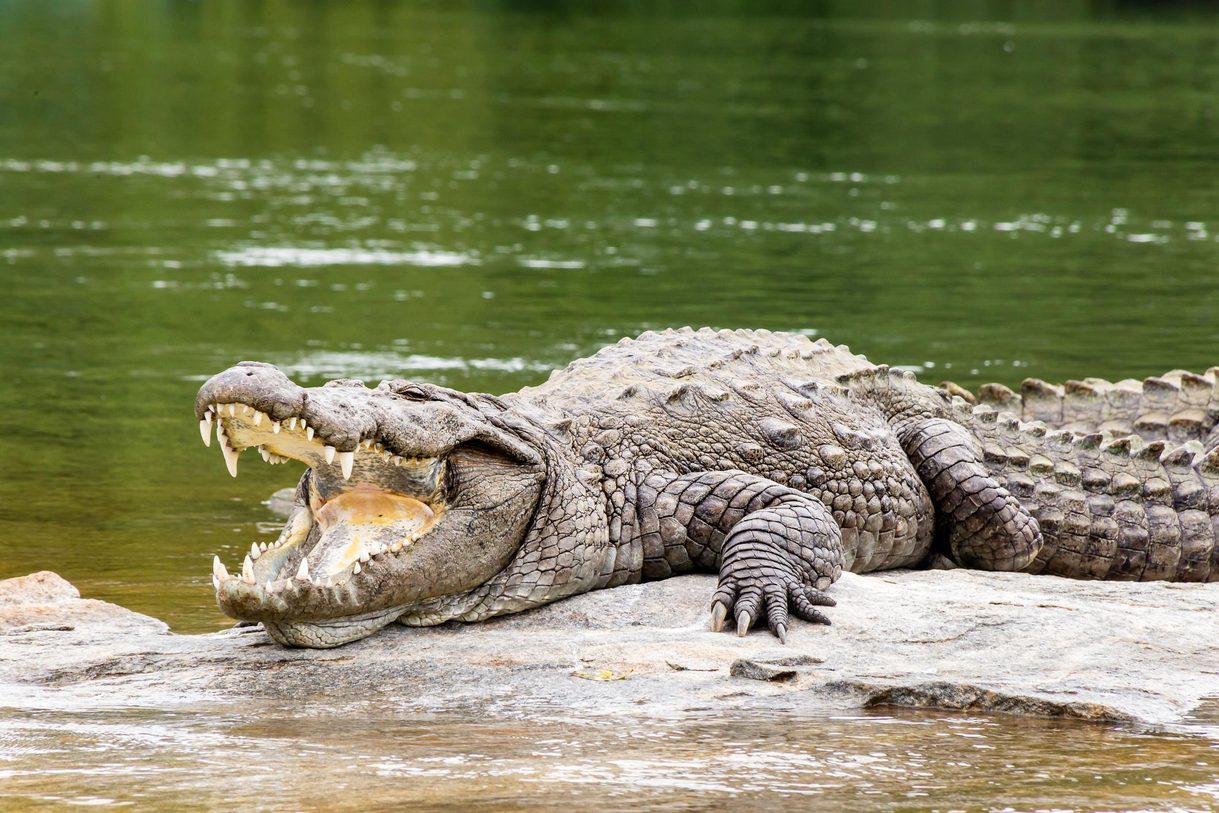
Mugger Crocodile
The mugger crocodile (Crocodylus palustris), also known as the marsh crocodile, is predominantly found in the Indian subcontinent.
It inhabits rivers, lakes, marshes, reservoirs and artificial water bodies.
Unlike the saltwater crocodile, which is particularly adapted to coastal and estuarine environments, the mugger crocodile is primarily a freshwater species.
It has a broad snout, muscular body and powerful jaws. Adults can grow to approximately four metres, with some exceptionally large individuals exceeding this length.
Mugger crocodiles are opportunistic predators. Their diet includes fish, reptiles, birds, amphibians and mammals.
They can also attack livestock and people, particularly where communities share water sources with crocodiles.
Their ability to live in relatively small water bodies close to human settlements creates opportunities for dangerous encounters.
5. Black Caiman: The Amazon’s Giant River Predator
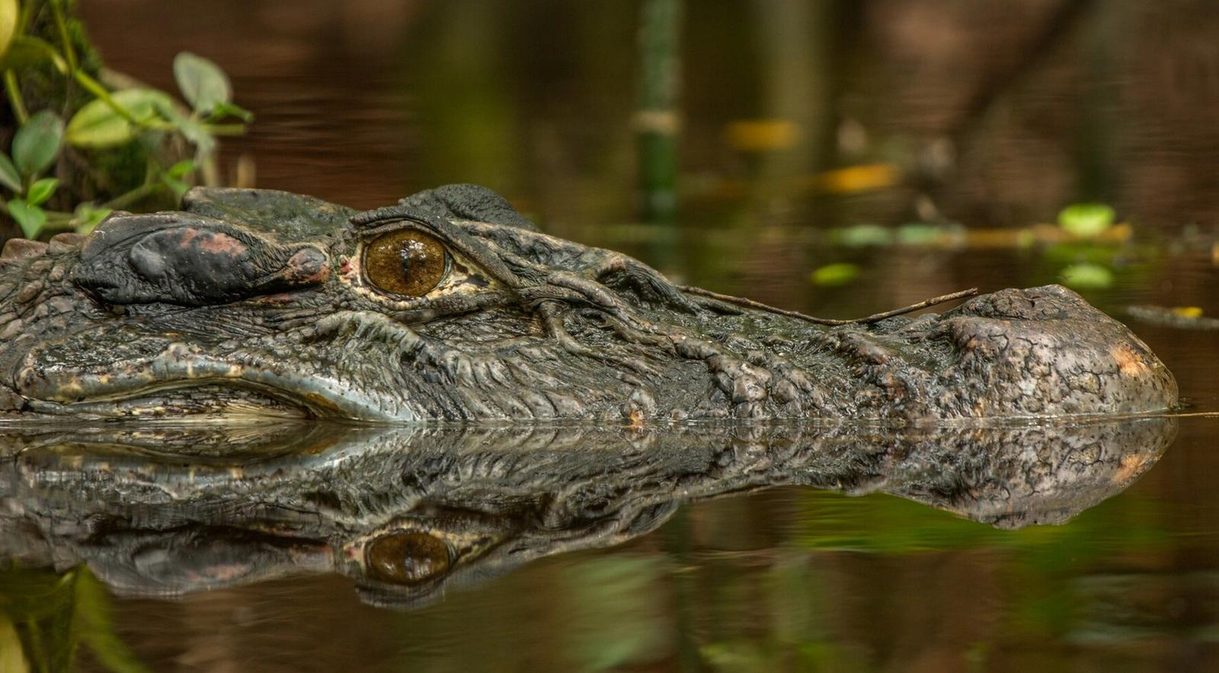
Black Caiman
The black caiman (Melanosuchus niger) is not technically a crocodile. It belongs to the alligator family, but it deserves a place among the world’s most dangerous crocodilian predators.
It is native to South America, particularly the Amazon Basin.
Black caimans are among the largest members of the alligator family. Large males can reach approximately five metres or more.
Their dark skin helps them disappear into shadowy rivers and flooded forests.
They feed on fish, turtles, birds, capybaras and other animals. Very large individuals are capable of overpowering substantial prey.
Although black caimans can be dangerous to humans, attacks are less frequently documented than those involving Nile and saltwater crocodiles.
Their enormous size and powerful jaws make them predators that should never be approached in the wild.
6. Why Are Crocodiles So Dangerous?
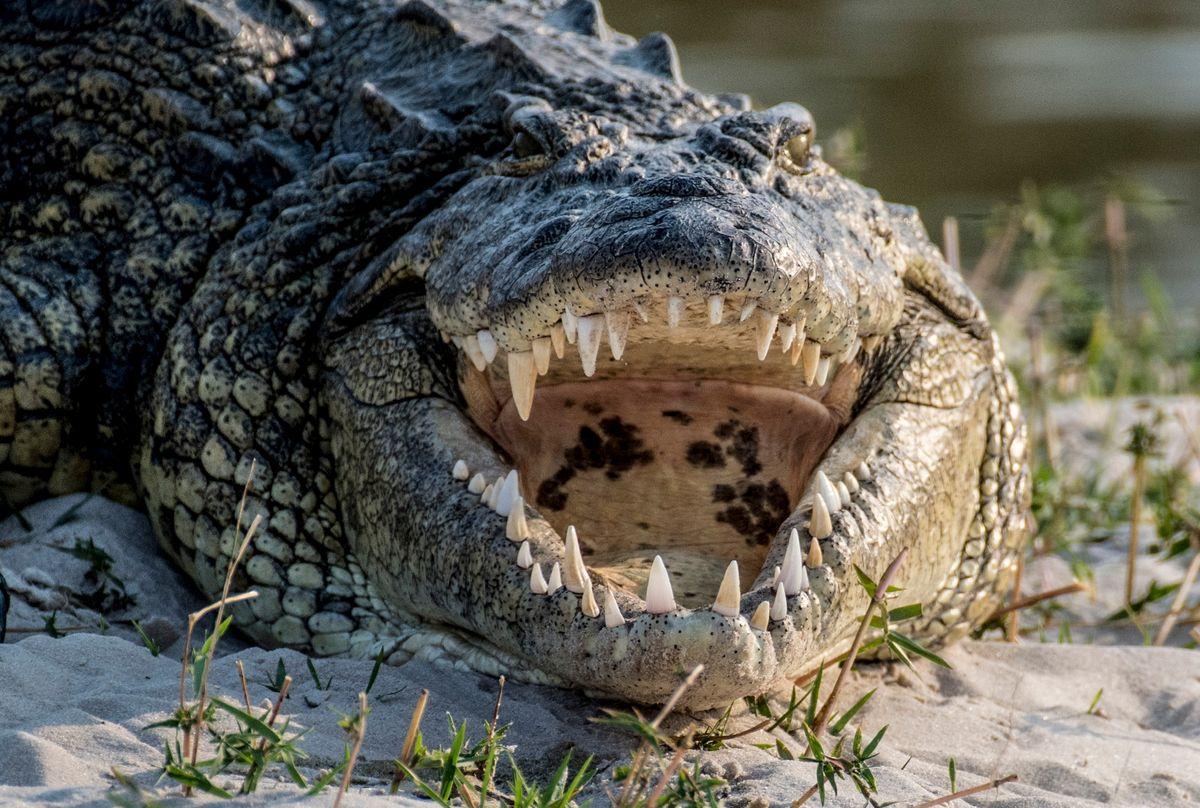
alligators use the gruesome ‘death roll’ to kill their prey
Crocodiles are not dangerous simply because they are large. Their bodies have evolved to make them exceptionally efficient hunters.
Several physical and behavioural characteristics give them an advantage over many other predators.
Their powerful jaws
A crocodile’s bite is one of the strongest among living animals.
Research measuring the bite forces of living crocodilians found that the saltwater crocodile produced the highest measured bite force, approximately 3,700 pounds per square inch in the tested individuals.
Its jaws are designed to close with tremendous force, allowing it to hold struggling prey and inflict devastating injuries.
However, crocodiles do not have equally powerful muscles for opening their jaws. Their jaw-closing muscles are much stronger than their opening muscles. National Geographic+1
The terrifying death roll
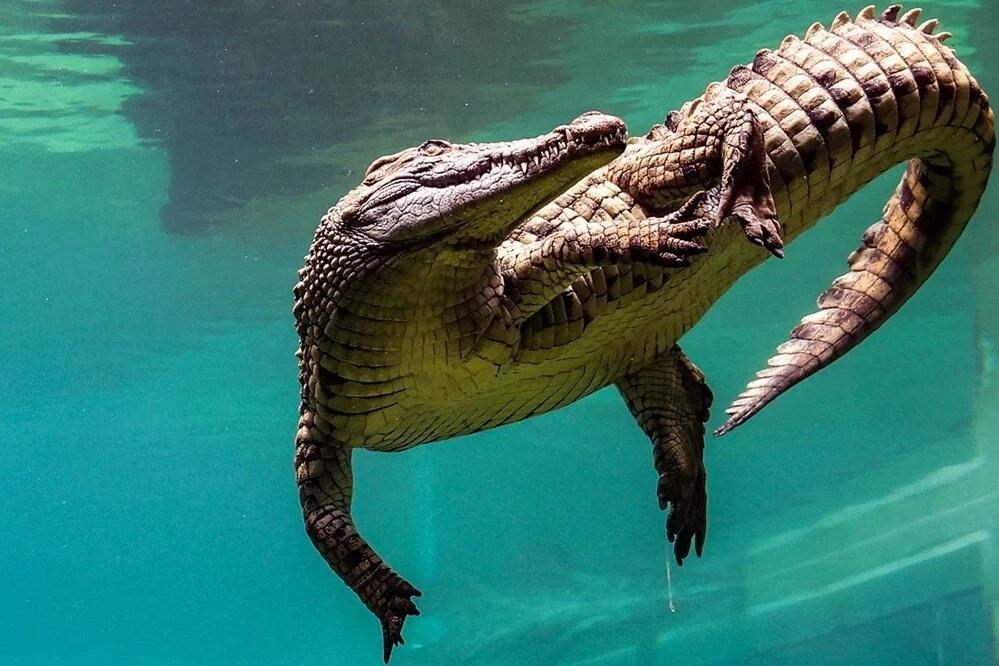
One of the most frightening crocodile hunting techniques is known as the death roll.
After grabbing prey, a crocodile may rotate its body rapidly underwater while maintaining its grip.
This movement can tear apart prey, disorient struggling animals and help the crocodile remove manageable pieces of food.
The technique is particularly effective when the crocodile captures an animal too large to swallow whole.
Incredible ambush abilities
Crocodiles are masters of patience.
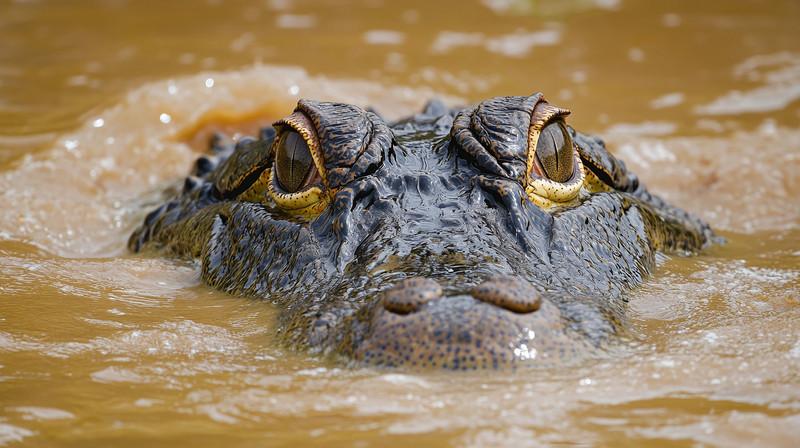
They can remain almost completely submerged, with only their eyes and nostrils visible above the water.
Their eyes are positioned on top of their heads, allowing them to observe their surroundings while keeping most of their bodies hidden.
Some large saltwater crocodiles can remain underwater for at least an hour under suitable conditions.
This makes them difficult to detect, particularly in muddy rivers and murky lakes. nt.gov.au+1
Powerful swimming abilities
Their long, muscular tails provide much of the power needed for swimming.
A crocodile can move quickly through water, accelerate suddenly and launch itself towards prey near the riverbank.
On land, it may appear slow and clumsy, but this can be misleading. Crocodiles can make surprisingly fast short-distance movements.
7. How Crocodiles Hunt and Kill Their Prey
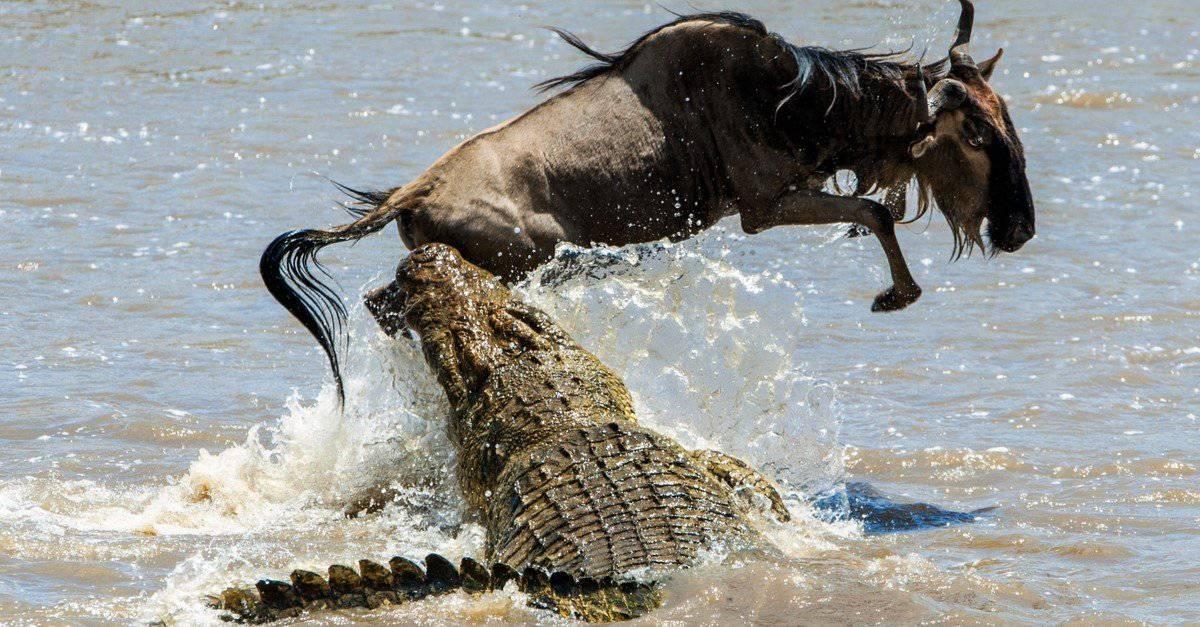
Crocodiles rarely need to chase their prey over long distances.
Instead, they use an ambush strategy that depends on concealment, timing and surprise.
The process usually begins when a crocodile identifies an animal approaching the water.
It may position itself close to the riverbank, remaining motionless while waiting for the right opportunity.
When the animal moves within striking distance, the crocodile suddenly lunges forward.
Its jaws clamp around the victim, and it may pull the animal underwater.
Large crocodiles can use their size and strength to overpower prey that would otherwise be difficult to capture.
In Africa, Nile crocodiles are particularly famous for attacking animals crossing rivers during seasonal migrations.
During these crossings, large numbers of wildebeest and zebras enter crocodile-infested waters.
Crocodiles wait for opportunities to capture animals that become separated, exhausted or vulnerable.
This behaviour demonstrates why rivers can become dangerous places even when the surrounding landscape appears peaceful.
8. Real Human Encounters: Why Crocodile Attacks Are So Deadly
Crocodile attacks are particularly frightening because they often happen in places where people carry out ordinary activities.
In several African communities, rivers and lakes are essential sources of water, food and transportation.
People fish, swim, wash clothes, collect water and cross waterways without always knowing whether crocodiles are nearby.
Research examining reported Nile crocodile attacks in South Africa and Eswatini between 1949 and 2016 identified 214 attacks.
The researchers found that many incidents occurred in natural water bodies. Victims were commonly attacked while swimming, bathing, fishing, doing household chores or crossing waterways.
Children younger than 16 accounted for 51 per cent of the recorded attacks in that study. Cambridge University Press & Assessment+1
These findings highlight an important reality: crocodile attacks are not restricted to tourists visiting remote wilderness areas.
They can happen to people whose daily activities bring them close to crocodile habitats.
Why escaping a crocodile attack is difficult
A crocodile attack can involve several dangerous factors.
First, the initial strike can happen with very little warning.
Second, the crocodile’s jaws can cause catastrophic injuries.
Third, the predator may attempt to pull its victim underwater, creating an immediate risk of drowning.
Finally, the animal’s ability to move through water gives it a considerable advantage over a person.
This combination makes prevention far more effective than attempting to escape once an attack has started.
9. Are Crocodiles Found in Kenya?
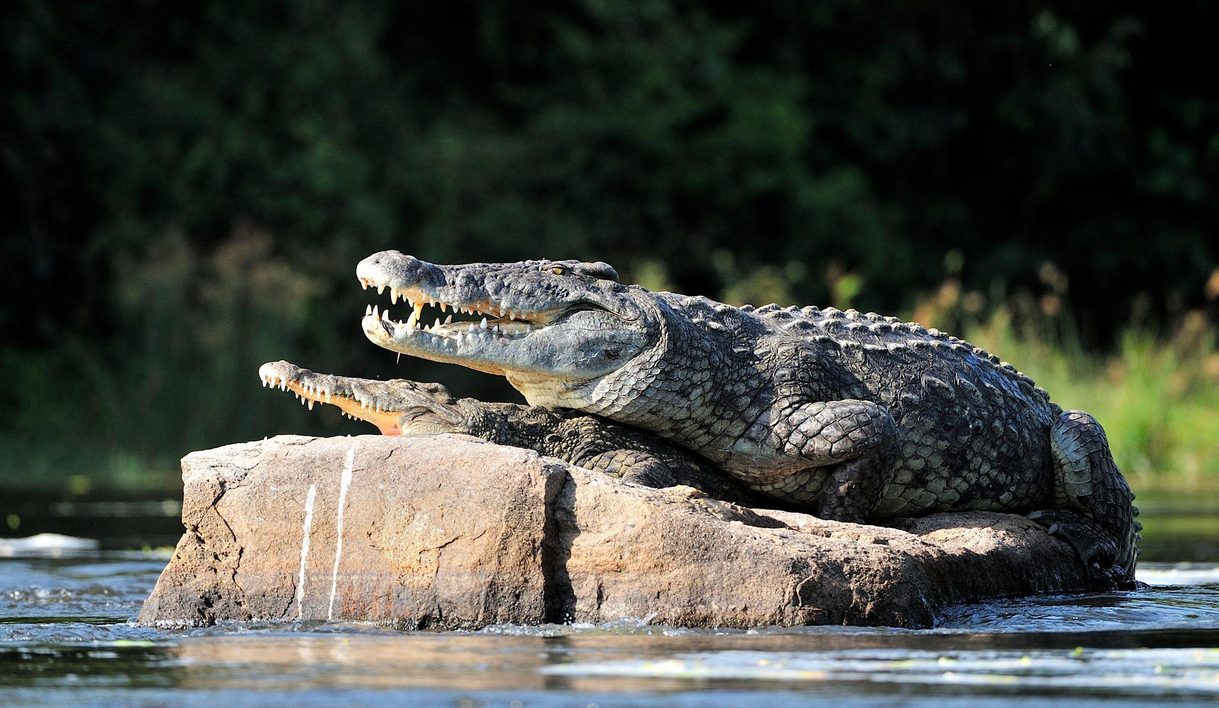
Nile crocodile. Two crocodiles , having opened from a heat
Yes. Kenya is home to Nile crocodiles, one of Africa’s most dangerous crocodilian species.
They inhabit several lakes, rivers and wetlands across the country.
Some of the places associated with crocodile populations include:
- Lake Victoria: Crocodiles inhabit parts of the lake and its surrounding waterways.
- Lake Turkana: The lake supports Nile crocodile populations, particularly around suitable breeding and feeding habitats.
- Tana River: Its river ecosystem provides suitable conditions for crocodiles.
- River systems and wetlands: Other freshwater habitats across Kenya can also support crocodile populations.
Crocodiles are an important part of these ecosystems because they help regulate populations of other animals and maintain ecological balance.
However, their presence creates risks for communities that depend on rivers and lakes.
People should avoid swimming in unfamiliar waterways, approaching crocodiles or washing close to places where crocodiles have been sighted.
The Kenya Wildlife Service plays an important role in wildlife management, conservation and addressing human-wildlife conflict.
10. Can a Human Survive a Crocodile Attack?
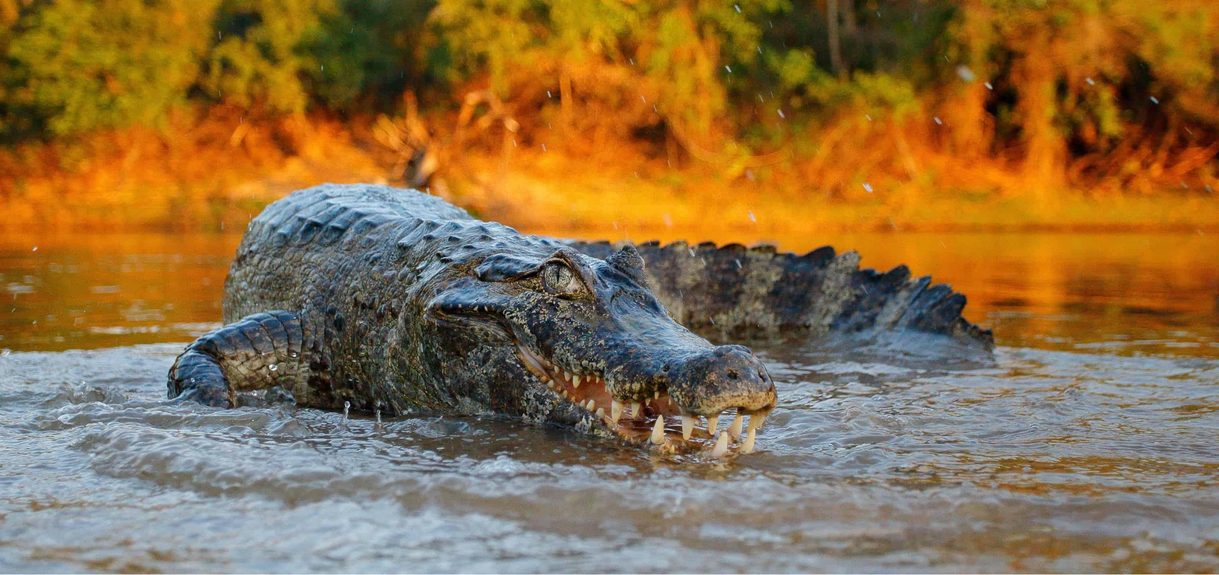
Yes, some people survive crocodile attacks, but survival depends on several factors, including the crocodile’s size, the location of the attack, the severity of injuries and how quickly medical assistance becomes available.
A crocodile attack should always be treated as a medical emergency.
The best way to survive an encounter is to avoid one in the first place.
Some important precautions include:
- Never swim in rivers or lakes known to contain dangerous crocodiles.
- Avoid approaching the water’s edge, particularly at night and around dawn or dusk.
- Never attempt to feed a crocodile.
- Keep children and domestic animals away from crocodile habitats.
- Do not assume that a water body is safe simply because no crocodile is visible.
- Observe warning signs and follow instructions from wildlife authorities.
- Report crocodile sightings near public areas to the relevant wildlife authorities.
Remember that crocodiles can attack from beneath the water without giving their victims enough time to react.
11. Are Crocodiles More Dangerous Than Lions and Sharks?
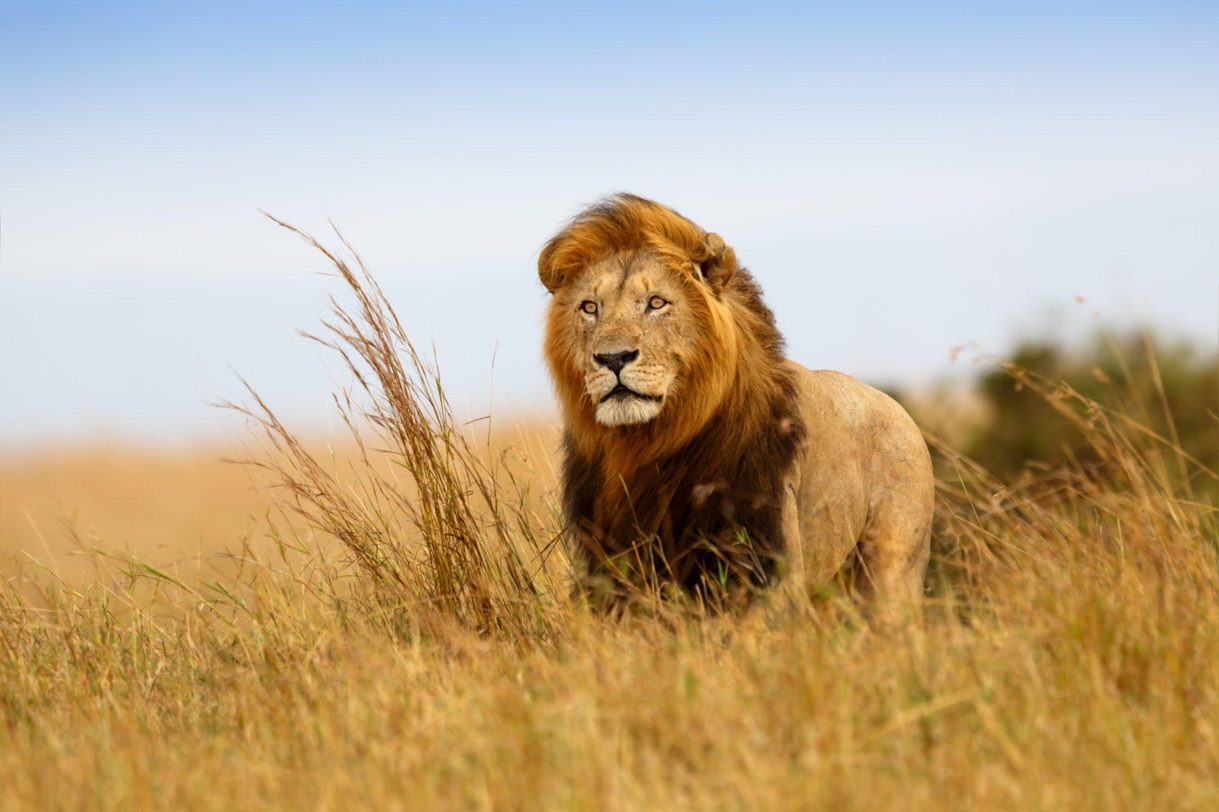
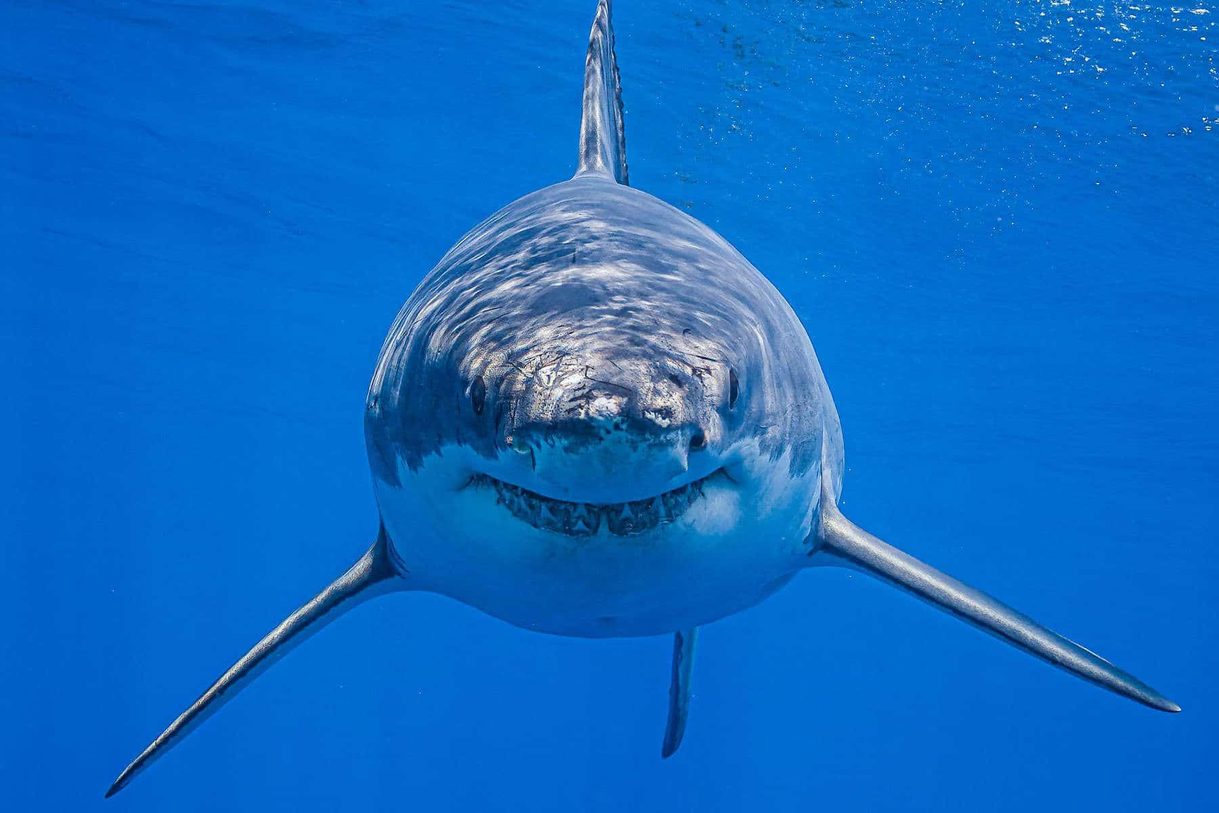
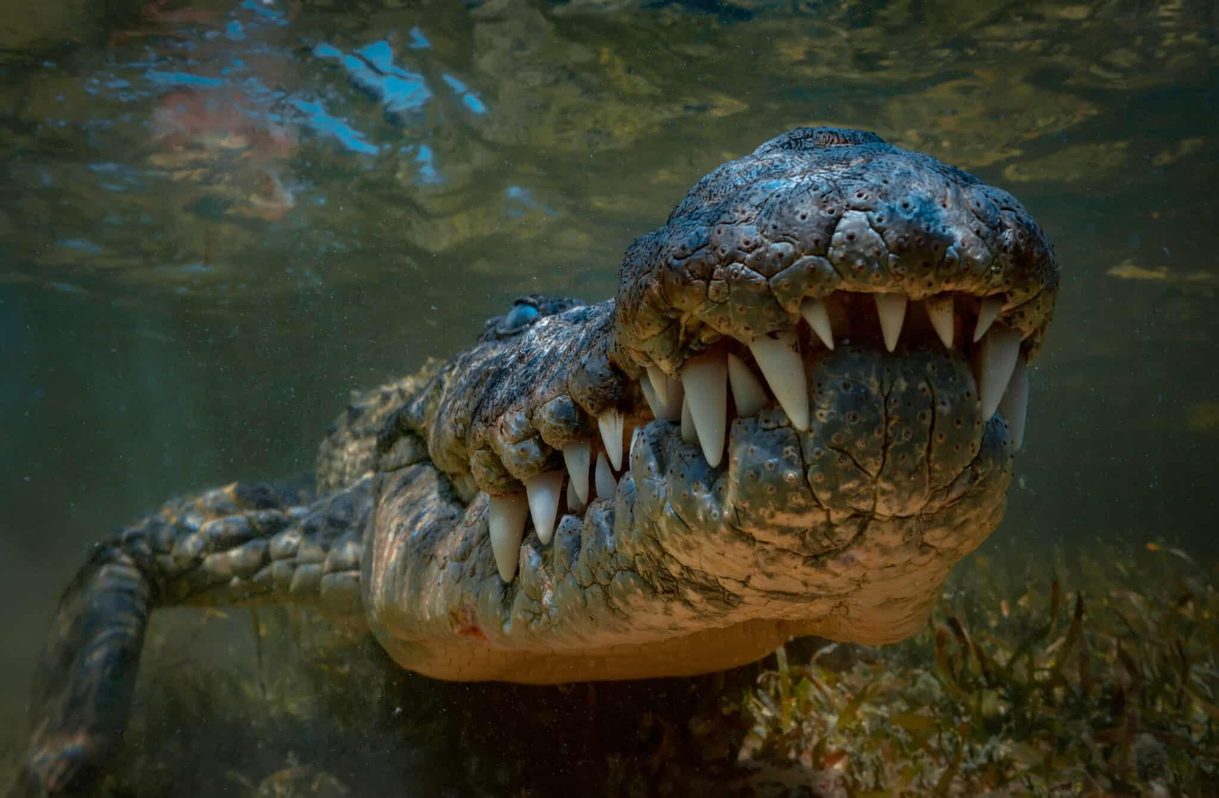
Comparing crocodiles, lions and sharks is difficult because they inhabit different environments and encounter humans under different circumstances.
However, crocodiles have several advantages that make them particularly dangerous.
Lions usually hunt on land and can sometimes be spotted before an attack. Sharks inhabit marine environments, where their encounters with humans are influenced by location and activity.
Crocodiles, on the other hand, can remain hidden in freshwater rivers, lakes and coastal waterways where people regularly carry out everyday activities.
The Nile crocodile is particularly concerning in parts of Africa because its habitat frequently overlaps with human settlements.
The saltwater crocodile is also an exceptionally formidable predator because of its enormous size and strength.
Ultimately, all three animals are dangerous in the wrong circumstances, but crocodiles have a particularly frightening combination of stealth, strength and ambush ability.
12. Why Crocodiles Have Survived for Millions of Years
Deinosuchus
Crocodiles belong to an ancient evolutionary lineage that stretches back more than 200 million years.
Their ancestors lived during the age of dinosaurs, and modern crocodilians retain many features that make them successful aquatic predators.
Their survival is partly explained by their ability to adapt to changing environments.
They can live in freshwater, saltwater and wetlands, depending on the species. Their slow metabolism allows them to survive for extended periods without eating.
They also have strong protective skin, powerful tails and highly developed hunting instincts.
Despite their frightening reputation, crocodiles are not simply mindless killing machines. They are important predators that contribute to the health of aquatic ecosystems.
Their conservation is therefore important, even in areas where human-wildlife conflict remains a serious challenge.
The Crocodile Is One Predator You Should Never Underestimate
Crocodiles are among the most extraordinary and dangerous animals on Earth.
The saltwater crocodile holds the distinction of being the largest living crocodilian, while the Nile crocodile has a particularly troubling record of attacks on humans across parts of Africa.
Their powerful jaws, stealthy hunting methods, muscular tails and ability to remain hidden underwater make them exceptionally effective predators.
For people living near African rivers and lakes, understanding crocodile behaviour is not simply an interesting wildlife lesson. It can be a matter of life and death.
A peaceful-looking river does not necessarily mean safe water.
Sometimes, beneath the surface, one of nature’s most powerful predators is patiently waiting.
SUGGESTED READS
- 15 Most Dangerous Dogs in the World: Powerful Breeds That Demand Respect
- 15 Most Dangerous Snakes in the World: The Deadly Reptiles You Would Never Want to Encounter
- THE BIRTH OF THE AK-47: A STORY OF WAR, WOUNDS, AND ONE MAN’S OBSESSION
- Why the Pacific Ocean and the Atlantic Ocean Seem Not to Mix: The Science, the History, and the Myth
- The Ocean’s Role in Climate Change: A Vital Regulator Under Threat
- The Invention of the Telephone
- how many countries in the world
- how long should someone boil eggs
- How Many People Are in the World?
- The shortest war in history

Support Our Website!
We appreciate your visit and hope you find our content valuable. If you’d like to support us further, please consider contributing through the TILL NUMBER: 9549825. Your support helps us keep delivering great content!
If you’d like to support Nabado from outside Kenya, we invite you to send your contributions through trusted third-party services such as Remitly, western union, SendWave, or WorldRemit. These platforms are reliable and convenient for international money transfers.
Please use the following details when sending your support:
Phone Number: +254701838999
Recipient Name: Peterson Getuma Okemwa
We sincerely appreciate your generosity and support. Thank you for being part of this journey!