

We aint done yet.. Expect another one.
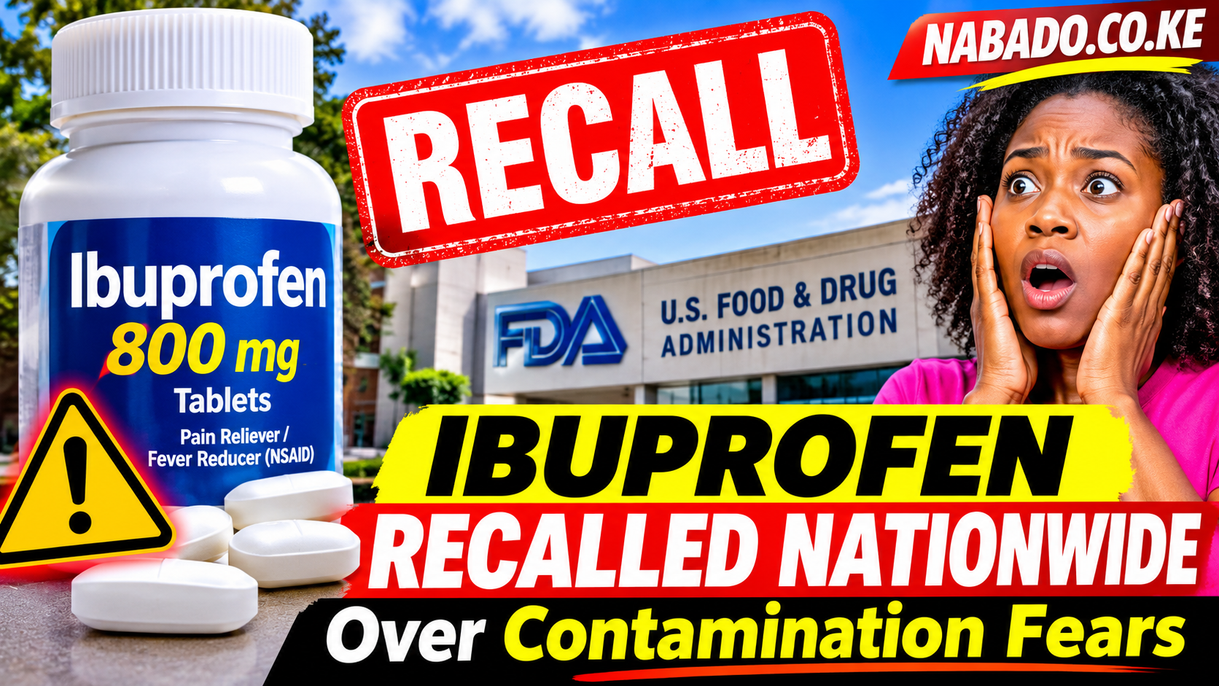
A nationwide drug recall has been announced in the United States after certain batches of 800mg ibuprofen tablets were found to have potential aluminum particle contamination, raising concerns about the safety of affected medication.
The recall, initiated by Golden State Medical Supply, Inc. (GSMS), affects a specific lot of prescription-strength ibuprofen distributed through McKesson. The United States Food and Drug Administration (FDA) published the recall announcement on November 24, 2026.
Although the manufacturer describes the likelihood of adverse health effects as remote, consumers who have purchased the affected medication are being advised to stop using it and seek guidance from their pharmacists or healthcare providers.
The development has drawn attention because ibuprofen is among the most widely used pain-relief medicines globally. Millions of people rely on the medication to manage headaches, muscle pain, dental discomfort, menstrual cramps, fever and inflammation.
Which Ibuprofen Tablets Are Affected by the Recall?
The recall specifically concerns 800mg ibuprofen tablets manufactured by Golden State Medical Supply, Inc.
According to the recall information, the affected product carries the National Drug Code (NDC) 51407-841-05.
The identified lot number is GS069303, with an expiration date of January 2030.
The medication was distributed through McKesson, a major pharmaceutical distributor in the United States.
Consumers are encouraged to examine their medication packaging carefully and compare the lot number with the information provided in the official recall announcement.
Importantly, the recall does not apply to every ibuprofen product on the market. Other strengths, brands and manufacturing batches should not automatically be considered affected.
Why Was the Ibuprofen Recalled?
The recall was triggered by the discovery of potential aluminum particle contamination on the surface of the affected tablets.
The particles reportedly measure between approximately 0.01 and 0.10 millimetres.
Although these particles are extremely small, their presence in medication raises quality-control and patient-safety concerns.
Medicines are expected to meet strict manufacturing standards because consumers depend on them to treat health conditions safely.
Foreign material in tablets can compromise product quality and potentially expose patients to unwanted substances.
In this case, the concern is that swallowing tablets containing aluminum particles could cause irritation or abrasion of the gastrointestinal tract.
The stomach and intestines are particularly relevant because they come into direct contact with swallowed medication.
However, GSMS has indicated that the probability of adverse reactions is remote because of the small size of the particles.
At the time of the recall announcement, no adverse events had been reported.
What Are the Possible Health Effects?
The potential health concern associated with the recalled medication involves the possibility of gastrointestinal irritation.
If contaminated tablets are swallowed, foreign particles could potentially irritate or scratch parts of the digestive system.
Depending on the circumstances, symptoms requiring medical assessment could include abdominal discomfort, nausea, vomiting or unusual digestive problems.
These symptoms are not proof that someone has been exposed to contaminated medication. They can have many other causes.
Consumers who suspect they have experienced a reaction after taking medication from the affected lot should contact a healthcare professional.
People should not attempt to diagnose themselves or assume that an absence of immediate symptoms means there is no need to follow the recall instructions.
What Should People Who Purchased the Affected Ibuprofen Do?
Anyone who has the identified batch of ibuprofen should stop using it immediately.
The safest approach is to check the packaging, identify the lot number and contact the pharmacy or healthcare provider for instructions.
Consumers should also consider the following precautions:
- Stop taking the affected tablets: Do not continue using medication from the recalled lot.
- Check the packaging: Confirm whether the product carries lot number GS069303.
- Contact the pharmacy: Ask the pharmacy where the medication was purchased about returning or replacing the affected tablets.
- Seek medical advice: Anyone who has already consumed the medication and is concerned should consult a healthcare professional.
- Keep the packaging: Retaining the original packaging can help pharmacists and healthcare providers identify the affected product.
Consumers should not dispose of prescription medication in a way that could allow other people or children to access it.
Why Ibuprofen Is So Widely Used
Ibuprofen belongs to a group of medicines known as nonsteroidal anti-inflammatory drugs, commonly referred to as NSAIDs.
It works by reducing the production of substances called prostaglandins, which contribute to pain, inflammation and fever.
The medication is commonly prescribed or recommended for several conditions, including headaches, back pain, arthritis, dental pain, muscle injuries and menstrual cramps.
It is available in different strengths and formulations, depending on the country and whether it is sold over the counter or through prescription.
The 800mg strength affected by this recall is a prescription-strength formulation in the United States.
Despite its widespread use, ibuprofen is not suitable for everyone. It can increase the risk of stomach irritation, ulcers, gastrointestinal bleeding and kidney complications, particularly when used improperly or by people with certain underlying conditions.
This is why healthcare professionals recommend following dosage instructions and avoiding unnecessary prolonged use.
Does the Recall Affect All Ibuprofen Brands?
No.
One of the most important details consumers should understand is that this recall concerns a specific product and manufacturing lot.
It does not mean that all ibuprofen tablets sold in American pharmacies are contaminated.
It also does not automatically mean that other brands or generic versions of ibuprofen are affected.
Consumers should avoid spreading misleading information suggesting that every ibuprofen product has been withdrawn from the market.
The correct approach is to identify the manufacturer, product code and lot number listed in the recall notice.
People who are uncertain about their medication should consult a pharmacist rather than discontinue unrelated prescribed treatment without medical advice.
Does the Recall Affect Kenya?
The announcement concerns a nationwide recall in the United States.
There is currently no confirmation in the recall announcement that the affected batch has been distributed in Kenya.
Kenyan consumers should therefore not assume that commonly available ibuprofen products have been recalled.
However, people who purchase imported medicines should always check the manufacturer, packaging and batch information.
If a product appears to match the recalled batch, they should avoid using it until its status has been confirmed by the relevant supplier or health authorities.
Questions Remain About Medication Quality Control
The recall highlights the importance of quality control in pharmaceutical manufacturing.
Medicines pass through multiple stages of production, inspection, packaging and distribution before reaching patients.
Manufacturers are expected to maintain procedures that prevent foreign materials from entering finished products.
When contamination is suspected, recalls help remove potentially affected products from circulation and reduce the possibility of further exposure.
The incident also demonstrates why consumers should pay attention to medication recall announcements rather than assuming that familiar medicines are always free from manufacturing problems.
What Happens Next?
Golden State Medical Supply’s recall places attention on the affected batch and the process of notifying distributors, pharmacies and other relevant parties.
Consumers who have the identified medication are advised to follow the manufacturer’s recall instructions and consult healthcare professionals where necessary.
Although no adverse events had been reported at the time of the announcement, the recall serves as a reminder that even widely used medicines can occasionally face manufacturing and quality-control challenges.
For now, the warning remains focused on one identified lot of 800mg ibuprofen tablets.
Consumers should verify their medication before drawing conclusions about the safety of other ibuprofen products.
NABADO.CO.KE will continue following developments surrounding the recall and any additional guidance issued by health authorities.
SUGGESTED READS
- A Baby Born With a Beard? The Strange Medical Truth Behind the Rare Phenomenon
- Why Do I Sometimes Forget What I Was About to Say? The Science Behind Losing Your Train of Thought
- What Would Happen If Humans Stopped Sleeping? The Terrifying Truth About Sleep Deprivation
- How to Prevent Cyclospora Infection and Explosive
- Tics and Tourette Syndrome: Causes, Symptoms, Diagnosis, and Treatment
- The Silent Killer That Turns Simple Infections Deadly
- Hantavirus: The Silent Threat from Rodents You Can’t Afford to Ignore
- Burned Out and Overwhelmed? Science Reveals Simple Ways to Relax Your Mind and Take Back Control
Support Our Website!
We appreciate your visit and hope you find our content valuable. If you’d like to support us further, please consider contributing through the TILL NUMBER: 9549825. Your support helps us keep delivering great content!
If you’d like to support Nabado from outside Kenya, we invite you to send your contributions through trusted third-party services such as Remitly, western union, SendWave, or WorldRemit. These platforms are reliable and convenient for international money transfers.
Please use the following details when sending your support:
Phone Number: +254701838999
Recipient Name: Peterson Getuma Okemwa
We sincerely appreciate your generosity and support. Thank you for being part of this journey!