

We aint done yet… Expect another one.
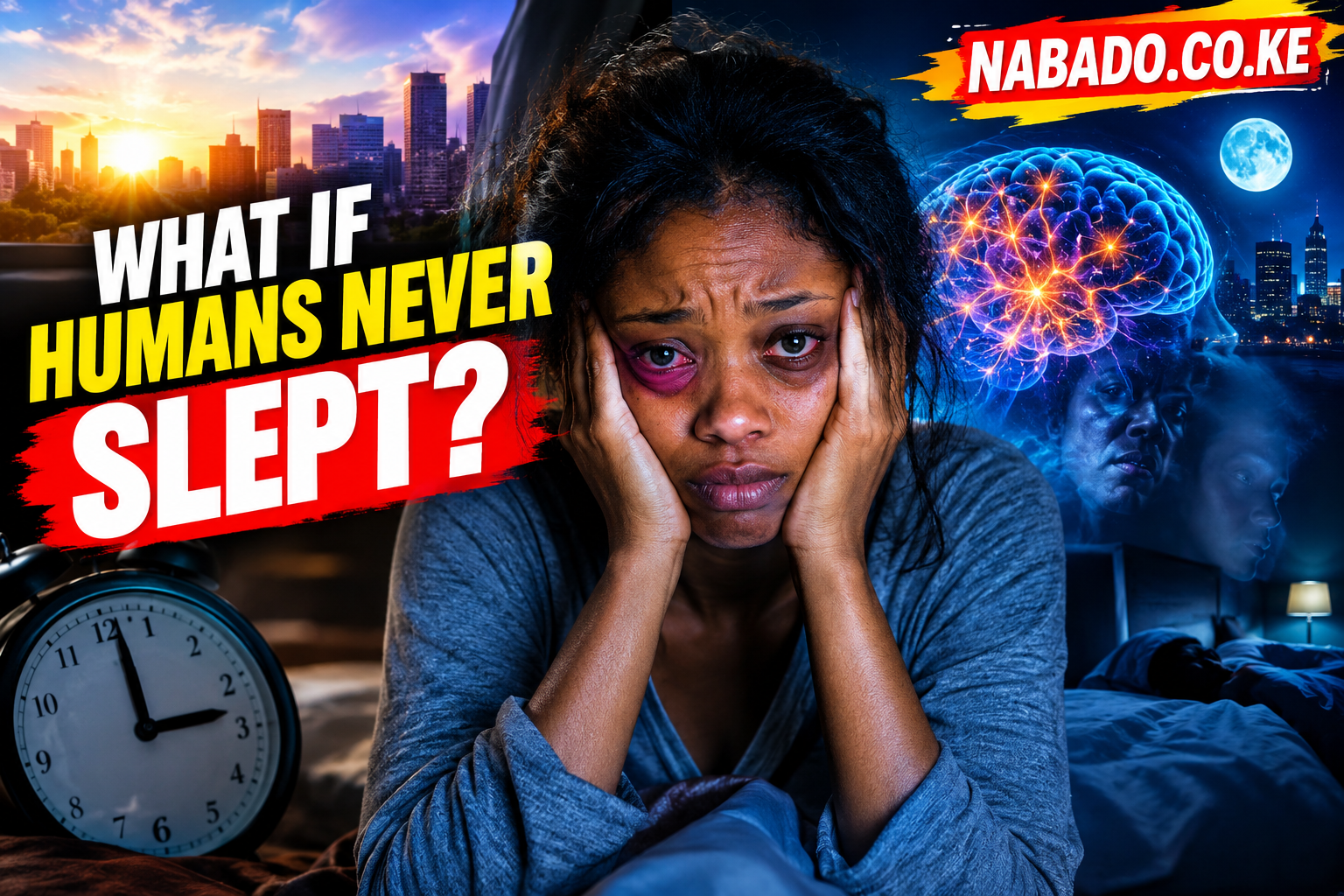
Imagine waking up one morning and discovering that you no longer needed sleep.
At first, it might sound like a dream come true.
No more lying in bed for seven or eight hours. No more struggling to wake up for work. No more feeling guilty about going to sleep when there are emails to answer, bills to pay, children to care for or entertainment to enjoy.
You would suddenly have an extra third of your life available.
But what if the opposite happened?
What if humans did not simply need less sleep, but lost the ability to sleep completely?
For the first few hours, nothing dramatic might happen. You would probably feel normal. You could work, talk, drive, eat and carry on with your day.
Then the exhaustion would begin.
As the hours turned into days, the human brain would gradually lose its ability to function properly. Concentration would collapse. Memory would become unreliable. Reaction times would slow. Emotions would become increasingly difficult to control.
Eventually, something far more disturbing could happen: the brain could begin producing experiences that are not actually happening.
Hallucinations, confusion and involuntary “microsleeps” could appear.
The longer the sleep deprivation continued, the more serious the consequences would become.
So, what would actually happen if humans stopped sleeping?
Sleep Is Not Simply Rest
Many people think of sleep as the body’s version of switching off.
That description is convenient, but it is misleading.
While you are asleep, your brain remains highly active. Different stages of sleep are associated with memory processing, emotional regulation, learning, brain maintenance and numerous physiological processes.
Sleep also interacts with the immune system, hormones, metabolism and cardiovascular health.
In other words, your body does not simply stop working when you go to bed.
It changes what it is doing.
During sleep, the brain processes information collected during the day. Memories are consolidated, neural connections are reorganized and the body carries out important maintenance processes.
This helps explain why staying awake all night can leave you feeling dramatically different the following day.
Sleep deprivation is not merely uncomfortable.
It affects how the brain operates.
The First 24 Hours Without Sleep
The first day without sleep might seem manageable.
Someone who stays awake for an entire night may initially feel capable of functioning normally, especially if they are drinking coffee or surrounded by other people.
But the changes are already happening.
Attention becomes weaker. Reaction times become slower. Judgment can deteriorate. Short-term memory becomes less reliable.
You may find yourself reading the same sentence several times without remembering what it said.
You might forget why you walked into a room.
You could make mistakes that you would normally consider obvious.
Driving becomes particularly dangerous because the brain is no longer maintaining the same level of alertness.
The frightening thing is that people experiencing sleep deprivation may not always recognize how impaired they have become.
They can feel as though they are functioning adequately while their actual performance tells a different story.
Around 36 Hours: The Brain Starts Struggling
After roughly a day and a half without sleep, the effects become increasingly difficult to ignore.
Mood can change dramatically.
A person who is normally calm may become impatient or angry over minor problems. Anxiety can increase. Emotional reactions may become exaggerated.
The ability to focus becomes worse.
The brain begins struggling to maintain sustained attention, making simple tasks unexpectedly difficult.
Physical symptoms can also appear.
You may experience headaches, heavy eyelids, muscle weakness, trembling or an overwhelming desire to lie down.
At this stage, the body is effectively demanding what it needs.
Sleep.
Around 48 Hours: Microsleeps Become a Serious Problem
One of the strangest consequences of severe sleep deprivation is something known as a microsleep.
A microsleep is a very brief period during which parts of the brain temporarily enter a sleep-like state.
It may last only a few seconds.
The person may not even realize it happened.
Imagine driving a car at highway speed and suddenly losing awareness for several seconds.
Even a tiny lapse in consciousness can have catastrophic consequences.
Microsleeps are one reason why sleep deprivation is such a serious safety issue for drivers, pilots, health workers, security personnel and anyone operating heavy machinery.
The brain cannot simply be ordered to remain awake indefinitely.
Eventually, biology begins fighting back.
Two or Three Days Without Sleep
Once someone reaches several days without proper sleep, the situation can become profoundly disturbing.
The person may have difficulty thinking clearly.
Speech can become less organized. Memory can become increasingly unreliable. Concentration can become extremely difficult.
And then there are the perceptual changes.
Some severely sleep-deprived people can experience hallucination-like phenomena.
They may see shadows, objects or movements that are not there. They may hear sounds that have no obvious external source. Their perception of time can also become distorted.
The brain is essentially struggling to process reality correctly.
This is one of the reasons prolonged sleep deprivation is sometimes compared to an altered state of consciousness.
The longer the deprivation continues, the harder it becomes for the brain to maintain normal cognitive control.
Why Does the Brain Need Sleep So Badly?
Scientists are still learning about all the functions of sleep, but we already know that sleep is involved in a remarkable number of biological processes.
One major function is memory and learning.
During sleep, the brain helps organize and consolidate information acquired while awake.
That means studying all night may actually be counterproductive.
You might spend more hours looking at your notes, but without adequate sleep, your ability to properly retain and use that information can suffer.
Sleep also plays an important role in emotional regulation.
After a poor night’s sleep, small problems can feel much bigger than they normally would.
You may become more irritable, impatient or emotionally sensitive.
Adequate sleep helps the brain regulate these responses.
What Happens to the Immune System?
Sleep and the immune system are closely connected.
During periods of inadequate sleep, the body’s immune response can become disrupted.
This doesn’t mean that missing one night of sleep automatically makes you sick.
But chronic sleep deprivation is associated with poorer health outcomes and can interfere with the body’s normal ability to respond to infections and maintain healthy physiological function.
If humans completely stopped sleeping, this disruption would become increasingly serious.
The body would lose an important period of biological recovery.
Sleep and the Heart
The cardiovascular system is also affected by sleep.
Sleep influences blood pressure, heart rate and various hormonal processes.
Persistent sleep deprivation has been associated with increased cardiovascular risks.
If nobody could sleep, the cardiovascular system would be exposed to prolonged physiological stress.
This would be particularly concerning for people who already have cardiovascular risk factors.
The human body simply was not designed to operate indefinitely without a sleep cycle.
Hormones Would Also Be Disrupted
Sleep affects several hormones involved in appetite, stress, metabolism and growth.
When sleep is restricted, the body’s regulation of hunger and satiety can change.
This may help explain why people who regularly sleep poorly sometimes experience stronger cravings or changes in eating behavior.
Stress hormones can also be affected.
The result can be a vicious cycle:
Less sleep creates more stress, while increased stress makes healthy sleep more difficult.
If humans stopped sleeping completely, this regulatory system would be pushed far beyond its normal limits.
What About the Brain Itself?
The brain is perhaps the organ most obviously affected by severe sleep deprivation.
It needs sleep to maintain normal cognitive performance.
Researchers have also found evidence that sleep is associated with processes involved in clearing certain waste products from the brain.
During sleep, changes in brain activity and fluid movement appear to support aspects of this maintenance system.
Scientists are still investigating exactly how all these mechanisms work and what their long-term implications are.
But one thing is clear:
Sleep is biologically active.
It is not simply empty time.
Could Humans Eventually Adapt to Living Without Sleep?
This is one of the most fascinating questions.
Could evolution eventually create humans who never needed to sleep?
In theory, evolution can produce extraordinary biological adaptations.
Some animals have developed unusual sleep strategies. Certain marine mammals, for example, can sleep with one hemisphere of the brain at a time, allowing them to remain partially alert.
But humans are not built this way.
There is currently no evidence that ordinary humans can completely eliminate the biological need for sleep.
Some people naturally require slightly less sleep than others, and genetic differences can influence sleep duration.
But that is very different from needing no sleep at all.
The idea that humans could simply train themselves to function permanently without sleep is not supported by scientific evidence.
What If Everyone Stopped Sleeping at the Same Time?
Now imagine a more extreme scenario.
Every human being on Earth suddenly becomes unable to sleep.
At first, the world would probably continue operating.
People would go to work.
Restaurants would open.
Schools would operate.
Flights would depart.
Hospitals would treat patients.
But as the hours passed, the consequences would accumulate.
Millions of people would become increasingly impaired.
Traffic accidents could increase.
Industrial accidents could rise.
Medical errors could become more common.
Air traffic controllers, pilots, drivers and machine operators would face enormous challenges.
Emergency services themselves would become overwhelmed.
The modern economy depends heavily on people being able to maintain attention, judgment and coordination.
Remove sleep from the equation and many of those systems begin to fail.
The Psychological Consequences Could Be Severe
Sleep deprivation does not only affect physical performance.
It can profoundly affect mental and emotional functioning.
People can become irritable, anxious, confused and emotionally unstable.
Social conflicts could increase because exhausted people have less ability to regulate their emotions.
Imagine an entire population experiencing those effects simultaneously.
Arguments that would normally be resolved calmly could escalate.
Workplaces could become chaotic.
Families could experience enormous stress.
Governments would face the unprecedented challenge of managing a population that is biologically incapable of recovering through sleep.
Would Humans Eventually Collapse?
If humans genuinely lost the ability to sleep forever, the answer would almost certainly be yes.
The exact timeline cannot be predicted.
Scientists cannot ethically conduct experiments in which people are kept awake indefinitely, so there is no precise human “death after X days” figure.
That distinction is important.
Popular stories sometimes claim that a person will definitely die after a particular number of days without sleep. The scientific evidence does not support such a simple universal countdown.
However, severe prolonged sleep deprivation clearly causes increasingly serious neurological, psychological and physiological problems.
At some point, the body’s ability to maintain normal function would be overwhelmed.
The Body May Try to Force Sleep
Perhaps the most fascinating part of this scenario is that the human brain may fight back.
Sleep is not something you can simply ignore forever.
As sleep pressure builds, the brain becomes increasingly difficult to keep awake.
Microsleeps can occur.
Attention can collapse.
The person may unintentionally fall asleep despite desperately trying to remain conscious.
This is why people who claim they can function indefinitely on almost no sleep should be cautious.
Feeling awake does not necessarily mean the brain is performing normally.
Why One Night of Poor Sleep Feels So Terrible
You don’t need to go days without sleep to experience its effects.
Even a single night of inadequate sleep can leave you feeling mentally foggy and physically drained.
You may struggle to concentrate.
You may become unusually hungry.
You may have difficulty controlling your emotions.
You may make simple mistakes.
And you may feel as though you need another cup of coffee just to get through the morning.
These experiences provide a small glimpse into what happens when the brain is denied something it considers essential.
The Modern World Often Treats Sleep as Optional
Perhaps the biggest lesson from the question of what happens when humans stop sleeping is that modern society sometimes treats sleep as an inconvenience.
People brag about working through the night.
Students sacrifice sleep to study.
Employees stay awake to meet deadlines.
Parents may sleep poorly for long periods because of responsibilities.
Entertainment and smartphones can keep people awake long after their bodies are asking for rest.
But biology does not care about deadlines.
Your brain does not understand that you have an early meeting tomorrow.
It simply responds to the need for sleep.
Sleep Is an Investment, Not Wasted Time
It can be tempting to think that sleeping means losing valuable hours.
In reality, good sleep helps make the hours you spend awake more productive.
A rested brain can concentrate better, learn more effectively, make better decisions and regulate emotions more successfully.
Instead of viewing sleep as time taken away from life, it may be more accurate to view it as part of the process that allows you to live your waking life properly.
So, what would happen if humans stopped sleeping?
The consequences would go far beyond feeling tired.
Within the first day, concentration and reaction times would begin deteriorating. After longer periods, memory, judgment and emotional control would become increasingly impaired. Microsleeps could create serious safety risks, while hallucinations and confusion could appear after severe deprivation.
Meanwhile, the body’s immune, hormonal, metabolic and cardiovascular systems would be placed under increasing strain.
If humans permanently lost the ability to sleep, modern civilization itself could eventually face a crisis because almost every major system depends on people being able to think clearly and function reliably.
Sleep may look like inactivity from the outside.
Inside the body, however, an enormous amount of work is taking place.
The next time you feel tempted to sacrifice another night’s sleep to finish one more task, remember this:
Your brain is not wasting those hours when you sleep. It is preparing you for everything that happens when you wake up.
And perhaps the strangest truth about sleep is that we spend roughly a third of our lives doing it because the other two-thirds depend on it.
SUGGESTED READS
- How to Prevent Cyclospora Infection and Explosive
- Tics and Tourette Syndrome: Causes, Symptoms, Diagnosis, and Treatment
- The Silent Killer That Turns Simple Infections Deadly
- Hantavirus: The Silent Threat from Rodents You Can’t Afford to Ignore
- Burned Out and Overwhelmed? Science Reveals Simple Ways to Relax Your Mind and Take Back Control
- What Happens When You Swallow Mucus? The Shocking Truth About Your Body’s Hidden Defense System
- How Exercise Transforms Your Mind: The Ultimate Guide to Mental Health Benefits
- How Food Can Solve Angriness: The Science of Eating Your Way to Calm

Support Our Website!
We appreciate your visit and hope you find our content valuable. If you’d like to support us further, please consider contributing through the TILL NUMBER: 9549825. Your support helps us keep delivering great content!
If you’d like to support Nabado from outside Kenya, we invite you to send your contributions through trusted third-party services such as Remitly, western union, SendWave, or WorldRemit. These platforms are reliable and convenient for international money transfers.
Please use the following details when sending your support:
Phone Number: +254701838999
Recipient Name: Peterson Getuma Okemwa
We sincerely appreciate your generosity and support. Thank you for being part of this journey!