

simply amazing, always for you.
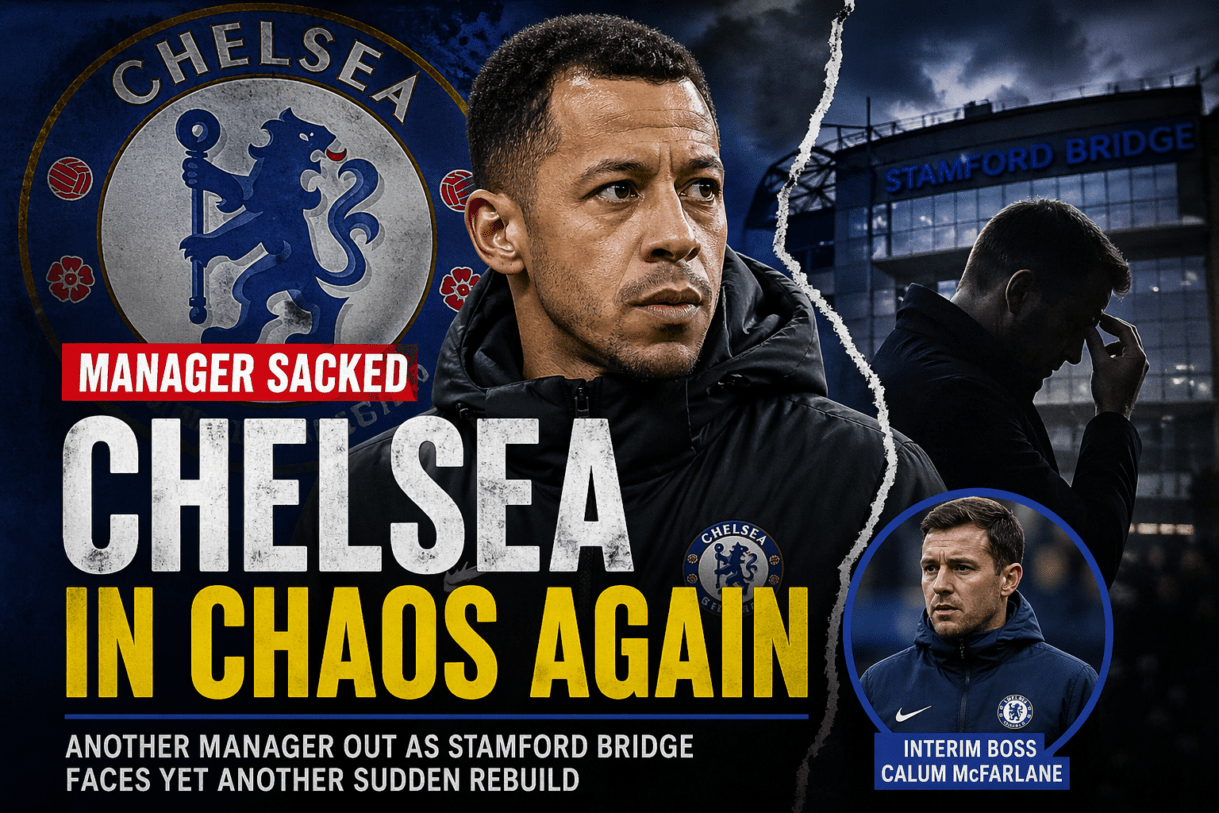
Chelsea Football Club is once again at the centre of managerial turbulence, with fresh changes in the dugout signaling another transitional chapter at Stamford Bridge. The Premier League giants, known for their high expectations and rapid decision-making when it comes to leadership, are navigating yet another shift in direction after recent developments involving their first-team coaching structure.
While official club communications have been measured, reports around the English football landscape suggest that Chelsea’s recent head coach has departed following a difficult run of results, leaving the club to rely on an interim setup as they reassess their long-term vision.
This latest development adds to a growing pattern in recent seasons, where managerial stability has proven elusive despite heavy investment in players and infrastructure.
A Club Built on High Expectations and Quick Decisions
Chelsea’s modern identity has been defined by ambition, pressure, and an uncompromising demand for results. Since the early 2000s, the club has rarely hesitated to change managers when performances fall below expectations.
That philosophy has delivered trophies, including Premier League titles and European success, but it has also created an environment where long-term managerial projects are difficult to sustain.
The current situation continues that trend. After a challenging spell of inconsistent performances and disappointing results, the club has once again opted for change at the top of the technical area.
Supporters have grown accustomed to such decisions, but there is also increasing debate about whether constant managerial turnover is hindering long-term squad development.
Recent Coaching Change and Interim Appointment
Chelsea’s latest managerial adjustment comes after a difficult period in domestic competition, where the team struggled to maintain consistency in front of goal and dropped crucial points in the league standings.
As a result, the head coach previously in charge—who had been appointed with expectations of long-term squad development—has reportedly been relieved of duties.
In the immediate aftermath, the club has turned to an internal interim solution. Coaching responsibilities for the first team have been handed to a temporary figure from within the club’s broader technical structure, tasked with stabilizing performances and restoring confidence in the dressing room.
The interim coach’s role is primarily focused on:
- Reorganizing defensive structure
- Improving attacking efficiency
- Restoring team morale
- Ensuring stability during the transition period
While not considered a permanent solution, the appointment is seen as a necessary step while Chelsea’s hierarchy evaluates potential long-term candidates.
Why the Change Was Made
Although Chelsea have not publicly outlined every detail behind the decision, several underlying issues contributed to the managerial shift.
1. Inconsistent Results
The team’s form has fluctuated significantly, with strong performances followed by unexpected drops in intensity and results.
2. Goal-Scoring Concerns
One of the most pressing issues has been the lack of consistent finishing in the final third, with the team struggling to convert dominance into goals.
3. Tactical Uncertainty
Observers have noted that Chelsea’s tactical identity has not been clearly defined over recent months, with frequent changes in formation and approach.
4. Pressure from Expectations
At a club of Chelsea’s size, patience is limited. Even during transition phases, results are expected to remain competitive at the highest level.
These combined factors reportedly accelerated the decision to make a change in leadership.
The Dressing Room Reaction
Inside the squad, reactions are said to be mixed but professional. Many players are understood to be focused on maintaining performance levels regardless of managerial uncertainty, while others are adjusting to yet another change in coaching style.
Frequent managerial turnover can often disrupt rhythm and development, especially for younger players still adapting to Premier League intensity. However, experienced squad members are expected to help maintain stability during this period.
The interim coaching staff is also believed to be placing strong emphasis on communication and clarity, two areas often affected during transitional phases.
What This Means for Chelsea’s Season
Chelsea’s immediate priority remains straightforward: stabilize results and secure a strong finish to the season.
However, the managerial uncertainty adds an additional layer of complexity. The club must balance short-term performance with long-term planning, especially as they consider who will lead the team into the next campaign.
Key objectives moving forward include:
- Securing consistent Premier League results
- Improving attacking efficiency
- Strengthening defensive organization
- Evaluating squad suitability for future tactical systems
Depending on how the interim period unfolds, Chelsea’s final league position could significantly influence their recruitment strategy and managerial appointment plans.
The Search for a Long-Term Manager
Behind the scenes, Chelsea’s hierarchy is expected to be evaluating potential candidates for a permanent managerial appointment.
While no official shortlist has been confirmed publicly, clubs at Chelsea’s level typically consider:
- Proven Premier League managers
- High-performing European coaches
- Emerging tactical innovators with strong development records
The challenge for Chelsea is not simply identifying a capable coach, but finding one whose philosophy aligns with the club’s long-term sporting project.
In recent years, mismatches between managerial style and squad composition have contributed to inconsistency, making the next appointment particularly significant.
A Pattern of Transition at Stamford Bridge
This is not the first time Chelsea have found themselves in a managerial transition phase, and it is unlikely to be the last.
Over the past decade, the club has developed a reputation for rapid managerial turnover, often prioritizing immediate performance over long-term continuity.
While this approach has produced silverware, it has also raised questions about structural stability and strategic consistency.
Football analysts frequently point out that sustained success in modern football often depends on long-term coaching projects, something Chelsea have struggled to maintain consistently.
Fan Reactions and Expectations
Among supporters, reactions are divided.
Some fans believe that managerial change is necessary to maintain competitiveness at the highest level, especially after periods of poor form. Others argue that constant changes disrupt squad development and prevent the team from building a clear identity.
What remains consistent, however, is expectation. Chelsea fans continue to demand competitive football, European qualification, and a clear sense of direction from the club.
The interim period will therefore be closely watched, not only for results but for signs of progress in playing style and cohesion.
What Comes Next
The coming weeks will be crucial for Chelsea’s direction both on and off the pitch. The interim coach will attempt to steady performances and restore momentum, while club executives continue evaluating long-term managerial options.
Much will depend on:
- Match results during the interim period
- Player response to tactical adjustments
- Availability of preferred managerial candidates
- End-of-season league positioning
For now, Chelsea remain in a familiar position: in transition, searching for stability, and attempting to realign short-term performance with long-term ambition.
Chelsea’s latest managerial change underscores a recurring theme in the club’s modern era—high ambition matched with limited patience for underperformance.
As the team moves forward under interim leadership, the focus will be on regaining consistency and restoring confidence. Beyond that, the club faces a familiar but crucial decision: choosing the next manager who will attempt to bring stability, identity, and sustained success back to Stamford Bridge.
Whether this transition leads to a new era of continuity or another short-lived chapter will depend on decisions made in the coming weeks—and how quickly results can be turned around on the pitch.
SUGGESTED READS
- Understanding the 2022 Kenyan Elections: Have We Learned from the Past?
- Kibaki vs. Raila: A Timeline of Political Rivalry and National Impact
- How to Break Free from Sugar Cravings: Tips for Healthy Eating
- How to Start a Plant-Based Diet: A Beginner’s Guide to Healthy Eating
- The 10 Best Foods for Boosting Your Immune System Naturally
- The Role of the International Criminal Court in African Conflicts
- 10 Parenting Quotes Every Mom and Dad Needs to Hear Today
- Things You Should Never Say to a New Parent: A Raw and Honest Guide

Support Our Website!
We appreciate your visit and hope you find our content valuable. If you’d like to support us further, please consider contributing through the TILL NUMBER: 9549825. Your support helps us keep delivering great content!
If you’d like to support Nabado from outside Kenya, we invite you to send your contributions through trusted third-party services such as Remitly, western union, SendWave, or WorldRemit. These platforms are reliable and convenient for international money transfers.
Please use the following details when sending your support:
Phone Number: +254701838999
Recipient Name: Peterson Getuma Okemwa
We sincerely appreciate your generosity and support. Thank you for being part of this journey!