

simply amazing, always for you.
A Quiet Revolution in How People Live and Spend
Across the internet, a major lifestyle shift is unfolding quietly but powerfully. People are increasingly searching for travel ideas, events, social activities, and personal growth experiences rather than product comparisons or shopping guides.
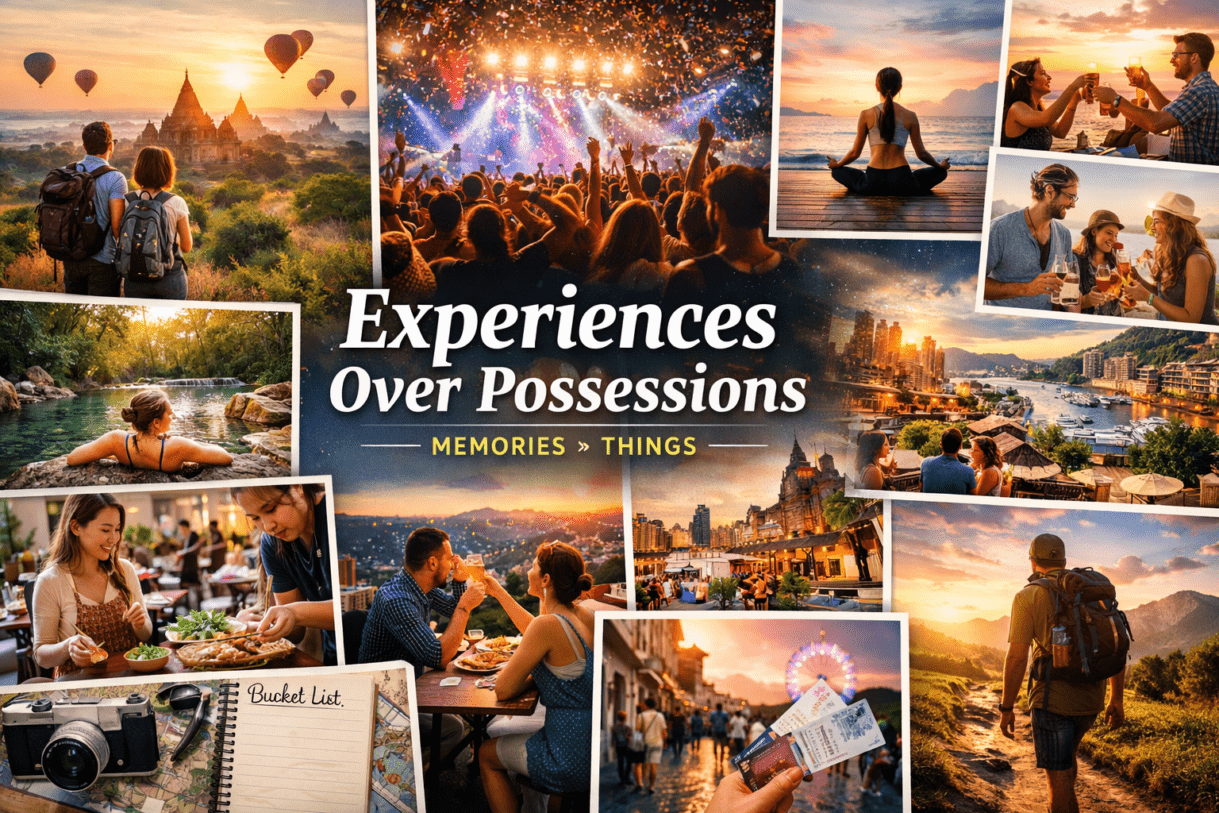
This shift is captured in a growing phrase: “experiences over possessions.”
It reflects a deeper transformation in how people define value, happiness, and success. Instead of measuring life through what they own, many are now measuring it through what they do, feel, and remember.
From search engines to social media trends, one pattern is becoming impossible to ignore: people are prioritizing moments over materials.
1. What “Experiences Over Possessions” Really Means
At its core, the concept is simple:
- Possessions refer to physical items—phones, clothes, cars, gadgets, and luxury goods.
- Experiences refer to activities and events—travel, concerts, dining, learning, sports, and social gatherings.
The trend means that people are choosing to spend more of their money, time, and attention on experiences that create memories rather than accumulating physical objects.
But this is not just a lifestyle slogan. It is a measurable shift in consumer behavior, visible in:
- Search queries
- Online shopping patterns
- Social media engagement
- Travel and entertainment spending
2. Search Trends Show a Clear Direction
Search engines provide one of the clearest windows into human intent. Over recent years, there has been a steady rise in searches related to experiences.
Common high-growth search categories include:
- “things to do near me”
- “unique travel experiences”
- “best weekend getaways”
- “concerts and events near me”
- “bucket list experiences”
- “immersive travel ideas”
At the same time, traditional product-driven searches—like “best phone under X price” or “buy latest gadgets”—have not grown at the same pace.
This indicates a shift in intent:
- From buying things
- To doing things
In digital behavior terms, this is a transition from transactional search intent to experiential search intent.
3. Why This Shift Is Happening Now
The rise of experiences over possessions is not random. It is being driven by multiple interconnected forces.
3.1 The Search for Emotional Fulfillment
Modern consumers are increasingly aware that material goods provide short-term satisfaction but limited long-term emotional impact.
Psychological research consistently shows:
- The excitement of buying a product fades quickly.
- Experiences tend to grow in value through memory and storytelling.
A trip, a concert, or a shared meal becomes part of identity. A gadget, over time, becomes ordinary.
This emotional difference is a key driver of the trend.
3.2 Social Media Has Changed What Feels Valuable
Social platforms have reshaped how people define status and satisfaction.
Experiences are:
- Easier to share
- More visually engaging
- More socially rewarding
A travel video, festival clip, or restaurant experience generates more engagement than a photo of a purchased item.
This creates a feedback loop:
- People post experiences
- Experiences get attention
- Attention increases perceived value of experiences
As a result, experiences become socially reinforced as more desirable.
3.3 The Rise of Minimalism and Decluttering Culture
Another strong factor is the global shift toward minimalism.
Urban living conditions, especially in cities, have made people more aware of:
- Limited space
- Clutter fatigue
- Maintenance burden of possessions
As a result, many people are choosing to:
- Own fewer items
- Prioritize quality over quantity
- Spend more on activities instead of objects
Experiences do not take up physical space, making them naturally attractive in a clutter-conscious world.
3.4 Economic Pressure and Value Optimization
Rising living costs have also influenced behavior.
Consumers are becoming more selective about what they buy. Instead of spending heavily on depreciating goods, many prefer to invest in moments that feel meaningful.
Interestingly, even when budgets are tight, people still prioritize:
- Occasional travel
- Social events
- Personal development experiences
This shows that experiences are not just luxury choices—they are increasingly seen as essential to quality of life.
3.5 Post-Pandemic Lifestyle Reprioritization
Global disruptions in recent years changed how people view time.
Many individuals now prioritize:
- Spending time with family and friends
- Traveling while they can
- Creating meaningful memories
This shift accelerated the demand for experiences, particularly:
- Domestic travel
- Outdoor activities
- Wellness retreats
- Cultural events
The mindset changed from “saving for later” to “living now.”
4. The Psychology Behind Experience-Based Living
The trend is deeply rooted in human psychology.
4.1 Memory vs Ownership
Experiences become part of memory structures in the brain. They are reconstructed over time and often become more meaningful as they are recalled.
Possessions, on the other hand, remain static objects. Their emotional value tends to decline after acquisition.
4.2 Identity Formation
People increasingly build identity through experiences:
- “I am someone who travels”
- “I enjoy live music”
- “I explore new cultures”
This identity-based living is more flexible and expressive than ownership-based identity.
4.3 Social Connection
Experiences are inherently social. They involve interaction, shared emotion, and participation.
This makes them more psychologically rewarding than solitary consumption of goods.
5. The Growth of the Experience Economy
Economists and marketers now refer to this shift as the experience economy.
It is characterized by:
- Services designed around participation
- Immersive customer engagement
- Personalization of activities
- Emotional branding
Industries benefiting from this shift include:
- Tourism and travel
- Entertainment and events
- Food and hospitality
- Education and personal development
- Wellness and health retreats
Businesses are no longer just selling products—they are selling moments.
6. How Businesses Are Responding
Companies have adapted quickly to this shift in demand.
Instead of focusing purely on products, they now emphasize:
- Brand experiences
- Story-driven marketing
- Event-based engagement
- Interactive services
For example:
- Travel companies promote “life-changing journeys”
- Restaurants highlight “dining experiences”
- Tech companies launch experiential product demos
The goal is no longer just ownership—it is emotional impact.
7. The Impact on Consumer Spending Patterns
Spending habits are gradually changing:
Increasing spending areas:
- Travel and tourism
- Concerts and festivals
- Food experiences
- Wellness and fitness retreats
Slower growth areas:
- Luxury fashion
- Non-essential gadgets
- Decorative material goods
This does not mean possessions are disappearing, but their role is becoming less dominant.
8. The Future of Lifestyle Trends
Looking ahead, the experiences-over-possessions trend is likely to evolve further into:
8.1 Hyper-personalized experiences
Tailored travel, custom events, and AI-driven activity planning.
8.2 Digital + physical hybrid experiences
Virtual reality concerts, immersive online events, and blended travel planning.
8.3 Experience subscriptions
Instead of owning products, people may subscribe to ongoing experiences (travel clubs, event memberships, lifestyle services).
9. What This Means for Individuals
For individuals, this shift presents a major rethinking of value:
- Time becomes more important than things
- Memories become more valuable than ownership
- Experiences become part of identity building
It also encourages more intentional living:
- Choosing quality over quantity
- Prioritizing meaningful spending
- Reducing unnecessary accumulation
A Lasting Shift in Human Priorities
The rise of “experiences over possessions” is not a passing trend. It is a structural shift in how people define value in the modern world.
Driven by psychology, technology, social media, and economic realities, the movement reflects a deeper truth:
People are no longer just asking “What can I buy?”
They are increasingly asking “What can I live?”
And that question is reshaping global search behavior, consumer markets, and lifestyle culture in real time.
SUGGESTED READS
- Bound by Lies: A Mother’s Confession
- A Pastor’s Confession
- Confession of a Man Torn Between the Twins
- Confession of a Double Life
- The Ocean’s Role in Climate Change: A Vital Regulator Under Threat
- The Invention of the Telephone
- The Evolution of Schools: Who Invented School?
- How Far Can Wild Animals See? A Look at Nature’s Vision Masters

Support Our Website!
We appreciate your visit and hope you find our content valuable. If you’d like to support us further, please consider contributing through the TILL NUMBER: 9549825. Your support helps us keep delivering great content!
If you’d like to support Nabado from outside Kenya, we invite you to send your contributions through trusted third-party services such as Remitly, western union, SendWave, or WorldRemit. These platforms are reliable and convenient for international money transfers.
Please use the following details when sending your support:
Phone Number: +254701838999
Recipient Name: Peterson Getuma Okemwa
We sincerely appreciate your generosity and support. Thank you for being part of this journey!
I was looking through some of your blog posts on this internet site and I conceive this website is really instructive! Continue posting.