

simply amazing, always for you.
Many Kenyans pay close attention to election campaigns, political rallies, and heated debates in Parliament. However, one aspect of leadership that often goes unnoticed is parliamentary attendance. While it may not make flashy headlines every day, whether an elected Member of Parliament (MP) attends parliamentary hearings can have a significant impact on citizens, public policy, and national development.
When news emerges that an MP has missed parliamentary hearings, many people dismiss it as a minor issue. After all, politicians have busy schedules, constituency engagements, and party activities to attend. But the truth is that parliamentary hearings are among the most important responsibilities entrusted to MPs by voters.
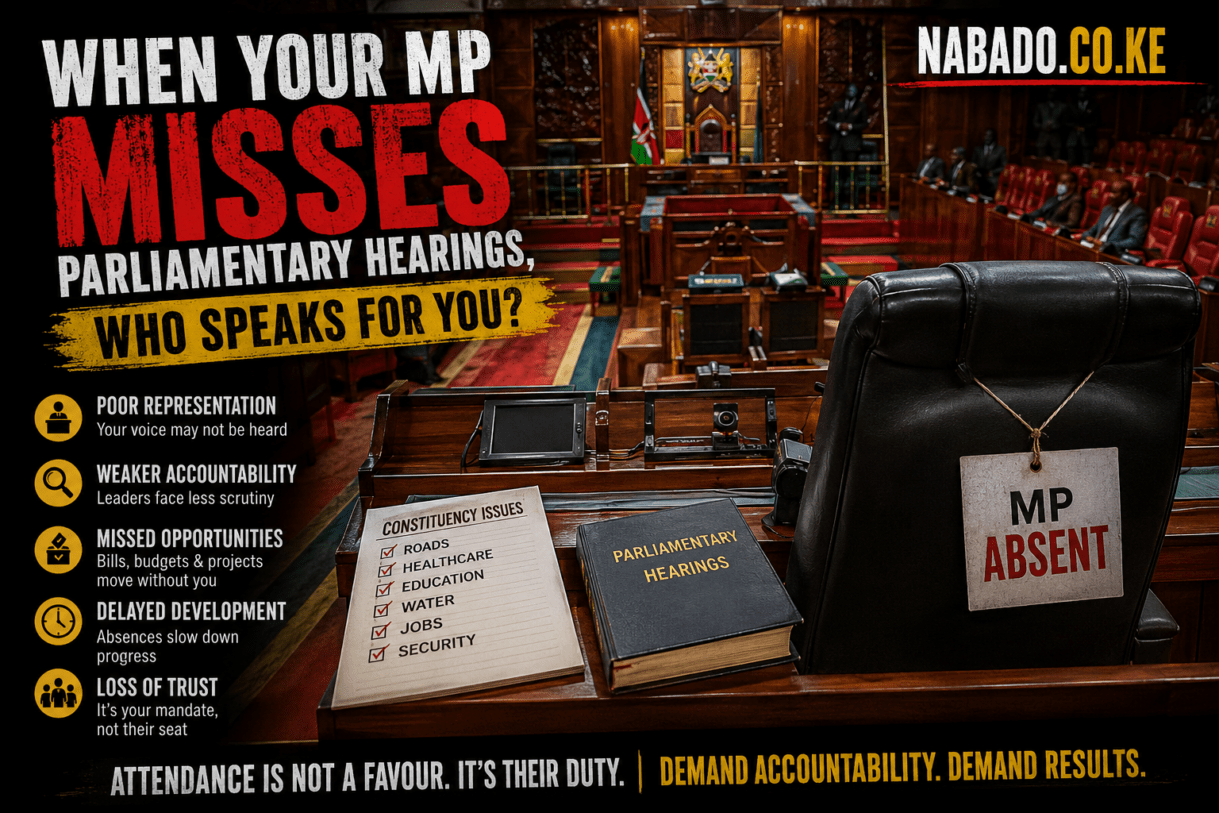
An MP who repeatedly misses parliamentary hearings may be failing to fulfill one of the core duties of the office. The consequences can extend far beyond the walls of Parliament and directly affect roads, schools, healthcare facilities, taxation, government accountability, and countless other issues that influence everyday life.
This article explores what parliamentary hearings are, why MPs are expected to attend them, what happens when they fail to show up, and why every Kenyan voter should pay attention to their representative’s attendance record.
Understanding Parliamentary Hearings
Parliamentary hearings are official meetings where lawmakers discuss, investigate, and make decisions on matters of national importance.
These hearings may take place within the National Assembly, the Senate, or parliamentary committees. During these sessions, MPs examine proposed laws, review government spending, question public officials, investigate scandals, and gather information from experts and stakeholders.
Parliamentary hearings serve as an essential part of democratic governance because they ensure that decisions are made through discussion, scrutiny, and public accountability.
Some hearings focus on:
- National budget allocations
- Tax policies
- Infrastructure projects
- Healthcare programs
- Education reforms
- Security matters
- Corruption investigations
- Public debt management
- Environmental concerns
In many cases, decisions made during these hearings affect millions of Kenyans.
Why MPs Are Elected in the First Place
Members of Parliament are elected to represent the interests of their constituents at the national level.
When citizens vote for an MP, they are essentially choosing someone to:
- Speak on their behalf
- Advocate for local development
- Participate in lawmaking
- Monitor government actions
- Protect public resources
- Raise concerns affecting residents
This representation is one of the foundations of democracy.
An MP is not simply elected to attend public events or political rallies. The office carries legal and constitutional responsibilities that require active participation in parliamentary business.
Attendance is therefore not optional—it is part of the job.
The Hidden Cost of Absenteeism
When an MP misses parliamentary hearings, the effects may not be immediately visible.
However, the consequences often accumulate over time.
Imagine a football team where one player consistently fails to appear for matches. The team loses a valuable contributor, strategies become weaker, and opportunities are missed.
The same principle applies in Parliament.
Every absent MP means one less voice representing a constituency during critical discussions.
The impact becomes even greater when hearings involve major national decisions.
Your Constituency Loses Its Voice
Perhaps the biggest consequence of absenteeism is the loss of representation.
Every constituency in Kenya has unique needs and challenges.
Some struggle with poor roads.
Others need more hospitals.
Some require better schools, water projects, or agricultural support.
During parliamentary hearings, MPs are expected to present and defend the interests of their constituents.
When an MP is absent, nobody may be available to raise these concerns at the right moment.
As a result, important local issues can be overlooked.
Citizens who voted for that MP effectively lose their voice in national discussions.
Missed Opportunities to Influence Laws
Laws shape every aspect of society.
They determine how taxes are collected, how businesses operate, how public funds are spent, and how rights are protected.
Parliamentary hearings often provide lawmakers with an opportunity to influence legislation before it becomes law.
An MP who misses hearings loses the chance to:
- Suggest amendments
- Oppose harmful provisions
- Support beneficial reforms
- Protect constituency interests
This means laws may be passed without considering the perspectives of the people who elected that MP.
Over time, such absences can weaken democratic representation.
The Impact on National Budgets
One of Parliament’s most important responsibilities is approving government budgets.
Budget hearings determine where billions of shillings will be allocated.
These decisions affect:
- Roads
- Schools
- Hospitals
- Water projects
- Agriculture
- Security
- Social programs
When MPs fail to attend budget discussions, they miss opportunities to advocate for funding that could benefit their constituencies.
A region that urgently needs infrastructure improvements could lose out because its representative was not present to argue for increased allocations.
In politics, showing up often matters just as much as speaking.
Weakening Government Accountability
Parliament plays a critical oversight role.
Government ministries, state corporations, and public institutions are regularly summoned before parliamentary committees to explain how public funds are being used.
This process helps prevent:
- Corruption
- Wasteful spending
- Abuse of power
- Mismanagement
When MPs attend hearings, they can question officials and demand explanations.
When they fail to attend, accountability mechanisms become weaker.
Government agencies may face less scrutiny, reducing transparency and increasing the risk of misuse of public resources.
Why Committee Hearings Matter
Many of Parliament’s most important activities occur within committees.
Committee hearings are often where detailed investigations and technical discussions take place.
These committees examine:
- Public accounts
- Finance matters
- Education policy
- Health programs
- Energy projects
- Infrastructure development
Some committees uncover major scandals and recommend reforms.
An MP who misses committee hearings may be absent during crucial investigations involving billions of taxpayer shillings.
This absence limits their ability to contribute meaningfully to oversight and policymaking.
Delays in Parliamentary Business
Parliamentary hearings require a minimum number of members, known as a quorum, to conduct official business.
When too many MPs fail to attend, meetings may be postponed.
This creates delays in:
- Passing legislation
- Approving budgets
- Investigating public concerns
- Implementing reforms
These delays can have real-world consequences.
For example, delayed approval of funding can slow development projects and disrupt essential government services.
Citizens ultimately bear the cost of such inefficiencies.
The Message Sent to Voters
Attendance is also a reflection of commitment.
Voters expect elected leaders to take their responsibilities seriously.
When an MP repeatedly misses hearings, many constituents begin questioning whether their interests are being prioritized.
Absenteeism can create perceptions of:
- Negligence
- Lack of commitment
- Poor leadership
- Disrespect for voters
Even if an MP remains active elsewhere, frequent absences from parliamentary duties can damage public confidence.
Trust is one of the most valuable assets in politics, and attendance records often influence how voters assess performance.
Are There Legitimate Reasons for Missing Hearings?
Not every absence indicates negligence.
MPs may occasionally miss hearings due to:
- Official government assignments
- Medical emergencies
- Family emergencies
- International parliamentary engagements
- Security concerns
Parliament generally recognizes valid reasons for absence.
The problem arises when absenteeism becomes habitual or when MPs fail to provide satisfactory explanations.
Repeated unexplained absences raise legitimate concerns about performance and accountability.
How Attendance Affects Development
Many people assume development depends solely on government funding.
However, effective representation also plays a major role.
An active MP can:
- Lobby for projects
- Influence funding decisions
- Push for policy changes
- Advocate for local priorities
An absent MP loses these opportunities.
This can leave constituencies at a disadvantage compared to areas represented by highly active legislators.
Development is often influenced by who participates in decision-making processes.
The Financial Question
Taxpayers fund Parliament.
MPs receive salaries, allowances, staff support, office resources, and other benefits to perform their duties.
When MPs fail to attend hearings without valid reasons, questions naturally arise about value for money.
Citizens may wonder:
- Are public resources being used effectively?
- Is the MP fulfilling contractual obligations to voters?
- Should there be stronger consequences for absenteeism?
These concerns become more significant during periods of economic hardship when citizens expect accountability from public officials.
What the Kenyan Constitution Expects
Kenya’s constitutional framework emphasizes representation, accountability, transparency, and public participation.
MPs are expected to uphold these principles through active involvement in parliamentary processes.
Attendance is not merely a procedural matter.
It is part of fulfilling constitutional responsibilities.
By participating in hearings, MPs help ensure democratic institutions function effectively.
Failure to participate undermines the spirit of representative governance.
How Voters Can Hold MPs Accountable
Citizens are not powerless when it comes to parliamentary attendance.
Voters can:
Monitor Attendance Records
Many parliamentary activities are publicly documented.
Attendance records often provide valuable insights into an MP’s level of engagement.
Ask Questions
Constituents can seek explanations from their representatives regarding frequent absences.
Participate in Public Forums
Town hall meetings and public engagements provide opportunities to raise concerns directly.
Use Elections Wisely
Elections remain the most powerful accountability mechanism.
Attendance and performance records can inform voting decisions.
Why Attendance Matters More Than Political Speeches
Political speeches often attract media attention.
However, actual legislative work usually happens inside parliamentary chambers and committee rooms.
A politician may deliver powerful speeches at rallies while contributing very little to lawmaking and oversight.
Attendance provides a more objective measure of engagement.
It reveals whether an MP is participating in the processes that shape national policy.
For this reason, voters should pay attention not only to what politicians say but also to what they do.
The Long-Term Consequences for Democracy
Democracy relies on participation.
Parliament functions effectively only when elected representatives actively engage in debates, hearings, and decision-making processes.
Persistent absenteeism can weaken:
- Representation
- Accountability
- Transparency
- Public trust
Over time, these weaknesses can undermine democratic institutions and reduce confidence in governance.
A strong Parliament requires committed lawmakers who consistently show up and perform their duties.
Lessons for Kenyan Voters
The issue of parliamentary attendance highlights an important lesson.
Leadership should not be measured solely by popularity, social media presence, or campaign promises.
Performance matters.
Attendance matters.
Participation matters.
When evaluating leaders, voters should consider:
- Attendance records
- Legislative contributions
- Oversight activities
- Development achievements
- Responsiveness to constituents
These indicators often provide a clearer picture of effectiveness than political rhetoric alone.
When your MP misses parliamentary hearings in Kenya, the consequences extend far beyond an empty chair in a committee room. Every missed hearing represents a lost opportunity to advocate for constituents, influence legislation, scrutinize government actions, and contribute to national development.
Parliamentary attendance is not a minor administrative detail. It is a fundamental part of democratic representation. Constituencies depend on their MPs to speak on their behalf, defend their interests, and ensure public resources are used responsibly.
While occasional absences may be unavoidable, repeated absenteeism can weaken accountability, reduce representation, delay important decisions, and erode public trust.
For Kenyan voters, the message is clear: pay attention to more than campaign promises. Monitor performance, demand accountability, and remember that effective leadership begins with showing up. An MP who consistently attends parliamentary hearings is not merely occupying a seat—they are actively fulfilling the responsibility entrusted to them by the people.
SUGGESTED READS
- Why African Countries Should Unite: The Key to a Stronger, Wealthier, and More Influential Continent
- From Silence to Resistance: How Kenyans Are Reclaiming Their Voice
- How Economic Pressure Is Redefining Kenyan Families
- The New Kenyan Revolution Isn’t on the Streets — It’s on Your Phone
- The Untold Story of Youth Movements in Modern Kenya: How a Generation Is Quietly Rewriting Power
- Inside Kenya’s Protest Culture: Why Anger Keeps Exploding—and Why Hope Refuses to Die
- Voters Are Exhausted — Inside Kenya’s Rising Political Fatigue

Support Our Website!
We appreciate your visit and hope you find our content valuable. If you’d like to support us further, please consider contributing through the TILL NUMBER: 9549825. Your support helps us keep delivering great content!
If you’d like to support Nabado from outside Kenya, we invite you to send your contributions through trusted third-party services such as Remitly, western union, SendWave, or WorldRemit. These platforms are reliable and convenient for international money transfers.
Please use the following details when sending your support:
Phone Number: +254701838999
Recipient Name: Peterson Getuma Okemwa
We sincerely appreciate your generosity and support. Thank you for being part of this journey!