

We aint done yet… Expect another one.
Women’s underwear may seem like an ordinary part of everyday clothing, but its history is surprisingly complex. What women wear underneath their clothes has been shaped by changing ideas about modesty, beauty, health, sexuality, social class, technology and personal freedom.
From simple linen garments worn thousands of years ago to modern bras, seamless underwear and period underwear, women’s undergarments have undergone a remarkable transformation. Some designs were created primarily for modesty, others for support, while many reflected the fashion ideals of their time.
The story of women’s underwear is therefore more than a history of clothing. It is also a story about how societies have viewed women’s bodies—and how women gradually gained greater control over how they dressed and presented themselves.
Ancient Beginnings
The history of women’s underwear stretches back thousands of years.
In ancient civilizations, people did not necessarily wear underwear in the modern sense. Clothing was often loose, layered and designed differently from today’s garments.
In ancient Egypt, for example, women commonly wore linen garments because linen was well suited to the hot climate. Some women may have worn simple cloth coverings beneath or around their main garments, particularly depending on their social status and occupation.
Ancient Greeks and Romans also had garments that served some of the functions of modern underwear. Roman women sometimes wore a breast-support garment called a strophium, a band of cloth wrapped around the chest. It was not exactly a modern bra, but it provided support and helped shape the body beneath clothing.
Roman women could also wear loincloth-like garments or simple undergarments, although underwear was not necessarily worn by everyone all the time.
The purpose was often practical rather than fashionable.
Underwear could provide warmth, absorb perspiration, protect outer clothing and offer support. The idea that underwear should be visually attractive was far less important than it became in later centuries.
The Middle Ages: Modesty Becomes More Important
During the medieval period in Europe, clothing became increasingly layered.
Women generally wore a linen garment close to the body beneath dresses and gowns. These garments helped protect expensive outer clothing from sweat and body oils.
Because bathing habits and laundry practices were different from those of modern society, undergarments played an important hygienic role.
Women did not generally wear panties in the modern form. Instead, their clothing typically consisted of shifts, chemises and other loose linen garments.
The shift was particularly important.
It was worn underneath the main dress and could be washed more frequently than the outer garment. In this way, the shift acted as a protective layer between the body and expensive clothing.
However, the absence of modern underwear did not mean women were completely without garments beneath their dresses.
Underwear simply looked very different.
The Renaissance and the Changing Female Silhouette
The Renaissance introduced major changes in European fashion.
Clothing increasingly emphasized the shape of the female body. Corsets and structured bodices became important tools for creating fashionable silhouettes.
Early corset-like garments were not necessarily identical to the extremely restrictive corsets associated with later centuries. Nevertheless, they contributed to a growing fashion culture in which women’s bodies were shaped to fit particular ideals.
The ideal female figure changed repeatedly.
At different times, fashion emphasized a narrow waist, fuller hips, a prominent bust or a flattened chest.
Underwear therefore became increasingly connected to body shaping.
A garment worn underneath clothing was no longer simply something practical. It could determine how the entire outfit looked.
The Rise of the Corset
The corset became one of the most influential garments in the history of women’s clothing.
By the 16th century and especially during subsequent centuries, structured bodices increasingly shaped women’s torsos.
Corsets were typically reinforced with materials such as whalebone, wood or later metal.
Their primary purpose was to create a particular body shape.
The fashionable silhouette could demand a dramatically smaller-looking waist, a raised bust and a controlled posture.
However, corsets have also become controversial symbols of women’s historical restrictions.
Some women complained about discomfort, difficulty breathing and physical limitations, although the actual experiences varied significantly depending on the garment, construction and tightness.
It is important not to reduce the entire history of corsets to the idea that women were simply forced to suffer.
Fashion was complicated.
Many women actively participated in choosing, purchasing and wearing fashionable clothing because appearance could affect social status, marriage prospects, employment and personal identity.
Nevertheless, the corset clearly demonstrates how underwear could become a powerful instrument for enforcing beauty standards.
The 18th Century and Elaborate Underwear
By the 18th century, women’s clothing had become increasingly elaborate among wealthy Europeans.
Underwear was often layered.
Women could wear shifts, stays, petticoats and other garments beneath elaborate dresses.
Petticoats helped support the shape of skirts, while stays provided structure to the upper body.
The amount and quality of underwear could also reveal social class.
Wealthier women could afford finely made linen, decorative fabrics and professionally tailored garments. Poorer women generally had fewer garments and relied on practical, durable materials.
Underwear was therefore not only about the body.
It was also about status.
The 19th Century: Underwear Becomes More Familiar
The 19th century brought some of the most important developments in women’s underwear.
As industrialization transformed clothing production, garments became increasingly available to a wider section of society.
Factories could produce textiles and clothing on a much larger scale.
This helped transform underwear from individually made household garments into commercially manufactured products.
Women increasingly wore combinations of chemises, drawers, corsets, petticoats and other layers.
Drawers deserve particular attention.
They were divided garments covering the legs and eventually became an important predecessor to modern panties.
Interestingly, early drawers were often open at the crotch.
This design allowed women to use the toilet without completely removing the garment.
The evolution of drawers demonstrates that underwear was often designed around practical concerns rather than simply appearance.
Bloomers Challenge Traditional Fashion
One of the most interesting developments of the 19th century was the appearance of bloomers.
Popularized in the 1850s and associated with women’s dress reform movements, bloomers were loose trousers worn underneath or as part of a simplified outfit.
They became controversial because trousers were strongly associated with men.
Women wearing them challenged traditional expectations about femininity.
Bloomers were not universally accepted, but they represented something important: clothing could become part of a wider argument about women’s independence.
As women became more involved in education, employment, cycling, sports and public life, restrictive clothing increasingly came under criticism.
The Birth of the Modern Bra
The modern bra did not appear suddenly.
Instead, it evolved through many different garments and inventions.
For centuries, women had used cloth bands, corsets and other devices to support or shape the breasts.
But during the late 19th and early 20th centuries, designers began developing garments that separated breast support from waist compression.
This was an important change.
Instead of one rigid garment controlling the entire torso, women could increasingly use separate garments for different purposes.
The early 20th century produced several patents and designs for breast-support garments.
One famous example is Mary Phelps Jacob, who patented an early backless brassiere in 1914. Her design provided an alternative to the restrictive corset for certain types of clothing.
The bra would continue evolving rapidly over the following decades.
The 1920s: A Revolution in Women’s Clothing
The 1920s dramatically changed women’s fashion.
The fashionable female silhouette became straighter and less focused on the exaggerated waist of earlier decades.
Women increasingly wore shorter skirts and looser dresses.
Flapper fashion helped popularize a slimmer, more youthful silhouette.
Underwear changed accordingly.
Bras became simpler and lighter, while corsets gradually lost some of their dominance.
This was not simply a fashion development.
Women’s social lives were changing.
More women were working outside the home, participating in sports and enjoying greater independence.
Clothing needed to allow movement.
The 1930s and the Structured Bra
The 1930s saw major developments in bra design.
Manufacturers increasingly experimented with cups, adjustable straps and different shapes.
The development of standardized cup sizing in the early 20th century helped make bras more commercially practical.
Instead of one general-size garment, women could increasingly purchase bras designed around different breast sizes.
This was a major step toward the modern lingerie industry.
Nylon Changes Everything
One of the most important technological developments in underwear history was the introduction of nylon.
Developed by DuPont and commercially introduced in the late 1930s, nylon offered manufacturers a new synthetic material.
It was lightweight, strong and could be produced in forms that were useful for stockings and later many types of underwear.
Synthetic fibers gradually transformed lingerie.
Underwear could become lighter, smoother, more elastic and easier to manufacture.
The lingerie industry was entering the modern era.
World War II and Practical Underwear
World War II affected almost every aspect of clothing.
Material shortages encouraged simpler designs.
Women also entered factories, offices and other workplaces in large numbers.
Practicality became increasingly important.
Bras and underwear needed to accommodate movement and changing lifestyles.
After the war, however, fashion once again moved toward more structured and glamorous designs.
The 1950s: Glamour and the Bullet Bra
The 1950s became famous for highly structured lingerie.
The iconic bullet bra created a distinctive pointed silhouette and became associated with the glamorous female image of the era.
Women were encouraged to embrace a more pronounced bust and defined waist.
Girdles were also popular.
These garments compressed and shaped the hips, waist and abdomen beneath dresses and skirts.
Underwear was once again being used to dramatically reshape the body.
But this period also marked the beginning of a major cultural contradiction.
Women were being encouraged to conform to highly specific beauty standards while simultaneously entering an era of growing social and economic independence.
The 1960s and the Underwear Revolution
The 1960s brought another major transformation.
Young women increasingly questioned traditional expectations surrounding appearance, gender and sexuality.
Fashion became more experimental.
Bras became lighter and less restrictive.
Panties also became smaller and more practical.
The growing popularity of trousers, miniskirts and modern fabrics required underwear that was less bulky and more comfortable.
The women’s liberation movement also changed the cultural meaning of underwear.
The bra became a symbol in debates about female identity and social expectations.
The famous phrase “bra burning” became associated with women’s liberation, although the historical reality is more complicated than the popular story suggests.
The broader point is that women increasingly questioned the idea that they had to dress according to traditional expectations.
The 1970s: Comfort Takes Center Stage
By the 1970s, natural movement and comfort became increasingly important.
Soft fabrics, lighter bras and simpler panties became popular.
The fashion industry also began experimenting with new materials and cuts.
Women’s underwear was no longer exclusively about creating an idealized silhouette.
Comfort itself was becoming a selling point.
This represented a significant philosophical shift.
Instead of asking only, “How does this garment make my body look?” consumers increasingly asked, “How does this garment feel?”
The 1980s: Underwear Becomes Fashion
The 1980s brought a powerful new trend: underwear began moving outward.
Lingerie became increasingly glamorous and deliberately designed.
Lace, satin, bright colors and decorative details became popular.
The fashion industry also began using underwear-inspired designs in outer clothing.
The distinction between underwear and fashion became less absolute.
At the same time, sports and fitness culture influenced bra design.
Sports bras became increasingly important as more women participated in running, aerobics and other athletic activities.
The sports bra represented another major development: underwear designed around women’s movement rather than simply appearance.
The 1990s: Minimalism and the Rise of the Thong
The 1990s introduced a different underwear aesthetic.
Minimalism became fashionable.
Seamless designs and lightweight materials became increasingly popular, especially under tight-fitting clothing.
The thong also became a highly visible fashion trend.
Its appeal was partly practical: it reduced visible panty lines beneath close-fitting clothes.
But it also became a cultural symbol of changing attitudes toward female sexuality.
Underwear was increasingly marketed not only as a functional garment but as a form of self-expression.
The 2000s: Celebrity Culture and Lingerie Marketing
The early 2000s saw underwear become deeply connected to celebrity culture.
Fashion magazines, television, advertising and pop culture transformed lingerie into a major consumer category.
Brands increasingly marketed underwear using celebrity models and carefully constructed images of beauty.
Low-rise jeans also influenced underwear styles.
Waistbands became visible in certain fashion trends, creating a deliberate interaction between underwear and outerwear.
The line between private clothing and public fashion became increasingly blurred.
The 2010s: Comfort Comes Back
After decades of push-up bras, rigid shaping garments and highly sexualized lingerie marketing, the 2010s saw a renewed interest in comfort.
Wireless bras became increasingly popular.
Bralettes gained attention.
High-waisted underwear returned.
Cotton and soft fabrics remained popular, while brands increasingly emphasized body diversity and inclusivity.
The message was changing.
Women did not necessarily need underwear designed to make them look like someone else.
They could choose garments based on how they wanted to feel.
The 2020s: Underwear Becomes More Personal
Today’s underwear market is more diverse than ever.
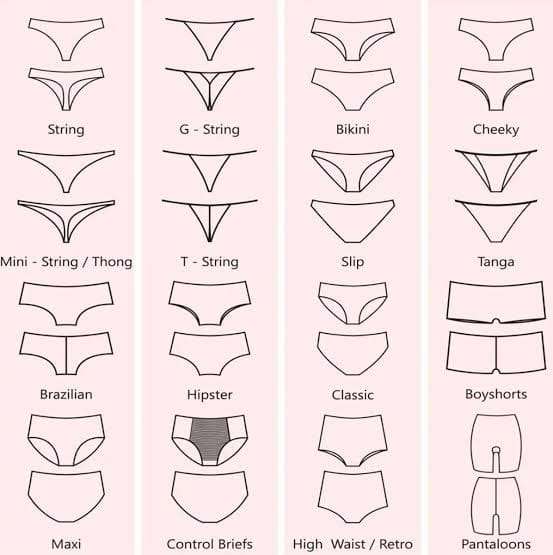
Women can choose from traditional bras, wireless bras, sports bras, bralettes, shapewear, seamless underwear, period underwear, high-waisted briefs, boyshorts, thongs and many other designs.
There is also growing demand for inclusive sizing.
The modern consumer increasingly expects underwear to accommodate different body shapes rather than forcing every body into one idealized silhouette.
Comfort, sustainability, affordability and functionality have become major considerations.
Period underwear has also emerged as an important innovation.
Designed to absorb menstrual fluid, it offers an alternative or complement to pads, tampons and menstrual cups.
This development reflects another important change: subjects that were once considered embarrassing or private are increasingly discussed openly.
The Influence of Feminism
The evolution of women’s underwear cannot be separated from the history of feminism.
For generations, clothing played a role in controlling how women were expected to behave.
Corsets restricted movement.
Heavy skirts made physical activity difficult.
Certain underwear styles reinforced narrow definitions of femininity.
Women’s clothing reform movements challenged many of these expectations.
Today, however, feminism’s influence on underwear is less about eliminating particular garments and more about choice.
A woman can wear a corset because she likes it.
She can wear a sports bra because she runs.
She can wear a bralette because it feels comfortable.
She can wear shapewear because she likes the silhouette.
Or she can choose not to wear a bra at all.
The important difference is agency.
Why Women Don’t All Wear the Same Underwear
Modern women have access to more underwear choices than at almost any point in history.
But there is no single “correct” choice.
Some women prioritize support.
Others prioritize comfort.
Some prefer cotton because of its breathability.
Others choose synthetic fabrics because of their stretch and moisture-management properties.
Some prefer full-coverage briefs.
Others prefer minimal designs.
Lifestyle also matters.
A woman who spends most of her day sitting at a desk may have different preferences from an athlete, construction worker, dancer or traveler.
Fashion also influences choices.
The underwear suitable beneath a bodycon dress may be different from what someone chooses under loose trousers.
Technology Is Transforming Underwear
Technology continues to influence underwear design.
Modern manufacturers can create fabrics that stretch in multiple directions while retaining their shape.
Seamless manufacturing can reduce visible edges.
Moisture-wicking fabrics can improve comfort during physical activity.
Antimicrobial treatments, temperature-regulating textiles and recycled fibers are also being explored.
Smart textiles may eventually push underwear even further into the world of wearable technology.
The basic purpose remains familiar, but the materials and engineering continue to evolve.
Sustainability and the Future
Sustainability is becoming increasingly important in fashion, including underwear.
Traditional underwear production can involve significant amounts of water, energy, synthetic fibers and packaging.
Consumers are increasingly interested in products made from recycled or responsibly sourced materials.
Brands are also exploring longer-lasting garments and more responsible manufacturing processes.
The future of underwear may therefore be defined not only by appearance and comfort but also by environmental impact.
From Modesty to Choice
The history of women’s underwear tells a fascinating story.
Ancient women used simple garments for practical purposes.
Medieval women wore linen layers beneath elaborate clothing.
Renaissance and later European fashions introduced increasingly structured garments.
Corsets reshaped women’s bodies.
Drawers eventually evolved into modern panties.
The bra developed from earlier breast-support garments.
Synthetic materials revolutionized manufacturing.
Sports bras responded to women’s growing participation in athletics.
Modern lingerie became a form of fashion and self-expression.
And today’s underwear industry increasingly emphasizes comfort, diversity and individual choice.
Perhaps the biggest transformation is not the invention of any particular garment.
It is the change in who gets to decide.
For much of history, underwear was heavily influenced by social expectations about what a woman’s body should look like. Today, women have far more options to decide what works for their own bodies, lifestyles and identities.
The evolution continues.
What began as simple layers of cloth has become a sophisticated global industry combining fashion, textile engineering, culture and personal expression.
And beneath all the changing designs, one principle remains remarkably consistent: women’s underwear has always reflected the society women were living in—and the freedoms they were gaining.
SUGGESTED READS
- Why Women Are Choosing Comfort Over Fashion — And Why the Trend Is Here to Stay
- Why More Women Are Choosing Not to Wear Bras and Underwear Nowadays
- How Fabric Choice Affects the Way Your Clothes Fit
- Before You Wear That Bodycon Dress, Read This
- The Hidden Rules of Wearing Leggings in Public: What No One Tells You
- Which Underwear Is Healthier for Daily Wear — Seamless or Cotton?
- How to Get Rid of Visible Panty Lines for Good — Smart, Comfortable Solutions
- Why Do Ladies Show Pant Lines? The Honest Truth No One Talks About

Support Our Website!
We appreciate your visit and hope you find our content valuable. If you’d like to support us further, please consider contributing through the TILL NUMBER: 9549825. Your support helps us keep delivering great content!
If you’d like to support Nabado from outside Kenya, we invite you to send your contributions through trusted third-party services such as Remitly, western union, SendWave, or WorldRemit. These platforms are reliable and convenient for international money transfers.
Please use the following details when sending your support:
Phone Number: +254701838999
Recipient Name: Peterson Getuma Okemwa
We sincerely appreciate your generosity and support. Thank you for being part of this journey!