

simply amazing, always for you.
History is filled with strange stories that blur the line between fact and fiction. Some are easily explained by science and historical research. Others continue to puzzle experts centuries after they occurred. Among the most intriguing of these mysteries is the tale of the Green Children of Woolpit, a story that has fascinated historians, folklorists, and mystery enthusiasts for more than 800 years.
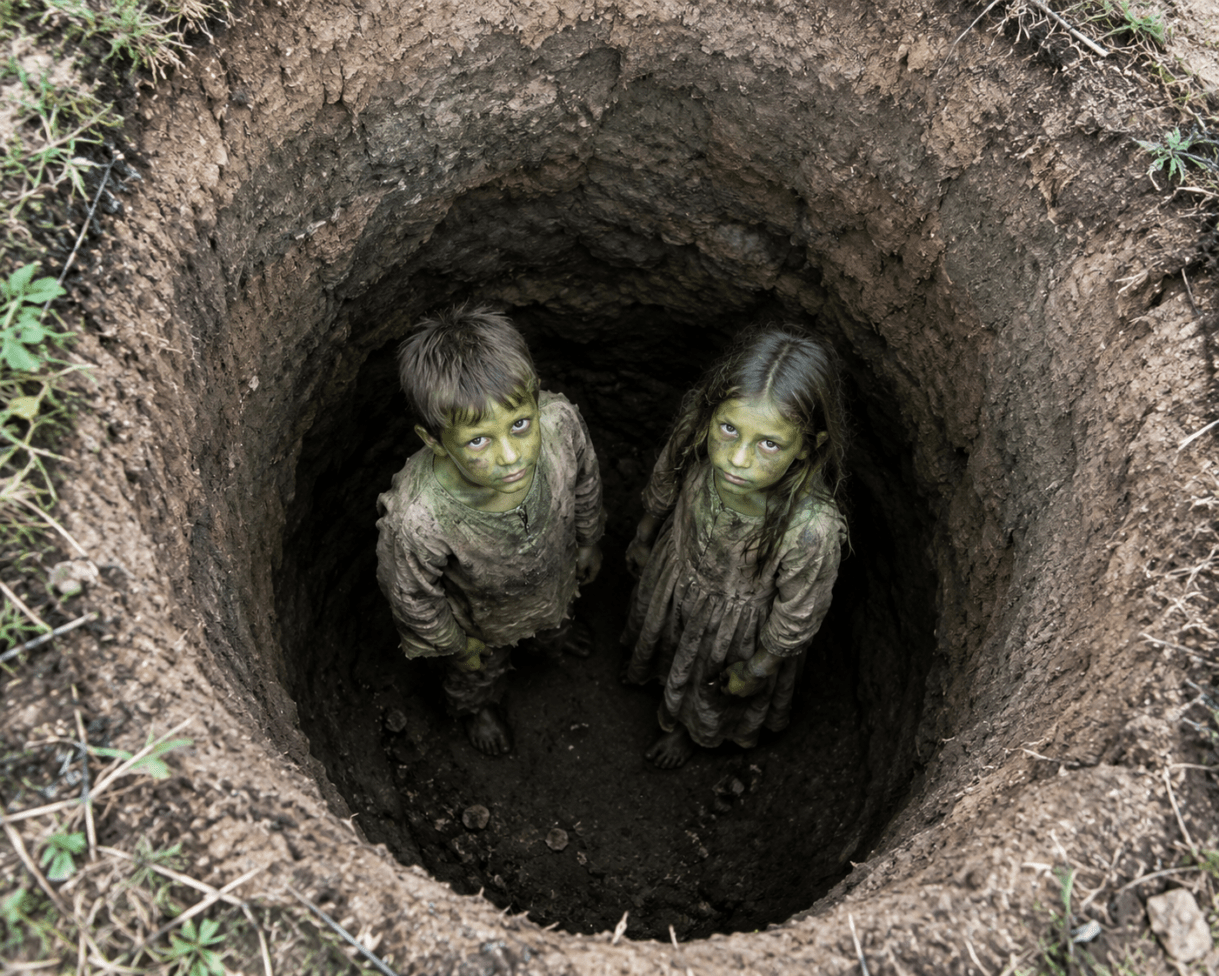
Imagine living in a quiet medieval village in England. Life revolves around farming, church services, and local traditions. News from distant lands is rare, and most people never travel far from where they were born. Then one day, two children appear seemingly out of nowhere. Their skin is green. Their clothes are unlike anything anyone has seen before. They speak an unknown language, and they refuse to eat ordinary food.
That is exactly what villagers in Woolpit reportedly experienced during the 12th century.
The Green Children of Woolpit remain one of the most bizarre and enduring mysteries in English folklore. Were they refugees from a distant land? Victims of a rare medical condition? Characters in a medieval legend? Or something even stranger?
This remarkable story continues to captivate people because it raises more questions than answers. Even today, historians cannot fully agree on what really happened.
Where Is Woolpit?
Before exploring the mystery itself, it helps to understand the setting.
Woolpit is a village in the county of Suffolk in eastern England. Its name comes from “wolf pits,” deep traps dug into the ground to catch wolves that once roamed the English countryside.
During the Middle Ages, Woolpit was a small agricultural community surrounded by fields, forests, and farmland. Life was simple but often difficult. Most villagers spent their days working the land and raising livestock.
Because travel was limited, people in medieval villages were often unfamiliar with foreign cultures and languages. Anything unusual could easily become the subject of rumors and legends.
This setting provides the backdrop for one of history’s strangest encounters.
The Discovery of the Green Children
According to historical accounts, the incident occurred sometime during the reign of King Stephen of England, which lasted from 1135 to 1154.
One day, villagers working in fields near the wolf pits discovered two children.
The pair appeared frightened and confused.
They were a boy and a girl, likely siblings.
At first glance, there seemed to be nothing extraordinary about them except for one shocking detail: their skin was green.
Witnesses reportedly described their skin as having a distinct green coloration unlike anything they had ever seen.
The children also wore unfamiliar clothing. The garments did not resemble the clothing typically worn by local villagers. Their appearance suggested they came from somewhere far away.
Yet the biggest mystery emerged when they tried to communicate.
No one could understand a word they said.
The language spoken by the children was completely unknown to the villagers.
The Children Refuse Food
The villagers, concerned about the children’s well-being, brought them into the community and attempted to care for them.
Like any hungry children, they were offered food.
Bread was presented.
They refused it.
Meat was offered.
They refused that too.
Various foods common in medieval England were placed before them.
Again, they refused.
The villagers became increasingly worried.
Days passed, and the children still would not eat.
Then something unexpected happened.
The children discovered fresh bean pods.
Immediately, they recognized the food and eagerly ate the beans.
According to the story, beans became their primary source of nourishment for a significant period.
This unusual dietary preference added another layer to the mystery.
Why would children refuse every available food except beans?
Were they unfamiliar with local foods? Had they grown up eating something entirely different?
Nobody knew.
The Boy’s Death
Unfortunately, the boy’s story ended tragically.
Historical accounts indicate that he became ill shortly after arriving in Woolpit.
Despite the villagers’ efforts to care for him, he died.
His death meant that one potential source of answers was lost forever.
The surviving girl, however, would eventually provide details that made the mystery even more fascinating.
The Girl Learns English
Over time, the girl adapted to life in Woolpit.
She gradually learned English and became able to communicate with those around her.
Naturally, villagers wanted answers.
Who was she?
Where had she come from?
How had she arrived in Woolpit?
The girl’s explanation would become one of the most famous and debated accounts in medieval history.
The Story of St. Martin’s Land
Once she could communicate, the girl revealed what she claimed was her homeland.
She called it St. Martin’s Land.
According to her account, it was a strange place unlike the world known to the villagers.
She described a land where sunlight was weak or absent.
Everything existed in a perpetual twilight.
There was no bright day as experienced in England.
Even more intriguingly, everyone in her homeland reportedly had green skin.
The girl explained that she and her brother had been tending livestock when they heard a loud sound.
Suddenly, they found themselves in an unfamiliar place.
The next thing they knew, they were wandering near Woolpit.
To medieval listeners, the story sounded impossible.
How could children travel from a hidden land into England without crossing roads, rivers, or seas?
The explanation only deepened the mystery.
The Historical Sources
One reason the Green Children story remains so compelling is that it was recorded by respected medieval chroniclers.
The two primary sources are:
- William of Newburgh
- Ralph of Coggeshall
Both men documented the story independently.
Importantly, neither writer treated the event as pure fantasy.
Instead, they presented it as something that people genuinely believed had occurred.
This has led historians to take the account more seriously than many other medieval legends.
While the chroniclers may not have witnessed the event themselves, they were writing relatively close to the time it supposedly happened.
That gives the story a degree of historical credibility that many folklore tales lack.
Theory 1: The Children Were Foreign Refugees
One of the most widely accepted explanations is that the children were foreign immigrants or refugees.
During the 12th century, various groups migrated across Europe.
The children may have belonged to a community whose language was unfamiliar to English villagers.
Some researchers suggest they may have come from Flemish settlements.
Flemish immigrants lived in parts of eastern England during the Middle Ages.
Political conflicts occasionally displaced entire communities.
If the children became separated from their families, they might have wandered into Woolpit.
Their strange language would have sounded incomprehensible to local villagers.
Their unfamiliar clothing could easily have seemed exotic.
This theory explains several aspects of the story, but not all of them.
Most notably, it does not fully explain the green skin.
Theory 2: A Medical Condition
Another popular explanation involves health and nutrition.
Some researchers believe the green coloration resulted from severe malnutrition.
A condition known historically as chlorosis can sometimes give skin a greenish appearance.
Iron deficiency and poor nutrition may alter a person’s complexion significantly.
This theory gains support from one important detail.
The children’s green color reportedly faded over time.
As they received regular food and care, their appearance became more normal.
That pattern is consistent with recovery from nutritional deficiencies.
If the children had experienced starvation or illness before arriving in Woolpit, their unusual skin tone might have had a medical explanation.
Theory 3: A Folk Tale Based on Real Events
Many historians believe the Green Children story may represent a real event that became exaggerated over time.
Medieval storytelling often blended facts with symbolism.
Perhaps two foreign children arrived in Woolpit under unusual circumstances.
Over decades, details may have been embellished.
The green skin could have become more dramatic.
The mysterious underground land may have evolved through retellings.
The story may therefore contain a kernel of truth wrapped in layers of folklore.
This explanation is attractive because it acknowledges both historical evidence and the tendency of stories to grow more extraordinary over time.
Theory 4: An Underground Civilization
Some enthusiasts have proposed a more exotic theory.
What if the girl’s account was true?
What if she and her brother came from an underground world?
Legends of hidden civilizations exist in many cultures.
Stories of subterranean kingdoms can be found throughout Europe, Asia, and the Americas.
Supporters of this theory point to the girl’s description of a dimly lit world where sunlight never fully penetrated.
An underground environment might fit such a description.
However, no evidence has ever been found to support the existence of such a civilization.
As a result, most historians view this explanation as folklore rather than reality.
Theory 5: A Parallel World
Modern mystery enthusiasts often suggest that the children came from another dimension.
According to this theory, they accidentally crossed between parallel worlds.
Their green skin, unusual language, and strange homeland could reflect an alternate reality.
While intriguing, this idea remains firmly within the realm of speculation.
There is no scientific evidence supporting dimensional travel in the context of the Woolpit story.
Nevertheless, the theory continues to fascinate those who enjoy unexplained mysteries.
Theory 6: Extraterrestrial Visitors
Perhaps the most sensational explanation is that the children were extraterrestrials.
Some UFO researchers have pointed to the unusual skin color, strange language, and mysterious origins as possible indicators of non-human visitors.
The girl’s description of arriving suddenly in another place has also fueled speculation.
However, there is no evidence connecting the story to extraterrestrial phenomena.
Most scholars dismiss this theory entirely.
Still, it demonstrates how powerful and mysterious the story remains.
Symbolism in the Story
Many folklorists focus less on whether the story is literally true and more on what it symbolizes.
The Green Children may represent outsiders entering an unfamiliar society.
Their strange appearance highlights fear of the unknown.
Their gradual adaptation reflects the process of cultural integration.
The story can be interpreted as a medieval reflection on immigration, identity, and belonging.
Viewed this way, the tale remains surprisingly relevant even today.
Communities around the world continue to grapple with questions about outsiders, cultural differences, and acceptance.
Why the Mystery Endures
Hundreds of years have passed since the Green Children allegedly appeared near Woolpit.
Yet the story refuses to disappear.
Why?
The answer lies in its unique combination of mystery and possibility.
Unlike many legends, the Green Children story contains just enough historical documentation to seem plausible.
At the same time, it includes details so strange that no explanation feels entirely satisfactory.
Every theory solves part of the puzzle while leaving other questions unanswered.
That uncertainty keeps the story alive.
Modern Interest in the Green Children
The Green Children of Woolpit continue to inspire books, documentaries, podcasts, articles, and academic studies.
Researchers revisit the case regularly, hoping to uncover new clues.
Writers and filmmakers use the story as inspiration for fantasy and science-fiction works.
Tourists visiting Woolpit often seek out locations connected to the legend.
The village itself has embraced the story as part of its heritage.
Few medieval mysteries have enjoyed such lasting popularity.
Lessons from the Green Children
Whether the story is fact, folklore, or a combination of both, it offers several lessons.
First, it reminds us that history is often stranger than fiction.
Second, it shows how cultural misunderstandings can create enduring mysteries.
Third, it highlights humanity’s fascination with the unknown.
People are naturally drawn to stories that challenge their understanding of reality.
The Green Children do exactly that.
The mystery of the Green Children of Wool pit remains one of the most fascinating stories from medieval England. Two children appeared seemingly from nowhere, speaking an unknown language and possessing unusual green skin. One died before revealing his story. The other described a mysterious land where sunlight barely existed and where everyone shared her strange appearance.
Centuries later, historians still debate what really happened.
Were they foreign refugees lost in a strange land? Victims of malnutrition? Characters in a story that evolved through generations of retelling? Or something far more mysterious?
No theory completely solves the puzzle.
That is why the Green Children of Woolpit continue to captivate audiences around the world. Their story exists in the space between history and legend, where facts become mysteries and mysteries become immortal.
Nearly 900 years after they first appeared near the wolf pits of a small English village, the Green Children remain one of history’s greatest unsolved enigmas—a tale that continues to challenge our understanding of what is possible and what might still be hidden in the shadows of the past.
SUGGESTED READS
- Why Listening Is the Key to a Healthy Relationship (And How to Be a Better Listener)
- How to Have Tough Conversations Without Ruining Your Relationship
- The Love Languages Explained: How to Love Your Partner the Right Way
- How to Improve Communication in Your Relationship (10 Simple Tips)
- What to Do When You’re Losing Interest in Your Partner (And How to Fix It)
- How to Balance Personal Space and Togetherness in a Relationship

Support Our Website!
We appreciate your visit and hope you find our content valuable. If you’d like to support us further, please consider contributing through the TILL NUMBER: 9549825. Your support helps us keep delivering great content!
If you’d like to support Nabado from outside Kenya, we invite you to send your contributions through trusted third-party services such as Remitly, western union, SendWave, or WorldRemit. These platforms are reliable and convenient for international money transfers.
Please use the following details when sending your support:
Phone Number: +254701838999
Recipient Name: Peterson Getuma Okemwa
We sincerely appreciate your generosity and support. Thank you for being part of this journey!