

simply amazing, always for you.
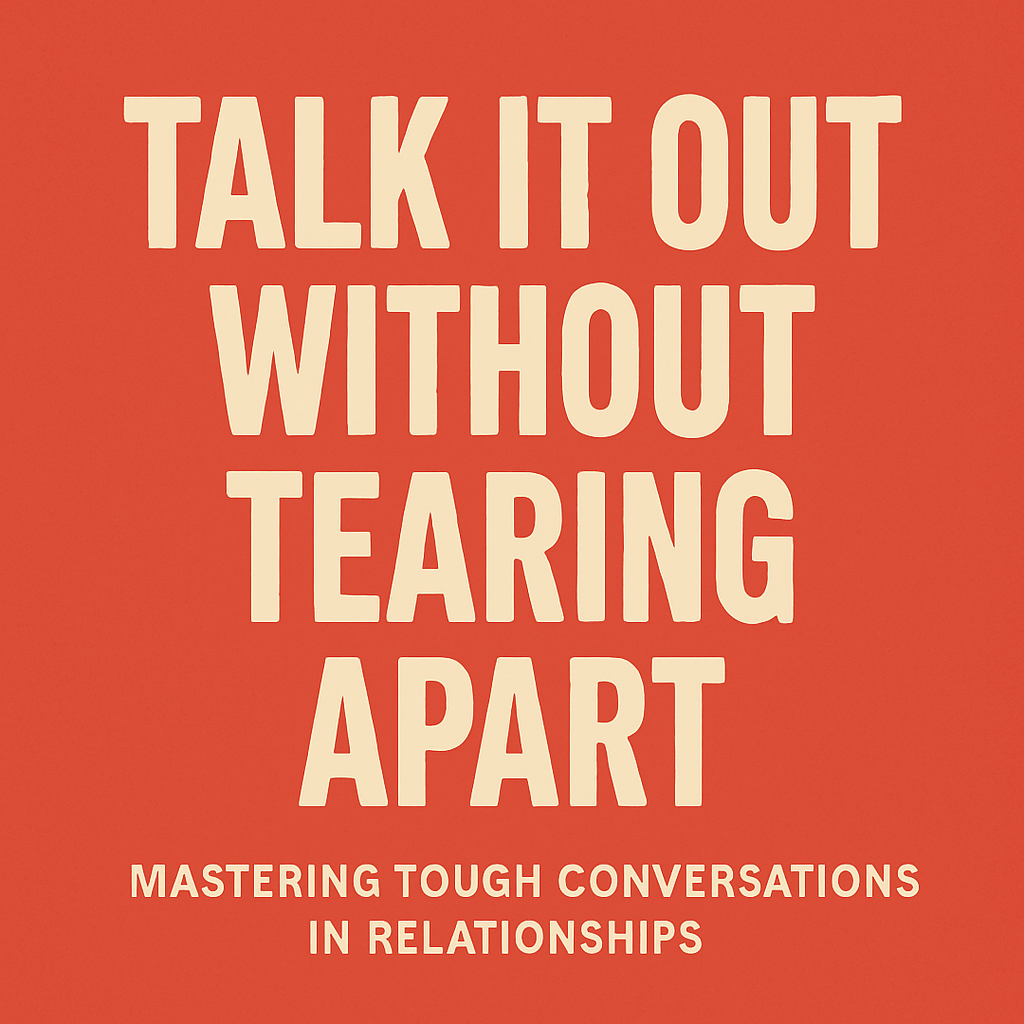
Whether it’s about money, intimacy, boundaries, or future goals, every relationship eventually hits a point where a tough conversation becomes necessary. But how do you bring up difficult topics without hurting your partner, sparking a fight, or threatening the foundation you’ve built?
The truth is, conflict isn’t inherently bad—it’s how you handle it that makes or breaks your relationship. Done right, tough conversations can strengthen your bond rather than strain it.
In this guide, we’ll break down how to have difficult conversations in a way that’s constructive, respectful, and relationship-enhancing.
Why Tough Conversations Are Necessary
Let’s be honest—talking about uncomfortable issues is no one’s idea of fun. But when you avoid hard topics, they don’t disappear; they fester. Unresolved tensions turn into resentment, miscommunication, and emotional distance.
Here’s why addressing issues head-on is healthier than sweeping them under the rug:
- Prevents misunderstandings. What you think is “no big deal” might be hurting your partner deeply.
- Promotes emotional intimacy. Vulnerability breeds closeness.
- Establishes boundaries. It’s hard to maintain mutual respect without clearly communicated limits.
- Builds trust. Honesty—even when it’s hard—signals safety in the relationship.
Signs You’re Avoiding a Hard Conversation
Sometimes, we don’t even realize we’re avoiding something. You may be skirting around a conversation if:
- You feel anxious every time the topic comes up
- You constantly change the subject when it arises
- You complain about it to friends but not to your partner
- You hope the issue “just works itself out”
- You feel passive-aggressive or resentful
If any of these resonate, it’s time to face the issue instead of running from it.
Step-by-Step: How to Have Tough Conversations Without Damaging Your Relationship
1. Get Clear on What You Want to Say
Before the conversation, take time to reflect.
Ask yourself:
- What is the core issue?
- How do I feel about it, and why?
- What do I need from my partner?
- What outcome am I hoping for?
Journaling your thoughts can help you articulate your feelings more clearly and avoid getting derailed during the conversation.
Tip: Avoid having the talk when you’re still overwhelmed with emotion. Processing your feelings first helps you speak calmly.
2. Choose the Right Time and Place
Timing matters. You don’t want to initiate a serious talk when your partner is stressed, distracted, or running out the door.
Choose a time when:
- You’re both calm
- You have privacy
- There’s no time pressure
- You’re in a neutral space (e.g., sitting on the couch, not lying in bed)
Avoid texting or calling about serious issues if you can. Face-to-face or video chat allows for tone, body language, and empathy to come through.
3. Start with Safety, Not Accusations
The goal is to have a conversation, not a confrontation.
Use “I” statements to express your feelings rather than blaming your partner. Starting with “You always…” or “You never…” puts people on the defensive. Instead, try:
- “I’ve been feeling overwhelmed about our finances, and I’d love to talk about how we handle money.”
- “I miss feeling close to you, and I want to understand what we both need right now.”
You’re inviting them into a shared solution—not attacking them.
4. Listen Like You Actually Want to Understand
Listening is half the conversation, and arguably the more important half. Don’t interrupt. Don’t formulate your comeback while they’re talking. Just listen.
Try active listening techniques:
- Repeat what you hear: “So what I’m hearing is…”
- Validate their feelings: “I can understand why that would upset you.”
- Ask clarifying questions: “When you say you feel dismissed, can you tell me what that looks like to you?”
Even if you don’t agree, show respect for their perspective.
5. Manage Your Emotions
Tough conversations can get heated quickly. If you feel your heart rate rising or your hands clenching, that’s a cue to pause.
It’s okay to take a short break and say:
- “I want to give this the attention it deserves, but I’m feeling overwhelmed. Can we take five minutes and come back?”
Self-regulation is a powerful relationship skill. You’re not avoiding the issue—you’re preserving the tone of the conversation.
6. Be Willing to Compromise
A tough conversation isn’t about “winning.” It’s about finding common ground. That often means compromising, especially when your needs and your partner’s don’t perfectly align.
Ask:
- “What can we both do differently to make this better?”
- “What do you need from me, and what do I need from you?”
Remember: healthy relationships aren’t about keeping score. They’re about mutual respect and shared growth.
7. End on a Constructive Note
After a difficult talk, it’s helpful to reaffirm your commitment to each other.
Try saying:
- “Thank you for being open with me. I know this wasn’t easy.”
- “I love you and want us to keep getting better at this.”
Ending with gratitude, affection, or a shared action plan helps reinforce that you’re in this together, not against each other.
Common Tough Conversations & How to Navigate Them
1. Money Problems
Talk about budgeting, debt, or financial goals with transparency. Share values before crunching numbers. Ask, “What does money represent to you?” to uncover deeper beliefs.
2. Sexual Intimacy
Use nonjudgmental language. Express your feelings rather than pointing fingers. “I’d love for us to reconnect physically. Can we talk about what’s been getting in the way?”
3. In-Laws or Family Drama
Focus on how interactions make you feel, not what the other person “should” do. Work as a team to set boundaries together.
4. Chores and Responsibilities
Don’t assume your partner “should just know.” Be specific: “When I come home and see the dishes piled up, I feel stressed. Can we come up with a better system?”
5. Future Goals (Marriage, Kids, etc.)
Bring up long-term plans with curiosity, not pressure. Ask open-ended questions: “Where do you see us in five years?”
What to Do If the Conversation Goes Sideways
Even with the best intentions, some conversations spiral.
If your partner shuts down:
- Stay calm and say, “I can see this is hard to talk about. Do you need some time before we continue?”
If voices are raised:
- Pause and say, “Let’s not go there. I care about you too much to let this turn into a fight.”
If they get defensive:
- Validate: “I’m not saying you’re a bad partner—I just want us to understand each other better.”
What Tough Conversations Reveal About Your Relationship
If you and your partner can’t talk about difficult things without it becoming toxic, that’s a red flag. Communication is a skill, but it also reflects deeper patterns of emotional safety, trust, and respect.
Healthy relationships allow space for:
- Differing opinions without punishment
- Mutual problem-solving
- Emotional expression without shame
If your relationship consistently makes you afraid to speak up, it might be time to seek professional support—or reconsider the relationship itself.
When to Seek Help
Sometimes, tough conversations need a neutral third party, especially when they involve repeated misunderstandings, power struggles, or emotional wounds.
Couples therapy, coaching, or even relationship workshops can help you learn:
- Conflict resolution skills
- How to speak and listen without triggering each other
- How to rebuild trust and emotional safety
Asking for help is not a sign of weakness. It’s a commitment to growth.
Tough conversations are unavoidable
but they don’t have to be relationship-ending. In fact, they’re often the turning point that brings you closer, not further apart.
By approaching sensitive topics with care, empathy, and a willingness to listen, you create a space where love can deepen and real understanding can flourish.
Don’t fear the conversation. Fear the silence that keeps your relationship stuck.

Support Our Website!
We appreciate your visit and hope you find our content valuable. If you’d like to support us further, please consider contributing through the TILL NUMBER: 9549825. Your support helps us keep delivering great content!
If you’d like to support Nabado from outside Kenya, we invite you to send your contributions through trusted third-party services such as Remitly, SendWave, or WorldRemit. These platforms are reliable and convenient for international money transfers.
Please use the following details when sending your support:
Phone Number: +254701838999
Recipient Name: Peterson Getuma Okemwa
We sincerely appreciate your generosity and support. Thank you for being part of this journey!