

We aint done yet.. Expect another one.
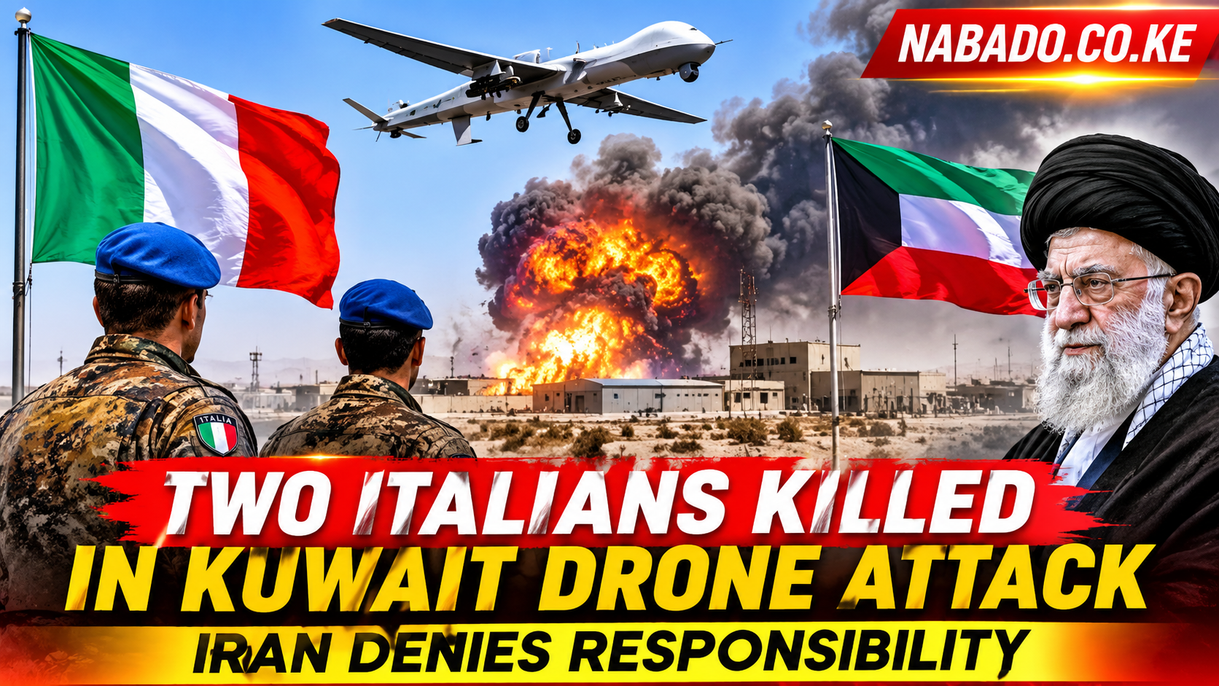
Two Italian nationals have been killed in a suspected drone attack targeting a military installation in Kuwait, sparking fresh diplomatic tensions between Italy and Iran as the conflict in the Middle East continues to escalate.
The two victims were reportedly Italian technicians working for Rheinmetall Italia, the Italian subsidiary of German defence manufacturer Rheinmetall. They were carrying out technical work at a military air-defence surveillance facility when the deadly incident occurred on Thursday, November 26, 2026.
The attack has raised fresh concerns about the safety of foreign personnel working at military installations across the Gulf region, particularly as tensions involving Iran, the United States, Israel and neighbouring Arab countries continue to intensify.
Italian authorities have pointed towards Iran as the suspected source of the drone, while Tehran has strongly denied involvement and called for an investigation into the incident.
Two Italian Defence Workers Die in Kuwait Drone Strike
Italy’s Foreign Minister, Antonio Tajani, confirmed the deaths of the two nationals, describing the incident as a serious tragedy.
According to information provided by Italian authorities, the victims were employees of Rheinmetall Italia and had been working at a surveillance and detection installation operated by Kuwait’s armed forces.
The facility was reportedly targeted by a drone, resulting in an explosion that killed the two Italian technicians.
Two other people were also injured during the incident. They reportedly included a Kuwaiti army captain and a Pakistani national.
The deaths have prompted concern within Italy, particularly because the technicians were reportedly carrying out professional duties connected to military defence infrastructure rather than participating in combat operations.
The incident also highlights the growing risks faced by foreign contractors and technical specialists working in countries affected by the expanding Middle East conflict.
Italy Points to Iran-Made Drone
One of the major developments surrounding the attack is the reported identification of the drone involved.
Foreign Minister Antonio Tajani told Italian media that preliminary findings indicated the drone was manufactured in Iran.
However, the discovery has not conclusively established who launched the aircraft or whether the Iranian government directly ordered the operation.
Iranian-designed drones have been used by different military actors and armed groups operating across the Middle East. Consequently, identifying the manufacturer does not automatically establish the identity of the operator.
Italian authorities are seeking further clarification as diplomatic discussions continue between the countries involved.
The distinction is particularly important because an attack carried out by Iranian military personnel would carry different diplomatic and security implications from one conducted by an independent armed group using Iranian-manufactured equipment.
Tehran Rejects Accusations and Offers Investigation
Iran has strongly rejected accusations that its military was responsible for the deadly incident.
Iranian military spokesperson General Abolfazl Shekarchi denied that Iranian forces had carried out the alleged attack, dismissing claims linking Tehran directly to the incident.
Iran’s diplomatic representatives have also challenged the accusations, warning that assigning responsibility without establishing the facts could further complicate an already dangerous regional situation.
Iranian Foreign Minister Abbas Araghchi reportedly held discussions with his Italian and Kuwaiti counterparts following the deaths.
During the diplomatic exchanges, Araghchi expressed condolences over the loss of the two Italian nationals while maintaining that Iran was not responsible.
He also indicated that Tehran was prepared to cooperate with a joint investigation involving the countries concerned.
The proposed investigation could become an important step towards establishing who carried out the operation and whether the attack was connected to the broader military confrontation in the region.
Nevertheless, the competing accounts have left important questions unanswered.
Italy’s Government Faces Pressure After Deaths
The deaths have placed Italy in a difficult diplomatic position as the government seeks accountability while avoiding further escalation in the Middle East.
Prime Minister Giorgia Meloni expressed condolences to the families of the victims, while Foreign Minister Tajani called for restraint and greater protection of countries and personnel caught up in the regional conflict.
Italy has maintained that attacks against countries in the Gulf should not be allowed to become a wider regional crisis.
The incident is particularly sensitive because the victims were Italian citizens working for a major European defence manufacturer.
Rheinmetall is one of Europe’s significant defence technology companies, supplying military equipment and systems to several countries.
The deaths could therefore intensify discussions about the security of European defence contractors operating in conflict-affected regions.
European governments are also closely monitoring the situation because further attacks could threaten their citizens, military interests and commercial operations across the Gulf.
Kuwait Increasingly Exposed to Regional Conflict
Kuwait’s strategic location has made it particularly vulnerable to the consequences of the confrontation involving Iran and other regional powers.
The country hosts important military infrastructure and has long maintained security cooperation with the United States.
Although Kuwait is not a direct participant in every aspect of the confrontation, its geographical position and military relationships have exposed it to growing security risks.
The latest drone incident has renewed questions about the ability of regional air-defence systems to protect military installations against unmanned aircraft.
Drones have become increasingly important in modern warfare because they can be deployed for surveillance, reconnaissance and attacks against strategic targets.
Their relatively low operating costs compared with conventional military aircraft have also made them attractive to both state and non-state military actors.
For countries such as Kuwait, protecting military installations, energy infrastructure and civilian facilities against drone attacks has become an increasingly important security priority.
Strait of Hormuz Adds to Growing Concerns
The incident comes at a time when security concerns are also mounting around the Strait of Hormuz, one of the world’s most important maritime shipping routes.
The narrow waterway connects the Persian Gulf to the Gulf of Oman and provides a critical passage for international oil and gas shipments.
Any serious disruption to shipping through the strait could have significant consequences for global energy markets, international trade and fuel prices.
Reports of attacks and maritime security incidents in surrounding waters have already increased concerns among shipping companies and governments.
For countries heavily dependent on imported petroleum, prolonged instability in the Gulf could translate into higher transportation and production costs.
Kenya and other African economies could also feel the effects of sustained disruption through increased international oil prices, potentially placing additional pressure on fuel costs and the general cost of living.
The possibility of further attacks on military installations and commercial vessels has therefore become a major concern for governments beyond the Middle East.
What Happens Next After the Deadly Attack?
The immediate challenge facing Italy and Kuwait is determining who was responsible for the drone strike.
Iran’s offer to participate in an investigation provides a possible diplomatic opening, but establishing responsibility may require technical evidence, intelligence assessments and examination of the drone’s components and flight path.
Investigators will also need to distinguish between the country that manufactured the aircraft and the organisation or military unit that deployed it.
For the families of the two Italian victims, the priority will be receiving answers about how the attack happened and why the facility was targeted.
For Kuwait, the incident represents another warning about the security threats facing military infrastructure in an increasingly unstable region.
The wider diplomatic consequences will depend heavily on the findings of the investigation and how the countries involved respond.
At this stage, Iran continues to deny responsibility, while Italy maintains that the drone was Iranian-made.
Until independent evidence establishes who launched it, responsibility for the deadly attack remains a disputed issue.
The deaths of the two Italian technicians have nevertheless demonstrated how quickly the expanding Middle East conflict can affect foreign nationals working thousands of kilometres from their home countries.
SUGGESTED READS
- Elifasi Msomi: The Axe Killer Who Terrorised Rural Natal
- Elias Xitavhudzi: The Pangaman Who Terrorised Atteridgeville
- Sipho Thwala: The Phoenix Strangler and the Women Who Vanished
- Norman Simons: The Station Strangler and the Cape Town Murders That Shocked South Africa
- Cedric Maake: The Chilling Story of South Africa’s ‘Wemmer Pan Killer’
- Moses Sithole: The “ABC Killer” Who Used Job Promises to Lure Women to Their Deaths
- The Malawi Vampire Panic: How Rumors Sparked a Deadly Wave of Fear
- The Congolese Rubber Atrocities: When Greed Turned the Congo into a Land of Terror

Support Our Website!
We appreciate your visit and hope you find our content valuable. If you’d like to support us further, please consider contributing through the TILL NUMBER: 9549825. Your support helps us keep delivering great content!
If you’d like to support Nabado from outside Kenya, we invite you to send your contributions through trusted third-party services such as Remitly, western union, SendWave, or WorldRemit. These platforms are reliable and convenient for international money transfers.
Please use the following details when sending your support:
Phone Number: +254701838999
Recipient Name: Peterson Getuma Okemwa
We sincerely appreciate your generosity and support. Thank you for being part of this journey!