

simply amazing, always for you.
If you’ve ever wondered why your grandparents are up before the sun or why they sometimes nap like it’s an Olympic sport, you’re not alone. Aging changes many things—our skin, our bones, our memory—and yes, our sleep patterns too. But here’s the kicker: some older people sleep less than they used to, while others start sleeping more. What’s really going on?
Let’s explore the surprising science, the subtle shifts, and the silent signals behind sleep changes in old age. Because whether you’re caring for aging parents, heading into your golden years yourself, or just curious, understanding how aging affects sleep is essential for health, happiness, and peace of mind.
Aging and Sleep: It’s Complicated
First, let’s set the record straight: older adults do not necessarily need less sleep, but they often get less — and not always by choice.
On average, adults still need around 7 to 8 hours of sleep each night well into their 70s and beyond. But due to a mix of biological, psychological, and environmental factors, many older adults either:
- Struggle to get enough rest, or
- Sleep longer than usual — often due to underlying health issues.
So, why the shift? Let’s break it down.
Why Some Older Adults Sleep Less
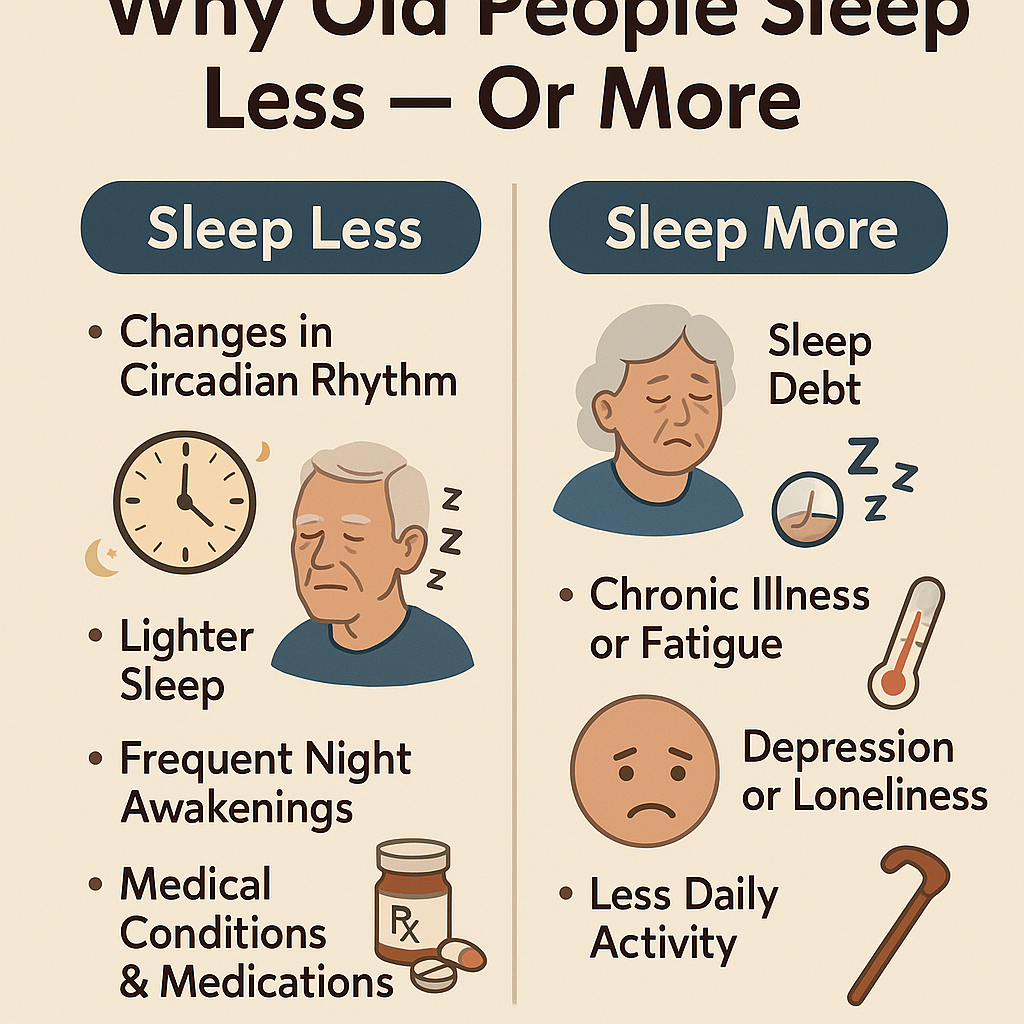
1. Their Body Clock Shifts (Circadian Rhythm Changes)
As we age, our circadian rhythm—the internal 24-hour body clock that tells us when to sleep and wake—undergoes a subtle yet impactful shift. Older adults often experience what’s called an “advanced sleep phase.” This means:
- They feel sleepy earlier in the evening
- They wake up earlier in the morning
- Their nighttime sleep may feel shorter, even if the total sleep is still adequate
It’s why your grandpa might be dozing off at 8 PM and waking up at 4 AM—his internal clock has shifted forward.
2. They Spend Less Time in Deep Sleep
Sleep isn’t just about how long you sleep — it’s about how well you sleep. And older adults tend to:
- Spend more time in lighter stages of sleep
- Experience fewer periods of slow-wave sleep (deep sleep) and REM sleep
This makes sleep feel less restorative. Even if an older person is in bed for 8 hours, they might not feel refreshed.
3. They Wake Up More Often at Night
Several age-related issues can disrupt nighttime sleep:
- Frequent urination (nocturia) due to prostate issues or bladder changes
- Chronic pain from arthritis, back issues, or other conditions
- Medical conditions like heart failure, GERD, or restless leg syndrome
- Sleep apnea, which becomes more common with age
These interruptions can fragment sleep and reduce overall sleep quality.
4. Medications Mess With Sleep
As people age, they often take more medications. Some of these can interfere with sleep, especially:
- Diuretics (used for blood pressure or heart issues) that increase nighttime urination
- Stimulants or antidepressants that reduce REM sleep
- Beta-blockers that suppress melatonin production
Polypharmacy — taking multiple medications — also increases the risk of drug interactions that can affect sleep.
5. Mental Health Issues Interfere With Rest
Insomnia isn’t just physical. Emotional health plays a huge role in sleep quality. Many older adults suffer from:
- Depression, which can cause early morning awakening or difficulty falling asleep
- Anxiety, which can make it hard to fall or stay asleep
- Loneliness, especially after the loss of a partner, can contribute to sleep disturbances
These aren’t just emotional struggles — they affect sleep deeply.
Why Some Older Adults Sleep More
Not all seniors sleep less. In fact, some seem to nap during the day, sleep long hours at night, and still feel tired. Here’s why:
1. They’re Catching Up on Sleep Debt
Years of poor sleep, stress, or overwork can create a sleep deficit that follows you into old age. Retirement or reduced responsibilities finally give the body a chance to recover — leading to more frequent napping or longer nighttime sleep.
2. Low Energy Levels Due to Health Issues
Fatigue in seniors can stem from a wide range of chronic conditions:
- Heart disease can make every activity feel exhausting
- Anemia can cause persistent tiredness
- Thyroid dysfunction, especially hypothyroidism, lowers energy levels
- Diabetes can mess with both blood sugar and sleep cycles
When the body is fighting to stay balanced, sleep becomes both a necessity and an escape.
3. Medications That Sedate
Just like some drugs cause insomnia, others can cause daytime drowsiness or promote longer sleep:
- Some antihistamines, antidepressants, or antipsychotics can be sedating
- Sleep aids (prescribed or over-the-counter) can leave lingering grogginess
- Pain medications may dull not only pain but also alertness
This kind of oversleeping isn’t always healthy — it can be a red flag.
4. Lack of Daily Engagement or Physical Activity
In retirement or with mobility issues, many seniors become less active. Fewer daily activities mean:
- Less stimulation to keep them alert during the day
- More boredom-induced naps
- A tendency to sleep out of habit, not necessity
Sleep is supposed to be the body’s way to recover, not just fill time.
5. Depression-Related Hypersomnia
While some depressed individuals struggle with insomnia, others experience hypersomnia—sleeping excessively. This isn’t restorative sleep, though. It’s often low-quality, fragmented, and leaves the person feeling just as tired.
Sleep becomes a way to escape from reality or emotional pain.
Is It Normal for Older Adults to Sleep Differently?
Yes and no.
What’s Normal:
- Falling asleep earlier than before
- Waking up earlier
- Taking short naps during the day
- Needing slightly less sleep but still averaging 7–8 hours
What’s Not Normal:
- Sleeping less than 5 hours or more than 9 hours consistently
- Feeling tired all day no matter how much you sleep
- Relying heavily on sleep medications
- Sleep disturbances caused by untreated medical or mental health conditions
If you or someone you care about shows signs of poor sleep that affects daily functioning, it’s worth talking to a doctor or sleep specialist.
Tips to Help Older Adults Sleep Better
Here are some practical, science-backed ways to promote better sleep in older age:
- Stick to a Schedule: Go to bed and wake up at the same time daily.
- Limit Daytime Naps: Keep naps short (20–30 minutes) and avoid napping too late.
- Get Sunlight: Natural light helps regulate the circadian rhythm. Morning light is best.
- Stay Active: Light exercise like walking or stretching during the day improves sleep quality.
- Create a Wind-Down Routine: Read, listen to calm music, or do light stretches before bed.
- Avoid Screens at Night: Blue light from phones or TVs can delay melatonin release.
- Cut Back on Stimulants: Avoid caffeine, alcohol, and large meals near bedtime.
- Make the Bedroom Sleep-Friendly: Cool, dark, quiet, and comfortable is the goal.
Sleep Is a Mirror of Health
Sleep in old age isn’t just about bedtime — it’s a reflection of overall health. Whether seniors are sleeping less or more, the key is to pay attention to how they feel during the day. Rested, alert, and functional? Great. But persistent fatigue, mood changes, or irregular sleep patterns may signal something deeper.
So if Grandma’s up with the roosters or Grandpa’s snoozing all afternoon, don’t just chalk it up to “old age.” Dig a little deeper. Healthy sleep is just as essential at 70 as it is at 30 — and sometimes, it’s the first clue that something needs care.

Support Our Website!
We appreciate your visit and hope you find our content valuable. If you’d like to support us further, please consider contributing through the TILL NUMBER: 9549825. Your support helps us keep delivering great content!
If you’d like to support Nabado from outside Kenya, we invite you to send your contributions through trusted third-party services such as Remitly, SendWave, or WorldRemit. These platforms are reliable and convenient for international money transfers.
Please use the following details when sending your support:
Phone Number: +254701838999
Recipient Name: Peterson Getuma Okemwa
We sincerely appreciate your generosity and support. Thank you for being part of this journey!