

simply amazing, always for you.
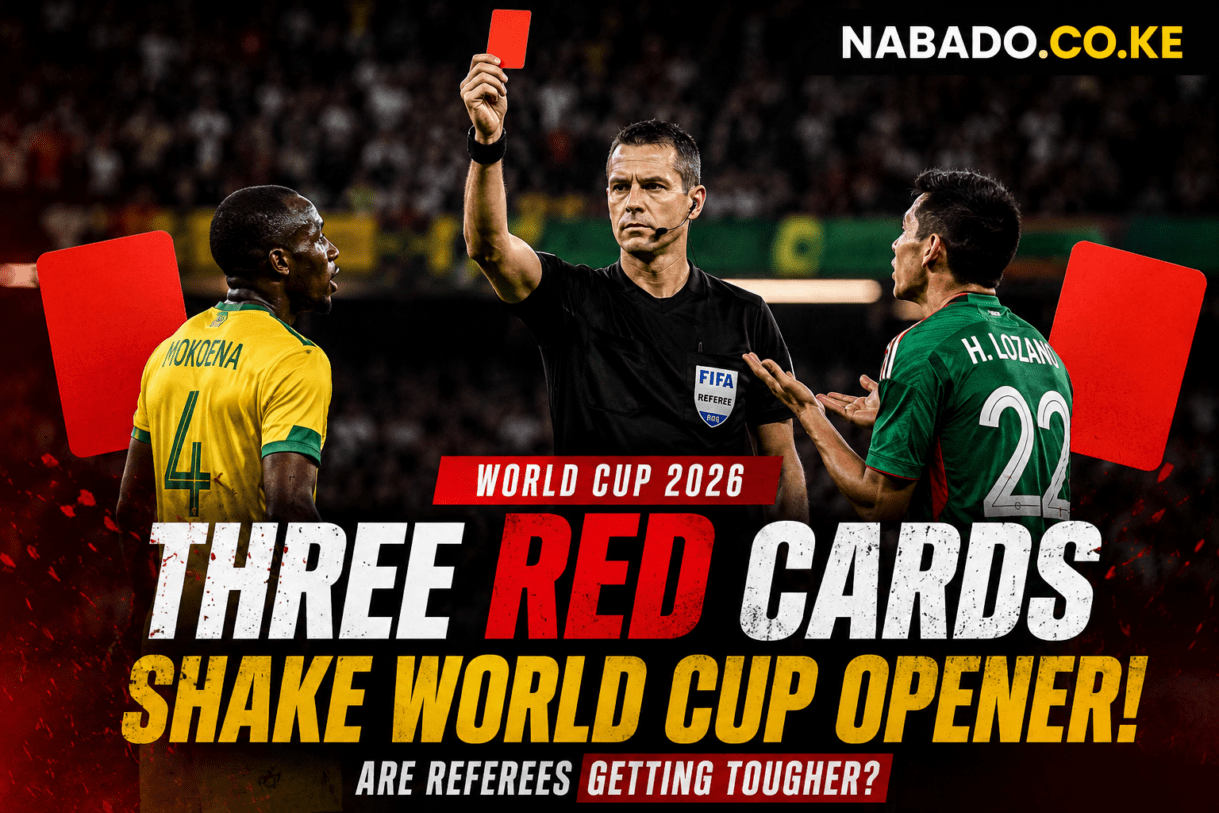
The 2026 FIFA World Cup is already making headlines, but not just for the football. The tournament’s opening match delivered a dramatic talking point that has fans, pundits, and players debating the role of referees after a record three red cards were shown in a single game.
The clash between Mexico and South Africa was expected to provide a thrilling start to the biggest football tournament on the planet. Instead, it became a showcase of strict officiating as players found themselves repeatedly on the wrong side of the referee’s whistle.
By the final whistle, three players had been sent off, creating one of the most controversial and memorable opening matches in World Cup history.
A Historic Opening Match
World Cup opening games are usually remembered for spectacular goals, emotional moments, and the excitement of a global tournament finally getting underway. This time, however, the spotlight shifted to disciplinary action.
The match quickly became physical, with both teams competing aggressively for every ball. Tensions rose as the game progressed, and several challenges pushed the limits of what officials were willing to tolerate.
As incidents piled up, the referee did not hesitate to take action. Three red cards were eventually issued, leaving fans stunned and setting a new record for an opening World Cup fixture.
Football supporters around the world immediately took to social media to discuss whether the punishments were justified or whether referees were being overly strict.
FIFA’s Message Appears Clear
Many football analysts believe the high number of red cards reflects a deliberate effort by FIFA to enforce discipline more aggressively during this year’s tournament.
In recent years, football authorities have increased their focus on player safety. Dangerous tackles, violent conduct, dissent toward officials, and unsporting behavior have all become major areas of concern.
The message appears simple: players who cross the line will face serious consequences.
Referees entering the tournament were reportedly encouraged to apply the laws of the game consistently and firmly. The opening match may have been the first major example of that approach in action.
VAR Continues to Change the Game
Another factor behind the increased disciplinary action is the growing influence of Video Assistant Referee (VAR) technology.
In previous World Cups, certain incidents might have gone unnoticed. Today, multiple camera angles and video reviews give officials the ability to examine challenges in far greater detail.
What looks like a yellow card in real time can quickly become a red card after a replay reveals dangerous contact or violent conduct.
The technology has undoubtedly improved accuracy, but it has also increased scrutiny on players. There is now far less chance of escaping punishment for serious offenses.
Comparing Previous World Cups
The opening match’s three red cards become even more remarkable when compared to recent tournaments.
The 2018 FIFA World Cup was generally viewed as one of the cleanest tournaments in modern history, with very few dismissals throughout the competition.
Similarly, the 2022 World Cup saw relatively low numbers of red cards despite the intense competition and high stakes.
To witness three dismissals in the very first match of the 2026 tournament has therefore raised eyebrows across the football world.
Many observers are wondering whether this could signal a major shift in officiating standards.
Players Also Share the Blame
While much of the conversation has focused on referees, former players have pointed out that the responsibility does not rest solely with officials.
Several of the incidents involved reckless challenges and unnecessary confrontations. Modern football places significant emphasis on protecting players from dangerous tackles, particularly those that risk serious injury.
When players make rash decisions, referees are often left with little choice.
Many analysts argue that if footballers adapt quickly to the standard being set, the number of red cards could decline as the tournament progresses.
Fans Split Over the Decisions
As expected, reactions have been mixed.
Some supporters praised the referee for maintaining control and sending a strong message that dangerous behavior would not be tolerated.
Others argued that football is becoming overly regulated and that excessive punishment risks disrupting the flow and excitement of matches.
The debate reflects a wider discussion within football about balancing player safety with the physical nature of the sport.
While opinions differ, one thing is certain: the decisions have captured global attention.
What This Means for the Rest of the Tournament
The events of the opening match are likely to influence how teams approach future games.
Coaches will undoubtedly remind players to remain disciplined and avoid unnecessary confrontations. Midfielders and defenders, in particular, may become more cautious when making tackles.
Referees across the tournament will also be under intense scrutiny. Every major decision will be analyzed by television audiences, football experts, and fans around the world.
If officials continue issuing red cards at a high rate, the conversation about stricter enforcement will only intensify.
A New Era of World Cup Officiating?
It may still be too early to determine whether the 2026 World Cup represents a new era of stricter refereeing.
One dramatic match does not necessarily establish a long-term trend. However, the opening fixture has undoubtedly set the tone for the tournament.
Players now know that referees are prepared to act decisively. Coaches know discipline could be just as important as tactics. Fans know every challenge will be examined more closely than ever before.
Whether this leads to a cleaner and safer tournament or sparks further controversy remains to be seen.
For now, the World Cup has delivered its first major talking point—and it came not from a stunning goal or a surprise result, but from three red cards that have the football world talking.
SUGGESTED READS
- Tics and Tourette Syndrome: Causes, Symptoms, Diagnosis, and Treatment
- The Silent Killer That Turns Simple Infections Deadly
- Hantavirus: The Silent Threat from Rodents You Can’t Afford to Ignore
- How Exercise Transforms Your Mind: The Ultimate Guide to Mental Health Benefits
- How Food Can Solve Angriness: The Science of Eating Your Way to Calm
- How to Break Free from Sugar Cravings: Tips for Healthy Eating
- How to Start a Plant-Based Diet: A Beginner’s Guide to Healthy Eating

Support Our Website!
We appreciate your visit and hope you find our content valuable. If you’d like to support us further, please consider contributing through the TILL NUMBER: 9549825. Your support helps us keep delivering great content!
If you’d like to support Nabado from outside Kenya, we invite you to send your contributions through trusted third-party services such as Remitly, western union, SendWave, or WorldRemit. These platforms are reliable and convenient for international money transfers.
Please use the following details when sending your support:
Phone Number: +254701838999
Recipient Name: Peterson Getuma Okemwa
We sincerely appreciate your generosity and support. Thank you for being part of this journey!