

simply amazing, always for you.
Robert Kathata’s Unusual Family Has Made Him One of Kenya’s Most Talked-About Polygamists
In an era where many people struggle to support a family of four or five, one man from Meru County has built a household so large that it continues to amaze Kenyans years after he first made headlines.
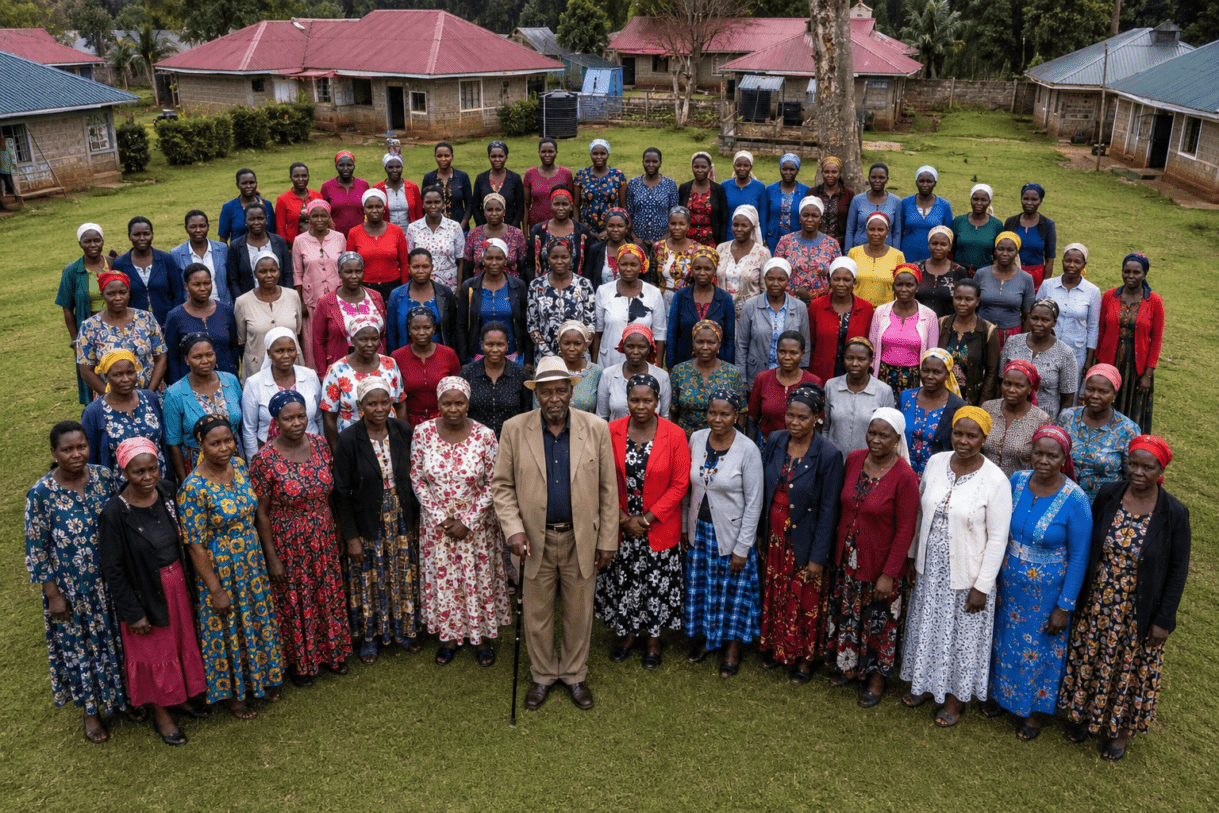
Robert Kathata, a farmer from Meru, is widely known for having married more than 18 wives, with reports over the years indicating that the number eventually grew beyond 30. His family includes dozens of children and grandchildren, creating what many describe as a community rather than a traditional household.
While stories about large families are not uncommon in some parts of Africa, Kathata’s case stands out because of the sheer scale of his household and his openness about his polygamous lifestyle.
As Kenya continues to modernize, his story has reignited discussions about culture, marriage, and whether polygamy still has a place in modern society.
A Family Built Over Decades
Unlike many viral stories that disappear after a few days, Robert Kathata’s story has remained in the public eye for years.
According to previous interviews, he began marrying at a young age and gradually expanded his family over several decades. Rather than marrying many women at once, he added wives over time as his household and resources grew.
The result is one of the largest known families in Kenya.
Visitors who have seen the homestead often compare it to a small village. Multiple houses sit within the compound, each occupied by different family members. Children play together while adults share responsibilities related to farming, livestock keeping, and household management.
The family structure is organized in a way that allows daily life to continue smoothly despite the enormous number of people involved.
How Does He Manage So Many Wives?
This is the question most Kenyans ask when they hear about Robert Kathata.
According to accounts from those familiar with his family, the household operates through a clear system of responsibilities.
Different wives oversee different sections of family life. Some focus on farming activities, others on raising children, preparing meals, or managing household affairs.
Kathata has previously explained that fairness and communication are critical in maintaining harmony.
With such a large family, misunderstandings can quickly escalate if not addressed properly. As a result, family meetings and open discussions reportedly play an important role in resolving disputes and making collective decisions.
While many people joke about the challenges of having even one spouse, Kathata insists that mutual respect is what keeps the family together.
The Economic Reality Behind the Lifestyle
Maintaining a family of this size requires substantial resources.
Food, education, clothing, healthcare, and housing costs can be overwhelming even for middle-income households.
For Kathata, farming has reportedly been the backbone of the family’s survival. Agriculture remains a major economic activity in Meru County, and large families often contribute labor that helps sustain farming operations.
However, economists point out that raising dozens of children in today’s Kenya is far more expensive than it was decades ago.
School fees, transportation, medical expenses, and the rising cost of living have increased financial pressure on households across the country.
This reality has led many younger Kenyans to question whether large polygamous families are still practical.
Public Reactions Across Kenya
Every time Robert Kathata’s story resurfaces online, it sparks intense debate.
Some people admire him for preserving cultural traditions that have existed for generations.
Supporters argue that polygamy remains legal in Kenya under certain circumstances and that consenting adults should be free to choose the type of marriage they prefer.
Others see Kathata as a symbol of traditional African family structures that existed long before colonial influence reshaped marriage practices.
Critics, however, argue that modern economic realities make such arrangements difficult to sustain.
Some also question whether emotional needs can truly be met in such a large household.
The debate often reflects a broader conversation taking place across Kenya as society balances cultural heritage with contemporary lifestyles.
Polygamy in Modern Kenya
Polygamy is legally recognized in Kenya under the Marriage Act of 2014, which allows men to marry multiple wives under customary or Islamic law.
Although the practice remains legal, it is far less common today than it was several decades ago.
Urbanization, changing social values, education, and economic pressures have contributed to a decline in polygamous marriages among younger generations.
Nevertheless, some communities continue to view the practice as an important cultural institution.
In regions such as Meru, stories of respected elders and successful farmers with multiple wives are still part of local folklore and community history.
A Life That Continues to Capture Attention
What makes Robert Kathata’s story remarkable is not simply the number of wives he has married.
It is the fact that he has managed to maintain one of the country’s largest families for decades while remaining a recognizable figure in public discussions about marriage and culture.
For younger Kenyans navigating modern relationships, his lifestyle may seem almost unimaginable.
For others, it represents a living connection to traditions that shaped family life for generations.
Regardless of where people stand on the issue, one thing is certain: few individuals have sparked as much curiosity about marriage in Kenya as Robert Kathata.
His story continues to challenge assumptions about what a family should look like and serves as a reminder that Kenya remains a country where diverse cultural traditions coexist alongside modern ways of life.
As conversations about marriage, culture, and identity continue across Kenya, Robert Kathata’s extraordinary family remains one of the country’s most fascinating human-interest stories.
Whether viewed as an example of commitment to tradition or a relic of a bygone era, the Meru farmer’s household stands as a rare and remarkable example of large-scale polygamy in the 21st century.
At a time when many families are getting smaller, Kathata’s family continues to attract attention for doing exactly the opposite.
SUGGESTED READS
- The Green Children of Woolpit: The Medieval Mystery That Still Defies Explanation
- The Dancing Plague of 1518: The Terrifying Mystery of the People Who Couldn’t Stop Dancing
- The Chilling Mystery of Dyatlov Pass
- The Man Who Received Calls From the Dead
- The Radio Station That Predicted a Murder\
- The Bear Who Went to War: The Unbelievable Story of Wojtek
- The Woman Who Fell 33,000 Feet and Lived: The Astonishing Story of Vesna Vulović

Support Our Website!
We appreciate your visit and hope you find our content valuable. If you’d like to support us further, please consider contributing through the TILL NUMBER: 9549825. Your support helps us keep delivering great content!
If you’d like to support Nabado from outside Kenya, we invite you to send your contributions through trusted third-party services such as Remitly, western union, SendWave, or WorldRemit. These platforms are reliable and convenient for international money transfers.
Please use the following details when sending your support:
Phone Number: +254701838999
Recipient Name: Peterson Getuma Okemwa
We sincerely appreciate your generosity and support. Thank you for being part of this journey!