

simply amazing, always for you.
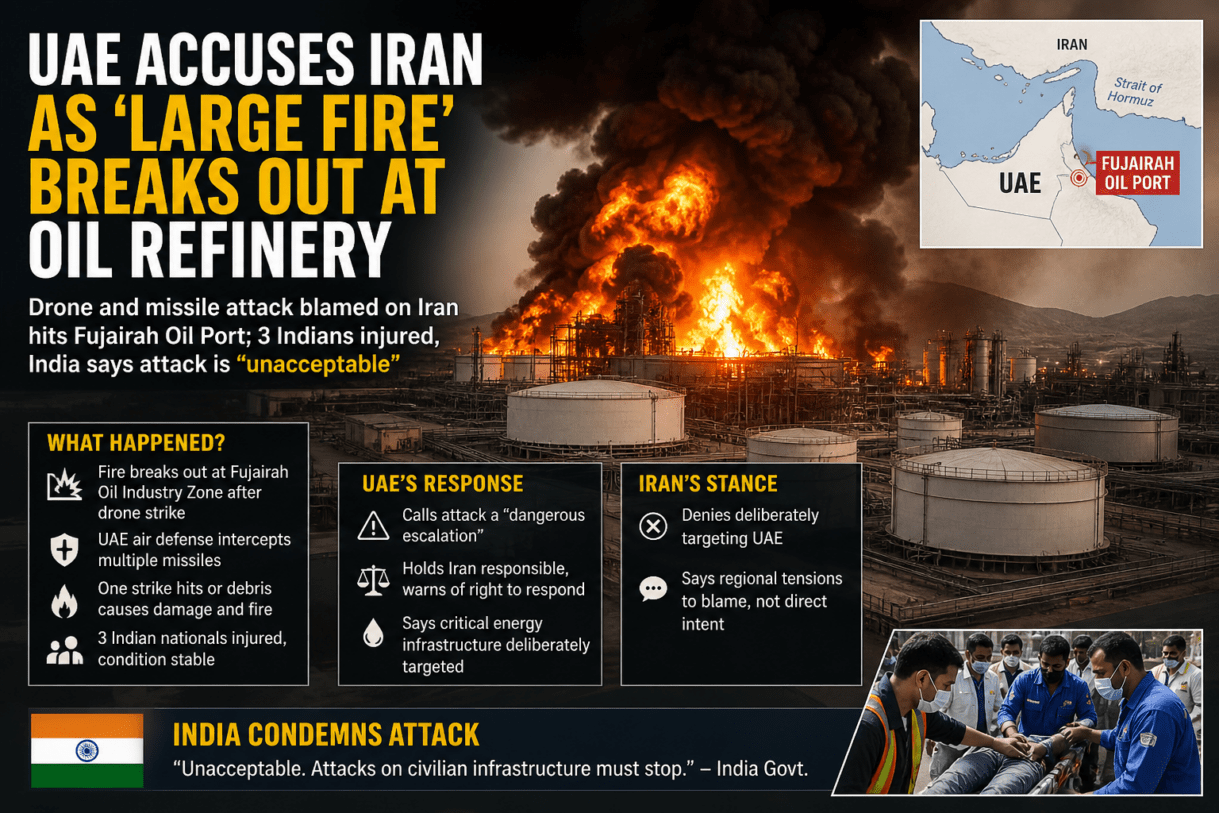
A dangerous new flashpoint has erupted in the Middle East after the United Arab Emirates accused Iran of launching a drone and missile assault that ignited a massive fire at one of the region’s most critical energy hubs, leaving foreign workers injured and raising fears of a wider conflict.
Fire Erupts at Strategic Oil Hub
The blaze broke out at the Fujairah Oil Industry Zone, a facility widely regarded as the UAE’s largest oil export terminal and a key artery in global energy supply chains. Thick plumes of smoke were seen rising over the port after what Emirati officials described as a coordinated aerial attack.
According to authorities, air defense systems intercepted several incoming threats, but at least one strike—or falling debris—hit the site, triggering the fire. Emergency crews rushed to contain the flames, while operations in parts of the facility were temporarily disrupted.
UAE Points Finger at Iran
Officials in the UAE were quick to assign blame, calling the incident a “dangerous and unacceptable escalation.” The government warned that targeting energy infrastructure threatens not only national security but also the stability of global oil markets.
While the UAE has not detailed its next steps, the language coming from senior officials suggests retaliation remains firmly on the table.
India Reacts After Citizens Injured
The incident has drawn sharp international reaction, particularly from India, after three Indian nationals working in the area were injured in the attack.
New Delhi condemned the strike in unusually strong terms, labeling it “unacceptable” and urging all sides to exercise restraint. Indian authorities also confirmed they are closely monitoring the condition of the injured workers and coordinating with UAE officials.
Iran Denies Direct Responsibility
Tehran has pushed back against the accusations. Officials in Iran denied intentionally targeting the UAE, suggesting the situation is being mischaracterized amid broader regional tensions.
The denial does little to ease concerns, especially as mistrust between the two nations deepens and diplomatic channels remain strained.
Why Fujairah Matters
The Fujairah hub occupies a uniquely strategic position outside the Strait of Hormuz, allowing oil shipments to bypass one of the world’s most volatile maritime corridors. Any disruption here has immediate ripple effects across global energy markets.
Analysts warn that attacks on such infrastructure signal a shift in conflict strategy—moving beyond symbolic targets to economically critical assets. That raises the stakes significantly.
A Fragile Region Edges Toward Crisis
This latest incident comes against the backdrop of a fragile regional ceasefire that now appears increasingly tenuous. Over the past months, the Gulf has witnessed a pattern of drone strikes, missile launches, and proxy confrontations, with energy facilities frequently in the crosshairs.
What makes this episode particularly alarming is its scale and symbolism: a direct hit on a globally significant oil hub, coupled with international casualties.
Global Implications
The consequences extend far beyond the Gulf:
- Oil markets could see immediate volatility as traders react to supply risk
- Shipping routes may face heightened security concerns
- Foreign workers—a backbone of Gulf economies—are now directly exposed to escalating conflict
For countries like Kenya and others reliant on imported fuel, any sustained disruption could translate into higher prices at the pump and broader economic pressure.
The fire at Fujairah is more than an isolated incident—it is a warning signal. With accusations flying, civilians caught in the crossfire, and critical infrastructure under threat, the region is edging closer to a wider confrontation.
Whether diplomacy can cool tensions or retaliation will ignite a larger conflict now becomes the defining question for the Middle East—and for global energy stability.
SUGGESTED READS
- Why Your Daily Spending Decisions Matter More Than You Think
- How to Supercharge Your Productivity at Work
- The Simple Habits That Help Kenyans Become Financially Stable
- Living Paycheck to Paycheck in Kenya: The Silent Financial Crisis No One Is Talking About
- Why More Kenyans Are Choosing Side Hustles Over Employment
- How to Manage Money in Kenya When Prices Keep Rising

Support Our Website!
We appreciate your visit and hope you find our content valuable. If you’d like to support us further, please consider contributing through the TILL NUMBER: 9549825. Your support helps us keep delivering great content!
If you’d like to support Nabado from outside Kenya, we invite you to send your contributions through trusted third-party services such as Remitly, western union, SendWave, or WorldRemit. These platforms are reliable and convenient for international money transfers.
Please use the following details when sending your support:
Phone Number: +254701838999
Recipient Name: Peterson Getuma Okemwa
We sincerely appreciate your generosity and support. Thank you for being part of this journey!