

We Ain’t Done Yet… Expect Another One.
Colombia Earthquake: At Least 132 Killed as Powerful 7.4-Magnitude Quake Leaves Widespread Destruction
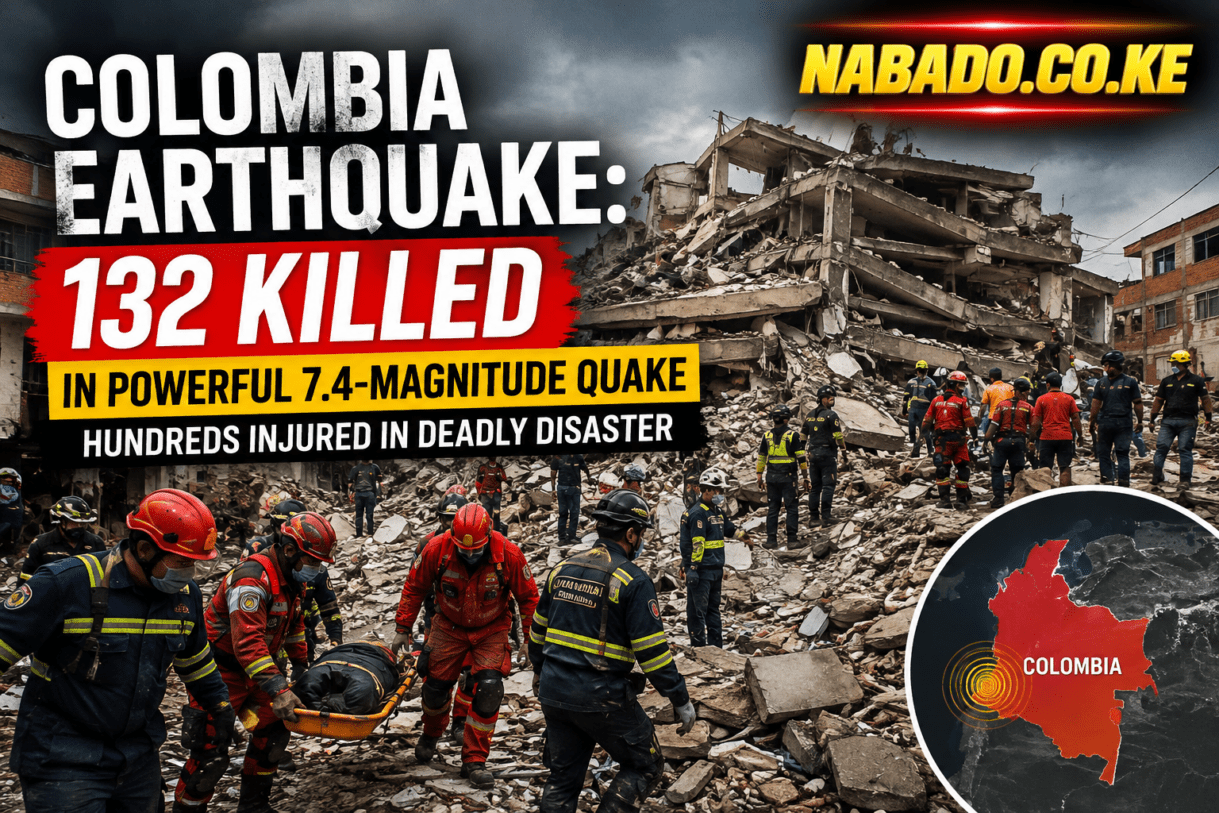
BOGOTÁ, Colombia — At least 132 people have been killed and more than 570 injured after a powerful 7.4-magnitude earthquake struck western Colombia, triggering widespread destruction, collapsing buildings and a frantic search for survivors.
The earthquake struck on Monday, August 10, sending powerful tremors across parts of the country and leaving communities scrambling for safety. Rescue teams have continued working through damaged buildings as authorities assess the full scale of the disaster.
The latest casualty figures represent a sharp increase from earlier reports, with officials warning that the toll could change as emergency crews reach more affected areas.
Powerful tremor shakes western Colombia
The earthquake was centered in Colombia’s western region, with the strongest effects reported across areas including Cali, Pereira and Manizales.
Buildings shook violently during the main tremor, sending residents running into streets as debris fell from structures. Videos and images from affected communities showed damaged buildings and emergency crews searching through rubble.
The scale of the destruction has made the disaster one of Colombia’s most serious seismic emergencies in years.
According to the latest reports, 61 buildings collapsed and about 1,575 homes were affected. Several critical facilities were also damaged, complicating efforts to treat victims and coordinate rescue operations.
Rescue teams search for survivors
Emergency workers have been deployed across affected communities as rescuers search collapsed structures for people who may still be trapped.
Hospitals have been placed under enormous pressure as hundreds of injured people seek treatment. Damage to medical facilities has further complicated the emergency response, with some patients and medical workers forced to deal with unsafe buildings and disrupted services.
Officials have urged residents to stay away from damaged structures because aftershocks could cause weakened buildings to collapse.
The earthquake was followed by multiple aftershocks, adding to fears among residents and creating additional challenges for rescue teams working in unstable areas.
National emergency response launched
Colombian authorities have activated a major emergency response as government agencies, security personnel, medical teams and rescue workers coordinate relief operations.
President Abelardo de la Espriella declared a national state of emergency and ordered government agencies to use available resources to respond to the disaster.
The emergency response is focused on rescuing survivors, treating the injured, restoring access to affected communities and providing assistance to families who have lost their homes.
Damage to transportation infrastructure and airports has also disrupted movement across parts of western Colombia, making it more difficult to move emergency supplies and personnel.
Fear of more casualties
Authorities face the difficult task of determining the full human and economic cost of the earthquake.
With rescue operations continuing, the number of casualties could still rise as emergency workers reach communities that were cut off or difficult to access immediately after the quake.
For families with relatives missing following the disaster, the rescue operation has become a race against time.
The earthquake has also left thousands of people facing uncertainty over where they will sleep and how they will rebuild their lives after homes and businesses were damaged.
One of Colombia’s strongest recent earthquakes
The magnitude 7.4 earthquake has been described by Colombian authorities as the country’s strongest earthquake recorded in the 21st century.
Colombia sits in a seismically active part of South America, where tectonic activity regularly produces earthquakes. However, the combination of the quake’s strength, widespread shaking and structural damage has produced a major national emergency.
The disaster also brings back memories of Colombia’s devastating 1999 Armenia earthquake, which killed roughly 1,900 people and injured thousands.
For now, however, the priority remains the same: saving lives.
Rescue teams are continuing to search through the rubble while medical workers treat the injured and authorities work to deliver assistance to affected communities.
As Colombia wakes to the aftermath of one of its most powerful earthquakes in decades, families across the affected region are waiting for news of loved ones while the country begins the long process of recovery.
SUGGESTED READS
- The Lies We Tell to Impress a Crush (And What They Reveal About Us)
- The Most Embarrassing Things Parents Have Done — And Why We’ll Never Forget Them
- If You Could Have Free Meals for Life at One Fast Food Chain — Which Should You Choose?
- 20 Must-Have Qualities in a Best Friend — What True Friendship Really Looks Like
- Top African Countries That Bring the Most Global Attention to Africa
- When Love Becomes Mockery: Why Certain Couples Are Ridiculed Throughout History and Culture

Support Our Website!
We appreciate your visit and hope you find our content valuable. If you’d like to support us further, please consider contributing through the TILL NUMBER: 9549825. Your support helps us keep delivering great content!
If you’d like to support Nabado from outside Kenya, we invite you to send your contributions through trusted third-party services such as Remitly, western union, SendWave, or WorldRemit. These platforms are reliable and convenient for international money transfers.
Please use the following details when sending your support:
Phone Number: +254701838999
Recipient Name: Peterson Getuma Okemwa
We sincerely appreciate your generosity and support. Thank you for being part of this journey!