

We Ain’t Done Yet… Expect Another One.
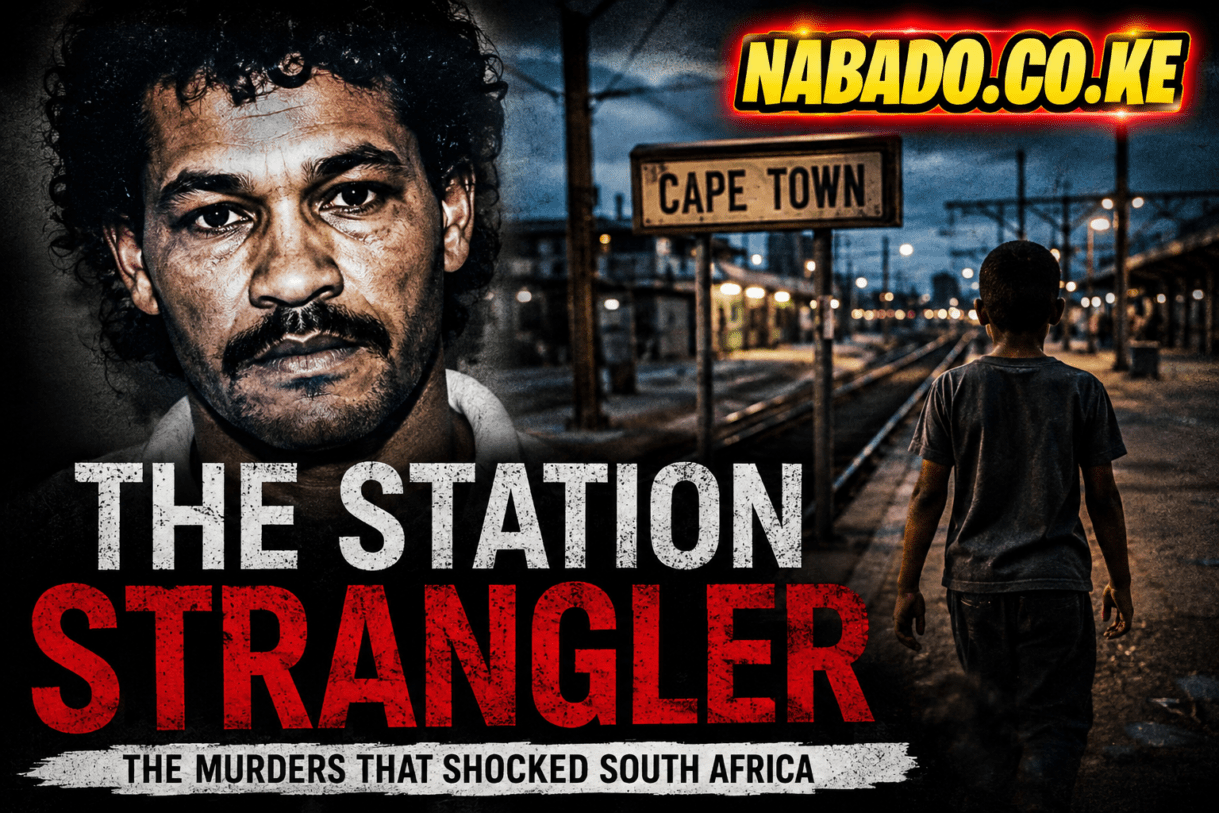
Norman Afzal Simons became one of the most notorious names in South African true crime after his conviction in a case involving the murder of a young boy in Cape Town. The case became associated with a much larger series of disappearances and killings that terrified communities during the 1980s and early 1990s.
Known publicly as the “Station Strangler,” Simons was linked by investigators to a string of young boys who disappeared around Cape Town’s railway stations. The nickname reflected one of the most disturbing elements of the case: railway stations and the surrounding areas became places where vulnerable children could vanish seemingly without a trace.
The investigation would eventually lead authorities to Simons, but the evidence presented in court did not establish his responsibility for every killing attributed to the Station Strangler.
That distinction remains important.
A city gripped by disappearances
During the period when the murders occurred, Cape Town was shaken by reports of children disappearing from communities around the city.
Some victims were reportedly last seen near railway stations or after encounters with people they knew or trusted. For families, the disappearances created a nightmare of uncertainty. A child could leave home and simply never return.
Investigators began looking for connections between cases that initially appeared separate.
The pattern eventually pointed toward a possible predator operating around transport hubs and areas where children could be isolated.
Railway stations were particularly significant because they brought together large numbers of people while also providing opportunities for someone to approach a child without immediately attracting attention.
The case against Norman Simons
Simons eventually came under suspicion and was arrested.
The prosecution’s case centered on the murder of Michael Martell, a young boy whose death became the key case against Simons.
Simons was convicted of Martell’s murder and sentenced to prison.
But the conviction did not resolve the wider mystery.
Several other disappearances and killings had been associated with the Station Strangler investigation. Simons denied responsibility for a number of them, and authorities never established in court that he was responsible for every crime attributed to the unidentified killer.
That left a troubling question hanging over the case:
Was Simons the Station Strangler responsible for the entire series—or had investigators connected several crimes to the wrong man?
The unanswered questions
One reason the Simons case continues to attract attention is the gap between what was suspected and what could actually be proven.
Serial-killer investigations often involve linking separate crimes through forensic evidence, witness testimony, behavioral patterns and other investigative clues.
In Simons’ case, however, the legal record established far less than the broader public narrative sometimes suggests.
The Station Strangler became associated with multiple victims, but the murder conviction against Simons concerned a specific killing.
That means claims that he definitively murdered every child attributed to the Station Strangler should be treated cautiously.
For the families of the other victims, that uncertainty was devastating.
A conviction in one case did not necessarily answer what had happened to their own children.
Why the case remains disturbing
The case exposed the vulnerability of children moving through busy urban environments.
A railway station can appear crowded and safe, yet the very movement of people can make it difficult to notice when someone disappears.
For investigators, that created an enormous challenge.
Witnesses might remember seeing a child but not remember exactly who the child was with. Potential suspects could disappear into crowds. Evidence could be lost before investigators understood that separate disappearances might be connected.
And in an era before modern forensic technology became as powerful and widespread as it is today, investigators had fewer tools for reconstructing events.
A legacy of fear
The Station Strangler case became part of South Africa’s dark true-crime history, particularly because of the victims’ ages and the uncertainty surrounding several disappearances.
The story is not simply about a convicted killer.
It is also about families who waited for answers, investigators who tried to connect apparently unrelated crimes and victims whose cases remained surrounded by unanswered questions.
Simons’ conviction provided a measure of justice in one case, but it did not necessarily close the book on the broader mystery.
That is what makes the case so unsettling decades later.
Norman Afzal Simons was convicted of murder, but the full story behind the Station Strangler killings remains one of South Africa’s most haunting criminal mysteries.
SUGGESTED READS
- The Night Terror of Tsavo: When Two Lions Brought a Railway to Its Knees
- The Town That Never Stopped Burning: The Chilling Story of Centralia’s Underground Fire
- The Ghost That Helped Solve a Murder: The Chilling Story of the Greenbrier Ghost
- The Russian Sleep Experiment Was Fake—But the Real Experiments Were Far More Terrifying
- The Corpse That Wouldn’t Decompose: The Haunting Mystery of Rosalia Lombardo
- Meet the Meru Man With 18+ Wives: Inside Kenya’s Most Extraordinary Family Empire
- The Green Children of Woolpit: The Medieval Mystery That Still Defies Explanation

Support Our Website!
We appreciate your visit and hope you find our content valuable. If you’d like to support us further, please consider contributing through the TILL NUMBER: 9549825. Your support helps us keep delivering great content!
If you’d like to support Nabado from outside Kenya, we invite you to send your contributions through trusted third-party services such as Remitly, western union, SendWave, or WorldRemit. These platforms are reliable and convenient for international money transfers.
Please use the following details when sending your support:
Phone Number: +254701838999
Recipient Name: Peterson Getuma Okemwa
We sincerely appreciate your generosity and support. Thank you for being part of this journey!