

simply amazing, always for you.
In an era where celebrity comebacks are often overhyped and underdelivered, Amanda Bynes is quietly crafting something far more compelling—an intentional, layered return that blends music, personal transformation, and image reinvention.
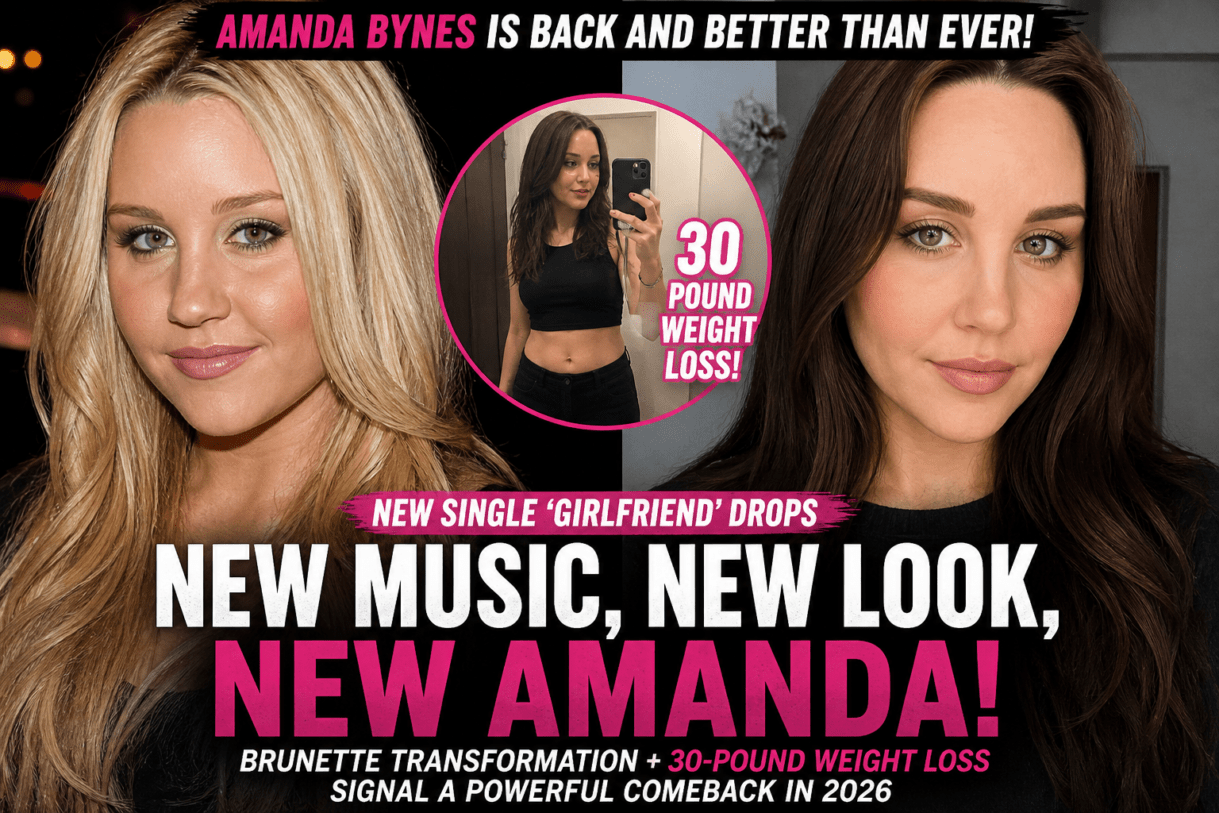
After years away from the spotlight, the former child star has re-emerged with a new single, a noticeably slimmer physique, and a striking brunette transformation. But beneath the headlines lies a deeper story—one of recalibration, control, and a carefully managed second act.
A Music Comeback That Signals More Than Nostalgia
Bynes’ newly released track, “Girlfriend,” marks a decisive shift in her creative direction. Known primarily for her acting career in the early 2000s, she is now leaning into music—specifically a blend of EDM and rap influences that positions her within a completely different entertainment lane.
Unlike many celebrity singles that feel like vanity projects, this release appears deliberate. Industry chatter suggests she has spent time developing material behind the scenes, hinting that “Girlfriend” could be the opening move in a larger musical rollout.
What stands out is the tonal shift. The track doesn’t rely on her past fame—it attempts to establish a new identity altogether. For an artist rebuilding her brand, that distinction matters.
The 30-Pound Weight Loss: More Than a Headline
Alongside her music release, Bynes has drawn attention for losing approximately 30 pounds. While celebrity weight loss stories often dominate headlines for superficial reasons, this one carries a different context.
Bynes has been unusually candid about her health journey, framing it as part of a broader commitment to physical and mental well-being. Rather than presenting it as a quick transformation, she has linked it to lifestyle changes and medical support—suggesting a structured, long-term approach.
In a media environment that often sensationalizes appearance, her transparency shifts the narrative slightly. It becomes less about aesthetics and more about personal stability and control—two things that have defined much of her journey in recent years.
The Brunette Transformation: A Visual Reset
Perhaps the most immediately noticeable change is her appearance. Bynes has traded her signature blonde hair for a darker brunette look—a move that has sparked widespread reaction online.
In celebrity culture, aesthetic changes are rarely accidental. This transformation reads as symbolic—a clear departure from the image audiences associated with her during her peak fame years.
Combined with her weight loss and new music direction, the brunette look reinforces a consistent message: this is not a return to the past. It’s a reintroduction on entirely new terms.
From Child Star to Cautionary Tale—and Now, a Rebuild
To understand why this moment matters, you have to revisit Bynes’ trajectory. She rose to fame as one of the most recognizable faces of early 2000s television, particularly through Nickelodeon hits and teen comedies.
Projects like The Amanda Show and films such as She’s the Man cemented her status as a bankable young star. She had comedic timing, screen presence, and a broad fan base.
Then came the abrupt withdrawal from acting, followed by years of personal struggles that played out publicly. Legal issues, mental health challenges, and extended time away from the industry transformed her narrative from rising star to cautionary tale.
That history makes her current re-emergence more complex than a typical comeback. It’s not just about reviving a career—it’s about reshaping a public identity that has been fractured for over a decade.
The Strategy Behind the Comeback
What makes Bynes’ return particularly interesting is its structure. Unlike sudden, media-heavy reappearances, her approach appears incremental:
- A single release instead of a full album
- Personal updates shared directly with fans
- Visual rebranding aligned with her new direction
This controlled rollout suggests a level of intentionality that contrasts sharply with the unpredictability that once defined her public life.
It also reflects a broader shift in how celebrities reclaim their narratives. Instead of relying solely on traditional media, figures like Bynes are using selective visibility—choosing when and how to re-enter the conversation.
Public Reaction: Curiosity, Skepticism, and Support
The public response has been mixed but engaged. Longtime fans are expressing cautious optimism, while others remain skeptical about whether this marks a sustained return or a brief moment of visibility.
That tension is typical of comeback narratives, especially for figures with complicated histories. But one thing is clear: people are paying attention again.
And in the entertainment industry, attention—when paired with strategy—can be a powerful currency.
Why This Comeback Feels Different
There’s a subtle but important distinction in how Bynes is approaching this phase of her career. Instead of leaning heavily on nostalgia, she appears to be building something new.
That decision carries risk. Reinvention always does. But it also creates space for longevity, something that nostalgia-driven comebacks often struggle to achieve.
By stepping into music, altering her image, and framing her personal transformation as part of a larger journey, she is positioning herself not just as a returning star—but as an evolving one.
What Comes Next?
The biggest question now is sustainability. One single and a wave of headlines can spark interest, but maintaining momentum requires consistency—more music, public appearances, and continued engagement.
If early signals are accurate, Bynes may already have additional material in development. Whether she expands into a full music project or explores other creative avenues remains to be seen.
What is certain is that her re-entry has been noticed—and it has shifted the conversation around her.
Amanda Bynes is no longer just a figure from early 2000s pop culture or a headline tied to past struggles. With a new single, a visible personal transformation, and a redefined image, she is actively rewriting her narrative.
This isn’t a simple comeback—it’s a controlled reinvention. And if the current trajectory holds, 2026 could mark the beginning of one of the most intriguing second acts in recent entertainment history.
SUGGESTED READS
- Hantavirus: The Silent Threat from Rodents You Can’t Afford to Ignore
- Meet the 10 Wealthiest Banks in the World Dominating Global Finance
- The Great Shift: Why the World Is Choosing Experiences Over Possessions
- Naked and Unashamed: The Shocking Truth Behind the World’s Most Controversial Festivals
- How to Love Yourself More Every Day: The Real, Practical Guide to Building Unshakable Self-Worth
- Who Invented Tattooing and Why Humans First Marked Their Skin
- 15 Powerful Ways to Create a Greener, More Sustainable Lifestyle
- Scientists Finally Reveal Why You Dream — And Why Your Brain Erases It Instantly

Support Our Website!
We appreciate your visit and hope you find our content valuable. If you’d like to support us further, please consider contributing through the TILL NUMBER: 9549825. Your support helps us keep delivering great content!
If you’d like to support Nabado from outside Kenya, we invite you to send your contributions through trusted third-party services such as Remitly, western union, SendWave, or WorldRemit. These platforms are reliable and convenient for international money transfers.
Please use the following details when sending your support:
Phone Number: +254701838999
Recipient Name: Peterson Getuma Okemwa
We sincerely appreciate your generosity and support. Thank you for being part of this journey!