

simply amazing, always for you.
An In-Depth, Heartfelt Guide to Rebuilding What Was Broken
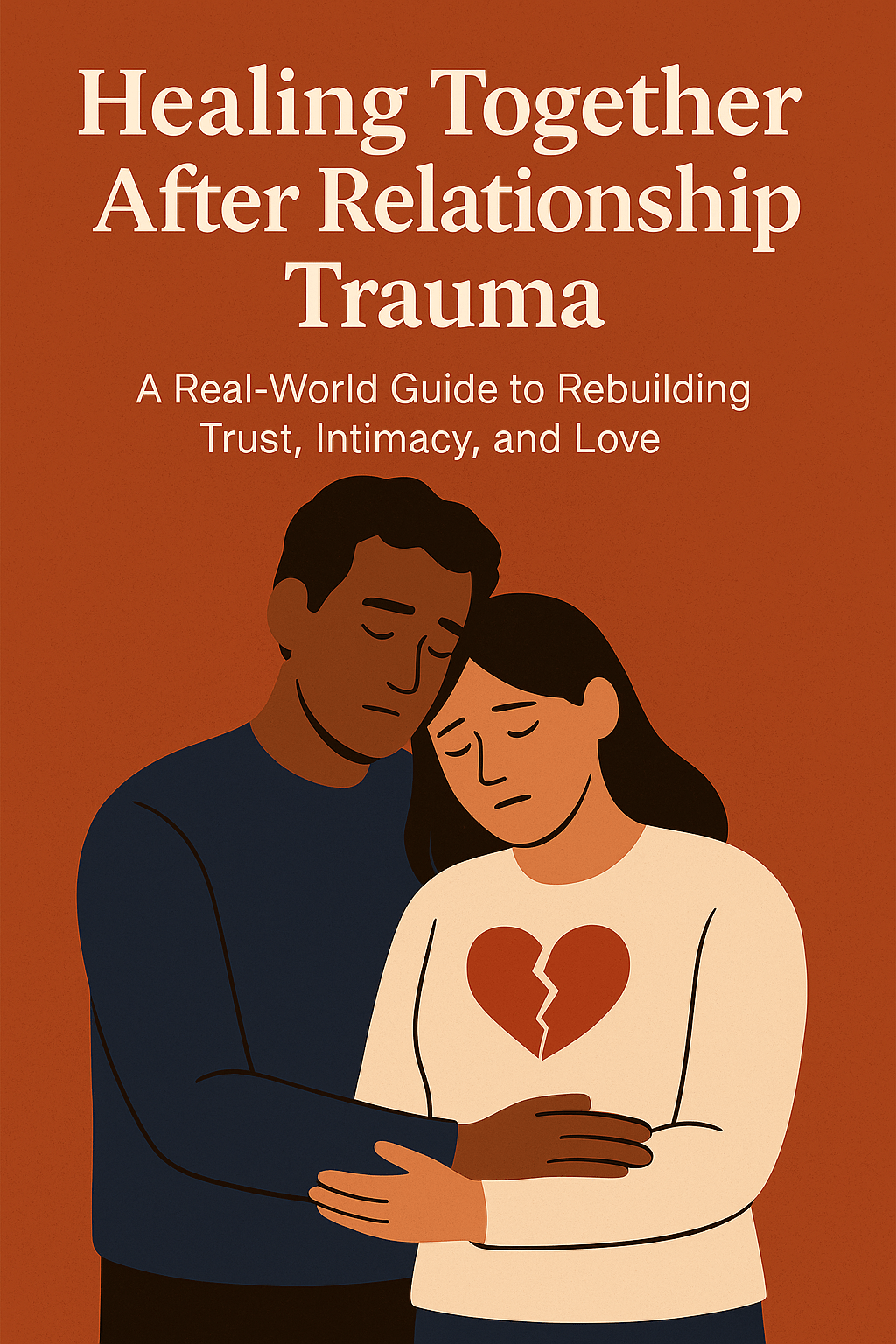
When something traumatic strikes a relationship, it doesn’t just hurt—it shatters. Whether it’s infidelity, emotional betrayal, financial devastation, addiction, abuse, or a shared experience like losing a child or surviving a natural disaster, trauma fundamentally alters how two people relate to one another.
Many couples assume that the moment the worst is over, they should simply “move on.” But trauma doesn’t vanish on command. It embeds itself in the nervous system, the memory, and the silent spaces between two people. Rebuilding isn’t about pretending it didn’t happen—it’s about acknowledging it did and deciding to fight through the pain together.
In this article, we’ll explore how to heal as a couple after trauma—step by step, with nuance, emotional honesty, and real-life examples. No shortcuts. No vague advice. Just practical, heartfelt guidance for couples trying to find their way back to each other.
Part I: Understanding the Nature of Relationship Trauma
Relationship trauma isn’t just about what happened—it’s about what it did to each person, and how it fractured trust, connection, and safety. Trauma in a relationship often involves:
- A betrayal of expectations: such as infidelity, lies, or financial secrets.
- A shared life-altering event: like a miscarriage, car accident, or home robbery.
- Repeated emotional injuries: such as neglect, emotional abuse, or manipulation.
- Individual trauma that spills into the relationship: like childhood abuse or PTSD.
Real Example: Olivia and Marcus
Olivia and Marcus had been married for six years when Marcus lost his job. What started as unemployment soon spiraled into depression, and eventually alcoholism. Olivia tried to hold the family together, but after a night of heavy drinking, Marcus became verbally abusive and destroyed furniture in a rage.
Though Marcus sought rehab later and remained sober, Olivia said something profound in therapy:
“He got better, but I never stopped living in fear. The trauma didn’t leave just because the drinking did.”
That’s what trauma does. Even if the cause is “fixed,” the impact lingers. Healing, then, must be intentional and mutual.
Part II: Acknowledge the Wound Together
You cannot heal what you refuse to name.
Too many couples want to skip to the “fix” without sitting in the discomfort of what’s broken. But healing begins with acknowledgment.
What does acknowledgment look like?
- Naming the trauma aloud.
- Giving each partner space to describe how it affected them.
- Accepting that two people can experience the same event very differently.
Real Example: Carlos and Jenna
Carlos cheated on Jenna after years of what he called “emotional disconnection.” When they tried couples therapy, his first instinct was to say, “I said I’m sorry, can’t we just move on?”
But Jenna needed her pain seen. It wasn’t just the affair—it was the sense that she was not enough. The healing started the day Carlos sat across from her and said:
“I broke something in you. I see it now. I don’t deserve forgiveness yet—but I want to earn it, if you’ll let me.”
It wasn’t a magic fix. But it was real. And it was a beginning.
Part III: Take Full Responsibility—Not Blame-Shifting
Trauma often comes with defensiveness. The one who caused the harm might say, “I was going through something,” or, “You weren’t there for me.” While these might be true contextually, they can’t replace ownership.
Healing requires the offending partner to say:
- “I hurt you, and I take full responsibility.”
- “It doesn’t matter what I was feeling—that wasn’t the way to handle it.”
- “I understand if you don’t trust me yet. I’m here to rebuild.”
And it requires the hurt partner to eventually shift from punishment to understanding, if the relationship is to survive.
Real Example: Teresa and Malik
Malik struggled with a gambling addiction and secretly drained their joint savings. Teresa found out when their mortgage payment bounced. Her trust was demolished.
In therapy, Malik first blamed stress and childhood trauma. But when he finally said,
“I betrayed you. I was selfish, and I didn’t think about what it would cost us,”
Teresa said she felt, for the first time, like he saw her pain instead of justifying his actions.
Accountability is the beginning of change.
Part IV: Professional Help Isn’t Optional
You wouldn’t try to rebuild a house after a fire without an architect. Why try to rebuild your emotional home without a professional?
Couples therapy, trauma-informed therapy, and individual counseling can make the difference between breakdown and breakthrough.
Therapists offer tools you don’t naturally know. They teach communication styles, conflict resolution, and trauma processing methods that rewire how you relate.
Real Example: Anisa and Drew
Anisa miscarried their first child. While she grieved openly, Drew became emotionally distant and buried himself in work. Their pain built walls.
When they saw a grief counselor, they finally began to understand each other’s languages of loss. Drew wasn’t unfeeling—he was frozen. Anisa wasn’t overreacting—she was drowning alone.
In therapy, they created rituals to honor the baby, grieved together, and slowly grew closer again.
Part V: Practice Radical, Relentless Empathy
When trauma is involved, empathy isn’t a suggestion—it’s a survival tool. Healing together means showing up with compassion, even when you’re tired, even when you don’t fully understand.
Tips for practicing empathy:
- Reflect back what you hear. “It sounds like you felt abandoned.”
- Resist fixing. Sometimes people just want to be seen.
- Ask open questions. “What was that moment like for you?”
- Don’t make it about you. Center their pain when they speak.
Real Example: Naomi and Paul
Paul’s mother died suddenly, and he withdrew from everyone, including Naomi. At first, Naomi thought he didn’t love her anymore. It hurt.
One night, after a long silence, Paul cried and said, “I didn’t think anyone could handle my grief, so I stayed inside it.”
Naomi said, “I don’t need to fix you—I just want to sit beside you in it.” That night was a turning point.
Sometimes, just being there is the most powerful thing you can do.
Part VI: Rebuild Trust Like It’s a New House
Trust, once broken, can’t be restored with words—it’s rebuilt with actions.
Think of trust like a house burned down. You don’t hang new curtains on charred walls. You start from the foundation.
How to rebuild trust:
- Be transparent. Share passwords, calendars, or bank info if needed.
- Be consistent. Show up when you say you will.
- Be patient. Don’t demand trust—earn it.
- Be vulnerable. Admit when you’re scared or unsure.
Real Example: Shauna and Ed
Ed had an emotional affair. Shauna felt that every text or late-night email was a potential threat. Instead of getting angry, Ed gave her full access to his devices—not because she asked, but because he wanted her to feel safe.
Every time he followed through on a promise or shared something before she had to ask, a brick was laid back on the foundation. It took time, but eventually, the house felt like a home again.
Part VII: Redefine Intimacy on New Terms
Trauma often makes physical or emotional closeness feel unsafe. Intimacy has to be relearned.
This means:
- Taking pressure off sex.
- Reintroducing non-sexual touch.
- Sharing emotions, memories, or even laughter again.
- Creating new “rituals of connection”—like weekly walks or coffee chats.
Real Example: Nina and Jorge
After Nina was assaulted, her relationship with physical touch changed completely. Jorge, her partner, felt helpless at first.
But instead of pushing for what once was, he asked, “What feels okay today?” Sometimes, it was just lying side by side. Sometimes, it was a kiss on the forehead.
Months later, they rekindled physical intimacy—but more importantly, they built a deeper emotional intimacy that gave Nina her power back.
Part VIII: Leave Room for Individual Healing
Even when healing as a couple, each person must be given room for personal growth. No relationship can thrive when one partner’s healing becomes dependent on the other.
Encourage individual healing through:
- Personal therapy
- Creative expression (journaling, painting, music)
- Physical health (exercise, sleep, nutrition)
- Faith, spirituality, or mindfulness
Real Example: Darren and Mei
Mei struggled with postpartum depression, which nearly drove Darren away. He felt rejected, and she felt broken. Through therapy, they realized that they both needed individual help before they could meet each other again.
Darren joined a men’s support group. Mei worked with a postpartum specialist. They came back to each other not as saviors, but as two people who’d learned to hold themselves, and now each other.
Part IX: Celebrate Every Small Victory
Healing isn’t linear. There will be days you feel light and days you don’t. Celebrate progress—no matter how small.
- The first night without a fight.
- A shared laugh over breakfast.
- Saying “I love you” and meaning it.
- Reaching for each other during conflict, not pulling away.
These moments aren’t just “nice.” They’re the evidence that healing is happening.
Part X: Know When It’s Time to Walk Away
Healing is noble—but not every relationship should survive. If the trauma has created ongoing abuse, danger, or complete emotional erosion, the healthiest act of love might be letting go.
Ask yourself:
- Is there respect on both sides?
- Is there genuine effort to change?
- Is the relationship still rooted in care and not just fear of starting over?
Leaving isn’t giving up. It’s choosing peace when pain has no end.
Healing after trauma in a relationship is among the hardest journeys two people can take.
It requires honesty, humility, time, professional help, and relentless effort. But when both people commit, when both people say, “I see you, I choose you, even in this mess,” it can become a transformation.
Some couples don’t just survive trauma—they become stronger, wiser, more compassionate because of it. Their love matures. Their bond deepens. Their hearts reopen.
Healing doesn’t mean returning to what you were. It means becoming something new—together.
So, here’s the question: If you and your partner are willing to do the hard work, to face the pain together rather than apart—what kind of relationship could rise from the ashes?

Support Our Website!
We appreciate your visit and hope you find our content valuable. If you’d like to support us further, please consider contributing through the TILL NUMBER: 9549825. Your support helps us keep delivering great content!
If you’d like to support Nabado from outside Kenya, we invite you to send your contributions through trusted third-party services such as Remitly, SendWave, or WorldRemit. These platforms are reliable and convenient for international money transfers.
Please use the following details when sending your support:
Phone Number: +254701838999
Recipient Name: Peterson Getuma Okemwa
We sincerely appreciate your generosity and support. Thank you for being part of this journey!