

simply amazing, always for you.
Why Gratitude Matters More Than Ever
The holiday season is often filled with twinkling lights, gifts, and delicious food—but amidst the joy and indulgence, something vital can get lost: gratitude.
Teaching your children to appreciate what they have, show kindness to others, and reflect on life’s blessings can help them grow into happier, more empathetic adults. Gratitude doesn’t just make kids nicer; it makes them more resilient, generous, and mentally healthy.
But how do you teach gratitude when everyone’s focused on what they want?
Let’s explore practical, age-appropriate, and meaningful ways to weave gratitude into your family’s holiday traditions.
1. Model Gratitude Yourself
Kids learn best by example. If you want to raise grateful children, you must show gratitude regularly in front of them.
- Say thank you to your kids when they help or show kindness.
- Acknowledge everyday blessings like “I’m so grateful we’re all healthy this year” or “I’m thankful we have food to share.”
- Express appreciation for your partner, neighbors, friends, and even strangers (e.g., thanking a delivery driver).
Tip: Start a “gratitude aloud” ritual—each day during the holiday season, say one thing you’re thankful for. Keep it simple and real.
2. Create a Gratitude Countdown Calendar
Just like an advent calendar, create a “25 Days of Gratitude” calendar where each day your child performs a small act of thanks.
Example daily prompts:
- Write a thank-you note to a teacher or family member.
- Donate a toy or book to someone in need.
- Compliment someone at school.
- Help mom or dad with chores without being asked.
- Say something nice about yourself (gratitude for your own growth matters too!).
Hang the calendar in a visible place, and make it a bonding moment each day.
3. Volunteer as a Family
One of the most powerful ways to instill gratitude is to help others.
During the holidays, volunteer together:
- Serve food at a local shelter.
- Help wrap gifts for donation drives.
- Visit or call elderly neighbors or relatives.
- Create holiday cards for kids in hospitals.
Children who see firsthand how others live—and how much impact their kindness can have—often gain a deeper appreciation for their own lives.
4. Gift Experiences, Not Just Things
Material gifts are fine, but they fade quickly. What lasts longer are shared experiences and memories.
Instead of piling on presents:
- Plan a family hike or movie night.
- Take a mini road trip to visit extended family.
- Cook a favorite holiday meal together.
Then, reflect on these experiences together. After each event, ask:
“What was your favorite part?”
“What made you feel happy or thankful today?”
This helps them internalize joy and link it with non-material things.
5. Start a Gratitude Jar or Tree
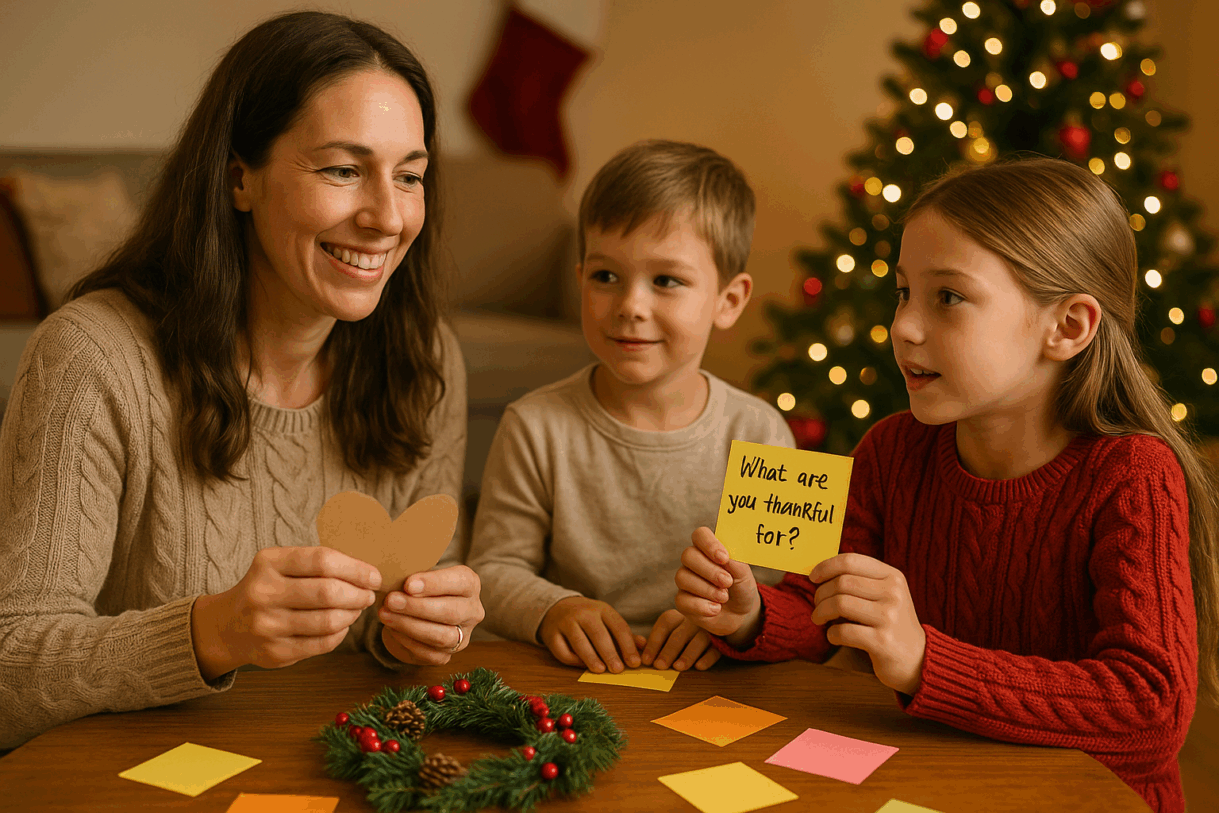
During the holidays, place a jar or a small decorative tree in a common space. Provide slips of paper where everyone can write what they’re thankful for.
Each night or week, read them aloud. This can become a powerful and touching family ritual.
Sample entries:
- “I’m grateful for cocoa and cuddles.”
- “Thankful Dad helped me with homework.”
- “I love my warm blanket.”
Over time, these small notes build a big picture of love and appreciation.
6. Read Gratitude-Focused Holiday Books
Children’s literature is a wonderful tool to reinforce values.
Recommended titles:
- “The Thankful Book” by Todd Parr (ages 3–6)
- “Bear Says Thanks” by Karma Wilson (ages 4–8)
- “Those Shoes” by Maribeth Boelts (ages 5–9)
- “Last Stop on Market Street” by Matt de la Peña (ages 6–10)
After reading, ask questions like:
- “What would you have done?”
- “How did the character show they were thankful?”
These stories give your child emotional language to understand gratitude.
7. Encourage Thank-You Notes and Videos
Revive the old-school tradition of writing thank-you notes for holiday gifts, even if they’re simple drawings or a few sentences.
Or go digital:
- Record a short thank-you video with your child.
- Have them say thank you in their own words and send it to the gift-giver.
This exercise reinforces that gifts aren’t just about receiving—they’re a form of connection, and gratitude is part of the loop.
8. Make Gratitude Part of Holiday Prayers or Rituals
If your family prays or has spiritual traditions during holidays like Christmas, Kwanzaa, Hanukkah, or others, weave gratitude into those moments.
You could say:
- “Let’s thank the people who made this meal possible.”
- “Today, we remember those who can’t be with us and are grateful for the memories.”
This reinforces the idea that holidays are not just about gifts—they’re about reflection and meaning.
9. Teach the Difference Between Wants and Needs
Help your child distinguish between what they want and what they need.
Use holiday wishlists as a teaching opportunity:
“You want a new video game, but you already have 10. What do you think someone with no toys would feel?”
Make them aware that others may have different circumstances—and helping them cultivates empathy.
You can also let them pick a gift for someone less fortunate. Walk them through the process of choosing something meaningful, wrapping it, and giving it.
10. Celebrate People, Not Just Presents
Design holiday rituals where people are at the center:
- Write letters to each family member saying what you appreciate about them.
- Create a “celebration circle” where everyone takes turns being told something kind.
- End each holiday gathering with a round of “one thing I’m grateful for.”
These moments anchor the holidays in love, not stuff.
11. Use Mealtimes for Gratitude Conversations
Holiday meals are a perfect chance to discuss gratitude in a casual, loving way.
Use prompts like:
- “What was something kind someone did for you today?”
- “If you had to give up one thing you love to help someone else, what would it be?”
- “Who do you want to thank today and why?”
Kids open up more when they feel safe and heard, especially around food and family.
12. Praise Effort, Not Just Outcomes
If your child shows generosity or thankfulness—even in small, clumsy ways—acknowledge it.
Say:
- “I loved how you helped your brother with his shoes today.”
- “You remembered to say thank you to Auntie. That was thoughtful.”
These affirmations build positive reinforcement, so gratitude becomes something your child associates with pride and love.
Planting Seeds That Will Grow for Life
Teaching gratitude isn’t a one-day task. It’s a practice—a series of small, intentional actions that, over time, help shape your child’s character.
The holidays are a golden opportunity to pause, reflect, and plant these seeds. Long after the toys are forgotten and the decorations are packed away, the values you nurture will remain.
Gratitude is more than saying “thank you”—it’s a mindset, a way of seeing the world.
Start this holiday season. Your child’s future—and the world—will be better for it.
SUGGESTED READS
- How to Manage Parenting and Holiday Trips: The Ultimate Guide for Stress-Free Family Travel
- Ultimate Guide to Parenting During the Holiday Season: Keep the Joy, Ditch the Stress
- How to Make Your Child’s Birthday Truly Special: A Complete Guide to Unforgettable Memories
- 51 Healthy Snacks Your Kids Will Actually Love (No More Fights at Snack Time)
- How to Keep Your Child Active and Healthy in the Digital Age

Support Our Website!
We appreciate your visit and hope you find our content valuable. If you’d like to support us further, please consider contributing through the TILL NUMBER: 9549825. Your support helps us keep delivering great content!
If you’d like to support Nabado from outside Kenya, we invite you to send your contributions through trusted third-party services such as Remitly, SendWave, or WorldRemit. These platforms are reliable and convenient for international money transfers.
Please use the following details when sending your support:
Phone Number: +254701838999
Recipient Name: Peterson Getuma Okemwa
We sincerely appreciate your generosity and support. Thank you for being part of this journey!